Inspirations

How to soothe skin irritation - effective care and regeneration of the skin barrier
Skin irritation is one of the most common complaints reported in beauty salons. Redness, burning, dryness, roughness, and tightness are signs that the hydrolipid barrier has been compromised. Recent research indicates that a damaged epidermal barrier increases transepidermal water loss (TEWL) by up to 50-60%, making the skin more susceptible to irritants, allergens, and microorganisms. In this guide you will learn: scientific causes of skin irritation, mechanisms of weakening the skin barrier, ingredients with proven soothing effects, a care routine that actually regenerates the epidermis, Orientana products, ideal for sensitive and irritated skin. Contents: What is skin irritation? Scientific Causes of Skin Irritation The role of the hydrolipid barrier and TEWL Active ingredients that soothe and regenerate Skincare routine for irritated skin - step by step Orientana products supporting regeneration How to avoid skin irritation? Patient questions What is skin irritation? Skin irritation is not a disease, but rather a defensive reaction of the epidermis to factors that disrupt its balance. Symptoms include: redness, baking, itching, dryness and flaking, feeling of heat, roughness, increased skin tension. Irritation may occur in sensitive skin as well as in oily or combination skin. Scientific Causes of Skin Irritation The most important factors confirmed by dermatological tests: Damage to the hydrolipid barrier MDPI research (2023) indicates that the loss of ceramides and lipids increases epidermal permeability and susceptibility to irritants. Oxidative stress UV radiation, smog, and stress increase levels of reactive oxygen species (ROS). This leads to inflammation and skin reactivity. Excessive exfoliation AHA/BHA/retinoids used too often weaken the intercellular cement. Hard water and detergents They disturb the pH and wash away protective lipids. Sudden temperature changes Cold and dry winter air can increase TEWL by more than 40% within a few days (JID, 2016). The role of the hydrolipid barrier and TEWL Irritation is a sign that we have a problem with the hydrolipid barrier. When the barrier is damaged, TEWL increases and the skin becomes reactive. Therefore, the key to soothing irritation is to regenerate the barrier - not just alleviate the symptoms. Check what cosmetics will help you with this. Active ingredients that soothe and regenerate Ceramides - the foundation of reconstruction Studies indicate that ceramide restoration can reduce TEWL by 30–60% within a few weeks (Karger, 2024). They will work great in the Orientana mask with Yuzu ceramides. Niacinamide It has anti-inflammatory properties, reduces redness and supports lipid synthesis. You will find it in Ashwagandha + CICA + Niacinamide Serum. CICA and adaptogens Centella Asiatica contains madecassoside and asiaticoside, which have powerful soothing properties and reduce skin inflammation. Adaptogens (such as ashwagandha) reduce skin reactivity. Trehalose and humectants Trehalose acts as a "protective shield" - it binds water and stabilizes cell structures. Plant mucin It has a smoothing, soothing and moisturizing effect - ideal for irritated skin. You will find it in the Smoothing and Soothing Serum with Mucin. Gluconolactone (PHA) According to the Journal of Cosmetic Dermatology (2021), gluconolactone: strengthens the barrier, has antioxidant properties, increases the tolerance of sensitive skin. You will find this ingredient in Orientana Tonic-Essence with Gluconolactone. Skincare routine for irritated skin - step by step Cleaning Delicate gel , without SLS and strong detergents. Toning Tonic-essence with gluconolactone Soothing and rebuilding serum Ashwagandha + CICA + Niacinamide serum Smoothing and soothing serum with mucin Regenerating mask with ceramides Yuzu mask + Ceramides + Trehalose Calming cream Sandalwood and Turmeric Cream How to avoid skin irritation? do not overdo it with peels, retinol, acids, use SPF, avoid "jumping" between many active cosmetics, introduce one new product every 10–14 days, use humidifiers during the heating season, protect the skin in winter (scarf, barrier cream). Skin irritation is a signal that the hydrolipid barrier requires regeneration. The most effective strategy is a simple, gentle skincare regimen rich in restorative ingredients: ceramides, trehalose, niacinamide, CICA, and humectants. Incorporating complementary Orientana cosmetics can soothe the skin, reduce redness, and restore comfort. Patient questions 1. What most often causes skin irritation? Too aggressive care, acids, retinol, hard water, frost, UV, oxidative stress. 2. Can skin irritation be the result of allergies? Yes, allergies cause inflammation, but dermatological diagnosis is necessary. 3. How long does it take for irritated skin to regenerate? From 3 to 14 days with good care. 4. Does niacinamide soothe irritation? Yes, it has anti-inflammatory properties and supports the barrier. 5. Will ceramides help with reddened skin? Yes, they rebuild the barrier and reduce sensitivity. 6. Is gluconolactone good for sensitive skin? Yes, it is the mildest acid, it strengthens the barrier. 7. Can I use retinol if I have irritation? No, you should take a break. 8. What best soothes acid irritation? CICA, ceramides, mucin, niacinamide, trehalose. 9. Can natural cosmetics also cause irritation? Yes, natural does not always mean gentle. 10. Can cold irritate the skin? Yes, low humidity and frost increase TEWL. 11. Can oily skin also be irritated? Of course, every skin has a barrier. 12. Can irritation indicate damage to the microbiome? Yes, dysbiosis increases skin reactivity. 13. Can I apply makeup to irritated skin? Only light, non-comedogenic formulas. 14. Does trehalose really protect the skin? Yes, it stabilizes cells and binds water. 15. Is enzyme peeling safe? Yes, but only once a week if there is no irritation. 16. What to do if your skin stings after using tonic? Discontinue use, introduce soothing products. 17. Does diet affect irritation? Yes, alcohol, spicy foods and sugar intensify redness. 18. How often should I use a ceramide mask? 2-4 times a week, depending on needs. 19. What to do if irritation persists? Dermatological consultation is necessary. See how snail slime affects the skin barrier
Learn more
Burning skin - how to rebuild the damaged hydrolipid barrier?
Does your skin sting, itch, and feel tight right after washing? This is one of the most common signs that the hydrolipid barrier has been compromised. Skin stinging is not just an aesthetic discomfort. It's a serious message from our body that its natural protective system has stopped functioning properly. In this article, you will learn why skin stinging occurs, how to rebuild a disrupted hydrolipid barrier, and what natural ingredients - including those from Orientana cosmetics - can provide real relief based on scientific research. The main task of the hydrolipid barrier is to protect against transepidermal water loss and to block harmful external factors. Research published in the Journal of Investigative Dermatology (2012) showed that damage to the hydrolipid barrier leads to an increase in TEWL by as much as 50-70%, which directly translates into a sensation of stinging and dry skin. Skin stinging - main causes of barrier disruption Aggressive detergents and surfactants The use of soaps based on SLS (Sodium Lauryl Sulfate) or SLES (Sodium Laureth Sulfate) causes the dissolution of intercellular lipids. According to research from Contact Dermatitis (2008), just two weeks of using products with SLS increases the risk of contact dermatitis by 35%. So review your face washes and use those with SLS/SLES for body washing. For your face, buy gentle gels and foams with good ingredients. Excessive exfoliation Daily use of mechanical or chemical peels (AHA, BHA acids) weakens the stratum corneum. Skin stinging after using a peel is often the first warning sign of barrier damage. Do not use strong peels at all in winter. Environmental factors Low air humidity (below 30%), frost, strong winds, and UV radiation degrade ceramides and cholesterol - key barrier components. Data from the British Journal of Dermatology (2015) show that in winter, TEWL increases by an average of 25%. Protect your face with a lipid-rich cream. Stress and hormonal imbalances Chronic stress raises cortisol levels, which weakens skin regeneration. Research from Archives of Dermatological Research (2011) indicates a link between chronic stress and a 40% increase in skin sensitivity. How to effectively rebuild the hydrolipid barrier? Step 1: Gentle cleansing Replace aggressive soaps with delicate and natural oils, gels, and foams. Orientana offers a natural Face Cleansing Foam, Soothing Face Cleansing Gel, and for makeup removal - Natural Cleansing Oil for the first step of cleansing. Step 2: Intense hydration Choose products with humectants (hyaluronic acid, glycerin, panthenol) and occlusives (shea butter, squalane). After washing your face, it is worth reaching for Hydrating Toner Essence. The composition includes rice proteins, gluconolactone, allantoin, hyaluronic acid, and date extract. We can also achieve skin hydration through Orientana Hydrating Serum, which combines low molecular weight hyaluronic acid with trehalose, or HydroTremella Elixir Serum with exosomes and snow mushroom. Step 3: Lipid replenishment Ceramides, cholesterol, and fatty acids in a 1:1:1 ratio are crucial. Orientana Cream Mask with Yuzu Ceramides contains shea butter (a natural source of unsaturated fatty acids), plant ceramides, mango butter, and hemp oil. Shea butter provides oleic and stearic acids, which, according to the International Journal of Cosmetic Science (2016), reduce TEWL by 22% after 4 weeks of use. For daily care, the Sandalwood and Turmeric Balance Cream and Ashwagandha Nourishing Cream will be suitable. Step 4: Protection against external factors Use SPF 30-50 daily, even in winter. UVA radiation penetrates deeply and destroys fibroblasts responsible for lipid production. Also ensure adequate indoor humidity (45-55%) - use humidifiers. Natural ingredients supporting the barrier - scientific confirmations Ingredient Action Scientific source Ceramides Lipid layer reconstruction, TEWL reduction by 31% Skin Pharmacology and Physiology (2014) Niacinamide (B3) Increases ceramide synthesis, reduces stinging by 41% British Journal of Dermatology (2000) Centella asiatica Stimulates collagen and fibroblast production, soothes inflammation Planta Medica (2013) Shea butter Reduces TEWL by 22%, strengthens lipid barrier Int. Journal of Cosmetic Science (2016) Panthenol (Provitamin B5) Hydration, acceleration of regeneration by 19% Journal of Dermatological Treatment (2007) Check out products with these and other ingredients that support the hydrolipid barrier. Additional tips for skin stinging • Avoid long, hot baths - water temperature should not exceed 37°C • Do not dry skin completely - gently pat dry with a towel • Apply moisturizing cream within 3 minutes after washing, while skin is still slightly damp • Drink at least 2 liters of water daily - internal hydration is key • Supplement your diet with omega-3 (fish, walnuts) and vitamin E (avocado, seeds) • At night, use intensive regenerating creams - this is when the skin regenerates most effectively Frequently asked questions about skin stinging How long does it take to rebuild the hydrolipid barrier? In the case of slight damage, you will notice the first effects after 7-10 days of systematic care. Full rebuilding of the hydrolipid barrier usually takes 4-6 weeks. In the case of chronic inflammation (e.g., atopic dermatitis), the process can take up to 3 months. Does skin stinging always mean a damaged barrier? Not always. Stinging can also indicate an allergic reaction, rosacea, seborrheic dermatitis, or infection. If symptoms persist for more than 2 weeks despite proper care, consult a dermatologist. Which ingredients can further irritate sensitive skin? Avoid denatured alcohol, artificial colorants, silicones (dimethicone, cyclomethicone), formaldehyde, and intense synthetic fragrances. Choose natural and sensitive skin cosmetics. Are natural cosmetics better for a damaged barrier? Natural cosmetics, such as Orientana, contain fewer synthetic additives that can irritate. However, the composition is key – even natural ingredients (e.g., essential oils) can be strong allergens. Look for products with minimalist compositions and clinically tested. Can I use a peel when my skin is stinging? No. In the acute stinging phase, completely refrain from peels, both mechanical and chemical. Only after symptoms subside (after about 4 weeks) can you introduce a very gentle enzymatic peel once every 10-14 days. What tests should be done for recurrent skin stinging? Consider allergy tests (patch test), vitamin D levels, thyroid tests (TSH, fT3, fT4), and a complete blood count with differential. Vitamin deficiencies, hormonal imbalances, or anemia can significantly weaken the skin's protective functions. Summary Skin stinging is a warning that should not be ignored. A damaged hydrolipid barrier requires a comprehensive approach: gentle cleansing, intense hydration, and lipid replenishment. Orientana natural cosmetics, rich in scientifically confirmed active ingredients, can be effective support in restoring skin balance. Remember that regeneration is a process that requires patience – the first effects will appear after about a week, but full rebuilding requires 4-6 weeks of systematic care. If symptoms worsen or persist despite using appropriate products, consult a dermatologist. Sources "Research Techniques Made Simple: Transepidermal Water Loss Measurement as a Research Tool" (2018) "Epidermal Barrier Dysfunction in Atopic Dermatitis" (2009) "Grether-Beck S, et al. Urea uptake enhances barrier function and antimicrobial defense in humans by regulating epidermal gene expression" (2012) Journal of Investigative Dermatology, Volume 132, Issue 6, Pages 1561-1572
Learn more
Ingredients for mature skin - which ones to choose to rejuvenate and strengthen the skin
Mature skin isn't just about wrinkles, but above all, the skin's changing needs. With age, collagen and elastin levels decline, skin loses firmness, discoloration and dryness appear, and the hydrolipid barrier weakens. Therefore, mature skin care requires active ingredients with proven anti-aging and regenerative properties . In this article, we'll show you which ingredients best support mature skin and how they work—both in terms of protecting against oxidative stress and providing deep regeneration. We'll focus on the natural and innovative ingredients found in Orientana cosmetics: Reishi - an adaptogen with strong antioxidant properties, Retinol H10 - a milder form of retinol with a rejuvenating effect, Ashwagandha - an Ayurvedic plant that improves skin firmness, Snail slime - intensely moisturizing and regenerating, Ceramides and exosomes - supporting the reconstruction of the skin barrier, Caffeine, acids and vegetable oils - improving the appearance and vitality of the skin. The article will also answer the most frequently asked questions from people looking for anti-aging cosmetics: Which ingredients really smooth wrinkles? Does mature skin need acids? How to strengthen the skin barrier naturally? Which Orientana cosmetics are best for people over 40 and 50? This will help you easily choose products tailored to your needs and understand how to combine ingredients into an effective anti-aging routine. Mature skin – challenges and needs Mature skin typically begins after the age of 35-40, when the skin's natural renewal processes slow down. Its structure changes, and daily habits, diet, and exposure to external factors (sun, pollution, stress) further accelerate the aging process. Skin becomes thinner, more sensitive, and less resistant to irritation. The most common problems of mature skin: Loss of firmness and elasticity - a decrease in collagen and elastin production leads to skin sagging. Wrinkles and expression lines become more and more visible, especially around the eyes, mouth and forehead. Dryness - the amount of natural lipids and ceramides decreases, leading to loss of moisture. Discoloration and uneven skin tone - caused by exposure to UV rays and decreased cellular activity. Weakened hydrolipid barrier - the skin is more susceptible to irritation, inflammation and dehydration. What does mature skin need? To maintain a healthy appearance and slow down the aging process, mature skin needs: strong antioxidants (e.g. Reishi, Ashwagandha), regenerating and rejuvenating ingredients (e.g. Retinol H10, snail slime), moisturizing and rebuilding the barrier (ceramides, exosomes, vegetable oils), gentle exfoliation (AHA, PHA acids), ingredients that improve microcirculation and skin oxygenation (caffeine). Thanks to the appropriate combination of these substances in daily care, it is possible not only to improve the appearance of the skin, but also to actually support its natural regenerative processes. The most important active ingredients for mature skin Anti-aging skincare requires ingredients that not only mask the signs of aging but also, and above all , address the underlying causes —slowed regeneration, weakened protective barriers, oxidative stress, and moisture loss. Orientana cosmetics offer natural and modern ingredients that address these needs. Reishi – a skin rejuvenating adaptogen Reishi mushroom (Ganoderma lucidum) is known as the "longevity mushroom." It contains polysaccharides and triterpenes that have powerful antioxidant properties. Neutralizes free radicals, delaying the aging process. Regenerates and strengthens the skin, supporting its resistance to environmental stress. Improves the firmness and elasticity of mature skin. 👉 You can find it in Reishi face creams, among others Retinol H10 – effective rejuvenation without irritation Retinol is the gold standard in anti-aging care, but classic forms can be irritating. Retinol H10 in Orientana cosmetics is a modern, stable form with high effectiveness and gentle action. Smoothes wrinkles and expression lines. Stimulates cell renewal, improving skin structure. Lightens discolorations and evens out skin tone. 👉 Perfect for evening skincare – for example, in a duet with Reishi. You'll find it in the Reishi Retinol H10 serum. Ashwagandha – a plant adaptogen for firmness Ashwagandha (Withania somnifera) has been used in Ayurveda for thousands of years as a strengthening and regenerating plant. Protects the skin against oxidative stress and has anti-aging properties. Improves the firmness and elasticity of mature skin. Soothes irritations and strengthens the protective barrier. 👉 Present in Orientana cosmetics as an ingredient supporting firming and regeneration. Check out the Nourishing Cream with Ashwagandha and the Ampoule Serum, which address various concerns of mature skin. Snail slime – intensive regeneration Snail slime is one of the most valued anti-aging ingredients. Strongly moisturizes and regenerates the skin. Smoothes wrinkles, reduces discoloration and scars. Accelerates the regeneration processes of irritated or dry skin. 👉 At Orientana it is found in essences and face and eye creams for mature skin. Ceramides – rebuilding the hydrolipid barrier Ceramides are natural lipids that seal the skin's protective barrier. They prevent water loss (TEWL). They increase the elasticity and softness of the skin. They strengthen the protective barrier, especially important for dry, mature skin. 👉 In Orientana cosmetics, ceramides support the hydration and firmness of mature skin in the nourishing HydroTremella eye cream Exosomes – modern biotechnology Exosomes are microvesicles that carry regenerative signals in the skin. They are an innovative biotechnological ingredient used in modern Orientana cosmetics. They stimulate cell renewal. They accelerate repair processes. They improve hydration and firmness. 👉 You will find them, among others, in the Orientana serum with exosomes and aloe. Caffeine – stimulation and oxygenation of the skin Caffeine works not only in coffee – it also has proven cosmetic effects. Stimulates microcirculation, oxygenates and nourishes the skin. Reduces puffiness and dark circles, especially around the eyes. Improves the color and vitality of mature skin. 👉 You can find snail slime in eye creams, for example. AHA, PHA and BHA acids – smoothing and brightening Acids in cosmetics for mature skin work on many levels. They gently exfoliate dead skin cells. They brighten discolorations and even out skin tone. They support cell renewal and increase the effectiveness of other ingredients. Vegetable oils – skin nourishment and comfort Natural oils (e.g. macadamia, mango, coconut, sesame, kokum butter) are excellent support for mature skin. They nourish and soften the skin. They strengthen the lipid barrier. They provide elasticity and protection against drying out. By combining these ingredients in daily care, mature skin gains support at every level – from antioxidant protection, through barrier reconstruction, to wrinkle smoothing and even skin tone. How active ingredients work in mature skin care Each active ingredient addresses different needs of mature skin. Therefore, the best results are achieved by combining moisturizing, regenerating, and anti-wrinkle ingredients into a daily routine. Wrinkle reduction and skin smoothing Retinol H10 – stimulates cell renewal, reduces wrinkle depth. Reishi – has antioxidant properties, protects against free radicals responsible for aging. Snail slime – fills and smoothes fine lines, improves skin smoothness. Regeneration and restoration of the hydrolipid barrier Ceramides – seal the skin barrier, prevent excessive water loss. Exosomes – support cellular communication, accelerate repair processes. Vegetable oils – provide essential fatty acids and protect the skin from drying out. Moisturizing and improving elasticity Snail slime – intensely moisturizes, binds water in the epidermis. Ashwagandha – improves skin firmness and elasticity. Reishi – supports hydrolipid balance and strengthens the skin's resistance to stress. Brightening and reducing discoloration Retinol H10 – evens out skin tone, brightens pigmentation spots. AHA and PHA acids – gently exfoliate, revealing fresher and brighter skin. Snail slime – reduces the visibility of scars and discolorations. Skin protection and stimulation Caffeine – improves microcirculation, reduces swelling and dark circles. Reishi and Ashwagandha – adaptogens that protect the skin from oxidative stress. Vegetable oils – create a protective layer against external factors. ✅ Thanks to this list, it is easy to choose ingredients for specific problems of mature skin: for wrinkles – retinol, reishi, snail slime, for dryness – ceramides, exosomes, oils, for discoloration – retinol, acids, snail slime, for lack of firmness – ashwagandha, reishi, ceramides, for skin fatigue – caffeine and adaptogens. How to Use Ingredients in Your Daily Mature Skin Care Routine The correct order and skillful combination of active ingredients are key to effective care for mature skin. Regular use and use of products tailored to the time of day allow you to maximize their potential. Morning routine – protection and hydration In the morning, your skin needs hydration and a protective barrier that will protect it from environmental stress, UV radiation and pollution. Cleansing – a gentle natural gel or foam so as not to damage the hydrolipid barrier. Toning – a tonic or tonic-essence that prepares the skin for further care. Moisturizing and strengthening serum – with ceramides, exosomes or snail slime. Eye care – cream or serum with caffeine and ceramides to reduce puffiness and dark circles and strengthen the delicate skin around the eyes. Cream with adaptogens – Reishi and Ashwagandha will help protect the skin against oxidative stress and loss of firmness. Sun protection (SPF) – a must-have step for mature skin, especially if you use retinol or acids in your evening skincare routine. Evening routine – regeneration and renewal In the evening, the skin has the greatest ability to regenerate, so it's the perfect time for active anti-aging ingredients. Two-step cleansing – plant oil + mild gel or foam. Tonic or essence – restores the skin's proper pH. H10 Retinol Serum – used 3–4 times a week to smooth wrinkles and reduce discoloration. Eye care – cream or serum with caffeine and ceramides to reduce puffiness and dark circles and strengthen the delicate skin around the eyes. Alternatively , on non-retinol days, choose a serum with snail mucus or exosomes to deeply moisturize and regenerate the skin. Nourishing cream – with plant oils and adaptogens (Reishi, Ashwagandha) supports night-time skin regeneration. Additional care - 2-3 times a week Acid peeling (AHA or PHA) – smoothes and brightens the skin, preparing it to absorb active ingredients. Regenerating masks – e.g. with dates or vitamin C, to enhance hydration and smooth the complexion. By using this routine, mature skin receives full support : in the morning, protection against external factors, regeneration and reconstruction in the evening, regularly – refreshment and strengthening through masks and peels. The most common mistakes in mature skin care Even the best active ingredients won't deliver the desired results if used incorrectly. Mature skin requires gentleness, consistency, and carefully selected formulas. Here are the most common mistakes to avoid: Skipping sunscreen Not using SPF cream daily accelerates the aging process, causes discoloration and reduces the effectiveness of anti-aging ingredients such as retinol and acids. Too aggressive skin cleansing Harsh detergent gels or frequent use of facial brushes damage the hydrolipid barrier. Skin becomes even drier and more susceptible to irritation. Instead, choose gentle Orientana gels and toners with inulin, gluconolactone, or rice water. Excessive exfoliation with acids AHA and PHA acids are beneficial, but if used daily, they can lead to irritation, hypersensitivity, and worsening skin condition. It's best to use them 2-3 times a week . Using retinol without skin preparation Retinol H10 is a gentler form of retinol, but it should always be introduced gradually. Failure of skin to adapt can result in irritation and redness. Using only heavy creams Mature skin needs not only nourishment but also active ingredients —adaptogens, ceramides, exosomes, and caffeine. A rich cream without active ingredients may improve comfort but won't slow down the aging process. Skipping eye and neck care The skin around the eyes and neck ages the fastest, so it is worth using dedicated eye creams and serums with caffeine and ceramides , and regularly care for the décolleté and neck with the same ingredients as the face. By avoiding these mistakes and choosing conscious care based on proven active ingredients, you can significantly improve the condition of mature skin and slow down the aging process. FAQ - frequently asked questions about mature skin Is retinol safe for mature skin? Yes, but it's worth reaching for milder forms, such as Retinol H10 in Orientana cosmetics. It's effective against wrinkles and discoloration, while being less irritating than traditional retinol. Which ingredients are best for smoothing wrinkles? The strongest anti-wrinkle ingredients are Retinol H10, Reishi, and Snail Slime . Used regularly, they improve skin texture and reduce fine lines. What ingredients rebuild the skin barrier? Ceramides, exosomes, and natural plant oils provide the best results. They strengthen the hydrolipid barrier, retain moisture, and protect against irritation. Does mature skin need acids? Yes, but in moderate doses. AHA and PHA acids gently exfoliate, lighten discolorations, and improve the absorption of other ingredients. Use them 2–3 times a week. Does snail slime really work? Yes, its effectiveness is confirmed by research. Snail slime intensely moisturizes, regenerates, and reduces the appearance of wrinkles and discoloration. Which Orientana cosmetics are best for mature skin? It's worth reaching for series with Reishi, Retinol H10, Snail Slime, Ashwagandha , and products with ceramides and exosomes . This combination provides comprehensive anti-aging care. Does caffeine matter in mature skin care? Yes, especially in eye cosmetics. Caffeine reduces puffiness, improves microcirculation, and adds freshness to the skin. How often should I use retinol in anti-aging care? Start with twice a week, then increase the frequency to 3-4 times a week. Always in the evening and in combination with a moisturizer and SPF during the day. Mature skin requires care based on ingredients that work on multiple levels—from antioxidant protection, through regeneration, to deep hydration. Reishi, Retinol H10, Ashwagandha, Snail Slime, Ceramides, Exosomes, Caffeine, Acids, and Natural Oils are the foundation of an effective anti-aging routine. Each of these ingredients addresses different skin needs: reducing wrinkles, brightening discolorations, strengthening the hydrolipid barrier, and restoring skin firmness. Orientana cosmetics combine traditional Asian and Ayurvedic plant knowledge with modern technologies such as Retinol H10 and exosomes. This makes them safe, effective, and tailored to the needs of mature skin. If you want to care for your skin in a natural yet modern way, choose Orientana cosmetics, designed specifically for mature skin. Choose care that not only improves appearance but also supports your skin's natural regenerative processes. Check out the full range of Orientana cosmetics for mature skin and choose the ingredients that best suit your skin's needs.
Learn more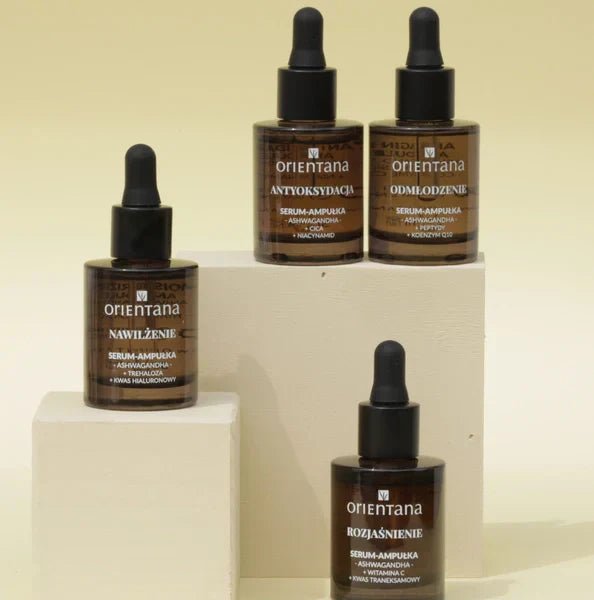
Anti-wrinkle serum – how to choose the best one and effectively rejuvenate your skin?
Have you ever wondered why it's worth using an anti-wrinkle serum ? Wrinkles are a natural part of the skin aging process, but modern skincare can significantly slow their formation and reduce already visible lines . One of the most effective cosmetics in the fight against the signs of aging is an anti-wrinkle serum – a concentrated product rich in active ingredients that works deeper than a regular cream. Unlike creams, serums have a lighter consistency and contain a higher concentration of active ingredients , such as vitamin C, hyaluronic acid, and plant adaptogens. These ingredients intensively support skin regeneration processes, improve firmness, and reduce wrinkles. In this post, you'll learn how anti-wrinkle serums work, which ingredients are truly effective, and I'll present some suggestions from the Orientana brand. We offer several types. serums based on the power of plants, as well as with active ingredients straight from the laboratory. How does anti-wrinkle serum work on the skin? The anti-wrinkle serum works on several levels: It stimulates the production of collagen and elastin , thanks to which the skin regains its firmness and wrinkles are smoothed. Protects against oxidative stress – antioxidants neutralize free radicals that accelerate the aging process. Improves hydration and the hydrolipid barrier – humectant ingredients, such as hyaluronic acid and phytomucin from the Tremella fungus, retain water in the skin. Strengthens and regenerates – adaptogens, such as ashwagandha and reishi, support the skin’s natural defense mechanisms. The effects of using a good anti-wrinkle serum can be seen after just a few weeks – the skin becomes smoother, firmer and more radiant. Key ingredients in anti-wrinkle serum The effectiveness of a serum depends primarily on the quality and synergy of its active ingredients. In anti-aging formulas, it's worth looking for: Retinoids and plant-based retinol equivalents – e.g. bakuchiol, Pistacia lentiscus resin extract (NovoRetin™) – have a strong rejuvenating and smoothing effect. Vitamin C in a stable form (3-O-Ethyl Ascorbic Acid) – brightens discolorations, stimulates collagen synthesis and has an antioxidant effect. Hyaluronic acid and Tremella fuciformis – intense hydration, improved skin elasticity. Niacinamide – improves elasticity, reduces unevenness and fine lines. Adaptogens – ashwagandha, reishi, schizandra – strengthen the skin and improve its resistance to environmental stress. Natural oils and butters – mango, shea, jojoba – nourishment and protection against moisture loss. Orientana Natural Anti-Wrinkle Serum – the Power of Plants and Adaptogens For years, the Orientana brand has specialized in creating natural cosmetics inspired by Asian recipes. These anti-wrinkle serums combine plant power, adaptogens , and modern formulas. These plant-based formulas are enriched with laboratory-proven ingredients in safe concentrations , ensuring they are effective but non-irritating. The offer includes the following anti-wrinkle serums : Ashwagandha + CICA + Niacinamide Antioxidant Serum A good starter in the fight against wrinkles. Start using it after the age of 25. It regenerates, soothes, and smooths wrinkles, and is also ideal for sensitive skin. Serum Ampoule Ashwagandha + peptides + coenzyme Q10 xx Reishi Serum + Retinol – a strong antioxidant, supports skin density and firmness. Tremella Serum with Exosomes – moisturizes, improves elasticity and reduces fine lines. Ashwagandha Serum with Vitamin C and Tranexamic Acid Thanks to natural ingredients and high concentrations of active substances, Orientana serums support both the reduction of signs of aging and anti-aging prevention. How to choose an anti-wrinkle serum for your skin type and age Dry and mature skin – choose a serum rich in peptides, retinol, hyaluronic acid, and adaptogens Combination and oily skin – choose light formulas with niacinamide, exosomes and tremella. Sensitive skin – avoid intense retinoids, choose gentler, plant-based formulas such as Ashwagandha + CICA serum, or ethylated vitamin C serum. Prevention – after the age of 25, it is worth using an anti-wrinkle serum to delay the formation of wrinkles. How to use anti-wrinkle serum to make it work effectively Cleansing – apply the serum to clean, dry skin of the face and neck. Order – apply the serum before the cream so that the active ingredients can penetrate deeper. Frequency – usually 1–2 times a day, depending on the manufacturer’s recommendations. UV protection – when using vitamin C, retinol or its substitutes, be sure to use SPF. Myths about anti-wrinkle serums “The serum only works on deep wrinkles” – in fact, it also works preventively and on fine lines. “I don’t need a serum before I’m 40.” – anti-aging prevention should start much earlier. “Natural serums are less effective” – carefully selected plant ingredients, such as those in the Orientana serum, are as effective as synthetic formulas. Anti-wrinkle serums are not only cosmetics that reduce existing wrinkles, but also an effective tool in preventing skin aging. By choosing natural formulas rich in adaptogens and vitamin C, like those found in Orientana serums, you're investing in healthy, younger-looking skin for years to come. Check out the full range of Orientana Natural Serums and find the perfect formula for your skin.
Learn more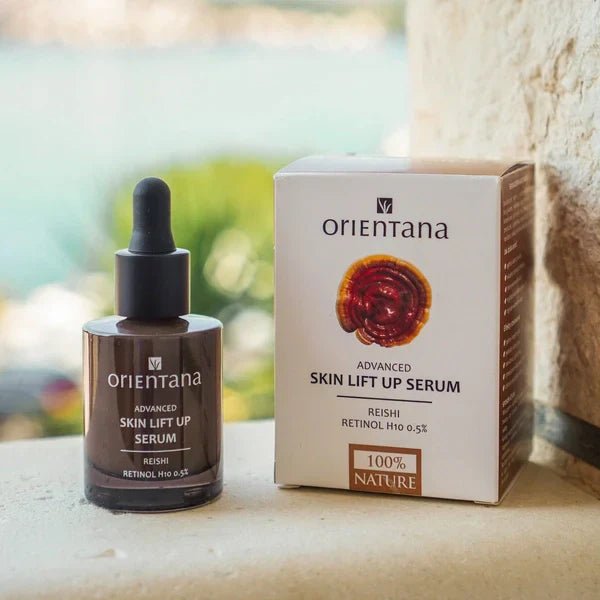
Retinol concentration in cosmetics - a comprehensive guide to effective skin care
The concentration of retinol in cosmetics is a key factor determining the effectiveness of anti-aging products. Retinol, a derivative of vitamin A, is one of the most effective active ingredients in skincare, but its proper dosing and application require knowledge and prudence. I will present to you all aspects related to retinol concentration, legal regulations, and practical guidelines for its use. What is retinol and why does concentration matter? Retinol is a form of vitamin A that, upon application to the skin, converts into retinoic acid – the active form responsible for cellular renewal. The concentration of retinol in a product directly affects its effectiveness, as well as potential side effects. Mechanism of action of retinol Retinol acts by: Accelerating cell renewal Stimulating collagen production Regulating sebum production Lightening hyperpigmentation Smoothing fine lines The effectiveness of these processes depends on the retinol concentration, which is why understanding the differences between individual concentration levels is so important. Optimal retinol concentration in treatments for different skin types Please note that I am referring to treatments here, not home use. Sensitive skin (0.01% - 0.03%) People with sensitive skin should start with the lowest retinol concentrations. This allows the skin to gradually adapt to the active ingredient without the risk of irritation. Normal skin (0.25% - 0.5%) Normal skin usually tolerates medium retinol concentrations well, providing visible results with minimal risk of side effects. Oily and problematic skin (0.5% - 1%) Higher retinol concentrations can be beneficial for oily skin, as they help regulate sebum production and prevent imperfections. EU regulation on retinol in cosmetics The European Union has long been monitoring retinol, analyzing reports of severe complications after using this ingredient. The conclusion was that consumers use retinol cosmetics without proper knowledge and treat them like "ordinary" creams. The Scientific Committee on Consumer Safety (SCCS) concluded that cosmetics can be a significant source of daily vitamin A intake, which – with simultaneous consumption (from diet or supplements) – may lead to exceeding safe levels. New EU legal regulations on retinol In accordance with Regulation (EC) No 1223/2009 of the European Parliament and of the Council of 30 November 2009 on cosmetic products, retinol and its derivatives are subject to strict regulations: Annex III (List of restricted substances) The maximum concentration of retinol in cosmetic products must not exceed 0.3% for products applied to the face and neck For body care products, the limit is 0.05% Products containing retinol must include a warning: "Contains retinol. Avoid contact with eyes. In case of skin irritation, discontinue use" Labeling requirements: Mandatory placement of warnings on the packaging Information on age restrictions (not recommended for use by persons under 12 years of age) Guidelines for avoiding sun exposure The restrictions introduced by the EU also apply to: retinyl palmitate, retinyl acetate, retinal due to their conversion in the skin to active retinoic acid. Restrictions on the use of retinol in skincare cosmetics result from its potential toxicity, irritating effects, and possible impact on fetal development. Retinol and its derivatives must not be used by pregnant and breastfeeding women. What is Retinol H10? Retinol H10 is the trade name of a raw material whose active ingredient is hydrogenated retinol, i.e., Hydrogenated Retinol. In the INCI of the raw material, you will find this name. The hydrogenation process involves saturating the retinol molecule with hydrogen, which stabilizes the chemical structure and makes it more resistant to oxidation, light, and heat. As a result, cosmetics with Retinol H10 have a longer shelf life, better durability, and are easier to formulate. Retinol H10 belongs to a modern generation of cosmetic retinoids. Unlike classic pure retinol or retinyl palmitate, it acts more gently, yet still effectively. It does not cause as intense peeling or irritation as its classic counterparts. This means it can be used more safely on a daily basis, also for sensitive, couperose, or mature skin. Thanks to these properties, it is increasingly appearing in premium skincare cosmetic formulations. Hydrogenated Retinol combines what is most difficult in cosmetics: the effect of a retinoid with gentleness for the skin. It is: stable – it does not oxidize quickly, does not lose its properties under the influence of light or air, better tolerated – it does not cause redness, flaking, or irritation characteristic of classic retinol, compatible with other ingredients – e.g., ceramides, niacinamide, peptides, or hyaluronic acid. This means it can be used even in more sensitive areas, such as the skin around the eyes, neck, and décolletage. Recommended concentration: 0.3–1.5% in the finished product Hydrogenated Retinol is not subject to the same legal restrictions as pure retinol, because: it does not directly convert to retinoic acid, it does not exhibit teratogenic effects, it does not accumulate in the body. For this reason, it can be used in higher concentrations – up to 1.5% in the finished product, without the risk of side effects (although caution and dermatological tests are still recommended, especially for year-round products and sensitive skin). Example of an effective cosmetic with Retinol H10 Orientana's Retinol H10 Serum is an excellent example of a product with a carefully selected retinol concentration. Orientana uses an innovative Retinol H10 formula combined with the reishi adaptogen, which is characterized by: Stable form of retinol ensuring long-term effectiveness Optimal concentration adapted to the needs of various skin types Addition of active ingredients that work synergistically with Retinol H10 Retinol H10 in Orientana's serum is an example of a modern approach to formulating products with retinol, where the concentration has been optimized for maximum effectiveness while maintaining user safety. Main action: Anti-aging, smoothing, skin tone improvement Hydrogenated Retinol has comprehensive, documented anti-aging and regenerative effects. It supports cell renewal processes, stimulates collagen and elastin production, and improves skin texture. Regular use of cosmetics with this ingredient: smooths fine lines and wrinkles, lightens discolorations and evens out skin tone, restores skin firmness and elasticity, supports epidermis regeneration and improves its protective barrier. All this makes Retinol H10 a primary ingredient in anti-aging care, but also one that supports the treatment of skin with imperfections or loss of radiance. How to properly use products with pure retinol? Rules for introducing retinol into skincare Gradual introduction: Start by applying 1-2 times a week Evening application: Use retinol only in the evening Sun protection: Mandatory use of SPF during the day Moisturizing: Use moisturizing creams to minimize skin dryness Apply retinol to dry skin Signs of proper adaptation Gentle peeling of the skin in the first weeks Gradual improvement of skin texture How to use retinol to avoid mistakes Most common mistakes: Too high a concentration to start with Starting skincare with high retinol concentrations can lead to severe irritation and discourage further use. Combining with other acids Simultaneous use of retinol with AHA/BHA acids can cause excessive skin irritation. Daytime use Retinol increases skin photosensitivity, so it should only be used in the evening. Skipping sun protection Lack of systematic SPF use during retinol treatment can lead to hyperpigmentation and skin damage. When to expect results? Retinol concentration affects the speed at which results appear: 2-4 weeks: Improvement in skin texture, reduction of minor imperfections 6-8 weeks: Visible reduction of fine lines 3-6 months: Significant improvement in skin elasticity and tone Contraindications and precautions When to avoid retinol: Pregnancy and breastfeeding Very sensitive or damaged skin Simultaneous use of other strong active ingredients Planned dermatological procedures Recommended precautions: Patch test before first use Consultation with a dermatologist in case of doubts Discontinue use if severe irritation occurs Systematic use of sun protection The future of retinol in cosmetics The development of cosmetic technologies brings increasingly advanced forms of retinol, such as Retinol H10 used by our brand. These innovations allow for: Better stability of the active ingredient Reduced risk of irritation while maintaining effectiveness Precise dosing of concentration for different skin types Safe combination with other active ingredients Creation of retinol-like ingredients from plant organisms, so-called phyto-retinol The concentration of retinol in cosmetics is a key parameter determining the effectiveness and safety of the product. Thanks to EU regulations, consumers can be sure that products available on the European market meet high quality and safety standards. Orientana's Retinol H10 Serum is an example of a modern approach to formulating retinol products, where advanced technology allows for optimizing concentration for maximum effectiveness while maintaining comfort of use. Remember that proper selection of retinol concentration for your skin's needs and adherence to safe use principles are key to achieving spectacular results in anti-aging care. It is always advisable to consult a dermatologist when choosing a product, especially for sensitive or problematic skin. Read also: Retinol H10 and ceramides - together or separately
Learn more