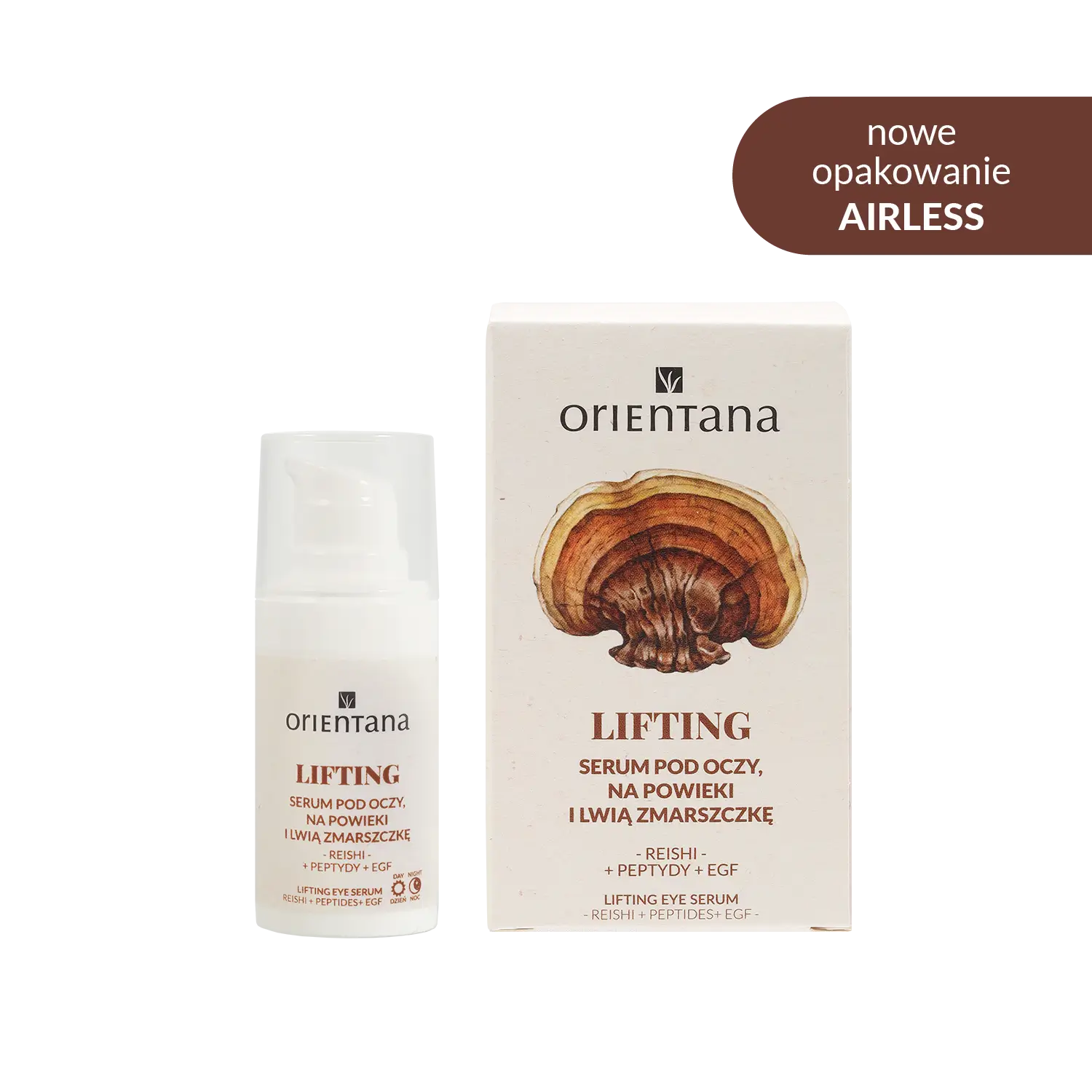
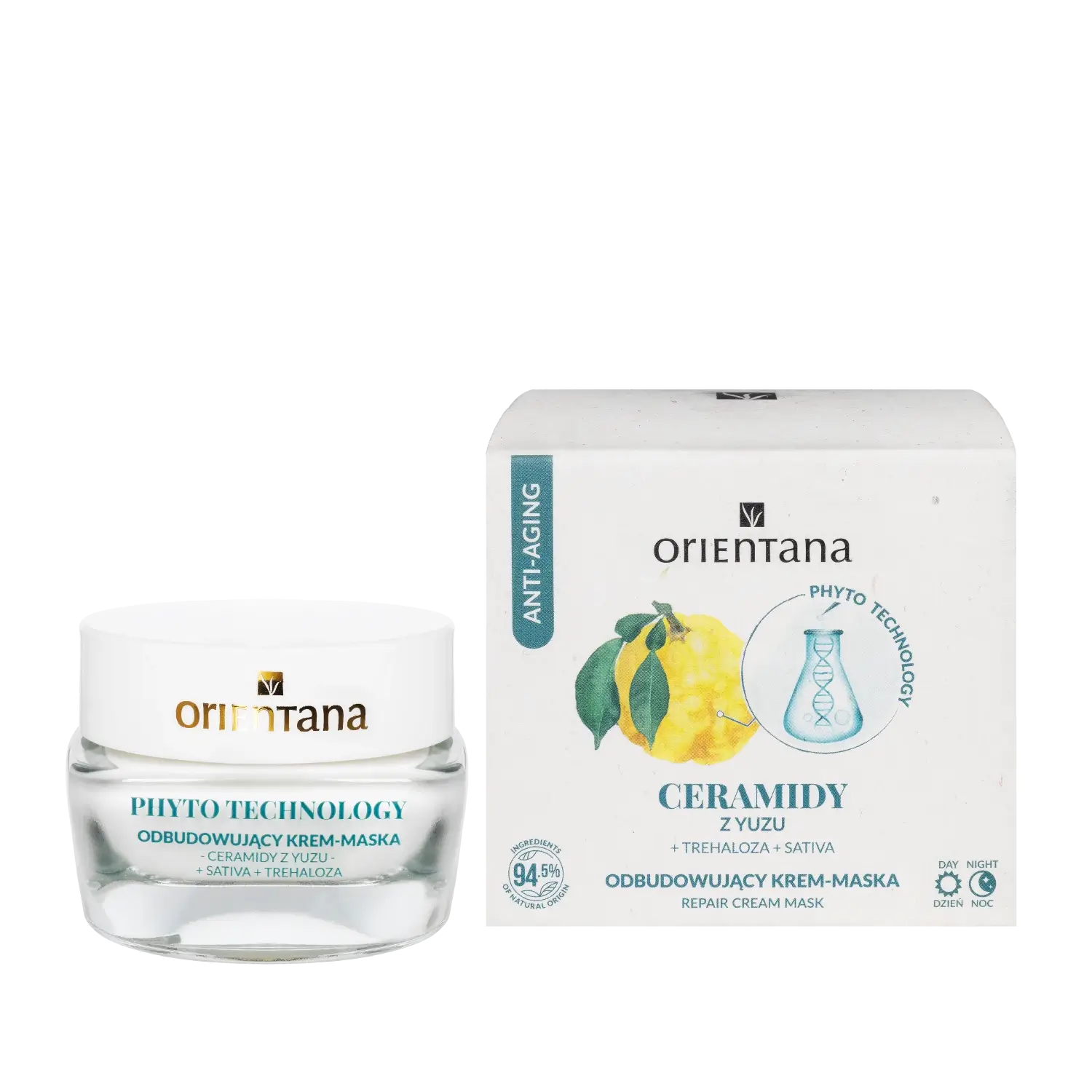
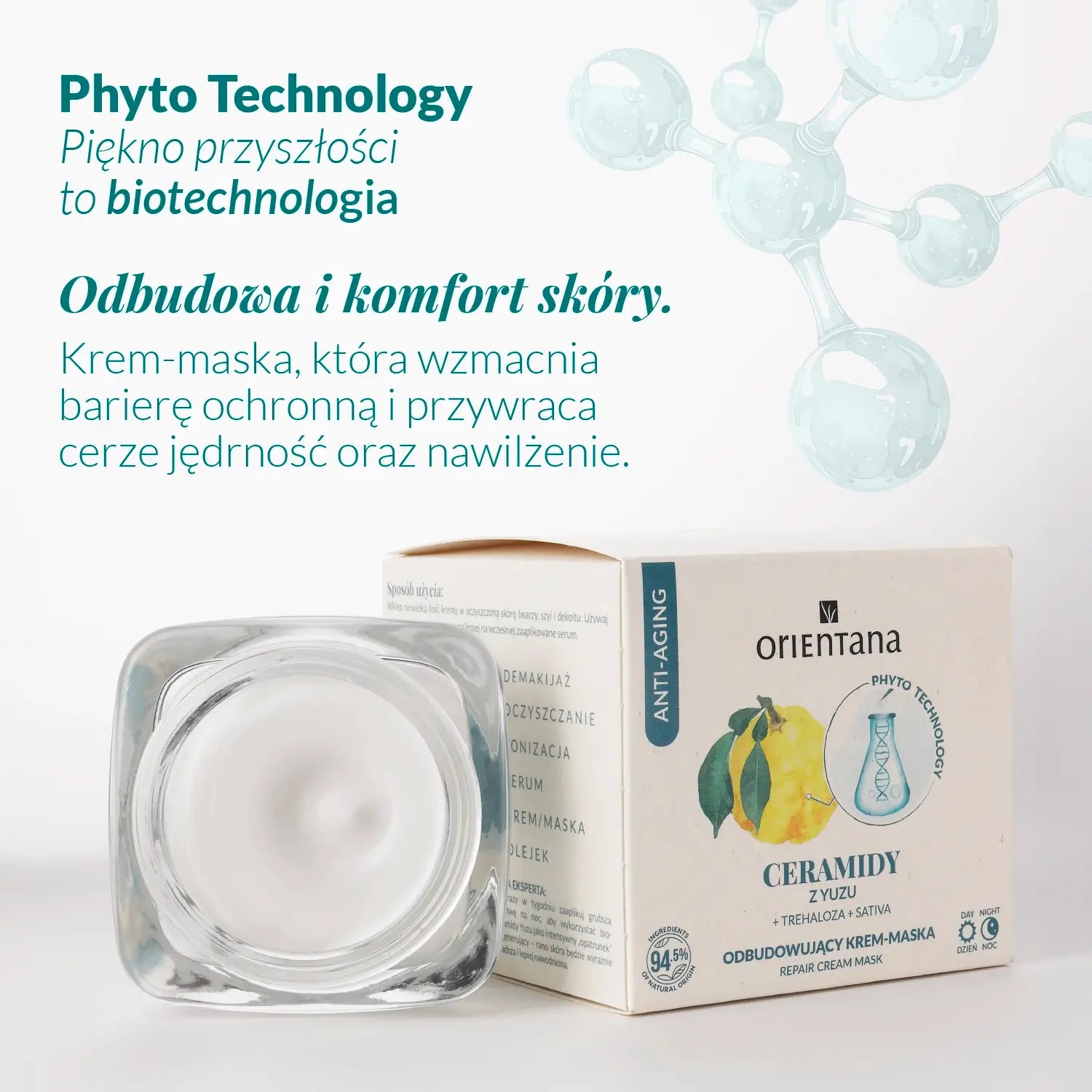
Type: Facial masks and scrubs
Regenerating mask with ceramides yuzu + sativa + trehalose 40 ml
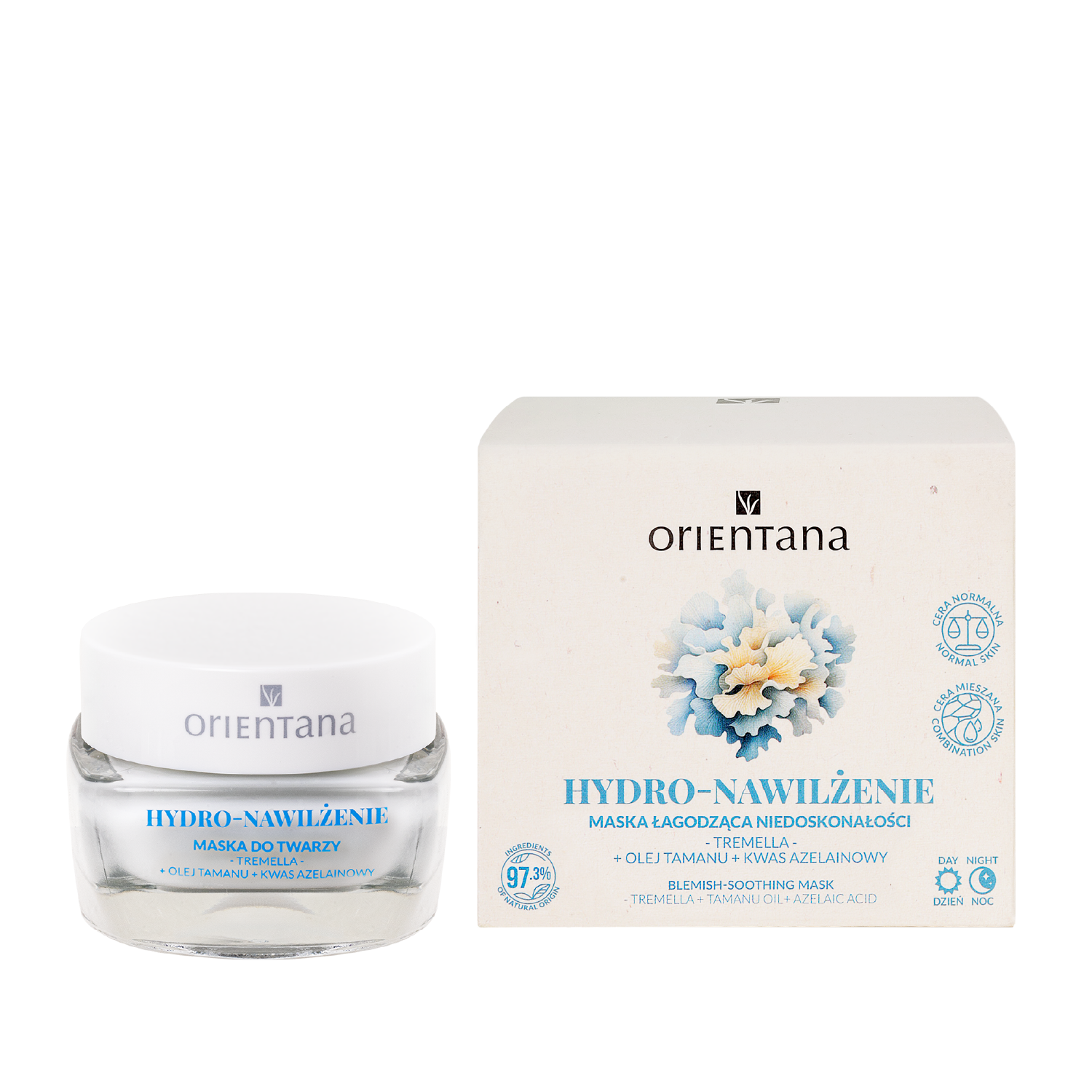
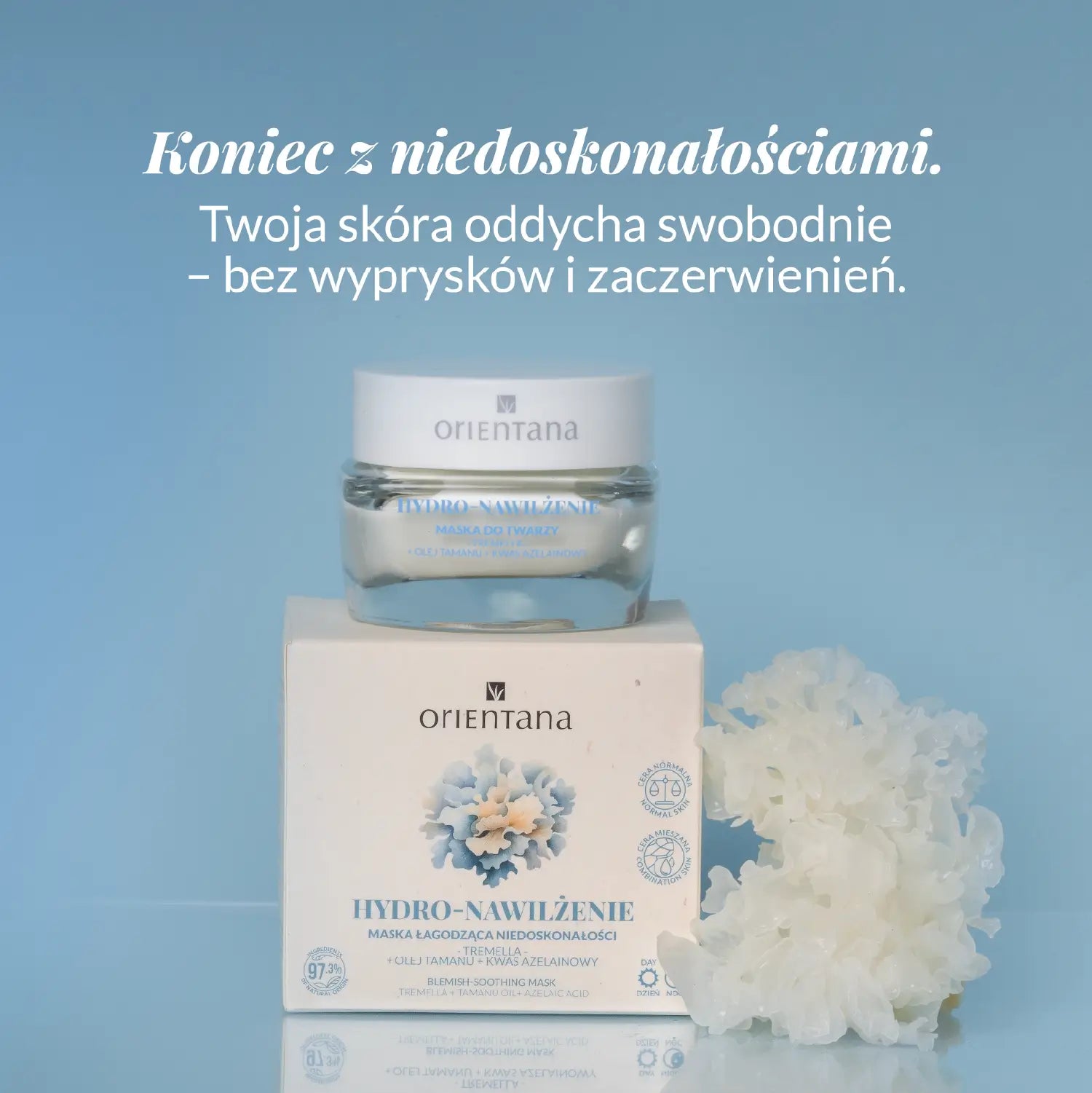
Type: Facial masks and scrubs
Tremella Tamanu Oil Azelaic Acid Mask for Facial Imperfections 50 ml


Type: Maski i peelingi do twarzy
2-in-1 Purifying Clay Facial Mask - Soothing - Algae + Tamanu Oil


Type: Maski i peelingi do twarzy
Exfoliating facial treatment - smoothing, pore cleansing and glow


Type: Maski i peelingi do twarzy
Maseczka pod oczy i na usta Sleeping Beauty 15 ml

Receive rewards
In the OrientKlub+ loyalty program!

The effectiveness of Ayurveda
High-quality natural ingredients!

Free delivery
For purchases over 159 PLN to pickup points!

Gift in a package
FREE samples with every order!

Full offer of Orientana brand
Guaranteed effective!

Many payment methods
Pay conveniently and securely!
Face masks are an essential part of daily skincare, offering a wide range of benefits. They can significantly improve skin condition, provided that we choose a product suitable for our needs. Every complexion is different, so it's worth paying attention to its specific requirements. Regular use of masks can bring spectacular results.
Among the most popular types of masks are sheet masks – easy to use, soaked in active ingredients, but in our opinion, they leave a lot of waste. Some time ago, we stopped producing masks like Korean face masks in favor of, for example, overnight masks. The best masks are cream masks, but don't choose single-use ones. They also leave a lot of waste. And like all single-use items, they pollute the planet with waste. They can be used for all skin types: oily, mature, sensitive, dry, and skin requiring improved firmness. When choosing a mask, it's worth paying attention to its composition.
What are face masks and why use them?
Face masks are much more than just cosmetics – they are an indispensable part of skincare that delivers spectacular results. Masks act like a magnet, attracting impurities present in the skin and providing the skin with valuable nutrients. Masks often contain ingredients like hyaluronic acid, which help retain moisture in the skin. Cleansing masks, on the other hand, effectively remove impurities, excess sebum, and dead skin cells. And nourishing ones? They provide the skin with essential ingredients, improving its condition. How to choose a mask perfectly suited to your skin's needs? Masks play a key role in facial care, supporting skin cleansing, moisturizing, and nourishing processes. Their regular use can significantly improve the appearance of the complexion – increase its elasticity, even out skin tone, and give it a healthy glow.
Types of Masks
Masks are indispensable allies in facial skincare. Understanding how different types of masks work allows you to create an effective and personalized skincare routine that meets your skin's needs. Hydrating Masks: Key to proper skin hydration For people with dry or mature skin, such masks are an absolute must-have. Thanks to ingredients like hyaluronic acid, glycerin, and gluconolactone, they effectively retain moisture in the skin, making it soft and elastic. Cleansing Masks: How to effectively cleanse the skin? Do you have oily skin or skin prone to imperfections? In that case, cleansing masks are a bullseye. They contain ingredients like clay or activated charcoal, which perfectly cope with removing impurities, excess sebum, and toxins. Face masks for mature skin - anti-wrinkle Do you want to reduce the visibility of wrinkles and improve skin firmness? Nourishing and firming masks are the ideal solution. They support skin regeneration, improving its structure and elasticity. Regular use of these nourishing masks is a simple way to provide the skin with essential ingredients. Vitamin C Masks Is your complexion dull and lacking radiance? Vitamin C masks help even out skin tone and give it a healthy, radiant appearance. Their regular use makes the complexion more uniform, fresh, and full of energy. Vitamin C masks such as Hello Papaya Mask also work to reduce discoloration. To enhance the action of vitamin C, the mask contains exfoliating ingredients such as enzymes. Soothing Masks Soothing masks are a lifesaver for irritated skin. It's worth trying ingredients like aloe vera or gotu kola, which have a calming effect, reducing redness and irritation. Nourishing Masks A nourishing mask contains ingredients such as plant butters and oils, e.g., mango butter, shea butter, or grapeseed oil. The rich composition supported by vitamins will maximally nourish the skin. Reach for Hello Date Mask.
What are the best masks? Application method
Choosing the right face mask is key to effective skin care. A variety of options are available on the market, such as sheet masks, cream masks, peel-off masks, and cream masks. Let's explore the pros and cons of each.
- Sheet Masks: Quick facial care, a threat to the Planet
Sheet masks are a choice for people who value simplicity and speed. However, packaged in single-use packaging that is not recyclable, they are not planet-friendly.
- Overnight Masks: Skin regeneration during sleep
Overnight masks are a true breakthrough for those who want to take care of their complexion. Their specially formulated formula works throughout the night, when the skin is most absorbent of nutrients. They often contain anti-wrinkle ingredients that help smooth fine lines and improve skin firmness. Overnight masks have an anti-wrinkle effect, smoothing fine lines and improving skin firmness. This saves time because care takes place during sleep. Overnight masks yield very good results.
How to choose the right mask for your skin?
Every skin type requires an individual approach. It's best to choose masks based on skin problems or skin type. Do you have dry skin? Choose face masks for dry skin that contain moisturizing ingredients, such as hyaluronic acid. Such products not only deeply hydrate but also support regeneration and improve skin elasticity, which is key to its healthy, radiant appearance. They are ideal for colder months or air-conditioned rooms, and regular use of hydrating masks makes the skin look better. For oily skin, face masks for oily skin will be best, as they effectively cleanse and regulate sebum secretion. Ingredients like clay or activated charcoal work perfectly in this role, helping to remove impurities and excess sebum. It's also worth choosing masks with plant extracts such as neem or tea tree. Face masks for combination skin should combine moisturizing and cleansing properties to meet the diverse needs of this complexion. Dry areas, such as the cheeks, require intense hydration, while the T-zone (forehead, nose, chin) needs sebum regulation. Skin with hypersensitivity requires particular gentleness. Face masks for sensitive skin should contain soothing ingredients, such as aloe vera or gotu kola. These substances help reduce irritation and redness, bringing relief and comfort to the skin. Regularly used, they will ensure a radiant skin appearance. Face masks for mature skin should be rich in anti-aging ingredients, such as collagen, retinol, or vitamin C. Mature skin requires special care. Choose rejuvenating masks based on their ingredients. Regular use of face masks for sensitive skin can significantly improve skin firmness and elasticity. How to use face masks? To achieve the best results, always apply masks to thoroughly cleansed skin. Use masks regularly, adjusting the frequency to your individual skin needs. The frequency of mask use depends on their purpose and your skin condition. Hydrating masks – use 2-3 times a week to maintain proper skin hydration, and cleansing masks – apply once a week to remove impurities and excess sebum, avoiding overdrying. Use face masks for sensitive skin whenever there is irritation or redness, and face masks for mature skin 2-3 times a week.
Homemade face masks for mature skin
Homemade masks are an excellent way to care for your skin using natural ingredients that we often find in our kitchen. We can make face masks with avocado, activated charcoal masks, nutmeg face masks, cinnamon face masks. Nutrients can work wonders, nourishing and moisturizing the complexion. What's more, such solutions are not only economical but also allow us to fully control the composition of cosmetics. However, care should be taken with homemade face masks for sensitive skin. Here, let's leave the expertise to cosmetologists. Recipes for homemade hydrating masks: Preparing homemade hydrating masks is incredibly simple, and the effects may pleasantly surprise you. Here are two tried-and-true recipes: Avocado and honey face mask Blend half an avocado with a tablespoon of honey. Apply the mixture to your face. Leave on for 15-20 minutes. Rinse with lukewarm water. Honey and oatmeal face masks Mix 3 tablespoons of oatmeal, 2 tablespoons of natural yogurt, and 1 teaspoon of honey. Apply to your face. Leave on for 15 minutes. Rinse with lukewarm water. Yeast face masks - cleansing and mattifying Mix 25g of yeast with 1-2 tablespoons of warm milk (to achieve the desired consistency). Apply the mask to cleansed facial skin, avoiding the eye and mouth area. Leave on for 15-20 minutes until the mask slightly dries. Rinse with lukewarm water. Nutmeg face masks - fighting imperfections Mix 1/2 teaspoon of ground nutmeg, 1 teaspoon of honey, and 1 teaspoon of natural yogurt into a thick paste. Apply for 10-15 minutes. Rinse with lukewarm water. Activated charcoal masks - pore cleansing Pour 1 teaspoon of boiled water and 1 tablespoon of natural yogurt over 2 teaspoons of activated charcoal. Apply for 10 minutes. The mask must not dry on the face. Rinse with lukewarm water. Cinnamon face masks - reducing breakouts Mix 1/2 teaspoon of cinnamon, 1 teaspoon of honey, 1/2 teaspoon of lemon juice. Apply to your face for 10 minutes. Rinse after 10 minutes. Hydrating mask for dry and aging skin 1/2 ripe banana, 1 teaspoon of honey, 1 teaspoon of olive oil or coconut oil. Mix everything, apply to your face for 20 minutes. Rinse with lukewarm water. Sea buckthorn oil face masks Add 1 teaspoon of sea buckthorn oil and 1 teaspoon of sea buckthorn juice (or 1 teaspoon of apple, tangerine, grape, orange, apricot, or watermelon juice) to 1 raw egg yolk. Mix everything thoroughly and apply the resulting mass to your face. After 20 minutes, rinse the mask with lukewarm water.