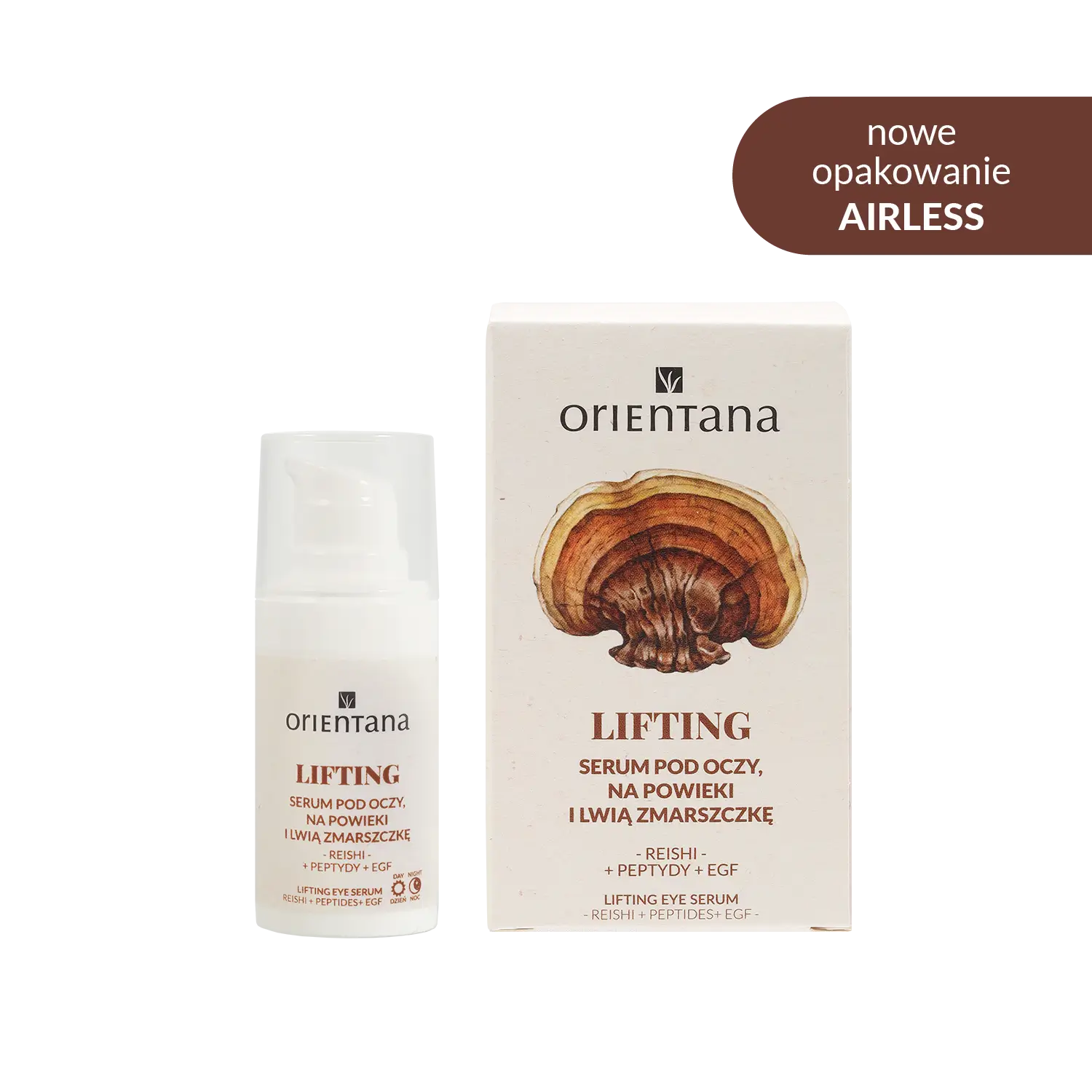

Natural Cosmetics - effective and conscious skincare
On this page, you will learn
- What are natural cosmetics and how do they differ from conventional ones?
- How do natural cosmetics work on the skin?
- The most important active ingredients in natural cosmetics.
- Who are natural cosmetics for?
- How to read the ingredient lists of natural cosmetics?
- Categories of natural cosmetics.
- How to build a natural skincare routine step-by-step?
- Are natural cosmetics safe for the skin?
- Natural cosmetics versus the "natural" claim in marketing - what to watch out for?
- Certifications and standards in natural cosmetics.
- Why choose Orientana natural cosmetics?
- How to switch to natural skincare (without "breakouts" and irritation)?
- The most common myths about natural cosmetics.
- How to choose natural cosmetics for your skin type and needs?
- Frequently asked questions about natural cosmetics.
What are natural cosmetics and how do they differ from conventional ones?
Natural cosmetics are skincare products whose formulas are primarily based on ingredients of plant, mineral, and biotechnological origin, sourced with respect for the environment and skin physiology. Their goal is not just a temporary visual effect, but a long-term improvement in skin condition by supporting its natural regenerative processes.
Unlike many conventional products, natural cosmetics focus on working with the skin, not against it. This means that instead of aggressively removing sebum, strongly degreasing, or "masking" problems, they aim to restore skin balance, strengthen the protective barrier, and stimulate natural repair mechanisms.
If you want to learn more about the difference between natural and conventional cosmetics, read Natural vs. conventional cosmetics – what is the real difference and which to choose?
More and more people are turning to natural cosmetics not only for ideological reasons but also for practical ones – skin often tolerates formulas rich in plant extracts, oils, butters, ferments, and adaptogens better.
Natural cosmetics are products primarily based on naturally derived ingredients that support the skin's natural functions and help maintain its balance.
The role of biotechnology in creating natural cosmetics.
Biotechnology, i.e., the use of controlled biological processes to obtain and improve active ingredients, plays an increasingly important role in the formulations of natural cosmetics. Thanks to it, it is possible to obtain substances of high purity, stability, and bioavailability, without excessive exploitation of natural resources.
In practice, this means, among other things, the use of:
- plant ferments that increase the absorption of ingredients by the skin,
- biotechnological polysaccharides with strong moisturizing properties,
- plant equivalents of substances naturally occurring in the skin, such as phytoceramides and phytopeptides.
Biotechnology also allows for the standardization of extracts, meaning obtaining a repeatable content of active compounds in each batch of raw material. This is crucial for the effectiveness and safety of natural cosmetics.
Modern natural cosmetics combine botanical knowledge with modern cosmetic technology. This makes it possible to obtain products that are both gentle and very effective.
Great emphasis is also placed on production ethics - responsible sourcing of raw materials and reducing the carbon footprint.
You can read about biotechnology in Orientana natural cosmetics in the article A new era in skincare.
Natural cosmetics are created from high-quality plant and biotechnological ingredients, using technologies that protect their activity and with respect for the environment.
What distinguishes natural cosmetics from conventional ones?
The most important difference is the philosophy of formulation. Natural cosmetics focus on supporting the skin, while conventional cosmetics often focus primarily on a quick visual effect.
Natural cosmetics:
- contain high concentrations of plant extracts and oils,
- often base on multi-directional ingredients,
- are designed for long-term improvement of skin condition.
Conventional cosmetics, on the other hand, more often use synthetic substances such as dyes or silicones, which may improve sensory perception but do not always provide real skincare value.
Ingredient composition and origin
- Natural cosmetics: min. 95% naturally derived ingredients (plant, mineral, animal from ethical sources)
- Conventional cosmetics: synthetic active substances, silicones, parabens, SLS/SLES, PEGs, artificial colorants and fragrances dominate
Safety and tolerability
- Natural cosmetics: less likely to cause allergies (although natural allergens also exist), gentler on the skin
- Conventional cosmetics: may contain irritating detergents and comedogenic substances that clog pores
Environmental impact
- Natural cosmetics: biodegradable ingredients, ecological packaging, always cruelty-free and often vegan
- Conventional cosmetics: microplastics, petroleum derivatives, hardly degradable compounds, animal testing (prohibited outside the EU, but still practiced in other regions)
It is worth emphasizing that natural cosmetics are not a compromise – modern cosmetology allows for the creation of natural formulas with high stability and effectiveness.
Natural cosmetics differ from conventional ones in that they focus on real skin support using naturally derived ingredients, rather than just visual effects.
Are natural cosmetics effective and why do they work?
Yes. The effectiveness of natural cosmetics results from the synergy of active ingredients and their compatibility with skin physiology. Plants produce numerous bioactive compounds, such as polyphenols, flavonoids, triterpenes, and polysaccharides, which exhibit:
- moisturizing,
- antioxidant,
- soothing,
- regenerative,
- skin barrier strengthening properties.
Regular use of well-selected natural cosmetics can lead to improved skin elasticity, even skin tone, reduced hypersensitivity, and better resistance to external factors.
However, regularity and matching products to skin needs are crucial.
Natural cosmetics are effective because they contain bioactive plant ingredients that support the skin's natural regenerative processes.
Natural cosmetics work because they are characterized by:
- High concentration of active substances Natural plant oils (e.g., rosehip oil, argan oil, sea buckthorn oil) contain natural vitamins A, C, E, omega acids, phytosterols - in a form that the skin recognizes and easily absorbs. In conventional creams, these ingredients are often synthetic or present in symbolic amounts.
- Synergy of ingredients Plants contain complexes of substances that work synergistically - e.g., reishi extract provides beta-glucans, polysaccharides, and triterpenoids simultaneously, which strengthens the multi-directional anti-aging effect.
- Support for the natural skin barrier Instead of "deceiving" the skin (like silicones, which only mask the problem), natural cosmetics actually rebuild the hydrolipid barrier, support the skin's microbiome, and restore its balance.
- Effectiveness documented by research in modern laboratories. Both ingredients and finished cosmetics are tested for their effect on the skin.
When are the effects visible?
There is a belief that natural cosmetics work slower than aggressive synthetic ingredients (e.g., high concentrations of chemical acids or retinoids), however, for some ingredients, the effect is noticeable immediately - e.g., soothing or moisturizing the skin. Moreover, the action of natural cosmetics can be more lasting and safer. Long-term anti-aging effects require 8-12 weeks of regular use.
For whom may natural cosmetics be less effective?
- People requiring immediate visual rejuvenating effects (e.g., silicone serum instantly smooths but does not nourish)
- Skin with advanced dermatological problems (rosacea, psoriasis) - in these cases, medicinal preparations may be needed.
How do natural cosmetics work on the skin?
Natural cosmetics have a holistic effect on the skin - they do not focus on one symptom, but support the natural mechanisms responsible for hydration, regeneration, protection, and youthful appearance of the skin. Instead of temporarily masking problems, they help the skin gradually regain balance and resilience.
Natural cosmetics support the skin's natural functions, improve its hydration, strengthen the protective barrier, and slow down the aging process.
Support for the hydrolipid barrier.
One of the key areas of action for natural cosmetics is strengthening the hydrolipid barrier, which is the protective layer responsible for maintaining skin moisture and protecting against external factors.
Natural cosmetics contain many ingredients with a structure similar to the lipids naturally found in the epidermis, making them easier for the skin to recognize and utilize.
How does it work?
- replenishing the skin's protective lipids,
- supporting natural epidermal regeneration,
- maintaining proper pH,
- alleviating micro-irritations.
Effects: less dryness, greater comfort, smoother and more resilient skin.
Read more: How to rebuild the hydrolipid barrier and choose ingredients for your skin type
Natural cosmetics strengthen the skin's barrier, reduce water loss, and improve resistance to external factors.
Hydration, regeneration, and skin protection.
Natural cosmetics combine ingredients that simultaneously moisturize the skin, support its regeneration, and protect it from environmental stress.
They work on multiple levels:
- deliver and retain water in the epidermis,
- support the skin's natural repair processes,
- strengthen its resistance to pollution, dry air, and UV radiation.
As a result, the skin becomes softer, more flexible, and less prone to irritation.
Natural cosmetics moisturize, regenerate, and protect the skin, supporting its natural defense mechanisms.
Anti-aging and smoothing effects.
Natural cosmetics support a youthful appearance of the skin by combining antioxidant, regenerating, and protective actions.
Their formulas help to:
- neutralize free radicals,
- support skin elasticity and firmness,
- improve hydration levels,
- reduce the formation of fine lines and wrinkles.
The result of regular use is firmer, smoother, and more radiant skin.
Discover conscious anti-aging care.
Natural cosmetics have anti-aging effects thanks to antioxidants and support for skin regeneration.
The most important active ingredients in natural cosmetics.
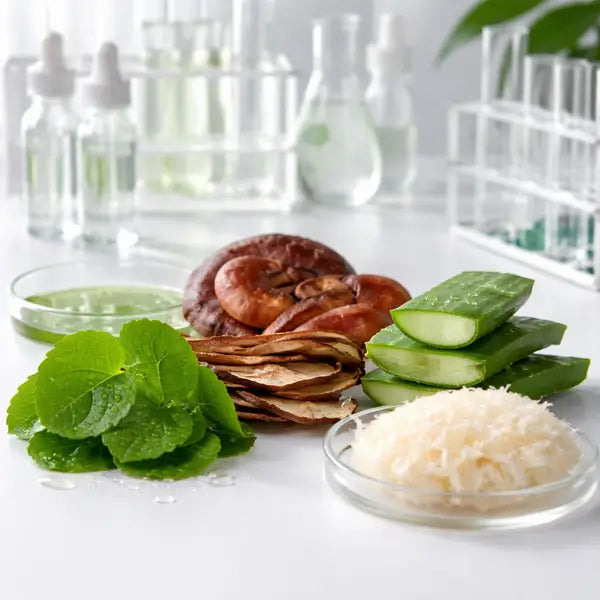
Natural cosmetics contain a wide spectrum of plant-derived, mineral, and biotechnological substances that act on the skin at multiple levels, from hydration, through protection, to regeneration and anti-aging. Three groups of ingredients are crucial in natural skincare: plant and fungal adaptogens, natural humectants and emollients, and soothing and regenerating substances.
Plant and fungal adaptogens
Adaptogens are substances of plant and fungal origin that help the skin adapt to environmental stress, such as UV radiation, air pollution, or temperature changes. In skincare, they act as antioxidants, support the protective barrier, and contribute to the skin's biological balance.
Commonly used adaptogens in natural cosmetics include:
- Ashwagandha (Withania somnifera) - known for its antioxidant and soothing properties, supports skin regeneration. Check out cosmetics with this adaptogen
- Reishi (Ganoderma lucidum) - a mushroom rich in antioxidants that supports skin immunity and has anti-aging effects. Check out cosmetics with reishi
- Other adaptogenic extracts - their action is to strengthen the skin's resistance to stress factors.
Adaptogens in natural products create a protective shield that reduces the effects of free radicals and supports long-term skin condition. If you want to learn more, check out how adaptogens work on the skin.
Adaptogens are natural ingredients that help the skin cope with environmental stress and have antioxidant effects.
Natural humectants, emollients, and lipids
In natural skincare, substances that bind water in the deeper layers of the skin (humectants) and those that protect the skin from moisture loss and soften the epidermis (emollients) play a key role.
Humectants include:
- Hyaluronic acid - a powerful humectant that binds water and provides long-lasting hydration, often found in serums and boosters.
- Plant polysaccharides and bioferments - natural plant sugars that help maintain skin hydration and elasticity.
- Tremella - an Asian mushroom that binds and retains water in the epidermis, thus intensely moisturizing the skin and supporting its elasticity and softness. Check out the HydroTremella series.
Emollients are natural fatty ingredients that form a protective film on the skin's surface:
- Plant oils (e.g., jojoba, avocado, sesame) - soften, smooth, and support the protective barrier.
- Plant butters (e.g., shea, mango) - intensely nourish and protect the skin from dryness.
Read about cosmetic oils in natural cosmetics.
Thanks to the combination of humectants and emollients, the skin is better hydrated, elastic, and less prone to irritation.
Natural humectants moisturize the skin, and emollients create a protective layer that prevents moisture loss.
Soothing and regenerating ingredients
The second key group of ingredients in natural cosmetics are substances with soothing, anti-inflammatory, and regenerating properties. They help the skin recover faster after irritation, damage, or exposure to external factors.
This group includes:
- Aloe vera, centella asiatica, algae - soothe irritation, calm redness, and support skin regeneration.
- Plant ceramides - rebuild the hydrolipid barrier and support the integrity of the epidermis. Check out yuzu ceramides.
- Betaine and other bioferments - have a soothing effect and help maintain proper hydration.
Natural soothing ingredients are particularly valuable in the care of sensitive skin, prone to redness, and after dermatological treatments.
Soothing and regenerating ingredients alleviate skin irritation, support its reconstruction, and help restore comfort.
Who are natural cosmetics for?
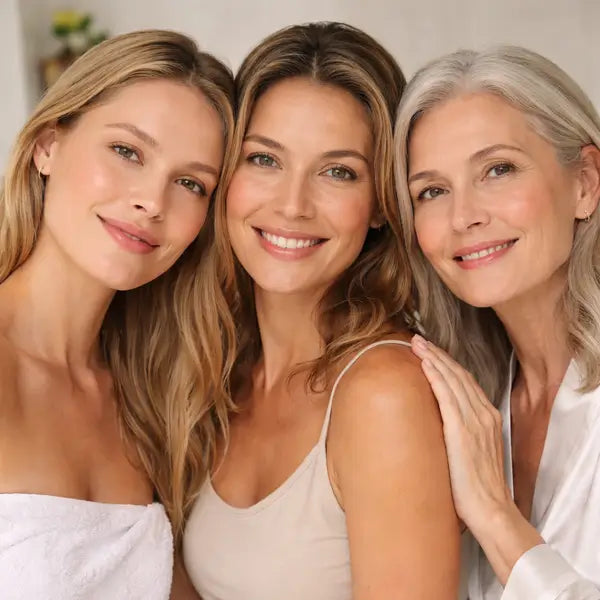
Natural cosmetics are suitable for people of all ages and skin types. Thanks to a wide range of plant-based and biotechnological ingredients, it is possible to precisely match the skincare routine to the skin's current needs, regardless of whether hydration, soothing, regeneration, or anti-aging action is the priority.
The most important principle in natural skincare is to observe the skin and select products not only according to age but primarily according to its condition.
Natural cosmetics are for everyone who wants to care for their skin in a gentle, effective, and physiologically appropriate way.
By skin type (sensitive, dry, acne-prone, mature)
Sensitive skin responds best to natural cosmetics with simple, gentle formulas, rich in soothing ingredients and barrier-strengthening components. Plant extracts, allantoin, betaine, or ferments help reduce the tendency for irritation and burning sensations. Check out cosmetics for sensitive skin.
Dry skin primarily needs moisturizing and nourishing ingredients. In natural cosmetics, this role is fulfilled by humectants and plant oils and butters, which improve skin elasticity and limit water loss. Cosmetics for dry skin.
Oily and combination skin tolerates natural ingredients with regulating, anti-inflammatory, and antioxidant properties well. Natural cosmetics support skin balance without excessive drying. Cosmetics for oily and combination skin.
Mature skin benefits from the presence of adaptogens, antioxidants, and regeneration-supporting ingredients that improve firmness, smoothness, and tone. Cosmetics for mature skin.
Natural cosmetics can be tailored to every skin type – from sensitive to mature.
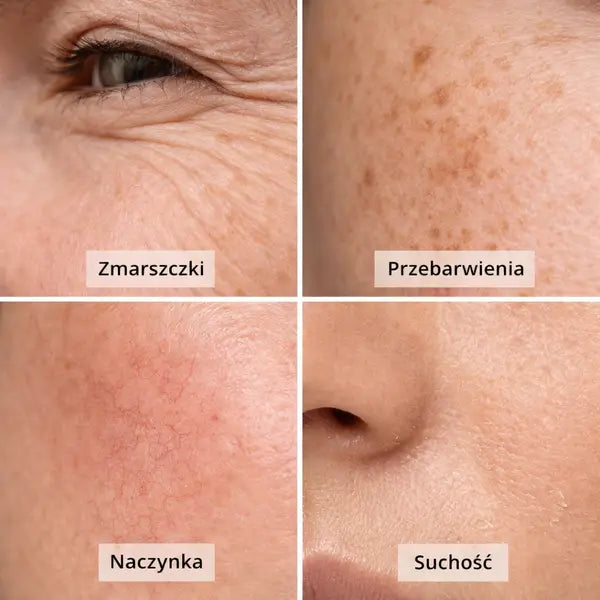
By skin concern (wrinkles, discoloration, broken capillaries, weakened barrier)
For wrinkles, key ingredients support regeneration and protect the skin from environmental stress. Natural cosmetics can help smooth fine lines and improve skin elasticity.
For discoloration, gentle evening of skin tone and protection against factors that exacerbate spot formation are important. Natural ingredients with antioxidant properties and those supporting skin renewal are particularly valuable here.
Skin with visible broken capillaries needs cosmetics that strengthen the protective barrier and have a soothing effect, limiting the tendency for redness.
A weakened skin barrier requires formulas focused on lipid reconstruction, intense hydration, and protection.
Natural cosmetics can be selected for specific skin problems, such as wrinkles, discoloration, or a weakened barrier.
By age (30+, 40+, 50+)
After the age of 30, skin often needs stronger support for hydration and protection against environmental stress. Natural cosmetics help maintain good skin condition and delay the first signs of aging.
After the age of 40, regeneration, improved elasticity, and support for natural skin renewal processes become more important.
After the age of 50, skin usually becomes thinner and drier, so nourishing, soothing, and barrier-supporting ingredients are crucial.
Natural cosmetics can be used at any age – just adapt them to the skin's current needs.
How to read natural cosmetic ingredients?
The ability to read cosmetic ingredients (INCI) allows you to consciously choose products tailored to your skin's needs and distinguish marketing slogans from the real quality of the formulations. In natural cosmetics, not only the ingredients used but also their order, origin, and function in the formula are particularly important.
The INCI list is always given in descending order – this means that the ingredients listed at the beginning are present in the highest concentration. In practice, just the first few items provide a lot of information about the product's character.
When reading the ingredients of natural cosmetics, pay attention to the order of ingredients, their origin, and their function in the formula.
Pay attention to the first items in INCI
The first 3-6 ingredients determine the base of the cosmetic. In natural cosmetics, these are often:
- hydrolates or water with added plant extracts,
- plant-derived emollients and emulsifiers (e.g., Caprylic/Capric Triglyceride, Glyceryl Stearate Citrate, Polyglyceryl-4 Cocoate)
- plant juices (e.g., aloe),
- plant oils.
If active plant extracts are high in the composition, it means that the product is genuinely based on active skincare ingredients, and not just on a neutral base.
The first few ingredients in INCI tell the most about a cosmetic.
Learn to recognize ingredient groups
It is worth learning to distinguish basic groups of substances:
- humectants - moisturize,
- emollients - soften and protect the skin,
- active ingredients - responsible for specific effects,
- preservatives - ensure product safety.
A well-balanced formula contains all these elements in appropriate proportions.
A good composition combines moisturizing, protective, and active ingredients.
Check the origin of ingredients
In natural cosmetics, the origin of raw materials plays a significant role. Ingredients can be:
- plant-derived,
- mineral,
- biotechnological.
Ingredients obtained by biotechnological methods, which are natural, environmentally friendly, and characterized by high purity, are increasingly common.
Natural ingredients can come from plants, minerals, or biotechnological processes.
Why a long ingredient list is not always bad
A long ingredient list does not mean a bad cosmetic. Natural cosmetics often contain many plant extracts that together form a comprehensive skincare complex.
It is much more important whether the composition is logically constructed and whether it contains ingredients that meet your skin's needs.
A long ingredient list is not a flaw if it is well-composed.
Pay attention to fragrance allergens
Natural cosmetics often contain essential oils or fragrance compositions. It is worth checking whether the composition contains fragrance allergens, especially if you have sensitive skin. Currently, in accordance with applicable regulations, selected fragrance allergens must be listed in the INCI composition on the packaging and are usually placed at the end, but they are not ingredients of the cosmetic itself.
People with sensitive skin should check for the presence of fragrance allergens.
Look for consistency between the promise and the composition
The product description should be reflected in the INCI. If the cosmetic promises hydration, the composition should include humectants and emollients. If it is meant to have a soothing effect, soothing ingredients should be clearly present.
The declared effect of a cosmetic must be visible in its composition.
Natural cosmetics categories.
Natural cosmetics today encompass a wide spectrum of products for face, body, and hair care. Each of these categories addresses different skin needs, yet all share a common denominator: formulations based on natural ingredients and nature-inspired technologies.
In Orientana's offer, the largest and most extensive group consists of natural face cosmetics, so it is worth starting your natural skincare journey with them.
Natural cosmetics are mainly divided into products for the face, body, and hair.
Natural face cosmetics
Natural face cosmetics address the most common skin needs: hydration, regeneration, skin barrier protection, evening out skin tone, and anti-aging effects. Thanks to the variety of formulas, you can build a complete skincare routine based solely on natural cosmetics.
This category includes, among others:
- natural face serums
- natural face boosters
- natural face creams
- natural face toners
- natural face masks
- natural face oils
- natural cleansing cosmetics
Natural face cosmetics help hydrate, regenerate, and protect the skin, as well as support its balance.
Natural body cosmetics
Natural body oils and lotions are based on plant oils and butters that nourish the skin, improve its elasticity, and protect against dryness. This is an ideal choice for people who want to care for their body skin in a gentle yet effective way.
Natural body cosmetics nourish, moisturize, and protect the skin from moisture loss.
Natural hair cosmetics
Natural hair and scalp cosmetics support balance, strengthen hair follicles, and improve the condition of hair lengths and ends. They are based on plant extracts, adaptogens, and ingredients that strengthen the hair structure.
Natural hair cosmetics support a healthy scalp and improve hair condition.

How to build a natural skincare routine step by step?
A natural skincare routine should be simple, regular, and tailored to the skin's current needs. It's not about the number of cosmetics, but about the correct order, ingredient consistency, and systematic application.
It's best to build it in stages: from gentle cleansing, through hydration and active ingredient support, to skin protection.
A natural skincare routine is based on cleansing, moisturizing, active ingredient support, and skin protection.
Morning natural skincare
The goal of a morning routine is to refresh the skin, provide hydration, and prepare it for contact with external factors throughout the day.
Steps of a morning routine:
- Gentle cleansing (gel, foam, or emulsion)
- Toning or essence to restore comfort
- Serum or booster tailored to skin needs
- Moisturizing or protective cream
- Sun protection (SPF)
Result: skin is hydrated, smoothed, and protected all day long.
See: natural cosmetics for cleansing, face serums, face boosters, face creams
The morning natural routine includes cleansing, toning, serum/booster, cream, and SPF.
Evening natural skincare
The evening routine focuses on thorough skin cleansing and supporting the regenerative processes that occur during sleep.
Steps of an evening routine:
- Makeup removal or oil/balm cleansing
- Gentle face washing
- Toner or essence
- Regenerating or nourishing serum
- Night cream or oil
Result: skin regenerated, softer, and more rested in the morning.
See: natural makeup removers, facial toners, facial serums, facial creams
The evening natural routine is makeup removal, cleansing, toning, serum, and cream.
Minimalist natural skincare (skinimalism)
A minimalist routine is a good solution for people with sensitive skin, beginners in natural skincare, or those who value simplicity.
3 basic steps:
- Gentle cleansing
- Serum or cream
- SPF protection in the morning / regenerating cream in the evening
Result: well-groomed skin without overloading it with excess cosmetics.
The minimalist natural routine is based on cleansing, one skincare product, and skin protection.
If you want to learn more about the skincare routine with natural cosmetics, check out Face Care - A Complete Guide to an Effective Routine [2026]
Are natural cosmetics safe for the skin?
Natural cosmetics are designed for high tolerance and compatibility with skin physiology. However, this does not mean that every natural ingredient will be suitable for everyone. The individual skin reaction, the method of cosmetic application, and reading the ingredients list are of key importance. Natural cosmetics are safe if they are correctly formulated and used according to recommendations.
Find out how the safety of cosmetics is assessed.
Can natural cosmetics cause allergies?
Yes, like any cosmetic, natural ones can also cause an allergic reaction. Plant-derived ingredients contain natural active compounds that can cause hypersensitivity in some people.
Reactions can most often involve:
- essential oils and fragrance compositions,
- selected plant extracts,
- preservatives permitted for use in natural cosmetics.
To minimize the risk:
- perform an allergy test before the first use,
- choose cosmetics with simple formulations if you have sensitive skin,
- avoid frequently changing many products at once.
Natural cosmetics can cause allergies just like all cosmetics, so it's worth performing an allergy test before the first use.
Preservatives in natural cosmetics
Natural cosmetics also require preservation to be microbiologically safe. Without preservatives, the product could quickly spoil and pose a threat to the skin.
In natural formulas, the following are used, among others:
- nature-identical preservatives,
- organic acids and their salts,
Their purpose is to protect the product against the development of bacteria, yeasts, and molds, and not to irritate the skin.
Natural cosmetics contain preservatives that ensure the safety and durability of the product.
Read about preservatives in natural cosmetics.
Natural cosmetics and pregnant women
Many natural cosmetics can be safely used during pregnancy, but it is worth paying attention to the ingredients and avoiding some substances, such as high concentrations of essential oils or potentially irritating ingredients. Additionally, in natural cosmetics, we can find, for example, plant-derived retinol, which, unlike chemical retinol, can be used during pregnancy.
Good practices:
- choose products with short and simple formulations,
- avoid intensely perfumed cosmetics,
- if in doubt, consult a doctor or pharmacist.
Pregnant women can use natural cosmetics, but they should pay attention to the ingredients and choose gentle formulas.
H3: Are natural cosmetics suitable for children?
Yes, provided they have short, simple formulations, are free of alcohol, irritating fragrances and aggressive preservatives, and have been dermatologically tested. Natural cosmetics, based on gentle vegetable oils, butters, and extracts, can support the protective barrier of a child's delicate skin and reduce the risk of irritation. It is always worth choosing products appropriate for the child's age and performing an allergy test before the first use.
Natural cosmetics with a short, gentle formulation can be safe for children and support the protection of their sensitive skin, provided they are appropriately chosen for age and tested on a small patch of skin.
Natural cosmetics and the word "natural" in marketing - what to watch out for?
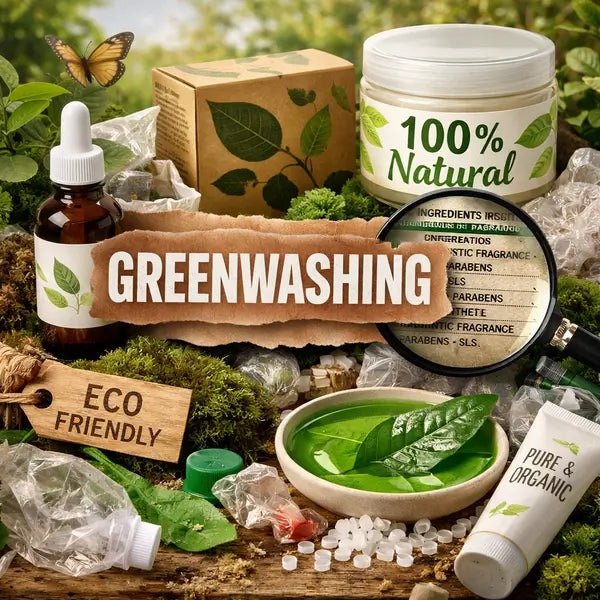
With the growing popularity of natural cosmetics, products that use the word "natural" solely as a marketing slogan are becoming increasingly common. Therefore, it is worth knowing how to distinguish reliable formulas from greenwashing and how to read labels consciously.
Not every cosmetic described as "natural" actually meets the standards of natural skincare.
What is greenwashing in cosmetics?
Greenwashing is a marketing strategy that suggests a product is eco-friendly or natural, even though its composition and production method have little to do with it.
The most common examples of greenwashing:
- large "eco", "bio", "nature" labels on the packaging without confirmation in the ingredients,
- a single plant extract in a formula based mainly on a synthetic base,
- communication focused solely on the appearance of the packaging, and not on the ingredients.
Greenwashing is the use of ecological slogans without real substance in the cosmetic's composition.
What does "of natural origin" mean?
The term "ingredient of natural origin" means that the raw material comes from plants, minerals, or biotechnological processes, but it may have been processed to be stable and safe in the cosmetic.
In practice:
- many effective natural ingredients are created through fermentation or other biotechnological processes,
- processing an ingredient does not mean it ceases to be natural,
- what matters is the final function and safety of the ingredient, not just its "raw" form.
An ingredient of natural origin is one that comes from nature, even if it has been technologically processed.
Why is "chemical-free" a myth?
Every cosmetic - including natural ones - is a mixture of chemical substances. Water, plant oils, vitamins, or extracts are also chemical compounds.
The difference lies not in the presence of "chemicals," but in:
- the quality and safety of the ingredients,
- their origin,
- their effect on the skin.
The slogan "chemical-free" therefore has no substantive value and says nothing about the actual quality of the product.
There are no "chemical-free" cosmetics - there are only cosmetics with different types of ingredients.
How to recognize a reliable natural cosmetic?
Pay attention to:
- the full INCI list and the order of ingredients,
- the presence of real plant extracts high up in the ingredient list,
- consistency between the declared action and the composition,
- transparent brand communication.
A reliable natural cosmetic stands on its ingredients, not slogans.
A good natural cosmetic can be recognized by its transparent composition and consistent communication, not by slogans.
Certificates and Standards in Natural Cosmetics
Certifications can be a helpful guide when choosing natural cosmetics, but they are not the sole determinant of product quality. It's important to understand what individual labels truly mean and why a good ingredient list and brand transparency are just as crucial as a certifying logo.
Certifications help assess cosmetic production standards, but they are not the only proof of its quality.
What do ECOCERT / COSMOS certifications provide?
ECOCERT and COSMOS are some of the most recognized standards for natural and organic cosmetics in Europe. They specify, among other things:
- the minimum percentage of ingredients of natural origin,
- lists of permitted and prohibited substances,
- rules for sourcing raw materials,
- requirements for biodegradability and packaging.
For the consumer, this means that the product meets specific, externally verified criteria regarding composition and production.
ECOCERT and COSMOS confirm that a cosmetic meets specified standards of naturalness and safety.
What does the NaTrue certification mean?
NaTrue is an international standard for natural and organic cosmetics that classifies products according to their level of naturalness.
This system:
- assesses the origin of raw materials,
- defines permissible processing methods,
- excludes many synthetic auxiliary substances.
This gives the consumer assurance that the product has been evaluated according to uniform criteria.
NaTrue is a certification confirming the cosmetic's compliance with natural care principles.
What do Vegan and Cruelty Free labels mean?
- Vegan - the product does not contain ingredients of animal origin.
- Cruelty Free - the cosmetic and its ingredients have not been tested on animals.
In the European Union, animal testing for cosmetics is prohibited, but these labels still inform about the brand's global policy and ethical approach.
Vegan means no animal-derived ingredients, and Cruelty Free means no animal testing.
Why doesn't the absence of a certificate mean a "non-natural" cosmetic?
Obtaining a certificate involves additional costs, audits, and formalities. Not every brand decides to take this step, despite using high-quality ingredients and transparent formulations.
In practice:
- a good INCI list can indicate naturalness just as well as a certificate,
- consistency between declarations and actual composition is important,
- the quality of raw materials and how they are combined in the formula are crucial.
The absence of a certificate does not mean that a cosmetic is not natural; the composition and brand transparency are primarily what matters.
ISO 16128-1:2016 Standard
This is an international document developed by the International Organization for Standardization (ISO), which introduces uniform guidelines for defining natural and naturally derived ingredients in cosmetics. Its full name is "Guidelines on technical definitions and criteria for natural and organic cosmetic ingredients and products – Part 1: Definitions for ingredients". ISO 16128-1:2016 is not a certification or product labeling system, but a set of technical definitions that help manufacturers, regulators, and consumers better understand what "natural ingredient," "naturally derived ingredient," "organic," or "organically derived" practically means. The standard introduces, among other things, the concept of the natural origin index, which specifies the percentage of natural raw materials in an ingredient. In the context of the natural cosmetics category, ISO 16128-1:2016 is an important reference point for assessing composition, but it does not replace rigorous certification standards or guarantee product quality or safety – these issues are regulated by separate provisions, including Regulation (EC) 1223/2009 on cosmetic products.
Why is it worth choosing Orientana natural cosmetics?
For years, Orientana has been creating natural cosmetics inspired by natural ingredients from Asian nature and modern cosmetology. Each formula is developed with the real needs of the skin and long-term skincare effects in mind - without compromising between naturalness and effectiveness.
Orientana natural cosmetics combine inspiration from natural Asian medicine, high-quality natural ingredients, and modern technologies.
Inspired by Ayurveda and Asian recipes
Orientana's philosophy is based on a holistic approach to skincare, characteristic of Ayurveda and traditional Asian recipes. Instead of focusing solely on one skin problem, formulas are designed to support its balance, resilience, and natural regenerative processes. Here you will find Ayurvedic cosmetics.
Orientana cosmetics use, among others, plant and mushroom adaptogens, and extracts known from traditional Eastern medicine, which have been used in skincare for centuries.
Learn about the principles of Ayurveda in skin and hair care.
The result: skincare that works gently, but consistently and long-term.
Orientana creates cosmetics inspired by Ayurveda and Asian skincare traditions.
Natural ingredients and modern technologies
Orientana combines naturally derived ingredients with modern cosmetic and biotechnological solutions. This creates formulas that are both gentle on the skin and effective in action.
In practice, this means:
- high content of plant extracts and bio-ferments,
- use of biomimetic ingredients,
- designing formulas that support the hydrolipid barrier and skin microbiome.
Each cosmetic is created with safety, stability, and real skincare effects in mind.
Orientana cosmetics combine natural ingredients with modern technology.
Cruelty-free and vegan formulas
Since its inception, Orientana has not tested cosmetics or ingredients on animals. Products are created in accordance with the applicable regulations of the European Union and with respect for ethics and the environment.
Additionally, the brand does not use ingredients of animal origin whose acquisition would involve harm or death to animals. You can read about animal testing in the article What does cosmetic testing on animals look like? Who tests and who doesn't
Orientana cosmetics are cruelty-free and created with respect for animals.
How to switch to natural skincare (without "breakouts" and irritation)?
The transition to natural skincare should not be abrupt. Skin needs time to adapt to new formulas, especially if it was previously accustomed to strong detergents, large amounts of silicones, or intense active ingredients.
Gradually introducing changes helps avoid irritation, dryness, and the so-called "transitional breakout."
It's best to transition to natural skincare gradually, introducing products one by one and observing the skin's reaction.
Introduce products in stages
Don't change your entire routine at once. Start with one product and use it for a few days before adding another.
Recommended order:
- cleansing product,
- moisturizing cream or serum,
- subsequent active products.
This way, you can easily notice which cosmetic benefits your skin and which might cause discomfort.
Introduce natural cosmetics one by one, not all at once.
More information in the article: Where to start natural skincare? A step-by-step guide for beginners
Keep your routine simple to start
Initially, 3 steps are enough:
- gentle cleansing,
- moisturizing serum or cream,
- SPF protection in the morning.
Minimalism allows the skin to calm down and gradually adapt to new formulas.
To start, cleansing, moisturizing, and SPF protection are sufficient.
Perform a patch test
Before the first use of a new cosmetic, apply a small amount of the product to the skin behind the ear or on the inner forearm and observe the area for 24 hours.
Absence of stinging, itching, and redness means the product is well tolerated.
A patch test helps check if a cosmetic causes an allergic reaction.
Give your skin time to adapt
The first 2-3 weeks are an adaptation period. During this time, the skin may react with mild dryness or minor imperfections – this is a natural stage of regulation.
If the symptoms are mild and gradually decrease, it means the skin is adapting to the new skincare routine.
Skin needs about 2-3 weeks to get used to a new skincare routine.
Do not immediately increase intensity
Initially, avoid combining many strong active ingredients (acids, retinoids, intense peels), even if they are of natural origin.
First, build a stable skincare base, and only then introduce stronger ingredients.
First, focus on hydration and barrier, then on stronger active ingredients.
The most common myths about natural cosmetics.
Many simplifications and misunderstandings have arisen around natural cosmetics. It is worth clarifying them to consciously choose products and have realistic expectations regarding the effects.
Natural cosmetics are effective, safe, and modern – many popular myths about them are not supported by facts.
Myth 1 - Natural cosmetics are weaker than conventional ones
Natural cosmetics contain bioactive plant and biotechnological ingredients that genuinely affect the skin's condition. Their action may be gentler, but it is long-term and supports skin physiology.
Natural cosmetics can be just as effective as conventional ones.
Myth 2 - Natural cosmetics are not suitable for problematic skin
Properly selected natural formulas are also effective for acne, hypersensitivity, or a weakened barrier. The key is the selection of ingredients, not the mere fact that the cosmetic is natural.
Natural cosmetics can also be used for skin problems.
Myth 3 - Natural cosmetics spoil quickly
Modern natural cosmetics contain safe preservative systems that ensure product stability and microbiological protection.
Natural cosmetics are preserved and safe to use.
Myth 4 - If it stings, it means it's working
Stinging and strong tingling are not signs of effectiveness. Good skincare – including natural – should be comfortable.
Stinging is not proof of a cosmetic's effectiveness.
How to choose natural cosmetics for your skin type and needs?
The selection of natural cosmetics should be based not only on age, but primarily on the current condition and needs of the skin.
Natural cosmetics are chosen according to skin type and needs.
Dry skin
Look for cosmetics rich in humectants and emollients that intensely moisturize and reduce water loss.
Dry skin needs hydration and lipids.
Sensitive skin
Choose simple formulas with a small number of ingredients and added soothing substances.
Sensitive skin best tolerates mild and simple formulations.
Combination and oily skin
Opt for light formulas that moisturize without weighing down and support skin balance.
Oily skin needs hydration, but in a light form.
Acne-prone skin
Choose natural cosmetics with regulating and soothing properties, without aggressive drying.
Acne-prone skin benefits from gentle and regulating care.
Mature skin
Look for formulas with antioxidants and ingredients that support regeneration and elasticity.
Mature skin needs regeneration and protection against oxidative stress.
Frequently Asked Questions about natural cosmetics.
Are natural cosmetics safe for the skin? Yes, if they are properly formulated and used according to recommendations.
Can natural cosmetics cause allergies? Yes, like any cosmetic, which is why it's worth performing an allergy patch test.
Are natural cosmetics effective? Yes, they contain bioactive ingredients that support the skin's natural functions.
Do natural cosmetics work slower? They often act more gently, but in the long term and permanently.
Are natural cosmetics suitable for sensitive skin? Yes, especially formulas with simple ingredients and soothing additives.
Are natural cosmetics good for acne-prone skin? Yes, if they are light and regulating.
Can natural cosmetics be used daily? Yes, they are intended for daily care.
Do natural cosmetics contain preservatives? Yes, to be microbiologically safe.
Do natural cosmetics spoil quickly? No, if they are properly preserved.
Are natural cosmetics suitable for children? Yes, if they have gentle compositions and are intended for sensitive skin.
Do natural cosmetics contain "chemicals"? Yes, like any cosmetic – the difference lies in the type and quality of ingredients.
Can natural cosmetics contain alcohol? Yes, in controlled amounts.
Are natural cosmetics vegan? Not always – it's worth checking labels and ingredients.
Are natural cosmetics cruelty-free? Most brands declare no animal testing.
Do natural cosmetics help with wrinkles? Yes, they support skin elasticity and regeneration.
Do natural cosmetics moisturize as well as conventional ones? Yes, thanks to humectants and emollients.
Do natural cosmetics clog pores? No, if they are well-suited to the skin type.
Can natural cosmetics be combined with dermatological ones? Yes, in most cases.
Are natural cosmetics more expensive? They often cost more due to the quality of raw materials, but not always.
Are natural cosmetics suitable for winter? Yes, they protect the skin barrier well.
Are natural cosmetics suitable for summer? Yes, especially light formulas.
Do natural cosmetics contain UV filters? They can contain mineral filters.
Are natural cosmetics good for pregnant women? Yes, but it's worth paying attention to the ingredients.
Do natural cosmetics need to be stored in the refrigerator? No, a cool and shaded place is sufficient.
Do natural cosmetics have a shorter shelf life? Sometimes they do, but they are stable throughout the PAO period.
Can natural cosmetics improve skin tone? Yes, thanks to antioxidants and regenerating ingredients.
Do natural cosmetics work on hyperpigmentation? They can support evening out skin tone.
Are natural cosmetics good for men? Yes, for all skin types.
Are natural cosmetics suitable for mature skin? Yes, they support regeneration and elasticity.
Is it worth transitioning to natural skincare gradually? Yes, that's the best solution.