Natural hair care is making a comeback these days. More and more people are looking for coloring methods that not only change hair color but also improve its condition. That's why henna is gaining popularity again.
Henna is one of the oldest natural hair coloring methods. It has been used for thousands of years in India, the Middle East, and Africa as a plant-based dye that gives hair beautiful color and shine while strengthening its structure.
Unlike many chemical dyes, henna is not aggressive to the hair. It contains no ammonia or oxidants, and its action is based on its natural bond with hair keratin. Therefore, henna coloring often also provides a conditioning effect.
So why are more and more people choosing henna over traditional hair dye? Here are seven key reasons.
What is henna for hair?
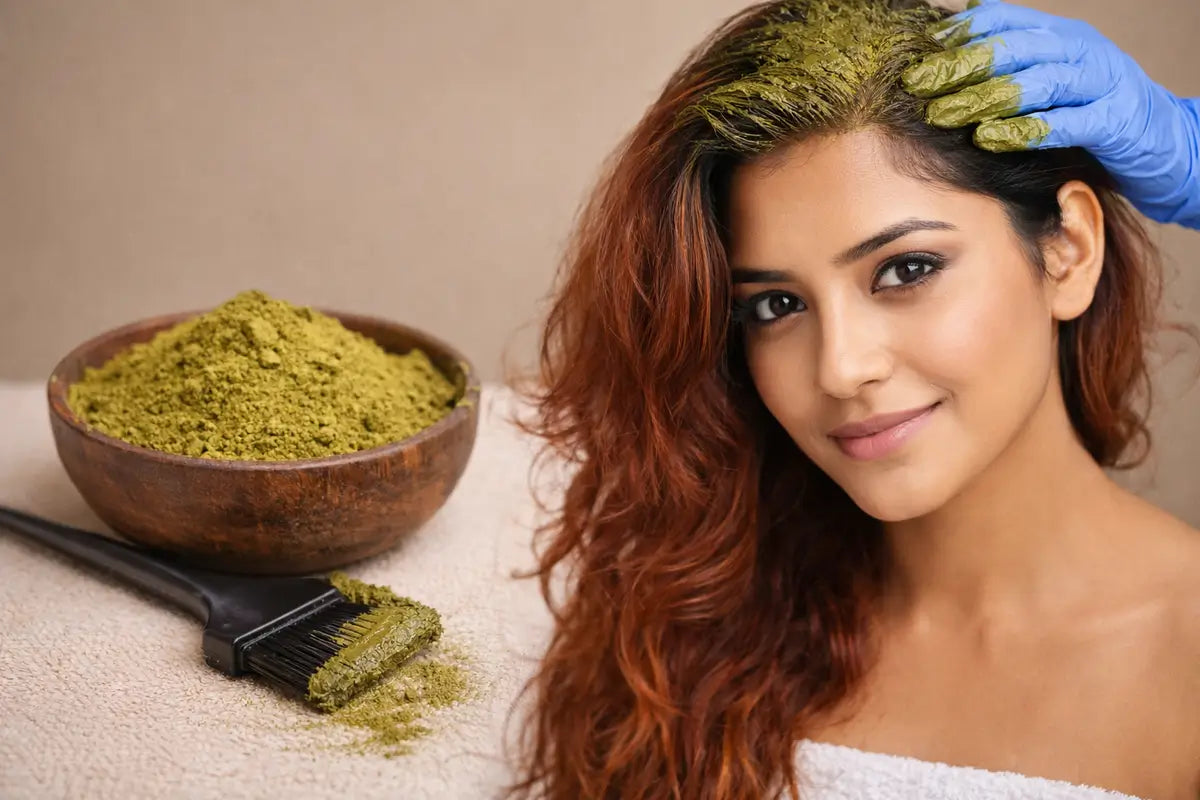
Henna is a natural plant dye obtained from the leaves of the Lawsonia inermis plant. After drying, the leaves are ground into a fine powder, which, when combined with water, creates a coloring paste.
Natural henna contains a pigment called lawsone , which binds to the hair's keratin and gives it color. Unlike chemical dyes, it doesn't lighten the hair's natural pigment but applies it to its surface.
Therefore, hennaing hair works differently than chemical dyeing. The color is more natural, multi-dimensional, and depends on the initial shade of the hair.
Henna is valued not only for its coloring properties. Many people also use it as a natural hair strengthening treatment.

Henna and chemical dye - the most important difference
Chemical dyes work by opening the hair cuticle and removing the natural pigment. They then inject synthetic color into the hair.
This process allows for a significant color change, but it can also weaken the hair structure, especially if you dye it frequently.
Henna works in a completely different way. The plant pigment combines with keratin, creating a natural layer of color on the hair's surface. The hair is not lightened or stripped of its natural pigment.
As a result, hair henna is often perceived as a gentler coloring method that simultaneously improves the appearance and condition of the hair.
7 reasons why henna is better than chemical dye
1. Henna does not damage the hair structure
One of the most common questions is whether henna damages hair. Unlike many chemical dyes, henna does not contain ammonia or oxidants, which can weaken hair.
Plant pigment doesn't aggressively open the hair cuticle. Instead, it binds to keratin, creating a natural color layer. This often makes hair more resistant to mechanical damage.
2. Henna strengthens and thickens hair
Many people notice that their hair appears thicker and more voluminous after hennaing. This is because the plant pigment coats the hair in a thin layer, visually increasing its thickness.
Regular use of henna can make hair appear stronger, more resilient, and less prone to breakage.
3. Henna color looks more natural
Henna creates a color that blends with the hair's natural pigment, resulting in a multi-dimensional shade with natural reflections.
Unlike many chemical dyes, the color isn't uniform or "flat." The hair often looks more natural, and the transition between regrowth and color is smoother.
4. Henna can improve the condition of the scalp
Henna has long been used not only for hair coloring, but also for scalp care.
Many people notice that their hair becomes oilier less quickly after henna application, and their scalp is in better condition. This may be due to the plant-based ingredients in henna powder.
5. Henna gives your hair an intense shine
One of the most distinctive effects of hennaing hair is shine. The plant pigment smoothes the hair's surface, allowing light to reflect more evenly.
As a result, hair often looks healthier, shinier and more well-groomed.
6. Henna is a natural coloring method
More and more people are paying attention to the ingredients of cosmetics. Henna is a plant-based product and has been used as a natural dye for centuries.
Therefore, hennaing hair is often chosen by people who want to limit contact with aggressive chemical ingredients used in some hair dyes.
7. Henna treatment is coloring and care in one
One of the greatest advantages of henna is that it also acts as a beauty treatment.
After hennaing, hair is often:
more shiny
more resilient
easier to arrange
less susceptible to breaking
That's why many people treat henna not only as a method of changing color, but also as a natural way to improve the condition of their hair.

Does henna have any limitations?
Although hennaing your hair has many benefits, it is worth knowing that henna works differently than chemical dye.
Henna does not lighten hair, so it works best for darkening or deepening natural color. The final shade also depends on the natural pigment in the hair.
The color of henna develops gradually and may change during the first few dozen hours after dyeing.
When is henna a better choice than dye?
Henna may be a particularly good solution for people who:
want natural hair coloring
have a sensitive scalp
want to strengthen their hair
they like the natural color effect
are looking for a more gentle method of dyeing their hair
Summary
Henna is one of the oldest and most natural hair coloring methods. Unlike many chemical dyes, it not only adds color to hair but can also improve its appearance and condition.
Although it does not offer as many color changes as chemical dyes, for many people it is a healthier and more natural alternative.
FAQ - most frequently asked questions about henna for hair
Does henna damage hair?
Natural henna does not damage the hair structure. The plant pigment binds to keratin, creating a layer of color on the hair's surface.
Does henna cover gray hair?
Henna can cover gray hair, but the final effect depends on the natural hair color and how long the henna is left on.
How long does henna last on the hair?
The henna color usually lasts for several weeks and gradually washes out.
Can henna be applied to dyed hair?
Henna can be used on previously dyed hair, but it is worth testing it on a small section of hair first.
Does henna thicken hair?
Henna can visually thicken hair because the plant pigment surrounds the hair with a thin layer.
Can henna be used frequently?
Hennaing your hair can be done regularly, especially when your roots become visible.
Does henna dry out hair?
Some people may experience slight dryness of their hair after henna treatment, so it is worth using a conditioner or mask after the treatment.
Does henna work as a beauty treatment?
Many people treat hair henna as a natural treatment that strengthens and improves the appearance of hair.