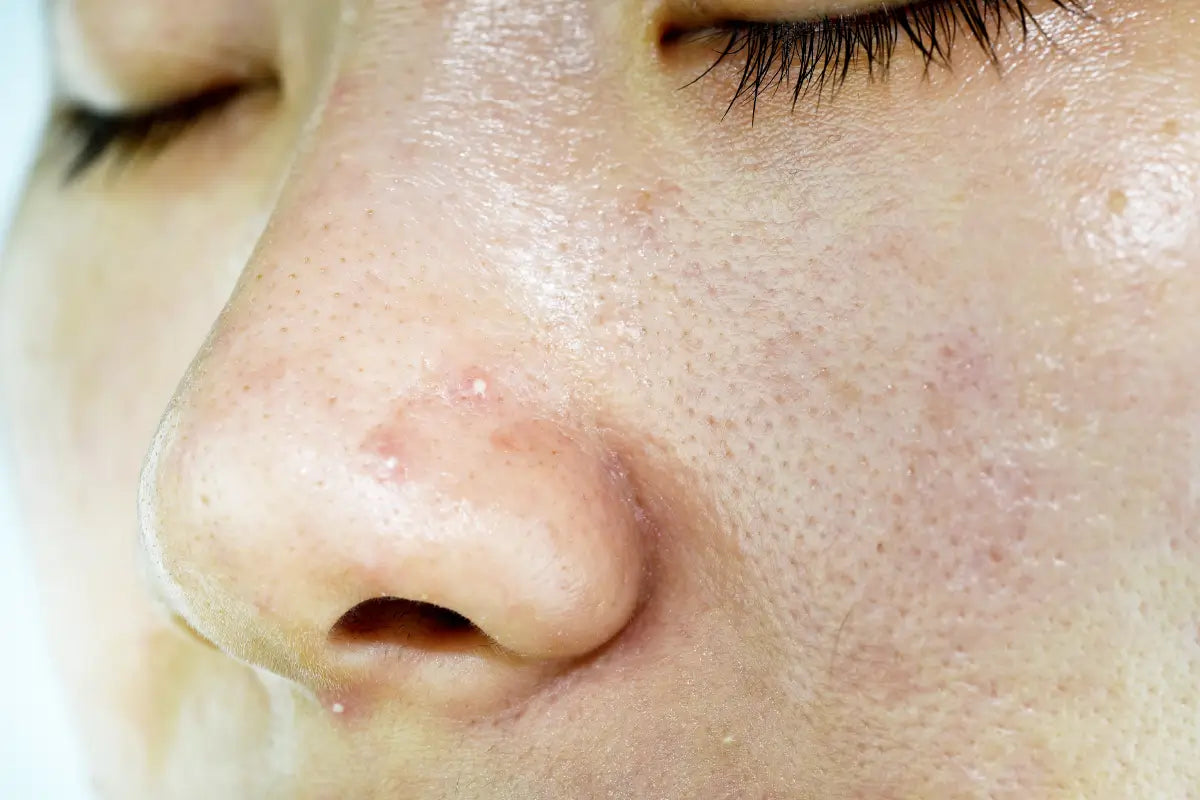
At the cosmetologist's office, I very often encounter patients with small changes under the skin that cause concern – most often, it turns out they are epidermoid cysts. Although they are benign lesions, in many cases they cause aesthetic discomfort, and when inflamed – also pain and swelling.
According to dermatological data (Dermatologic Surgery, 2019), epidermoid cysts account for up to 20% of all benign skin tumors. Their presence is not dangerous, but it requires attention and a conscious approach to skin care.
What are epidermoid cysts?
Epidermoid cysts (also known as epidermal cysts) are small, round lumps under the skin, filled with keratinous and sebaceous material. They form as a result of a blocked hair follicle or sebaceous gland.
Characteristic features:
• spherical or oval shape,
• size from a few mm to several cm,
• skin color unchanged or slightly yellowish,
• usually painless (until superinfection).
What are the causes of epidermoid cysts?
Keratinization disorders of the epidermis
Most often, epidermoid cysts form as a result of excessive keratin accumulation. Epidermal keratinization is a natural process in which cells gradually die and slough off. However, when this process is disturbed, keratin accumulates in the hair follicle opening, leading to a blockage and cyst formation. This explains why epidermoid cysts have a characteristic white or yellowish, "cheesy" content.
Overproduction of sebum
Another factor contributing to the formation of epidermoid cysts is increased sebum secretion by the sebaceous glands. Sebum, combined with keratin, can effectively block the hair follicle opening. This phenomenon is observed especially in people with oily and combination skin, as well as during periods of intense hormonal changes.
Genetic predispositions
Genetic factors are also significant. Studies indicate that people who experience epidermoid cysts more frequently may have an innate predisposition to the formation of epidermal cysts. In practice, this means that even with proper skin care, their risk of developing lesions is higher.
Skin microtraumas
Even minor injuries, such as irritation after shaving, abrasions, or squeezing acne lesions, can damage hair follicles and lead to blockage of gland openings. This promotes the accumulation of keratin and sebum, and consequently, the formation of cysts. Therefore, dermatologists strongly advise against mechanically manipulating skin lesions.
Acne and seborrheic dermatitis
Epidermoid cysts appear more frequently in people with acne vulgaris and seborrheic dermatitis. Both of these dermatoses are associated with overproduction of sebum, chronic inflammation, and keratinization disorders, which creates a favorable environment for the formation of epidermal cysts.
Hormonal factors
Hormones, especially androgens, play an important role in regulating the function of sebaceous glands. Their excess leads to overproduction of sebum, thereby increasing the risk of hair follicle blockage and the development of epidermoid cysts. For this reason, these lesions are more often observed during puberty, in people with polycystic ovary syndrome (PCOS), or with endocrinological disorders.
According to a publication in the Journal of the American Academy of Dermatology (2017), it is the overproduction of keratin and sebum that constitutes the key mechanisms for the development of epidermal cysts. The authors emphasize that understanding these processes is essential for proper diagnosis and differentiation of epidermoid cysts from other skin lesions.
How to recognize an epidermoid cyst?
• a hard or soft lump palpable under the skin,
• sometimes a visible "dark spot" on the surface (blocked follicle opening),
• usually grows painlessly over months or years,
• in case of inflammation – redness, swelling, tenderness.
Are epidermoid cysts dangerous?
They are generally harmless and benign in nature.
However, they can:
• become superinfected with bacteria,
• rupture and cause inflammation,
• cause psychological and aesthetic discomfort.
In rare cases, they require differentiation from skin cancerous tumors – therefore, any lesion that grows rapidly or changes appearance should be evaluated by a dermatologist.
Treatment of epidermoid cysts
• Surgical removal – the most effective method, the entire cyst with its capsule is excised to prevent recurrence.
• Drainage – removal of the contents, but the cyst may regrow.
• CO2 laser – used in aesthetic medicine, precisely removes the lesion.
WARNING! Do not squeeze epidermoid cysts yourself, as this leads to infection and scarring.
Skin care for skin prone to epidermoid cysts
Although existing epidermoid cysts are removed surgically, proper care can reduce the risk of their formation. Familiarize yourself with the proposed care that limits the formation of epidermoid cysts.
Skin cleansing
Gentle gels without SLS and alkaline soaps.
I recommend: Gentle Date + Inulin Face Wash Gel – cleanses without disrupting the hydrolipid barrier.
Toning and regulation
Moisturizing Toner Essence with Gluconolactone – gentle exfoliation and pH balance restoration. Thanks to the skin microbiome balance provided by this product, epidermoid cysts will not form.
Sebum reduction
HydroTremella Sebum Regulating Cream

HydroTremella Mask for Imperfections

Lifestyle and epidermoid cysts
• Diet – limit simple sugars and trans fats, support a diet rich in zinc, vitamin A, and omega-3 fatty acids.
• Skin hygiene – regular but gentle cleansing.
• No squeezing of lesions – minimizes the risk of microtrauma and infection.
• Stress reduction – stress aggravates inflammation and seborrheic problems.
Frequently Asked Questions about Epidermoid Cysts (Q&A)
Are epidermoid cysts cancerous?
No – they are benign lesions, epidermal cysts.
Do epidermoid cysts hurt?
No, unless they become superinfected.
What is the risk of complications with epidermoid cysts?
Superinfection, rupture, scarring from improper removal.
Can epidermoid cysts disappear on their own?
Sometimes small lesions absorb, but usually they require removal.
Do epidermoid cysts return after removal?
If the entire capsule is not removed – yes.
How to distinguish an epidermoid cyst from a milium?
Milia are small, white keratin bumps; epidermoid cysts are larger and have a capsule.
Can cosmetics dissolve an epidermoid cyst?
No – cosmetics support prevention, they do not remove an existing cyst.
Does diet affect the formation of epidermoid cysts?
Yes – a diet rich in trans fats and sugars contributes to skin problems.
Are epidermoid cysts contagious?
No – they do not spread to other people.
Can epidermoid cysts be removed in a beauty salon?
No – only a dermatologist or surgeon.
How long does an epidermoid cyst removal procedure take?
Usually several minutes under local anesthesia.
Does epidermoid cyst removal hurt?
No – it is performed under anesthesia.
Can epidermoid cysts form on the head?
Yes – they often appear on the hairy scalp.
How to care for the skin after epidermoid cyst removal?
Follow the doctor's recommendations – hygiene, avoiding irritating cosmetics.
Are epidermoid cysts more common in men or women?
They occur in both sexes, although they are more frequently observed in adult men.
Are epidermoid cysts hereditary?
There is often a family predisposition.
What cosmetic ingredients support skin prone to epidermoid cysts?
Niacinamide, gluconolactone, adaptogens, soothing extracts.
Do epidermoid cysts appear in children?
Rarely, more often in adults.
Does stress contribute to epidermoid cysts?
Yes – it affects hormones and sebum production.
Can you have many epidermoid cysts at once?
Yes – multiple cysts can occur.
Can epidermoid cysts be confused with acne?
Yes – therefore, a dermatological consultation is important.
Can using Orientana prevent epidermoid cysts?
Yes – Date + Inulin gel, gluconolactone toner, and niacinamide serum support healthy skin balance.
How long does the skin heal after epidermoid cyst removal?
Usually 1–2 weeks, the scar is minimal.
Are epidermoid cysts more common in people with oily skin?
Yes – seborrhea and excessive keratinization contribute to their formation.
Remember:
Epidermoid cysts are common, benign epidermal cysts that form due to blocked hair follicles and sebaceous glands. Although not dangerous, they can cause discomfort and may require surgical removal.
Home care does not remove epidermoid cysts, but it can prevent their formation. It is worth using cosmetics that regulate sebum secretion, support the microbiome, and strengthen the skin barrier.
Check out Orientana cosmetics for blemish-prone skin and take care of healthy, clear skin every day.
You might be interested in: Post about skin microbiome