Vitamin C serums are a popular skincare product because they offer numerous benefits, including brightening the complexion, reducing discoloration, and protecting against free radical damage. Not sure how to get rid of discoloration? Looking for an effective serum? Read the full post.
Vitamin C Face Serum - Different Types of Vitamin C
In cosmetology, this vitamin comes in various forms, which differ in stability, effectiveness, and cosmetic applications. Below, we present the most popular ones. Does a miracle serum not exist? It depends on how you choose your vitamin C.
Ascorbic acid is the purest and most active form of the vitamin. It has powerful antioxidant properties, brightens skin discolorations, and stimulates collagen production. Unfortunately, this form of the vitamin is unstable and susceptible to oxidation, especially when exposed to air, light, or high temperatures. It is most often found in serums at concentrations of 5–20%. It requires a suitable pH (below 3.5) to maintain its effectiveness.
Sodium ascorbyl phosphate (SAP) is a stable, water-soluble form of the vitamin. It is gentler than ascorbic acid and suitable for sensitive skin. It helps fight acne, but is less effective than the pure form of the vitamin. It is often used in anti-acne facial serums with vitamin C.
Magnesium ascorbyl phosphate (MAP) is a stable, water-soluble form of the vitamin, and its effectiveness is observed even at lower concentrations (approx. 5%). It is gentle on the skin, strongly moisturizing, and anti-inflammatory, but less effective than pure ascorbic acid in high concentrations. It is often a component of serums for dry and sensitive skin.
Ascorbyl tetraisopalmitate (Tetrahexyldecyl ascorbate - THDA) is a lipophilic (fat-soluble) form of the vitamin. It penetrates deeper into the skin layers and is well-tolerated even by sensitive skin. It is stable and highly effective in reducing discoloration and stimulating collagen. Its disadvantage is its price. This ingredient is much more expensive than other forms. It is found in exclusive serums.
Ascorbyl palmitate is a stable, lipophilic form of the vitamin. It combines the antioxidant properties of the vitamin with those of fats. It is gentle on the skin but less effective in brightening than pure ascorbic acid. It is used as an additive in nourishing and protective cosmetics.
Ascorbyl Glucoside is a stable form of the vitamin bound to a glucose molecule. It acts gently, gradually releasing the vitamin into the skin. It brightens spots and supports collagen synthesis. It requires enzymatic activation in the skin, which may reduce effectiveness. Used as an active ingredient in serums for sensitive skin.
Ethyl ascorbic acid (Ethyl Ascorbic Acid) is a stable, water-soluble form of the vitamin with an ethyl group. Its advantages include high stability, good skin penetration, and brightening and anti-aging effects. However, it may be less effective than ascorbic acid in the short term. This type of vitamin can be found in serums for oily, combination, and aging skin.
3-O-Ethyl Ascorbic Acid (3-O-Ethyl Ascorbic Acid) is an ethylated, highly stable form of vitamin C that is highly water-soluble. It has brightening properties, reduces hyperpigmentation, and supports collagen synthesis. This ingredient is expensive, so it's found in high-quality anti-aging and brightening serums, even for sensitive skin.
Different forms of vitamin C in cosmetics are tailored to the needs of different skin types. We most recognize this vitamin as a remedy for hyperpigmented skin and skin in need of a radiant glow. In this post, you'll learn about additional benefits of vitamin C.

Brightening Face Serum - A Little History
This vitamin is one of the most popular and frequently used active substances in cosmetology, an antioxidant valued for its versatility and effectiveness. Its popularity stems from its unique skincare properties, which address the needs of many skin types and skin concerns.
The use of vitamin C in cosmetology developed gradually with advances in scientific research and the cosmetics industry. Japan was one of the first countries to widely use this vitamin in cosmetology in the 1970s and 1980s.
Japanese cosmetics companies such as Shiseido pioneered the use of the vitamin and its stable derivatives, particularly in skin-lightening products. These products were part of skincare lines popular in Asia for evening skin.
Something for mature and wrinkle-fighting skin? In the 1980s and 1990s, American scientists and cosmetics companies began using the vitamin in anti-aging cosmetics.
Skinceuticals , founded by Dr. Sheldon Pinnell, was one of the first to develop a pH-balanced, stable vitamin serum, a breakthrough in anti-aging skincare. Dr. Pinnell, a dermatologist and scientist, introduced formulas based on scientific research on the vitamin's effectiveness in reducing the signs of aging and protecting skin from UV radiation.
The vitamin was studied as a skincare ingredient as early as the mid-20th century, but its mass introduction into cosmetology took place in the 1970s and 1980s.
Its popularity stems from its strong antioxidant properties, as it neutralizes free radicals, the main cause of skin aging. Dreaming of a good vitamin C facial serum? Check out our professional treatments.
Vitamin C in beauty salons and aesthetic medicine
This vitamin is an indispensable ingredient in both cosmetology and aesthetic medicine. Thanks to its wide range of applications—from brightening and revitalizing treatments to advanced anti-aging therapies—it is one of the most versatile and popular ingredients in the beauty industry.
Its use produces quick and visible results, which is why it is extremely popular among both cosmetologists and aesthetic medicine patients. It will be appreciated by skin in need of smoothing, rejuvenation, and irritation reduction.
Popular treatments with vitamin in beauty salons include needle-free mesotherapy, sonophoresis, chemical peels with vitamin, masks and ampoules with vitamin, and rejuvenating treatments when it is used in combination with other ingredients, such as hyaluronic acid or retinol, to improve skin firmness.
In aesthetic medicine, this vitamin is used in more advanced treatments that achieve long-lasting results in improving skin condition. The active ingredient is delivered deep into the skin via microinjections. This is a needle mesotherapy treatment. This treatment provides intense skin brightening, firming, and reduction of hyperpigmentation.
Vitamin cocktails are also popular. These are blends of vitamins with other active ingredients, such as hyaluronic acid and amino acids, used in revitalizing treatments. The results include skin rejuvenation, regeneration, and wrinkle reduction. Vitamin preparations are used as a complement to laser therapies or chemical peels in the treatment of skin hyperpigmentation.
Often used for mature skin and skin in need of brightening, biorevitalization reduces hyperpigmentation, provides anti-aging benefits, and reduces wrinkles. During this treatment, the vitamin is applied to the face, neck, décolleté, and hands for intensive regeneration.
Read about how to choose a serum for your skin.
Recommendations after treatments for skin with discoloration
It's essential to use sunscreen , as skin may be more sensitive to the sun after treatments. It's essential to use creams with SPF 30 or higher. It's also important to use cosmetics that deeply moisturize the skin . Pay particular attention to dehydrated skin. After treatments, avoid aggressive cosmetics (e.g., those with AHA/BHA acids) for a few days to prevent irritation.
Who are vitamin treatments for?
- For people with hyperpigmentation and uneven skin tone.
- For skin that needs radiance, tired and gray skin.
- For skin exposed to UV rays and pollution.
- For skin with the first signs of aging, mature skin, and skin in need of regeneration and firming.
- For vascular skin
What does vitamin C serum do?
This vitamin has a versatile and beneficial effect on the skin, making it one of the most valued ingredients in cosmetology and aesthetic medicine.
It is an antioxidant that protects the skin and has antioxidant properties. It neutralizes free radicals generated by UV radiation, pollution, and other environmental stressors. It protects cells from oxidative damage, which accelerates the skin aging process.
It stimulates collagen production , which is essential for this. This action reduces wrinkles. Regular use of this vitamin helps reduce the appearance of imperfections and improve skin texture.
It lightens discolorations and evens out skin tone by inhibiting melanogenesis, meaning it stops the activity of the tyrosinase enzyme, which is involved in the production of melanin (skin pigment). It helps lighten sun spots, melasma, acne scars, and other pigmentation changes. It improves skin tone, giving it a healthier and more radiant appearance.
It has anti-inflammatory properties, making it helpful in soothing acne, redness, and irritation. It accelerates the healing of minor wounds and supports skin regeneration after cosmetic procedures.
This vitamin improves skin texture and hydration, supporting epidermal regeneration, making skin smoother and softer. It supports the hydrolipid barrier by improving the skin's ability to retain moisture, resulting in better hydration.
Skin with dilated capillaries will love it because it reduces redness and strengthens the walls of blood vessels, which helps reduce redness and visible capillaries.
Can vitamin C serum be used with another ingredient?
This vitamin is an extremely versatile ingredient, and its effects can be enhanced or supplemented by combining it with other active substances. Appropriate combinations of ingredients allow for increased stability, improved absorption, and more comprehensive skincare effects.
Vitamin-enhancing ingredients - daily facial care
Vitamin E (Tocopherol)
- Why does it work? : Vitamin E is also a powerful antioxidant. Together with vitamin E, they create a synergistic combination, mutually regenerating each other's antioxidant properties.
- Effects : Increased protection against free radicals; Enhanced UV protection; Reduction of visible signs of aging.
This combination will work well in cosmetics that have anti-aging properties and moisturize the skin.
Ferulic Acid
- Why does it work? : Ferulic acid stabilizes the vitamin, improving its durability and effectiveness.
- Effects : Strengthening the antioxidant effect; Increasing protection against UV radiation; More intense skin brightening.
Ferulic acid with vitamin C is suitable for dull skin, skin that needs sun spot reduction, and skin that needs smoothing.
Tranexamic acid
- Why does it work?: It strongly reduces discoloration.
- Effects : Brightening of the skin; Better hydration and unification of skin tone.
Perfect combinations for skin in need of brightening and skin in need of radiance.
Hyaluronic acid
- Why does it work? : Hyaluronic acid supports skin hydration, which is crucial for the vitamin to work effectively.
- Effects : Better skin hydration; Improved skin elasticity and smoothness; Minimized irritation.
This combination will be loved by skin that needs hydration, dehydrated skin, and skin that needs smoothing.
Retinol (Vitamin A)
- Why does it work? : Both vitamins enhance each other's anti-aging effects.
- Effects : Increased collagen production; Better wrinkle reduction and even skin tone; Improved skin texture.
These ingredients should be used with caution, as both can be irritating. It's best to alternate them (e.g., vitamin A in the morning, retinol in the evening). They're excellent for mature skin and will be appreciated by blemish-prone and combination skin.
Ingredients that support vitamin absorption and stability
Peptides
- Why does it work? : Peptides can support skin regeneration and improve penetration into the skin.
- Effects : Stimulation of collagen synthesis; Strengthening of skin elasticity; Improvement of cell regeneration.
Use the peptide serum in the morning and the vitamin C facial serum ampoule in the evening. They will beautifully illuminate your skin.
Ceramides
- Why does it work?: Ceramides support the skin's protective barrier, allowing the vitamin to work more effectively. This combination will be appreciated by skin in need of regeneration.
- Effects : Better skin protection against moisture loss; Lower risk of irritation.
Use the ceramide serum in the evening and the vitamin serum in the morning. This routine moisturizes the skin, especially dehydrated skin. It's perfect for skin in need of rejuvenation.
Glutathione
- Why does it work? : Glutathione is a powerful antioxidant that enhances the effects of the vitamin.
- Effects : antioxidant action; Supports skin detoxification; Radiant skin.
This interaction of ingredients will appeal to skin with the first signs of aging.
Ingredients that complement the action of the vitamin
AHA/BHA acids
- Why does it work? : Fruit acids (AHA) and salicylic acids (BHA) help exfoliate the skin, which increases absorption.
- Effects : Faster skin brightening; Reduced appearance of sun spots; Reduced visibility of pores; Improved skin texture.
However, they must be used carefully to avoid irritation, especially when using the vitamin in high concentrations and one after the other.
Allantoin and panthenol
- Why does it work? : Allantoin and panthenol have a soothing effect that counteracts potential irritation caused by the vitamin.
- Effects : Reduced risk of redness; Improved comfort of using vitamin cosmetics.
The vitamin works well with a variety of ingredients that enhance its effectiveness, improve stability, and expand its range of benefits. Here are a few recommendations:
- Anti-aging care : Vitamin C + Vitamin E + Ferulic or Tranexamic acid
- Brightening and evening out the skin tone : Vitamin C + niacinamide + AHA acids.
- Skin in need of regeneration : Vitamin C + retinol + peptides.
- Moisturizing and soothing : Vitamin C + hyaluronic acid + allantoin.
- Combination skin: Vitamin C + niacinamide + panthenol
The key to success is choosing the right combinations for your skin type and needs, and using the products as recommended to avoid irritation.
What not to combine vitamin C serum with in one routine
Copper and Copper Peptides – Copper may react with the vitamin, reducing the effectiveness of both ingredients. Use these ingredients at different times of the day.
Chemical peels and exfoliating products can increase skin sensitivity and lead to irritation. After chemical peels, wait a few days before introducing vitamin-rich products.
AHA and BHA Acids – Acids like glycolic and salicylic acid operate at very low pH, which can reduce the stability of the vitamin in its ascorbic acid form. Combining them can increase the risk of irritation and dry skin. Use them on different days or at different times of day.
Retinol and its derivatives (vitamin A) – Retinol operates in a different pH range than vitamin A, which may reduce effectiveness if used together. Combining these two ingredients may increase the risk of irritation, especially in those with sensitive skin. Vitamin A should be applied in the morning (for its antioxidant effect) and retinol in the evening (for its regenerative effect).
Unstable combination with niacinamide (vitamin B3) - Niacinamide can potentially neutralize the effect of ascorbic acid (pure vitamin), especially in an environment with
Which vitamin C serum? It depends on the concentration.
The best concentration of vitamin C in a serum depends on your skin type, sensitivity, and skincare goals.
Low concentrations (5-10%) should be used by those new to vitamin use. People with sensitive, irritation-prone skin, or rosacea should use it; they will be pleased with this excellent product. We recommend it for anti-aging benefits and to even out skin tone. It also works well as a brightening serum.
Medium concentrations (10-15%) can be used by people with normal, combination, or slightly oily skin who want to introduce effective anti-aging care. However, caution should be exercised, and the use should be performed gradually, starting with lower concentrations. Side effects, such as skin irritation, may occur. Such concentrations are used for aging prevention and to reduce imperfections. However, not daily and only for skin that is already very mature.
High concentrations (15-25%) are safest to use under the supervision of a cosmetologist, in treatments performed outside the home. They can be used by people accustomed to the effects of vitamins, with normal or oily skin, and skin resistant to acids and active ingredients. They are suitable for those with visible discoloration or advanced signs of aging. Used under the watchful eye of a specialist, treatments will result in visible reduction of discoloration and wrinkles, and improvement in skin firmness.
How to choose the best concentration?
- Novices: Start with a low concentration (5-10%) and increase gradually.
- Sensitive skin: Concentrations of 5-10% and stable forms of vitamin C (e.g. ascorbyl tetraisopalmitate).
- Normal/combination skin: Concentration 10-15% in salons.
- Oily or mature skin: Concentrations of 15-20% may produce the best results, under the supervision of a specialist.
Forms of vitamin C and concentration
Different forms of the vitamin differ in their effects and tolerance:
- L-ascorbic acid: The most active, but potentially irritating. Effective at concentrations of 10-20%.
- Ascorbyl tetraisopalmitate: A stable and gentle form, often used in lower concentrations (2-10%).
- Ascorbyl glucoside: Stable form, works in concentrations of 5-10%.
When should you not use vitamin C?
This ingredient should not be used on severely irritated or damaged skin. Ascorbic acid may cause burning and redness on damaged skin. Allow the skin to heal properly or choose a more gentle form of the vitamin, such as ethyl ascorbic acid.
Do not use vitamin C serums on very sensitive skin. It may react with irritation to higher concentrations of the vitamin (e.g., above 10%). Choose products with a lower concentration of vitamin C (5–10%), such as in the BRIGHTENING serum.
Avoid taking the vitamin during the day if you do not plan to use sunscreen.
During pregnancy (in some cases) - High concentrations of vitamin C (especially in the form of ascorbic acid) may be irritating to sensitive skin, which is common during pregnancy. Choose gentler forms or consult your obstetrician and dermatologist.
Using a vitamin supplement after invasive cosmetic procedures is not recommended, as skin after procedures such as microdermabrasion, laser therapy, or deep peels is more sensitive and prone to irritation. Wait a few days or use a gentle form of the vitamin after consulting a cosmetologist.
The Best Vitamin C Serum? Check out these from Orientana
Orientana offers a unique vitamin C facial serum that perfectly aligns with the brand's philosophy – natural care, inspiration from Asian nature, and research-proven effectiveness. This product is an absolute must-have in your daily skincare routine. Three types of these serums feature effective and well-balanced active ingredients.
Orientana products are distinguished by their natural formulas that combine plant ingredients from ecologically clean regions of Asia.
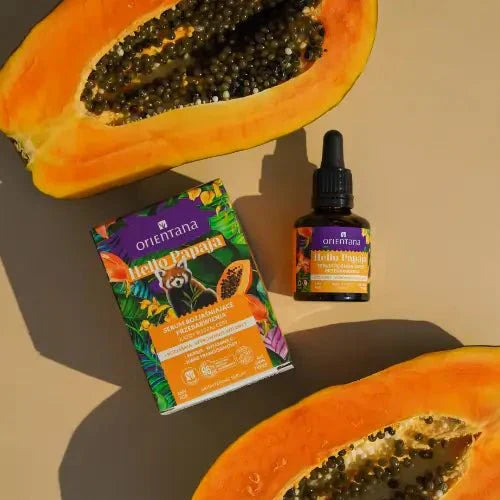
- Ashwagandha Serum Ampoule, Vitamin C, and Tranexamic Acid 30 ml - BRIGHTENING – a sensational serum enriched with active ingredients such as ashwagandha and tranexamic acid, which additionally soothe inflammation and strengthen the skin's protective barrier. This serum brilliantly brightens discolorations, has anti-aging properties, adds radiance to dull skin, and is perfect for skin in need of hydration. 3-O-Ethyl ascorbic acid, enriched with additional antioxidants from mango, papaya, and pineapple, is a great serum for all ages.
The serum has a slightly gel-like consistency and absorbs well. This great product is available at Hebe Drugstores for 65 PLN. 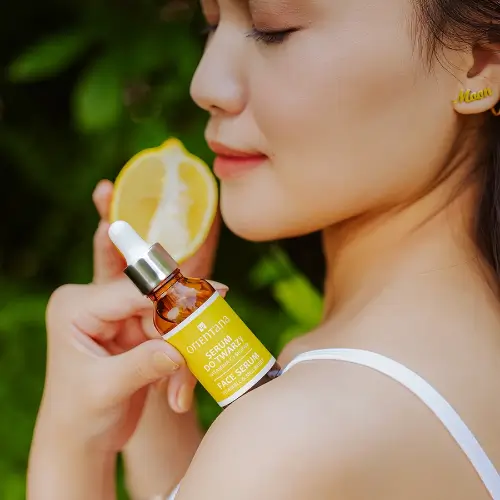
Orientana's vitamin C serum is a versatile product – suitable for both day and night use. During the day, we recommend applying it under sunscreen to enhance UV protection. At night, it regenerates, supporting skin renewal processes. It also works well as a brightening serum, giving the complexion a healthy appearance.
- Reviews of vitamin C serum
Our clients' opinions are visible on the Orientana website:
This wonderful serum calms inflammation and reduces redness. With prolonged use, it brightens the complexion slightly and reduces discoloration. It's not suitable under makeup—I use it at night.
It refreshes, moisturizes, and has a beautiful scent that energizes me. ❤️ Great serum
I've been using the serum for a while now. It's a fantastic serum for a new mom.
The serum has a beautiful oriental scent, absorbs perfectly, and my skin reacts positively to it from the first use ❤️
It eliminates discoloration and all traces of imperfections. My favorite product.
Great product. Super moisturizing.
This is my second bottle, I'll definitely buy it again. 🔥👍️
Excellent. A wonderful product. I'm already using another bottle of serum.
It has a very pleasant scent and absorbs well. Skin is left moisturized and nourished. 🔥 The serum works great.
I've been using the serum for a short time, but I can already see the effects.
Vitamin C - when to apply serum? How to choose the right one for your skin type?
L-ascorbic acid and its various forms work great in serums for all skin types.
Used for mature skin : Wrinkle reduction, firming, moisturizing and improving skin elasticity.
Skin with hyperpigmentation Brightening and evening out of skin tone, skin radiance and hydration.
Acne skin : Reduction of inflammation and acne lesions,
Sensitive skin : Strengthens the protective barrier and reduces irritation.
Tired and gray skin : Restoration of radiance and energy.
Vitamin C serums can be used from a relatively young age, as their properties are beneficial for skin regardless of age. However, it's crucial to choose the right product and concentration for the skin's needs at a given stage of life.
During adolescence (from around 15-16 years of age), vitamin C can be used to prevent environmental pollution, brighten skin, and support the treatment of acne discoloration. It's important to choose products with low concentrations (e.g., 5-10%) and gentle formulas to avoid irritation. Looking for a good antioxidant? Want a brightening effect? Choose this product.
In young adults (20-30 years old), vitamin C helps prevent premature skin aging by improving skin tone and protecting against oxidative stress. A 10% concentration is usually appropriate for younger skin that does not yet require intensive regeneration.
After the age of 30, skin begins to lose collagen, and the first signs of aging appear, such as fine lines and loss of elasticity. Vitamin C serums support collagen production and reduce discoloration. Higher concentrations (15-20%) can be used if the skin is accustomed to the vitamin's effects.
Skin over 40 will benefit from a vitamin C serum, which helps combat the more visible signs of aging, such as wrinkles, discoloration, and loss of firmness. Higher concentrations (e.g., 20%) may be more effective at regenerating skin.
Recommendations:
- Try it gently: Start with lower concentrations, regardless of age.
- Consult a dermatologist: If you have any doubts about your age or skin needs, a dermatologist will help you choose the right product.
- Use sun protection: Vitamin C works best when combined with an SPF cream.
There is no strict age limit for using vitamin C serums – the key is to match them to your skin's current needs.
Disadvantages of vitamin C serum
Vitamin C serum has many benefits, but like any cosmetic product, it also has potential drawbacks and limitations. Here are the most important ones:
Irritations and allergic reactions
- For sensitive skin: Vitamin C, especially in higher concentrations (e.g. 15-20%), may cause irritation, redness, itching or burning, especially in people with sensitive skin.
- Inappropriate form of vitamin C: Some forms of vitamin C may be more irritating than more stable forms, such as ascorbyl tetraisopalmitate.
Impermanence
- Vitamin C is very unstable and easily oxidizes when exposed to light, air, or high temperatures, which reduces its effectiveness.
- Oxidized serums can turn yellow or brown and may stop working or even irritate the skin.
Application problems
- Layering with other products: Vitamin C serums may not be compatible with certain ingredients, such as niacinamide or AHA/BHA acids, which may lead to irritation or reduce the effectiveness of the products.
- UV protection requirement: Although the vitamin acts as an antioxidant, using it without proper SPF protection may be ineffective and even increase sun sensitivity.
Cost
- A good vitamin C serum is often expensive because stable forms of vitamin C require advanced technology and special packaging (e.g., dark bottles).
Possibility of clogging pores
- Some formulas can be too heavy or contain comedogenic ingredients, leading to clogged pores and blemishes, especially if they're in oil or emulsion form.
Improper storage
- The serum requires appropriate storage conditions (dark, cool place), and improper storage may lead to rapid loss of properties.
Not for all skin types
- Acne-prone skin: Vitamin serums can exacerbate inflammation, especially in active acne.
- Very oily skin: Some serum formulas may be too sticky or heavy.
While vitamin C serums have potential drawbacks, choosing the right product, using it as directed, and following proper care are key to minimizing the risk of problems.
How do I know if I need vitamin C serum?
Vitamin C serums are a popular skincare product because they offer numerous benefits, such as brightening the complexion, reducing discoloration, and protecting against free radical damage. To assess whether your skin needs a vitamin C serum, it's worth considering a few factors:
Define your care goals
- Brightening your complexion: If your skin looks dull, tired, or has an uneven tone, a vitamin C serum can help.
- Discoloration: Vitamin C helps reduce dark spots and discoloration.
- Anti-aging protection: If you want to prevent the signs of aging, vitamin C as an antioxidant can be helpful.
- Mature skin care - skin in need of rejuvenation,
The condition of your skin
- Discoloration: Visible sun spots, acne spots, or age spots may indicate the need to supplement with vitamin C.
- Tired or stressed skin: If your skin is exposed to UV rays, pollution, or oxidative stress, vitamin C can act as a protective barrier.
Problems with skin regeneration
- Vitamin C supports collagen production, which is crucial if you notice signs of loss of firmness.
Preventive care
- Looking to add an antioxidant serum to your skincare routine? This one with vitamin C might be a great choice.
Tips for those who want to introduce vitamin C serum into their skincare routine
How to get started? Assess your skin's needs: Observe its condition, paying attention to signs of fatigue, discoloration, or loss of elasticity.
- Consult a dermatologist: If you have difficulty assessing your skin, a specialist will help you choose the right product.
- Try the product: Choose a vitamin C serum with the right concentration (10-15% is recommended to start with) and observe how your skin reacts.
Vitamin C serums are especially recommended for those who want to improve the appearance of their skin, but each case is unique. If in doubt, it's worth consulting an expert.
- Start with a low concentration: To start, choose a vitamin C serum with a 5-10% concentration.
- Test the product: Before full use, perform an allergy test on a small area of skin.
- Choose stable forms of vitamin C: Look for products containing, for example, ascorbyl tetraisopalmitate (a more stable form than L-ascorbic acid).
- Use sun protection: Always use sunscreen with SPF when using vitamin C serum.
While vitamin C serums may have potential drawbacks, choosing the right product, using it as directed, and following proper care are key to minimizing the risk of problems. Remember, high concentrations should be used by a professional.