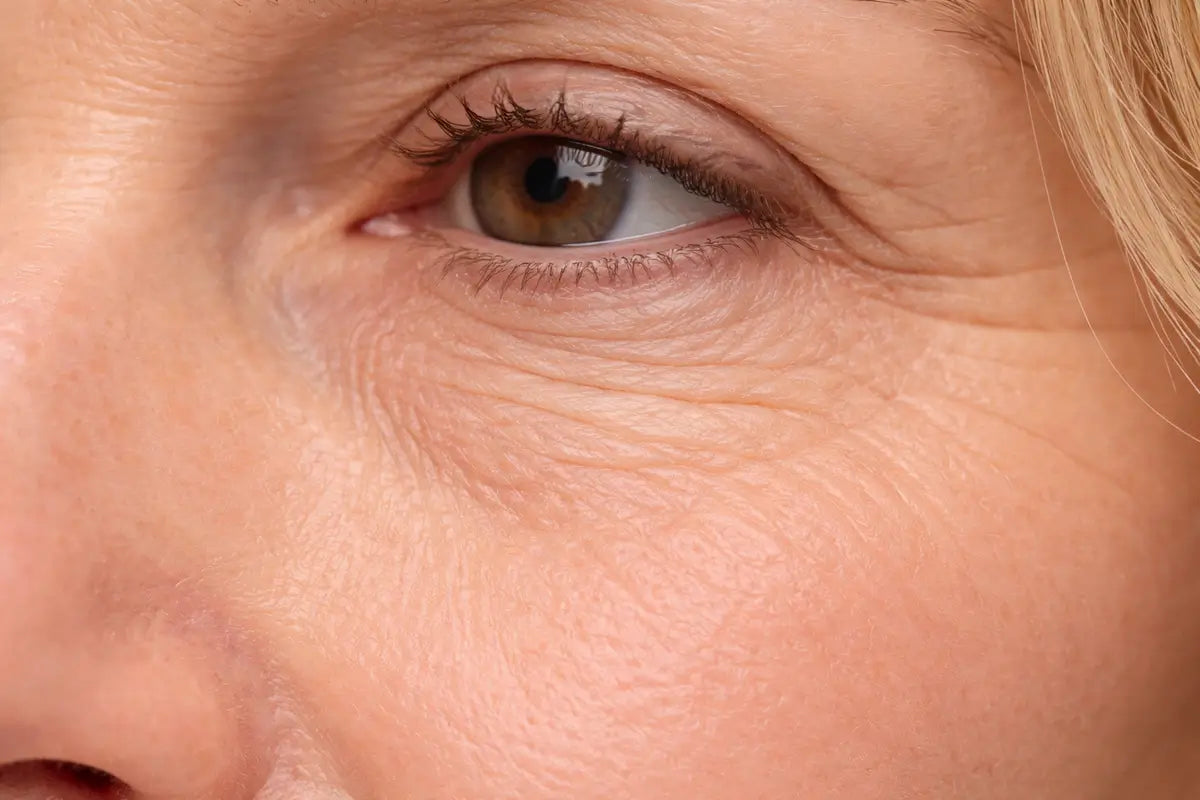
Parchment skin is a term used in cosmetology to describe skin that is very thin, dry, and lacking elasticity, resembling parchment in its texture. This term often appears in the context of skin aging, but it does not exclusively apply to older individuals. Parchment skin can also occur in younger people, especially when the skin is severely dehydrated, exposed to UV radiation, or cared for too aggressively.
Parchment skin is characterized by a thin, dull, and "wrinkled" appearance. Fine lines appear, along with a feeling of tightness and increased susceptibility to irritation. Such skin retains water poorly, reacts more quickly to external factors, and can appear tired and lacking radiance.
The good news, however, is that proper care can significantly improve its condition. The key is to rebuild the hydrolipid barrier, intensely moisturize, and support skin regeneration processes.
What does parchment skin look like?
Parchment skin has a very characteristic appearance. Cosmetologists describe it as thin, slightly wrinkled, and dry, with a visible loss of firmness.
The most common symptoms of parchment skin are:
- very thin skin structure
- fine, superficial wrinkles
- dull, sallow skin tone
- feeling of dryness and tightness
- reduced elasticity
- tendency to irritation
- slower skin regeneration
In the case of parchment skin, wrinkles are not solely due to facial expressions. They are often a result of skin dehydration and weakening of its supportive structure.
The skin can look as if it has been slightly "crinkled." When stretched, the wrinkles temporarily smooth out but quickly return.
Test - is your skin parchment-like?
There are several simple ways to assess whether your skin is beginning to exhibit characteristics of parchment skin.
Skin pinch test
Gently pinch the skin on your cheek or under your eye. If fine wrinkles or a skin fold remain for a few seconds after releasing, it may indicate dehydration and loss of elasticity.
Elasticity test
Gently pull the skin on your cheek. If it slowly returns to its original shape, it may indicate a decrease in collagen levels.
Hydration test
If an immediate feeling of tightness occurs after washing your face, and your skin looks dry and dull, the hydrolipid barrier is likely weakened.
Why does skin become parchment-like?
The formation of parchment skin is a result of several biological processes occurring in the skin.
Decrease in collagen production
Collagen is responsible for skin firmness and density. Its production gradually begins to decline after the age of 25. With age, collagen fibers become thinner and less organized.
The skin then loses its elasticity and begins to look thinner.
Learn more about collagen.
Loss of elastin
Elastin is a protein that allows the skin to return to its original shape after stretching. When its quantity decreases, the skin loses elasticity and begins to wrinkle.
Decrease in hyaluronic acid levels
Hyaluronic acid binds water in the skin. One molecule can bind up to a thousand times its weight in water.
With age, the level of hyaluronic acid in the skin decreases, leading to dehydration and loss of skin volume.
Oxidative stress
Free radicals damage skin cell structures, including collagen and elastin. Their excess accelerates the aging process and can cause parchment skin.
Sources of oxidative stress include:
- UV radiation
- air pollution
- smoking
- chronic stress
Learn what oxidative stress is and how to deal with it.
Photoaging
UV radiation is one of the most important factors accelerating skin aging. It causes degradation of collagen and elastin and increases water loss from the epidermis.
Parchment skin vs. thin skin - are they the same?
Although these terms are sometimes used interchangeably, they do not mean exactly the same thing.
Thin skin can be a genetic trait. It does not always signify a skincare problem and does not necessarily involve dehydration.
Parchment skin, on the other hand, is a result of changes occurring in the skin, such as loss of hydration, decreased collagen, and weakening of the hydrolipid barrier.
Thus, one can have thin skin that is healthy and well-hydrated, yet does not exhibit the characteristics of parchment skin.
Where does parchment skin most commonly appear?
Parchment skin most commonly appears in areas where the skin is naturally thin.
The most susceptible areas are:
- eye area
- neck
- décolletage
- hands
Parchment skin under the eyes
The skin around the eyes is up to four times thinner than on the cheeks. It contains fewer sebaceous glands and loses water more quickly.
Therefore, it is often in this area that the first signs of parchment skin appear.
Regular use of eye creams that strengthen the skin barrier and improve its hydration can significantly enhance the appearance of this delicate area.
How to care for parchment skin?
Parchment skin care should focus on three main goals:
- intense hydration
- rebuilding the hydrolipid barrier
- stimulating skin regeneration
Gentle cleansing
Parchment skin does not tolerate aggressive detergents. Overly strong cleansing agents can further weaken the skin's protective barrier.
Gentle face washes and foams with a mild formula work best.
Multi-level hydration
Parchment skin needs ingredients that bind water in the skin and prevent its loss.
The most important moisturizing ingredients include:
- hyaluronic acid
- tremella
- glycerin
- betaine
Rebuilding the hydrolipid barrier
The hydrolipid barrier protects the skin from water loss and external factors.
To rebuild it, the following help:
- ceramides
- squalane
- vegetable oils
- plant butters
Learn more about the hydrolipid barrier
Antioxidant protection
Antioxidants neutralize free radicals and protect the skin from oxidative stress.
The most important include:
- vitamin C
- vitamin E
- adaptogens
- plant polyphenols
Check out what antioxidants are and how they work on the skin.
Best cosmetic ingredients for parchment skin
Tremella
Tremella is often called the plant equivalent of hyaluronic acid. Its molecules can bind large amounts of water, thus intensely moisturizing the skin.
Peptides
Biomimetic peptides support skin regeneration processes and can stimulate collagen production.
Ceramides
Ceramides rebuild the hydrolipid barrier and reduce water loss through the epidermis.
Niacinamide
Niacinamide supports skin regeneration, improves its elasticity, and helps strengthen the protective barrier.
Adaptogens
Adaptogenic plants, such as ashwagandha or reishi, help the skin cope with oxidative stress.
Can parchment skin be reversed?
Parchment skin cannot be completely "reversed" because some changes result from the natural aging process. However, its appearance can be significantly improved.
Regular care can:
- increase skin hydration levels
- improve its elasticity
- smooth fine wrinkles
- strengthen the hydrolipid barrier
The result is smoother, more elastic, and radiant skin.
Home remedies to improve the condition of parchment skin
In addition to cosmetics, it's worth incorporating a few simple habits.
Facial massage
Regular massage improves microcirculation and can support skin regeneration.
Gua sha
Gua sha massage helps improve skin tension and reduce fine wrinkles.
Adequate hydration
Drinking an adequate amount of water helps maintain proper skin hydration levels.
Diet rich in antioxidants
Vegetables, fruits, and healthy fats provide nutrients that support skin regeneration.
Eye cream for parchment skin - what cosmetics to choose?
Parchment skin often appears first around the eyes. This area is the thinnest and most susceptible to dehydration. Additionally, it contains fewer sebaceous glands, which naturally protect the skin from water loss. When hydration levels drop, fine wrinkles appear, and the skin becomes thin and starts to resemble parchment.
Therefore, the care for this area should be particularly gentle, yet intensely regenerating. Eye creams that combine moisturizing ingredients, rebuild the hydrolipid barrier, and support skin regeneration work best.
Eye creams based on plant ingredients, antioxidants, and substances that improve skin hydration are very effective for parchment skin.
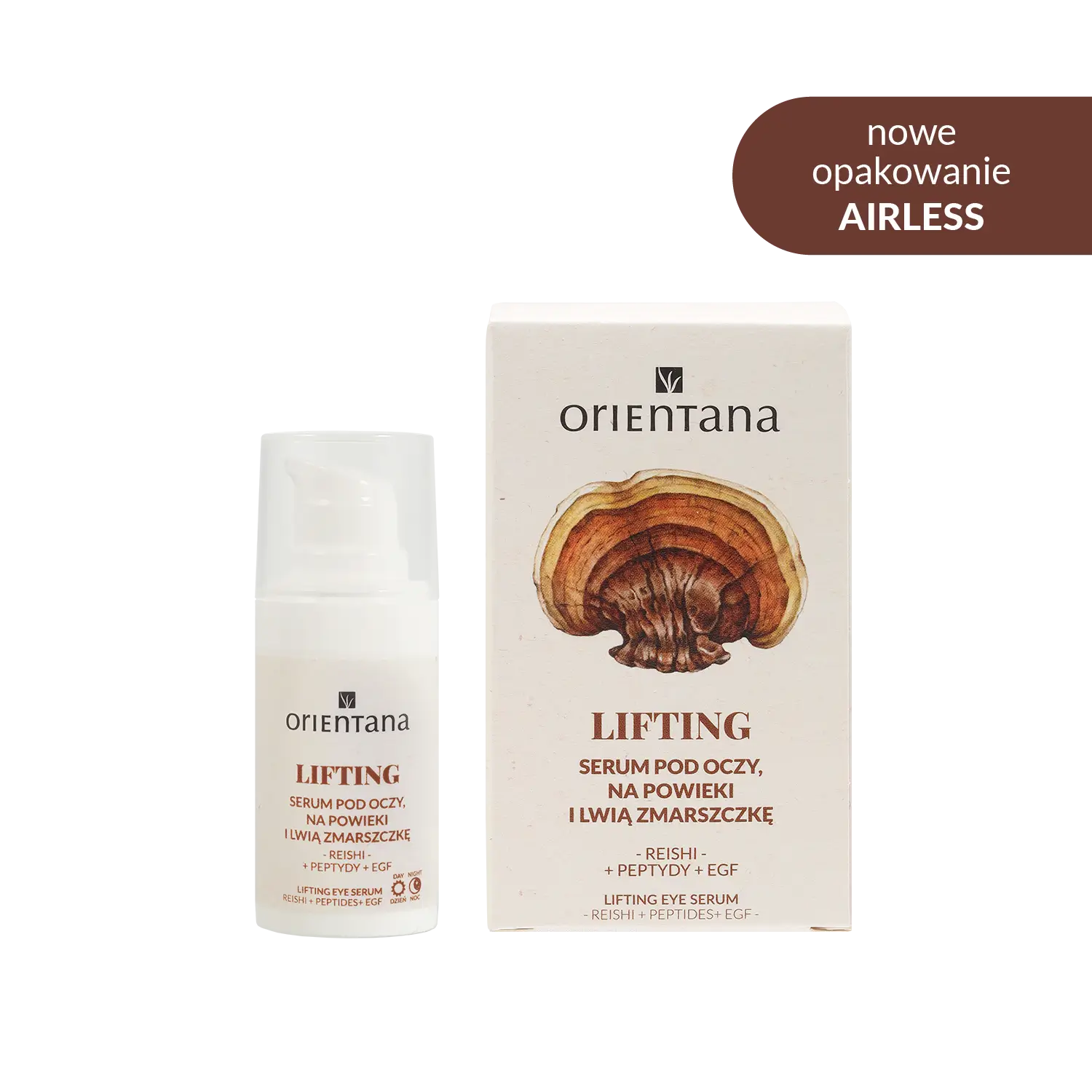
Eye serum with Reishi - regeneration and antioxidant protection
Reishi mushroom is one of the most potent natural antioxidants used in cosmetology. It helps protect the skin from oxidative stress, which accelerates the aging process and leads to a loss of skin elasticity.

Reishi eye cream helps to:
- improve skin elasticity around the eyes
- reduce the appearance of fine wrinkles
- protect the skin from free radicals
- support skin regeneration
Regular use of adaptogen-rich cream can make the skin around the eyes appear more taut and rested.
Eye cream with tremella - intense skin hydration
Tremella, also known as snow mushroom, is often called the plant equivalent of hyaluronic acid. Its polysaccharides have the ability to bind large amounts of water, helping to maintain proper skin hydration levels.

For parchment skin under the eyes, tremella:
- intensely moisturizes the skin
- improves its smoothness
- reduces the appearance of fine dehydration wrinkles
- supports the regeneration of the hydrolipid barrier
As a result, the skin around the eyes becomes more elastic and appears less tired.
Snail slime eye cream
Snail slime is one of the most interesting ingredients in modern cosmetology. It supports regenerative processes and improves skin structure.

In eye creams, it helps to:
- improve skin tension
- smooth fine wrinkles
- increase skin elasticity
- support the rebuilding of skin structure
The combination of peptides with plant extracts and antioxidants makes the skin around the eyes smoother and better hydrated.
Eye cream with biotechnological retinol

The anti-wrinkle eye cream with biotechnological retinol NovoRetin™, caffeine, and moringa is ideal support for parchment skin – thin, dry, and prone to wrinkles. It acts as:
- a smoothing and firming agent without the risk of irritation,
- intensely hydrating
- improving the elasticity of the delicate skin under the eyes.
Caffeine reduces dark circles and puffiness, while moringa supports regeneration and protects against oxidative stress. The skin becomes more taut, smooth, and visibly nourished.
How to apply eye cream to parchment skin?
For the best results from skincare, eye cream should be applied correctly.
It is best to:
- apply a small amount of cream morning and evening
- gently pat the cosmetic with fingertips
- start from the inner corner of the eye and move outwards
- do not stretch the skin during application
Regular care of the skin around the eyes can significantly improve its appearance. Hydrated, well-nourished skin looks smoother and more radiant, and fine wrinkles become less visible.
For parchment skin, consistency is key. Daily application of eye cream rich in regenerating and moisturizing ingredients gradually helps restore comfort, elasticity, and a healthy appearance to the skin.
FAQ - frequently asked questions about parchment skin
Is parchment skin a skin disease?
No. It is a cosmetological term describing very thin and dry skin.
Does parchment skin only appear in older people?
Not always. It can also appear in younger people, especially with skin dehydration.
What does parchment skin look like?
It is thin, dry, slightly wrinkled, and has reduced elasticity.
Does skin dehydration cause parchment skin?
Yes, dehydration is one of the most common causes of its formation.
Can parchment skin appear under the eyes?
Yes, the eye area is particularly susceptible to its appearance.
Does parchment skin mean a lack of collagen?
It can be associated with a decrease in collagen, which occurs with age.
How to moisturize parchment skin?
It is best to use cosmetics with humectants, ceramides, and antioxidants.
Does hyaluronic acid help parchment skin?
Yes, it helps increase skin hydration levels.
Does retinol help parchment skin?
It can support skin regeneration, but should be used cautiously.
Does diet affect skin condition?
Yes, a diet rich in antioxidants supports skin regeneration.
Can parchment skin improve?
Yes, proper care can significantly improve its appearance.
Does stress affect the skin?
Yes, chronic stress can accelerate the skin aging process.
Is SPF important for parchment skin?
Yes, sun protection is crucial.
Is peeling good for parchment skin?
Yes, but it should be very gentle.
Does facial massage help parchment skin?
It can improve microcirculation and skin tension.
Do cosmetic treatments help?
Yes, some treatments can improve skin elasticity.
Does parchment skin only affect the face?
No, it can also appear on the neck, décolletage, and hands.
Can parchment skin be prevented?
Regular care and UV protection can slow down its formation.
Can parchment skin be genetic?
Thin skin can be genetic, but parchment skin usually results from aging processes.
Does collagen in cosmetics work on parchment skin?
It can improve skin hydration and smoothness.
Does vitamin C help parchment skin?
Yes, it supports collagen production and acts as an antioxidant.
Can parchment skin be a symptom of body dehydration?
It can be one of the signals of insufficient hydration.
Do adaptogens help the skin?
Yes, they help the skin cope with oxidative stress.
Can parchment skin appear suddenly?
Sometimes, especially with severe dehydration or aggressive care.
Are parchment wrinkles permanent?
Some of them may diminish after improving skin hydration.
Can parchment skin be a result of excessive sun exposure?
Yes, UV radiation is one of the main factors.
Do plant oils help parchment skin?
Yes, they help rebuild the hydrolipid barrier.
Can parchment skin be sensitive?
Yes, it is often more prone to irritation.
Does niacinamide help with parchment skin?
Yes, it supports regeneration and strengthens the skin barrier.
Does parchment skin require special care?
Yes, regenerating and moisturizing care works best.
Can parchment skin look younger after care?
Yes, improved hydration and elasticity can significantly enhance its appearance.