
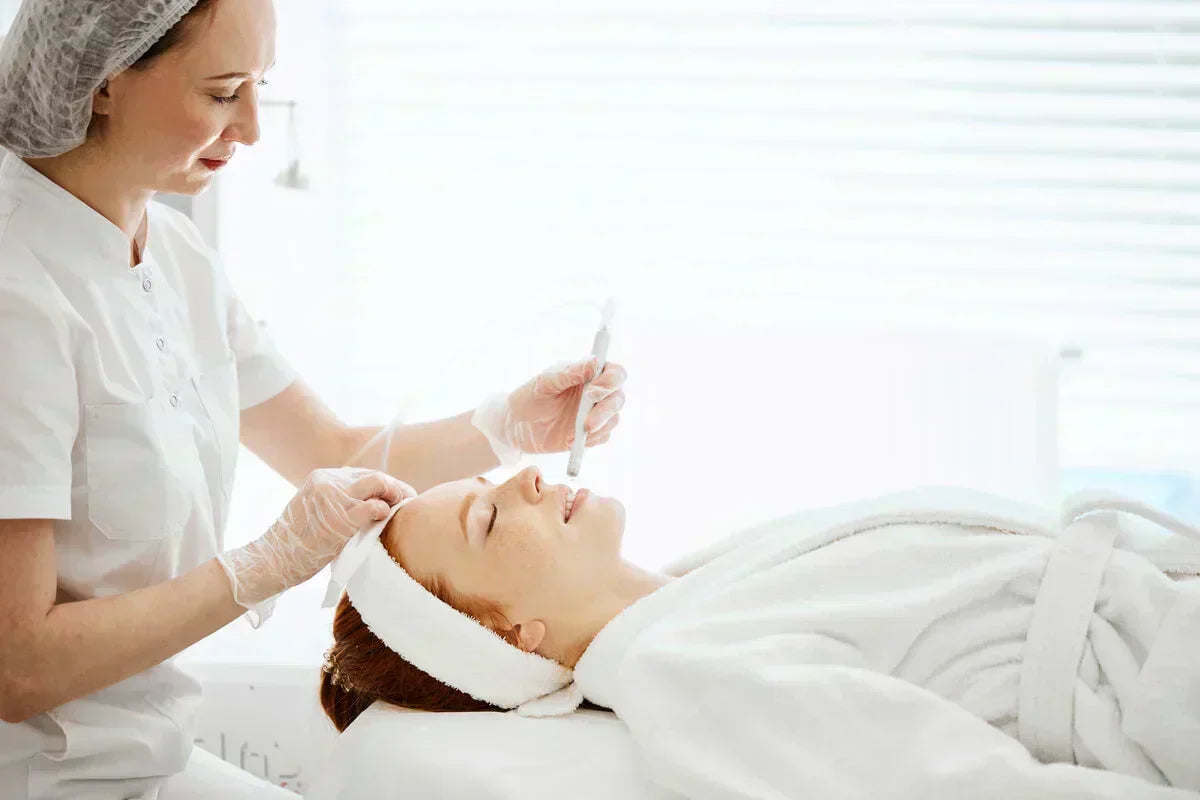
Microneedles in cosmetics are a modern technology mainly used in aesthetic medicine and dermocosmetics. These are microscopic needles, which can be made from various materials, such as biocompatible polymers, metals, or even soluble active substances.
How do microneedles work?
Microneedles are designed to gently penetrate the stratum corneum of the epidermis, creating microchannels that facilitate the penetration of active ingredients deep into the skin. As a result, the effectiveness of substances such as hyaluronic acid, vitamin C, retinol, and peptides can be increased.
Types of microneedles:
- Mechanical (dermarollers, dermapens) – used in microneedle mesotherapy, they stimulate skin regeneration and increase cosmetic absorption.
- Soluble microneedles – made from biodegradable substances (e.g., hyaluronic acid) that dissolve in the skin, releasing active ingredients.
- Polymer microneedles – made from biocompatible materials, they can be used, for example, in cosmetic patches for long-term release of active substances.
Potential benefits of using microneedles:
- Better penetration of active ingredients
- Stimulation of collagen and elastin production
- Improved skin texture and firmness
- Less invasive than traditional needles

Sponge Microneedles
Sponge microneedles (ang. sponge spicules) are an innovative cosmetic technology based on natural needles derived from marine sponges. They are used in cosmetics for exfoliation, skin stimulation, and improved penetration of active ingredients.
What are sponge microneedles?
Sponge microneedles are microscopic needles derived from natural freshwater sponges, such as Spongilla, which, after drying and pulverizing, retain their needle-like structure. They are capable of penetrating the skin, leading to slight micro-damage and stimulating the skin to regenerate.
How do sponge microneedles work?
Micro-exfoliation – removes dead skin cells, acting as a natural peel.
Skin stimulation – by penetrating the skin, they can stimulate microcirculation and collagen production.
Facilitation of active ingredient absorption – they create microchannels through which nutrients (e.g., vitamin C, niacinamide, acids) can more effectively penetrate into deeper layers of the skin.
Warming effect and skin redness – after application, the skin may be slightly irritated and red for several hours, which indicates active regeneration.

Who are they for?
People with oily and acne-prone skin – can help cleanse pores and reduce imperfections.
Mature skin – can stimulate cell renewal and improve firmness.
People with hyperpigmentation – can support skin tone equalization.
Where can they be found?
Sponge microneedles are used in:
Enzymatic and acidic peels – e.g., in professional exfoliating treatments.
Ampoules and essences – with anti-aging and brightening effects.
Masks and creams – supporting skin detoxification.

Why have microneedles become popular?
Microneedles are one of the hottest trends in cosmetology and aesthetic medicine. Their popularity stems from several key factors that make them effective, safe, and attractive to consumers.
Potentially increased efficacy of cosmetics
- Possible better penetration of active ingredients – microneedles create microchannels in the skin, allowing ingredients (e.g., hyaluronic acid, vitamin C, peptides) to penetrate deeper.
- Minimizing the epidermal barrier – standard creams often act superficially, but microneedles help transport substances deeper into the skin.
The effect of a professional treatment at home
- Consumers are increasingly looking for alternatives to aesthetic medicine treatments in clinics, and cosmetics with microneedles offer similar effects without the need for a specialist visit.
- Patches, masks, or serums with microneedles mimic the action of microneedle mesotherapy – a popular treatment in aesthetic clinics.
Natural skin stimulation
- Microneedles can stimulate collagen and elastin production, leading to skin rejuvenation.
- The skin's natural regenerative processes are accelerated, resulting in a firming, smoothing, and revitalizing effect.
- The popularity of "skin cycling" and trends related to skin regeneration makes microneedles eagerly used in anti-aging care.
Trend for "aesthetic medicine cosmetics at home"
- Clients expect effective, scientifically proven solutions.
Microneedles, as a technology used in aesthetic medicine, enjoy greater trust than classic creams or serums.
Where did the trend for microneedles come from in Poland?
The trend for microneedles in cosmetics appeared in Poland as part of a global boom in advanced skin care, which began in Asia and quickly spread to the West. The main sources of this trend are:
Korean and Japanese skincare (K-Beauty & J-Beauty)
South Korea and Japan are world leaders in cosmetic innovations.
The Korean beauty market introduced microneedles in patches and serums, especially in anti-aging and acne care.
The popularity of K-Beauty in Poland meant that microneedle technology quickly began to be promoted by influencers and cosmetologists.
Trend for "effective cosmetics" and home aesthetic medicine
In Europe and the USA, for several years now, there has been a trend for cosmetics that imitate professional salon treatments. Microneedles in cosmetics are a great alternative to needle mesotherapy because:
- They are less invasive
- They can be used at home
- They provide effects similar to professional treatments
In Poland, due to the rising prices of aesthetic medicine treatments, more and more people are looking for cheaper but effective skin care solutions – microneedles fit perfectly into this trend.
Popularity of dermarollers and microneedle mesotherapy
Microneedles became popular in Poland initially thanks to microneedle mesotherapy treatments. Dermarollers and dermapens used in clinics also became available to consumers, which increased interest in microneedle technology.
In response to this trend, cosmetic brands began offering patches, masks, and serums with microneedles as a safer alternative for home care.
Influencers and social media
The trend for microneedles in cosmetics has been strongly promoted by beauty influencers on YouTube, Instagram, and TikTok. In Poland, many people started using microneedle cosmetics thanks to social media advertisements.
Hashtags such as #microneedles #spongespicules #mesotherapy #kbeauty quickly gained popularity.
Risks associated with home use of microneedles
Risk of irritation and skin damage
Microneedles, both synthetic and natural (e.g., Spongilla sponge microneedles), cause micro-damage to the stratum corneum, which can lead to irritation, redness, and inflammation.
After such a procedure, the skin becomes more sensitive to external factors, increasing the risk of allergic reactions and hypersensitivity. According to dermatological studies, improper use of microneedles, especially by people without adequate training, can result in prolonged redness and increased skin permeability to pathogens (Singh & Yadav, 2016).
Lack of control over penetration depth
In professional microneedle mesotherapy treatments, the depth of punctures is precisely regulated depending on the patient's skin needs. In the case of home cosmetics with microneedles, the user has no control over the penetration depth.
Too intensive use of such products, especially in combination with irritating active substances (e.g., AHA/BHA acids, retinol), can lead to damage to the hydrolipid barrier, which in turn increases transepidermal water loss and leads to chronic skin dryness (Kaushik et al., 2021).
Possibility of infection transmission
Microchannels created by microneedles can facilitate the penetration of bacteria, viruses, and fungi into deeper layers of the skin. In home settings, users often do not adhere to hygiene rules as strictly as in dermatological clinics, which increases the risk of infections.
Using microneedles on acne-prone skin or skin with active inflammation can further spread Propionibacterium acnes bacteria, worsening the skin condition and leading to the formation of acne scars (Jeong et al., 2022).
Lack of sufficient research on long-term effects
Although short-term studies have shown positive effects of using microneedles in cosmetics, there is still a lack of long-term studies evaluating the safety of this technology.
There are concerns that regular use of microneedles may lead to chronic skin inflammation, which contributes to accelerated aging of epidermal cells and their degeneration (Fabbrocini et al., 2018). The dermatological literature also indicates the possibility of an increased risk of post-inflammatory hyperpigmentation, especially in individuals with sensitive skin and a tendency to hyperpigmentation (Ortonne, 2019).
Possible placebo effect and limited effectiveness
Some of the effects attributed to microneedle cosmetics may result from a placebo or a short-term surface effect, rather than a real improvement in skin condition at deep levels. These products often contain small amounts of active substances, and their absorption depends on many factors, such as individual skin structure, hydration, or the presence of a lipid barrier.
Studies comparing the effectiveness of microneedle mesotherapy with professional equipment and home cosmetics have shown that the effects in home conditions are significantly weaker and less durable (Alster & Tanzi, 2020).
Potential side effects and interactions with cosmetic ingredients
Not all active ingredients are suitable for use in combination with microneedles. Irritating substances, such as high-concentration vitamin C, AHA acids, and retinoids, can cause excessive irritation, burning, and skin peeling.
Moreover, in home settings, the user is unable to accurately assess which ingredients may cause an allergic reaction or contact sensitization, which increases the risk of negative side effects (Baumann, 2017).
High costs and marketing nature of the trend
Microneedle cosmetics are often significantly more expensive than traditional skincare products, even though their composition does not differ significantly in terms of active substances.
Cosmetic brands use the novelty effect and advanced technology as a marketing tool, which does not always translate into real benefits for the consumer. Some studies show that traditional methods of applying active ingredients, such as sonophoresis or iontophoresis, can be equally effective and at the same time less invasive for the skin (Yadav et al., 2021).
If you want to replace microneedle cosmetics, it is worth reaching for products that offer similar effects (regeneration, firming, increased penetration of active ingredients) without micro-damage to the skin. Here are some alternatives:
Products with niacinamide, peptides, retinol, adaptogens.
In my opinion
Despite the popularity of microneedles in home cosmetics, there are many arguments against their use. The most important of these include: risk of irritation and skin damage, lack of control over penetration depth, possibility of infection transmission, insufficient research on long-term safety, limited effectiveness, risk of interaction with active ingredients, and high costs associated with the marketing nature of the trend.
In light of available research and expert opinions, the use of microneedle cosmetics should be preceded by a thorough analysis of individual skin needs and consultation with a dermatologist or cosmetologist.
Despite promising results, further, more detailed clinical studies are necessary to fully understand the mechanisms of action of sponge microneedles and to determine optimal protocols for their use in various skin types and dermatological conditions.
Bibliography
• Alster, T. S., & Tanzi, E. L. (2020). Microneedling: Advances and Clinical Applications. Dermatologic Surgery, 46(4), 521-527.
• Baumann, L. (2017). Cosmetic Dermatology: Principles and Practice. McGraw-Hill.
• Fabbrocini, G., De Vita, V., Pastore, F., & D'Arco, V. (2018). Skin inflammation and aging: New concepts. Journal of Cosmetic Dermatology, 17(3), 258-265.
• Jeong, H. J., Hong, S. M., & Lee, J. H. (2022). Role of Propionibacterium Acnes in Acne Vulgaris and Inflammatory Skin Disorders. International Journal of Dermatology, 61(5), 620-630.
• Kaushik, A., Sinha, R. K., & Bhardwaj, A. (2021). Microchannel Drug Delivery and Skin Barrier Disruption: A Review of Advances in Microneedling and Its Applications. Journal of Drug Delivery Science and Technology, 65, 102758.
• Ortonne, J. P. (2019). Pigmentary disorders: A global perspective. The Journal of Clinical and Aesthetic Dermatology, 12(4), 23-31.
• Singh, A., & Yadav, S. (2016). Microneedling: Advances and Wider Applications. Indian Dermatology Online Journal, 7(4), 244-252.
• Yadav, K. S., Pande, V., & Bhatt, P. (2021). Transdermal drug delivery: A paradigm shift in modern therapeutics. Biomedical Research and Reviews, 3(1), 12-19.