Keratosis pilaris, colloquially known as "chicken skin," is a common, though often underestimated, dermatological condition. Contrary to popular belief, it is not merely an aesthetic defect – it indicates disorders in the keratinization process of the epidermis and requires appropriate care. In my cosmetology practice, I encounter many people who struggle with this problem for years, and the key to improvement turns out to be consistency and the selection of appropriate cosmetics.
In this article, I will explain exactly what keratosis pilaris is, what its causes are, and how its symptoms can be effectively alleviated, using, among other things, Orientana body butters and oils, as well as homemade scrubs.

What is keratosis pilaris?
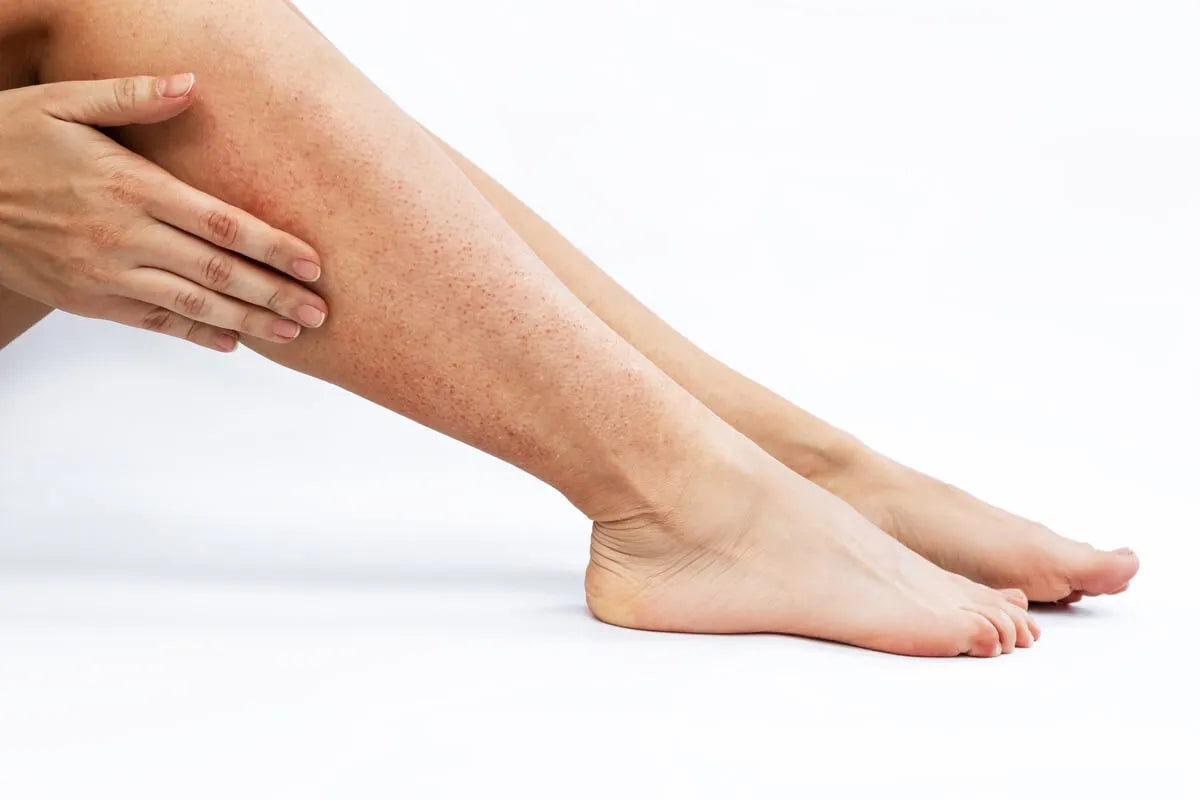
Keratosis pilaris is a chronic dermatosis characterized by the formation of small, rough bumps within hair follicles. They arise due to excessive keratin production, which clogs the follicle openings. The skin becomes rough, dry, and uneven.
The changes most often appear on the:
• arms,
• thighs,
• buttocks,
• cheeks (especially in children and adolescents).
Symptoms of keratosis pilaris
• small, hard bumps noticeable to the touch,
• rough, "goosebump-like" skin texture,
• tendency to dryness,
• seasonal aggravation (symptoms stronger in winter, milder in summer).
It is worth emphasizing that keratosis pilaris is not contagious, although it can affect self-esteem and quality of life.
Causes of formation
Excessive keratinization
The primary mechanism is the overproduction of keratin, which forms plugs blocking hair follicles.
Genetic factors
It often runs in families – if parents had the problem, children may also inherit it.
Dry and atopic skin
People with atopic dermatitis or psoriasis are more prone to developing the changes.
Environmental factors
• low air humidity,
• air conditioning and heating,
• frequent use of harsh detergents.
Skin care for keratosis pilaris
Gentle exfoliation
Regular removal of excess dead epidermis is fundamental. However, it is worth remembering that mechanical peels should be used carefully.
Practical example:
• Homemade sugar scrub – 2 tablespoons of cane sugar, a teaspoon of oil (e.g., Orientana Indian Jasmine body oil), a few drops of honey.
• Salt scrub – for topical use, especially on thighs and arms, but less frequently than sugar scrub to avoid irritating the skin.
Learn more about body scrubs in the article: Homemade scrub - my proven ways to smooth and radiant skin
Intensive moisturizing and oiling
Keratosis pilaris requires cosmetics that simultaneously moisturize and rebuild the skin's hydrolipid barrier.
Orientana body butters
contain natural plant butters (including shea butter, mango butter) that smooth the skin and reduce roughness. Regular application after bathing yields the best results.

Body oils
Natural oils act as an occlusion – they retain water in the skin and improve its elasticity. Orientana Moisturizing Body Oil – Indian Jasmine is an example of a cosmetic that can be used alone or combined with a lotion or butter, creating what is known as "skin flooding".
Body lotions
One of the most important elements of care for this condition is a well-chosen body lotion that not only intensely moisturizes but also helps soften and smooth the epidermis. It is worth choosing products rich in emollients and natural plant butters, such as Orientana sandalwood body lotion, which envelops the skin with a nourishing layer, reducing its roughness and dryness. Regular use of the lotion, especially after bathing or dry brushing, gradually restores the skin's softness and healthy appearance, and the symptoms of keratosis pilaris become less visible.
Lifestyle and keratosis pilaris
• Diet rich in omega-3 and omega-6 fatty acids – supports the lipid barrier.
• Vitamin A and C – affect the keratinization process.
• Avoiding hot baths – high temperatures further dry out the skin.
• Cotton clothing – minimizes friction and irritation.
Frequently Asked Questions (FAQ)
Can keratosis pilaris be cured?
No, but it can be significantly alleviated through proper care and a healthy lifestyle.
Does sunbathing improve skin condition?
Symptoms usually decrease in summer, but this is a seasonal effect. UV radiation is not a treatment method.
How often should I use scrubs?
1-2 times a week, depending on skin tolerance.
Can children also have keratosis pilaris?
Yes, it often appears in childhood. In such cases, care should be particularly gentle.
What cosmetics are best to use?
Rich in emollients and humectants: Orientana body butters, natural oils, as well as gentle homemade scrubs.
My advice
Keratosis pilaris is a chronic problem, but it can be managed. The most important thing is a combination of:
• regular exfoliation (e.g., sugar scrub with Orientana oil),
• intensive moisturizing and oiling (Orientana butters and oils),
• lifestyle changes (diet, hydration, avoiding harsh detergents).
As a cosmetologist, I emphasize: there is no "miracle product" that will eliminate the problem in a few days. However, patience, consistency, and conscious skincare choices can significantly improve the appearance and condition of the skin.