Skin is a biological organ, not a "placeholder for cream." It's the largest organ in the human body, occupying up to 2 square meters and weighing approximately 15% of the body's weight . In cosmetology, it's often said that " skin remembers everything ": every irritant, lack of protection, oxygen deprivation, oxidative stress, discoloration, or dehydration are the result of previous processes that often go unnoticed.
As a cosmetologist, I always emphasize: skin care doesn't start with a cream, but with understanding its structure and biological needs. Most skin problems—dryness, acne, loss of firmness, hyperreactivity, atopic dermatitis—don't stem from a lack of a "miracle ingredient," but from a compromised protective barrier and loss of homeostasis.
Contents:
- Introduction - skin as a living organ
- Skin structure - from surface to depth
- The skin microbiome - the invisible ecosystem
- Skin Functions - Protection, Regulation and Senses
- What destroys the skin - factors that disrupt the hydrolipid barrier
- Hydrolipid barrier - the foundation of healthy care
- Adaptogens and polysaccharides in skin care
- Moisturizing vs. Hydration
- Skin care step by step
- Skin and emotions - the impact of stress on the epidermal barrier
- The role of touch and massage in care
- Frequently asked questions about skin care
- Summary - conscious care based on skin biology
Skin structure - from surface to depth
To effectively care for your skin, you need to understand its three-layer structure:
Epidermis
It's only 0.05-1 mm thick, yet it plays a crucial role in protecting the body. It consists of five layers of keratinocytes undergoing the keratinization process – from the basal layer to the stratum corneum.
The most important element from a cosmetology perspective is the hydrolipid barrier, found in the stratum corneum. This cement-lipid structure, composed of ceramides, cholesterol, and fatty acids, forms the skin's biological protective barrier, determining whether the skin loses water (TEWL), reacts with irritation, or is capable of self-regeneration.
Dermis
This is where fibroblasts are located – cells that produce collagen, elastin, and hyaluronic acid. The dermis is responsible for firmness, density, and elasticity. In cosmetology, it's said that "anti-wrinkle" creams act superficially, while a serum with a biocompatible composition can stimulate fibroblast activity, but only if the epidermal barrier is intact.
Subcutaneous tissue (Subcutis)
A storage facility for energy, fat, and a cushioning structure. In women, adipocytes (fat cells) are arranged vertically, which leads to microcirculation and collagen disorders, leading to bulges, such as cellulite. In men, the structure is lattice-like, which is why cellulite is less common.
Skin microbiome – a forgotten element of skincare
Millions of microorganisms live on the skin's surface: bacteria, fungi, and microorganisms. They protect us from pathogens, regulate pH, and support regeneration. Frequent use of harsh detergents, alcohol, antibacterial products, and excessive sterility destroys the microbiome, leading to skin reactivity, acne, or dryness.

It's worth noting that modern skincare increasingly doesn't "fight" the skin, but rather works with the microbiome . Orientana incorporates biocompatible, fermented, and prebiotic ingredients into its formulas—such as rice ferments, adaptogenic extracts, and natural polysaccharides (e.g., Tremella), which nourish the skin without damaging it.
Skin Functions - Why You Shouldn't Treat It Like a "Makeup Canvas"
The skin performs several key functions:
- Protective - creates a barrier against UV radiation, toxins, heavy metals and bacteria.
- Immunological - Langerhans cells in the epidermis actively respond to threats.
- Regulatory - through sweat and sebum, the skin influences body temperature and water-lipid balance.
- Sensual – nerve endings respond to touch, temperature, and pain. A lack of touch and nurturing affects the nervous system (which is why nurturing rituals lower cortisol levels – the stress hormone).
- Detoxifying - sweat removes toxins, but only if the pores are not clogged with synthetic occlusive films.
The skin isn't "glass." It's a living, responsive organ. If we apply a cosmetic rich in active ingredients to a damaged barrier, the ingredients will not only be ineffective but may also trigger an irritating reaction. Therefore, an anti-wrinkle cream will never be effective unless the hydrolipid barrier is first restored.
What damages the skin? The main factors that disrupt the hydrolipid barrier.
Skin in a balanced state has the ability to regenerate itself. However, just a few repeated habits can disrupt its physiology. The most common factors I see in patients in my office:
Aggressive cleaning agents - detergents and alcohol
Products containing SLS, SLES, sulfates, alcohol denat., and synthetic preservatives wash away protective lipids from the stratum corneum.
The skin loses its ability to retain water, TEWL (Transepidermal Water Loss) increases, and feelings of tightness, dryness, and hyperreactivity occur. Therefore, it's best to use non-aggressive facial cleansers.
The more often we try to “moisturize” with a synthetic cream with silicone, the more the skin loses its protective function and becomes dependent on an external occlusive film.
Excessive exfoliation - acids, retinoids, mechanical peels
Keratinocytes take approximately 28 days to complete the full detachment cycle.
Using strong peels every 2-3 days is a sure way to cause chronic inflammation and micro-damage to the skin.
Disturbed barrier = greater penetration of irritants → redness, acne, burning, discoloration.
UV radiation and oxidative stress
UV-A damages collagen fibers, UV-B causes redness and burns, and UV-C (industrial lamps) kills keratinocyte cells.
Radiation causes the release of free radicals that oxidize the lipids and proteins of the epidermis → the skin becomes dull, gray, and loses its firmness.
Adaptogens (like Reishi, used in Orientana) protect fibroblasts from oxidative stress and restore their metabolic activity.
No hydrolipid reconstruction after cleansing
A common mistake is to apply a light serum "on bare skin" without sealing the moisture with lipids.
The result? The serum moisturizes less than it should, and over time, the skin becomes chronically dehydrated despite using "moisturizing cosmetics."
The hydrolipid barrier is the true foundation of skin care.
The hydrolipid barrier is a natural protective film of the skin, composed of:
- Ceramides (approx. 50%)
- Free fatty acids
- Cholesterol
- Natural Moisturizing Factor (NMF)
When this structure is disturbed – for example by detergents, retinoids, stress – the skin loses water, reacts with irritation, begins to peel or produces excess sebum to compensate.
Rebuilding the barrier does not involve moisturizing, but rather providing externally ingredients that are biocompatible with the lipid cement - this is where Yuzu phytoceramides (present in Orientana cosmetics) work great, as they mimic the structure of human ceramides.
Adaptogens and polysaccharides in skin care - the advantage of Orientana formulas
Tremella Fuciformis – plant-based hyaluronic acid x500

A polysaccharide structure that binds 500x more water than classic hyaluronic acid.
It creates a biocompatible film on the skin surface that retains water and improves elasticity without feeling sticky.
Orientana uses Tremella in its Hydro line. Tremella acts as a "biological protective membrane".
Reishi – an adaptogen for reactive skin
Reishi (Ganoderma lucidum) contains beta-glucans, triterpenes, and immunomodulatory polysaccharides that reduce inflammation and neutralize oxidative stress at the cellular level.
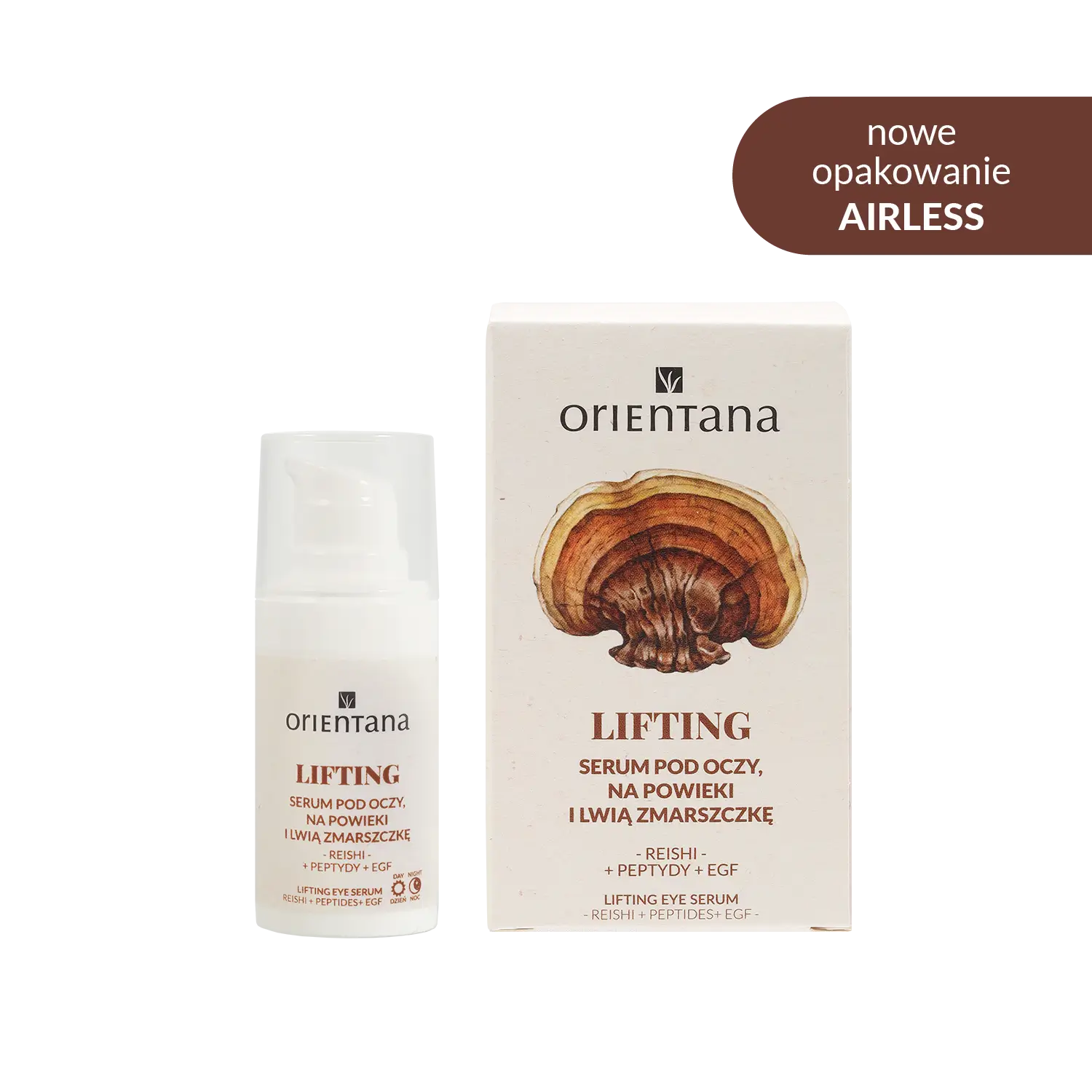
An ideal ingredient for stressed skin, accelerated aging, and barrier dysfunction. Used as a leading ingredient in anti-aging cosmetics .
Phyto ingredients - intelligent active ingredients
Phytocollagen - a vegan ingredient obtained from microalgae, is actually collagen amino acids that firm and tighten the skin.
Plant-derived ceramides obtained from Japanese yuzu, structurally similar to human skin ceramides, bind to the intercellular cement, sealing the stratum corneum. Present in Orientana 's Yuzu Ceramide B cream-mask , they have a repairing and barrier effect, which is crucial for hypersensitive and dehydrated skin.
Phyto retinol - read more
Phytohormones - read
Phyto mucin - read up.
Moisturizing vs. Hydration - Not Every Cream Really "Moisturizes"
A big myth in skincare is the belief that a “moisturizer” is enough to keep skin healthy.
Cosmetically we have two processes:
- Hydration (humectants) - substances such as glycerin, hyaluronic acid, trehalose that attract water.
- Moisturizing (emollients/lipids) - ingredients that create a biocompatible lipid film that retains moisture.
If you only use humectants without lipids, you dry out your skin even more because water evaporates faster.
Step-by-step skin care – a cosmetologist's protocol based on physiology
Step 1: Cleansing – without disturbing the hydrolipid barrier
The first step in skincare is the cleansing product. Its quality determines the appearance of the hydrolipid barrier after treatment.
Mistake of 80% of patients: strongly foaming gels, "creaky" cleansing and tonics with alcohol - this leads to chronic dehydration and hyperreactivity of the skin.
Choose formulas that support the microbiome , not “sterilize the skin.”
Step 2: Hydration – humectants as “structured water” for the skin
The skin doesn't need "water from the outside," but rather active water transport into the intercellular cement. This is where humectants come into play: glycerin, trehalose, betaine, aloe vera juice, ferments, and the snow fungus tremella .
Step 3: Moisturizing – rebuilding protective lipids
If you apply a moisturizing serum without following it with a cream or oil, the effect is superficial and short-lived. The skin becomes even drier because water evaporates faster, drawing water from deeper layers of the skin. This is where lipid-based products should be effective.
Step 4: Protection – antioxidants and adaptogens
Skin aging is primarily caused by oxidative and inflammatory stress. Antioxidants reduce free radicals, inhibiting the degradation of collagen and elastin. Orientana offers natural antioxidants, including ashwagandha and centella.
Step 5: Regulating the microbiome – long-term care
Often overlooked, yet absolutely crucial, if the microbiome is disturbed, the skin will react with seborrhea, inflammation, or dryness—regardless of the cream. Orientana uses, among other things, plant ferments that are biocompatible with skin flora, non-irritating, and support the skin's physiological balance.
Skin and emotions - how stress affects the epidermal barrier
From the perspective of a clinical cosmetologist, it's worth emphasizing that the skin is a neurobiological organ. This means it's directly connected to the nervous system. When cortisol (stress hormone) levels rise, the following occurs:
- slowing down the regeneration of keratinocytes
- decrease in ceramide production in the stratum corneum
- weakening of skin microcirculation
- increased reactivity – redness, burning, itching
This is why many patients say in the office: "When I have a stressful period, my skin reacts immediately." This is no coincidence, because stress literally "opens the barrier", increasing TEWL and the skin's susceptibility to aggressive factors.
The role of touch and massage in skin care
Dermatological studies show that medium-pressure touch (typical of skin massage ) reduces cortisol activity by up to 30% and increases serotonin secretion.
Regularly rubbing oil or cream into the skin is not just "care" - it is a biological signal to the nervous system: "It's safe, you can regenerate."
Orientana cosmetics, especially body and bust massage oils, butters and creams with aromatic extracts, are in line with this philosophy; they not only nourish the skin with lipids, but also have a sensory effect, influencing the limbic system through scent.
Frequently asked questions
Can skin become dry despite using a moisturizer?
Yes. Skin can become dehydrated if a cream contains primarily humectants without lipids. Water evaporates, making the skin even drier.
Why does the skin react red to new cosmetics?
Because the skin's hydrolipid barrier is disturbed, the substances penetrate deeper and cause a neurological reaction and micro-inflammation.
Is sensitive skin the same as reactive skin?
No. Sensitive skin is a structural characteristic, while reactive skin is a temporary condition resulting from a damaged barrier. Reactive skin can be trained to tolerate it.
Can skin “unlearn” lipid production?
Yes. Frequent use of aggressive detergents forces the skin to defend itself and produce excess sebum, or conversely, hypolipidemia, when the sebaceous glands lose their activity.
Does massage improve skin condition or is it just relaxation?
Technically, massage improves skin microcirculation, oxygenates fibroblasts and supports the transport of nutrients - this is real biological stimulation.
Why does skin turn gray and lose its shine?
Lack of oxygen and slowed keratinocyte exfoliation cause the skin to metabolically "die." Regeneration of the barrier and microcirculation is crucial.
Does the skin really absorb active ingredients?
Only those that are biocompatible and have the appropriate molecular weight. Ferments, adaptogens, and phytoceramides are more easily recognized than synthetic polymers.
Can skin be oily and dehydrated at the same time?
Yes, this is a very common occurrence. The skin produces sebum as an attempt to protect itself, but at the same time, it has a high TEWL and is biologically dehydrated.
Can skin become “addicted” to cosmetics?
Not in the chemical sense, but if the hydrolipid barrier is not restored, the skin stops self-regulating.
Remember. Skin doesn't need constant correction, but biological support. Modern cosmetology is moving away from the "skin repair" narrative and replacing it with biomodulation —supporting natural regeneration mechanisms.
Care that respects skin biology is based on:
- gentle cleansing (without removing lipids),
- hydration with humectants (Tremella, aloe),
- locking in moisture with biocompatible lipids (Yuzu phytoceramides, vegetable oils),
- antioxidant and adaptogenic protection (Reishi, Ashwagandha),
- stimulation through touch and microcirculation (oils and massages),
- maintaining the microbiome (ferments and plant extracts of Orientana).
The skin doesn't expect "strong cosmetics" from us, but rather intelligent support for its own defense mechanisms. This allows it to regenerate itself, and this is the true essence of conscious skincare.