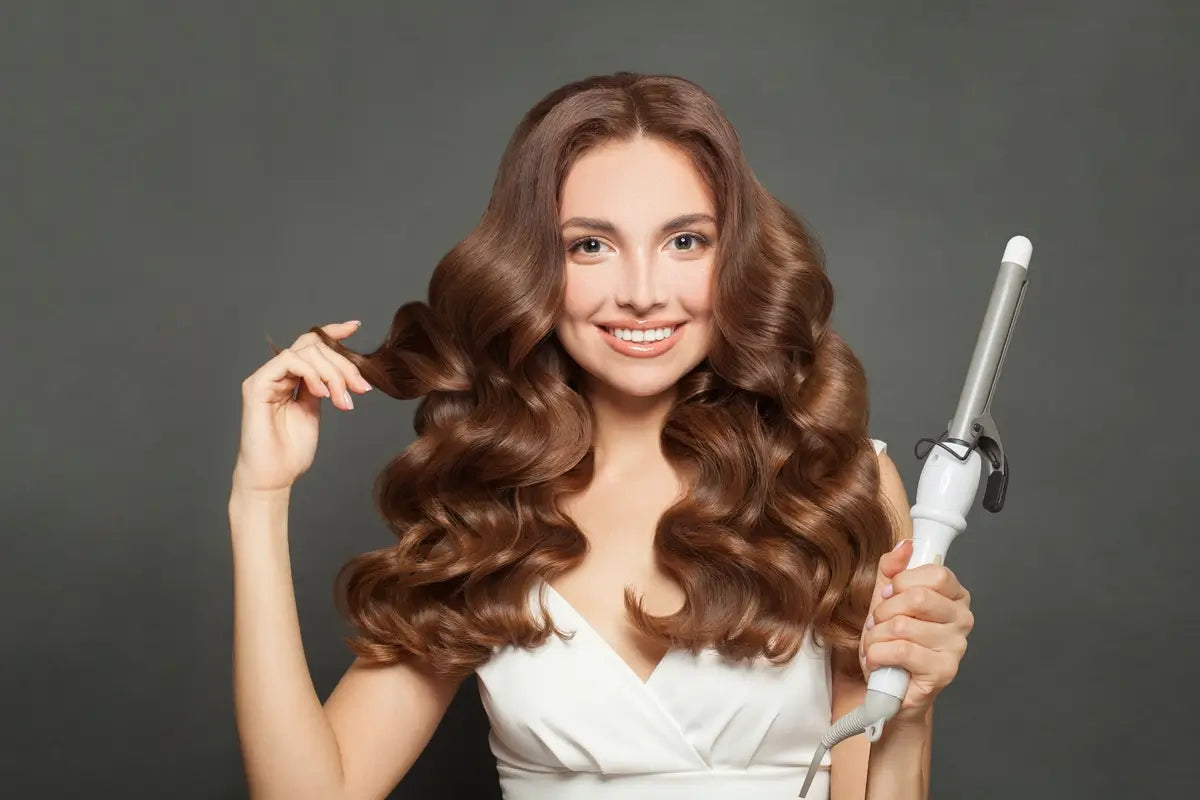
A straightener is one of the most popular hair styling tools. It quickly achieves smooth, straight strands and an elegant finish. However, frequent use of a straightener, especially at high temperatures, can damage the hair structure: drying out ends, weakening the cuticle, leading to brittleness and dullness. On the other hand, if you choose a good straightener and apply proper hair care, you can enjoy a smooth effect without excessively weighing down your hair.
In this post, I will share knowledge on how to choose a straightener, what to look for, how to use it safely, and also what to do if you want to avoid a straightener altogether but still achieve a smoothing effect. In this context, I will show natural solutions—including Orientana serum—that can replace heat styling.
Table of Contents
- What is a straightener and how does it work?
- Types of straighteners
- Types of plates - how they affect hair
- Straightener temperature - what is safe?
- Key features of modern straighteners
- Straightener and different hair needs
- How to use a straightener without damaging hair
- Heat protection care before styling
- Common straightening mistakes
- Does a straightener damage hair? Facts and myths
- Hair care after straightening
- What instead of a straightener? - natural smoothing methods
- Natural smoothing cosmetics - the role of Orientana serum
- Frequently asked questions
What is a straightener and how does it work?
A straightener is a heating device that straightens hair by passing it through heated plates (ceramic, titanium, tourmaline, etc.). The hair's structure is altered as the keratin in the hair is loosened by heat, and the cuticle opens, allowing for lasting "smoothing" of the strand. However, this heat can also be the biggest threat: without proper protection and care, hair can become dry, brittle, and dull.
Therefore, a straightener is an effective tool but requires careful use.
Types of straighteners
Straighteners available on the market differ in features, technology, and purpose. Here are the most popular types:
- Classic straighteners: with a single pair of plates, heating to a set temperature.
- Steam straighteners: emit steam during straightening, which helps moisturize hair, reduce dryness, and frequency of damage.
- Infrared straighteners: gentler on hair, heating the internal layers of the hair, providing a smooth effect.
- Cordless straighteners: convenient for travel, though often with limited power.
- Mini travel straighteners: compact, for touch-ups during the day.
- 2-in-1 or multifunctional straighteners, e.g., with curling or waving functions, in addition to straightening.
The choice depends on your hair's needs: its thickness, porosity, elasticity, and styling frequency.
Hair treated with a straightener needs moisturizing. Use mists.

Types of plates - how they affect hair
Straightener plates are one of the key factors determining the effect and safety of styling:
- Ceramic - heat evenly, provide gentle heat, less harmful to hair; good for fine and medium hair.
- Tourmaline - thanks to ionization, they reduce frizz and static; hair becomes smooth and shiny.
- Titanium - fast heating, high temperature; good for thick, coarse, and stubborn hair.
- Plates with additives (keratin / oils / protective coatings) - offer additional smoothing and shine; can help reduce damage.
- Plate width - narrower plates are better for precise straightening of thin strands, wider ones - for faster work on long hair.
Choosing plates according to hair type and needs significantly affects the result and condition of hair after styling.
Straightener temperature - what is safe?
The straightener temperature should be adjusted to the condition and type of hair:
- Fine, delicate hair - 150–170 °C.
- Normal, healthy hair - 170–190 °C.
- Thick, strong, stubborn hair - 190–220 °C.
The ability to adjust the temperature is crucial; lack of this option is a sign to skip the straightener.
Key features of modern straighteners
Modern straighteners often offer additional features that improve the effect and minimize damage:
- Ionization - reduces frizz, smooths the hair cuticle.
- Infrared - gentler on hair structure.
- Steam function - adds moisture during styling.
- Floating plates - better adapt to hair when clamped, reducing "pulling."
- Automatic shut-off / temperature sensors - increase safety.
- Fast heating (PTC, MCH) - saves time.
- Care / shine mode - provides a smooth and glossy effect.
When choosing a straightener, it is worth checking if it offers at least some of these functions.
Trycho Lychee conditioner-mask perfectly regenerates hair subjected to straightening.

Straightener and different hair needs
Depending on the condition and state of the hair, a straightener can work differently:
- Dry, damaged hair - requires lower temperature and thermal protection.
- High porosity hair - frizzes more easily, so it is worth using ionization or steam.
- Wavy / slightly curly hair - a straightener provides a quick effect, but the risk of dryness is greater.
- Color-treated hair or chemically treated hair - particularly susceptible to weakening - needs a delicate approach.
Always adjust the temperature and device functions to the actual needs of your hair, not just the desired effect.
How to use a straightener without damaging hair
To minimize the risk of damage:
- Use the straightener on completely dry, brushed hair.
- Divide hair into thin sections, this allows for straightening at a lower temperature, with less strain.
- Try to make a maximum of one pass with the straightener on each section.
- Do not stop the straightener in one place, move the plates smoothly.
- Regularly clean the straightener plates, accumulated product can burn hair.
Such a conscious approach significantly reduces the risk of dryness, brittleness, and dullness.
Heat protection care before styling
Before using a straightener, it is always worth applying a heat-protective cosmetic, e.g., a light serum, oil, or spray with polymers/waxes. This closes the hair cuticle, and heat does not act directly on the keratin.
Lack of such protection is a straight path to dryness, damage to the structure, and weakening of the hair.
Common straightening mistakes
- Setting too high a temperature relative to the hair structure.
- Straightening wet or damp hair.
- Lack of thermal protection.
- Straightening daily - lack of regenerative breaks.
- Using dirty or damaged plates.
- "Straightening against the grain," i.e., continuously straightening the same spots.
Avoiding these mistakes significantly extends the healthy condition of the hair.
Does a straightener damage hair? Facts and myths
Yes - if used improperly. Under high temperatures, keratin can denature, hair loses water, the cuticle remains open, leading to dryness, brittleness, dullness, and frizz.
No - if you use the appropriate temperature, thermal protection, and care. Then the straightener can be a safe styling tool.
Much depends on awareness - how, when, and with what products you use the straightener.
Hair care after straightening
After heat styling, it's worth supporting your hair:
- by using emollients and humectants to moisturize the strands;
- regenerating masks, protein or amino acid conditioners to strengthen the hair from within;
- oils / protective serums on the ends to prevent splitting and dryness;
- regular trimming of ends to remove damage and support healthy growth.
Thanks to this, hair will regain elasticity, shine, and strength.
What instead of a straightener? - natural smoothing methods
If you want to minimize the risk of damage and avoid a straightener, it's worth reaching for methods without high temperatures:
- Straightening rollers - allow you to achieve smoothness and natural hair arrangement without heat.
- Smoothing brushes - with dense bristles that mechanically tame hair and reduce frizz.
- Cold-styling / wet styling - drying with cool air + combing and stretching hair, which closes the cuticle.
- Smoothing cosmetics - serums, oils, light masks that close the cuticle, moisturize, and protect the hair structure without heat.
These are convenient and much gentler options for hair - especially if you style frequently, have fine or damaged hair, or want to give it a break.
Natural smoothing cosmetics - the role of Orientana serum

Orientana offers a product that works great as a natural alternative to a straightener: Trichological smoothing hair serum Lychee Gluconolactone Pectin Lactic Acid.
Why consider it?
- The serum can smooth hair and give it smoothness and shine without using heat. (
- It contains ingredients such as gluconolactone, pectins, lactic acid — which moisturize and strengthen the hair structure, restoring elasticity and resistance.
- After use, hair becomes soft, easy to comb, less frizzy, smells beautiful, and looks healthier.
How to use Orientana serum - step by step
- Spray the serum on damp or dry hair, focusing on the lengths (not the scalp).
- Comb hair with a wide-tooth comb - to distribute the product evenly.
- Leave to air dry or style - without using a straightener or hairdryer.
- Use regularly, preferably as the last step in your hair care routine, so that hair is constantly protected, smooth, and shiny.
For many people, this serum becomes a daily alternative to heat styling, especially if hair needs regeneration or we want to reduce the risk of damage.
Frequently asked questions
Can I completely give up a straightener and only use serum / smoothing cosmetics?
Yes, especially for fine, damaged, frizzy hair. Serum + appropriate care are often enough to achieve smoothness and discipline.
Will Orientana serum also work for very frizzy or high porosity hair?
Yes, moisturizing and film-forming ingredients help close the cuticle, reducing frizz and static.
Do smoothing cosmetics (without a straightener) provide a lasting effect?
The effect is not as lasting as with a straightener, but regular use improves hair structure, making hair naturally smoother and less dependent on heat styling.
Does the serum need to be rinsed off?
No, it's a leave-in product that works all day/night, protecting hair and giving it smoothness.
Can Orientana serum be used daily?
Yes, its light formula and natural ingredients make it safe for daily use.
A straightener is an effective styling tool but only when used consciously: with the right temperature, thermal protection, and proper care. However, if you care about hair health, elasticity, moisture, and want to reduce the risk of damage - it's worth considering alternatives.
Natural smoothing methods, especially using Orientana serum, are a gentle, effective, and daily option. Thanks to this, hair can be smooth, shiny, and healthy without heat, without brittleness, without dryness.
Take smart care of your hair - try natural solutions, let it breathe and regenerate.