
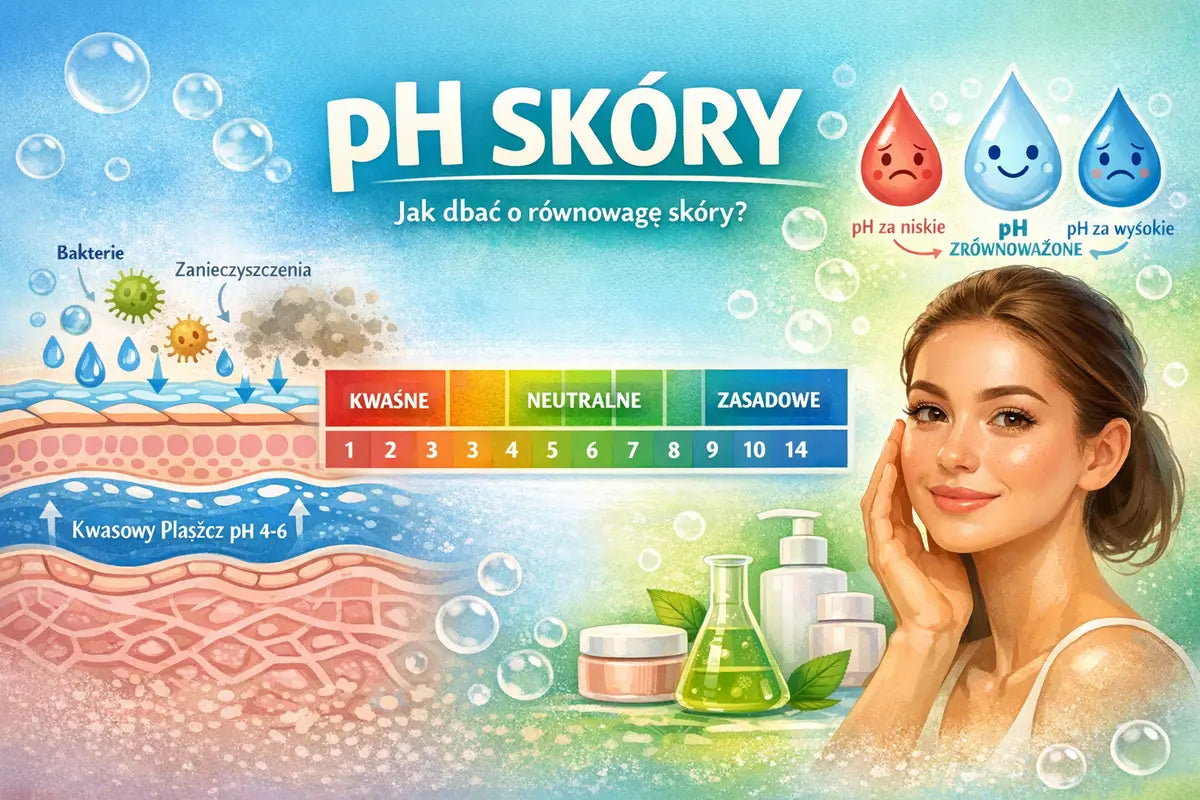
Skin pH is one of those parameters that is becoming increasingly popular, yet it's still often underestimated in daily skincare. However, the proper pH determines the condition of the skin's protective barrier, hydration levels, resistance to irritation, and even susceptibility to imperfections or premature aging.
Skin can appear dry, sensitive, oily, or problematic not because it's "your skin type," but because its natural balance has been disrupted. One of the main warning signs is an imbalance in skin pH.
In this article we explain:
- what exactly is skin pH,
- what pH is considered normal,
- which lowers or raises the skin's pH,
- how to restore balance with care,
- and what ingredients support the skin's natural environment.
Contents
- What is skin pH?
- What skin pH is considered normal?
- Why is a slightly acidic pH so important?
- What disturbs the skin's pH?
- Symptoms of abnormal skin pH
- How does care affect skin pH?
- How to restore the proper skin pH step by step
- The best ingredients to support pH balance
- Skin pH and different skin types
- FAQ - Frequently asked questions about skin pH
What is skin pH?
pH is an indicator of whether a given environment is acidic, neutral, or alkaline. The pH scale ranges from 0 to 14:
- pH 0-6.9 - acidic environment
- pH 7 - neutral
- pH 7.1-14 - alkaline environment
In the case of skin, we talk about the so-called acid mantle. It is a thin layer located on the surface of the epidermis, composed of:
- sebum,
- sweat,
- lipids,
- natural moisturizing factors (NMF),
- metabolites of microorganisms living on the skin.
This coat forms the first line of defense against external factors and regulates the living environment of the skin microbiome.

What skin pH is considered normal?
Normal skin pH is usually in the range of 4.5-5.5 . This means the skin should be slightly acidic.
This range is not accidental. In such an environment:
- enzymes responsible for epidermis renewal work most effectively,
- the hydrolipid barrier functions properly,
- the development of pathogenic bacteria is inhibited,
- the skin microbiome remains in balance.
Slight deviations from this range may already affect the appearance and comfort of the skin.
Why is a slightly acidic pH so important?
A slightly acidic pH serves several key functions:
First, it strengthens the skin's protective barrier. A healthy pH promotes the production of intercellular lipids, which seal the epidermis and prevent water loss.
Secondly, it protects against microorganisms. In an acidic environment, pathogenic bacteria, fungi, and viruses have a much harder time multiplying.
Third, it supports natural regeneration processes. Enzymes responsible for exfoliation and cell renewal work best at a pH of around 5.
When the skin's pH shifts towards the alkaline side, defense mechanisms weaken and the skin becomes more susceptible to damage.
What disturbs the skin's pH?
The most common factors that disturb the skin's pH include:
- aggressive cleaning agents with high pH,
- frequent washing of the face with hot water,
- alcohol abuse in cosmetics,
- excessive exfoliation,
- stress,
- environmental pollution,
- UV radiation.
Cleansing is particularly important - it is the first step in skincare, which can either protect the skin's pH or systematically destroy it.

Symptoms of abnormal skin pH
Disturbed skin pH doesn't always manifest itself immediately with dramatic changes. Often, these are subtle signals that can easily be attributed to a "bad skin day" or a change in the weather.
The most common symptoms of abnormal pH include:
- feeling of tightness after washing,
- burning or stinging after applying cosmetics,
- excessive dryness despite the use of creams,
- tendency to irritation and redness,
- increased number of blackheads and pimples,
- simultaneous oiliness and dryness (so-called dehydrated skin).
When the skin's pH shifts toward alkaline, the protective barrier becomes less permeable. The skin loses water more quickly and reacts more easily to irritants.
How to check skin pH?
The most accurate skin pH measurements are performed in beauty salons using specialized equipment. Home pH test strips also exist, but their results should be considered approximate.
In everyday practice, observing the skin reaction is much more important than the measurement itself:
- do you feel comfortable or tight after washing,
- do cosmetics "pinch",
- whether the skin reddens easily,
- whether imperfections appear faster.
It is these signals that most often indicate a disturbed balance.
Skin pH and the hydrolipid barrier
Skin pH and the hydrolipid barrier are closely linked. When pH remains within the physiological range, intercellular lipids arrange themselves into proper structures, creating a tight "brick" of protection.
At elevated pH:
- the production of ceramides decreases,
- transepidermal water loss (TEWL) increases,
- the skin microbiome is disturbed.
As a result, the skin becomes more reactive and less able to tolerate even delicate active ingredients.
Read more about the hydrolipid barrier.
Skin pH and the microbiome
Billions of microorganisms live on the skin's surface, making up the microbiome. Their role includes protecting against pathogens and supporting barrier function.
A slightly acidic pH favors the growth of "good" bacteria, while an alkaline environment facilitates the proliferation of pathogenic microorganisms. Therefore, maintaining a proper pH is one of the foundations of a healthy microbiome.
Read more about the microbiome .
How does care affect skin pH?
Every step of care matters:
Cleaning
The cleaning product has the greatest impact on pH. Products with a pH that is too high can disrupt the protective acid mantle for up to several hours.
Toning
A tonic or lotion helps to more quickly restore the proper skin pH after washing.
Serum and cream
Well-composed formulas support the natural pH regulating mechanisms instead of disrupting them.
Check out our natural facial cosmetics.
Regular, gentle care acts as a systematic "reset" of the skin to a state of balance.
How to restore the proper skin pH step by step
- Replace aggressive gels with gentle cleansing products .
- Avoid washing your face with hot water.
- Use toner or lotion after each cleansing.
- Limit the frequency of exfoliation.
- Include cosmetics that support the hydrolipid barrier.
These simple changes often bring noticeable improvements.
The best ingredients to support skin's pH balance
In cosmetic formulas, it is worth looking for ingredients that:
- strengthen the barrier,
- support the microbiome,
- have a soothing effect.
Such substances include, among others:
- gluconolactone,
- niacinamide,
- panthenol,
- allantoin,
- ceramides,
- betaine,
- ectoine.
These ingredients not only nourish but also help the skin maintain a stable environment.
Skin pH and different skin types
Dry and sensitive skin usually reacts more quickly to pH disturbances.
Oily and acne-prone skin with too high a pH can produce even more sebum.
Mature skin naturally loses its ability to maintain an acidic reaction with age.
That's why every skin type, regardless of type, benefits from care that respects the skin's physiology.
FAQ - Frequently asked questions about skin pH
Can skin pH be “spoiled” with one cosmetic?
A single use of a high pH product typically doesn't cause lasting changes, but regular use can gradually weaken the skin's protective barrier. It then takes the skin longer to regain its balance on its own.
How quickly does the skin return to the correct pH after washing?
In healthy skin, this process takes from several minutes to about two hours. If the hydrolipid barrier is weakened, pH normalization may take much longer.
Is toner really necessary to regulate pH?
Yes. A toner or toning lotion accelerates the recovery of the acidic pH after cleansing and prepares the skin for subsequent care steps.
Do acids change the skin's pH?
Cosmetic acids temporarily lower the skin's pH, which is part of their mechanism of action. With proper use and appropriate regenerative care, the skin quickly returns to its normal pH.
Does oily skin also need cosmetics with low pH?
Yes. Oily skin also thrives in a slightly acidic environment. Too high a pH can further stimulate the sebaceous glands to produce sebum.
Do natural cosmetics always have a good pH?
Not always. The origin of ingredients does not automatically guarantee proper pH. What matters is the final product formulation and its stability.
Does tap water affect skin pH?
Yes. Tap water usually has a pH close to neutral or slightly alkaline, so after washing, it's worth using a toner or lotion to restore the acidity.
What does “pH-friendly” care look like in practice?
Care that supports the proper skin pH is based on three pillars:
Gentle cleansing
Cleaning products should remove contaminants without damaging the protective layer.
Rapid normalization
Toning after each wash helps reduce the time your skin remains at an elevated pH.
Strengthening the barrier
Serums and creams with ceramides, humectants and soothing ingredients support the skin's natural regulatory mechanisms.
This regimen has long-term effects and reduces the skin's susceptibility to irritation.
Why is skin pH the foundation of healthy skin?
Correct skin pH:
- strengthens the hydrolipid barrier,
- protects the microbiome,
- improves the tolerance of active ingredients,
- reduces the tendency to imperfections,
- slows down the aging process.
Without a stable pH, even the best cosmetics will not work optimally.
Summary
Skin pH is one of the most important, yet most underestimated, elements of skincare. A slightly acidic environment is essential for the proper functioning of the skin's protective barrier, microbiome, and regenerative processes.
If your skin is sensitive, often irritated, dry and oily at the same time, or reacts badly to cosmetics, it is worth first taking a closer look at whether your daily care routine supports its natural pH.