

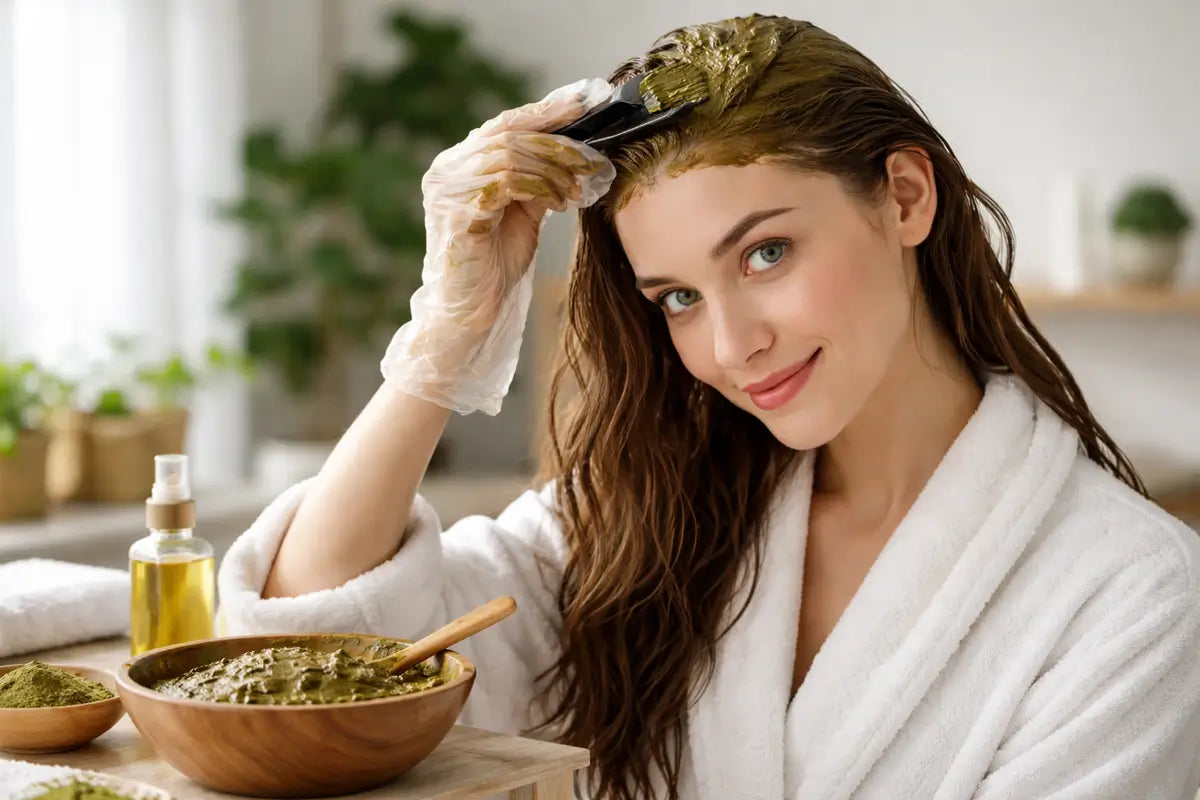
Introduction - hair henna is not a dye. It's a process.
Hair henna doesn't work like classic drugstore hair dye. It doesn't provide a "one-size-fits-all" effect. It doesn't impose color.
Henna works with your hair.
That's why two people using the same mixture can achieve completely different results. And that's what makes henna not just a product - it's an experience. A ritual. A return to conscious hair care.
In this article, you will discover interesting facts that change the way you think about henna. This is knowledge that allows you not only to dye your hair - but to understand it.
What is hair henna really? (and why it works differently than dye)
Henna is made from the leaves of the plant Lawsonia inermis. Its active ingredient is a dye called lawsone.
It is this that is responsible for the entire "magical" effect.
But the key difference is that:
✳️ herbal henna does NOT lighten hair
✳️ herbal henna does NOT open the hair cuticle like chemical dye
✳️ herbal henna does NOT damage the hair structure
Instead, it binds to the hair's keratin.
This can be compared to the biological "envelopment" of the hair with pigment. Lawsone binds to proteins, creating a lasting but natural coloring effect.
What's more, hair henna also has a protective effect:
- it forms a protective layer on the hair
- it can partially protect against UV radiation
- it smooths the hair surface
✳️ In practice: color + care in one.
Learn more about hair henna in our guide: Orientana Henna
Why does hair henna never give an identical color?
This is one of the most common questions, and at the same time, henna's greatest advantage.
The final color depends on:
- the natural pigment of the hair (melanin)
- the sulfur content in keratin
- hair porosity
- coloring history
- hair condition
Gray hair?
It will be more intense, sometimes even vivid (because it lacks melanin), if red henna is used. Only red henna will cover gray hair and is therefore also the first stage of dyeing gray hair to another color, e.g. chocolate.
Damaged hair?
It can "grab" more pigment.
Low porosity hair?
The effect will be more subtle and cooler.
✳️ That's why henna never gives a "one-color-from-the-box" result. It gives your color.
Oxidation effect - why does the color change after 2 days?
This is the moment that surprises most people.
After rinsing off henna, the color often appears lighter, more reddish, or more intense.
And then... it changes.
Why?
The lawsone dye oxidizes under the influence of oxygen. This process takes:
✳️ from 24 to even 72 hours
During this time:
- the color deepens
- becomes more natural
- often slightly darkens
✳️ Therefore, do not judge the effect immediately after dyeing.
It's a bit like tea - it needs time to "mature".
Henna and pH - the secret only insiders know
The pH of the henna mixture has a huge impact on the hair coloring effect.
Acidic environment:
- releases more pigment
- gives a deeper, more intense color
That's why it's often used:
- lemon juice
- amla
- hibiscus
Whereas a neutral or slightly alkaline environment:
- gives a more delicate effect
✳️ This means you can consciously control the color.
Does henna thicken hair? Science says: yes
One of the most visible effects of using hair henna is:
✳️ increased hair volume
Why?
Henna:
- creates a thin layer on the hair surface
- increases its diameter
- smoothes the cuticles
Effect:
- hair appears thicker
- is more shiny
- frizz is reduced
✳️ This is natural hair "lamination".
Amla and other herbs - how they affect color and care
Henna rarely works alone. Most often, it is combined with other plants.
Amla
- cools the shade
- reduces redness
- strengthens hair
Bhringraj
- supports hair follicles
- may reduce hair loss
Neem
- works on the scalp
- supports microbiome balance
✳️ This is no longer just coloring. It's trichological care.
Color mixing - natural hair colorimetry
Henna gives warm shades – from copper to mahogany.
But what about browns and blacks?
Here enters the second hero: indigo.
✳️ henna = red pigment
✳️ indigo = blue pigment
Together:
- they create browns
- they create blacks
And now the most important thing:
- more henna → warmer shade
- more indigo → cooler shade
✳️ It's like mixing paints... but 100% naturally.
Hair Henna vs. Chemical Dyes - What You Need to Know
This is a topic that requires honesty.
Henna:
- does not work like chemical dye
- does not give a predictable result with subsequent chemical dyeing
After henna:
✳️ dye may take differently
✳️ color may be difficult to predict
Therefore:
- it is worth planning your coloring consciously
- do not treat henna as "temporary"
✳️ Henna is a decision, not a temporary experiment.
Biggest myths about hair henna
"Henna dries out hair"
No. A poorly chosen mixture might give that impression, but henna itself smoothes and strengthens hair.
"Henna only gives red color"
Not true. Thanks to mixtures, a full spectrum of shades can be achieved.
"Does not cover gray hair"
It does – often even better than dyes.
"It's difficult to use"
It's a matter of practice. After 2-3 uses, it becomes intuitive.
Henna in culture - more than cosmetics
Henna has been part of rituals for thousands of years.
- India – mehendi decorations before marriage
- Egypt – used by aristocracy
- Middle East – symbol of protection and happiness
✳️ Hair color had cultural and spiritual significance.
How hair "learns" henna
This is one of the most fascinating aspects.
With regular use:
- the color becomes more stable
- hair "acts up" less color-wise
- the effect is more predictable
✳️ pigment accumulates
This means that:
Your henna after 3 months will work differently than at the beginning.
Pro tips that make a huge difference
- heat = more intense color
- longer time = deeper effect
- oiling before henna = more subtle shade
- strand test = must-have
Your henna = Your color
Henna gives something no other dye can.
✳️ control
✳️ personalization
✳️ care
If you want:
- natural color
- healthier hair
- a "wow" effect that doesn't look artificial
✳️ reach for henna and start experimenting.
Check out our henna and create your own unique shade
FAQ
Why does henna change color after 2 days?
Because the pigment oxidizes under the influence of oxygen and deepens the color.
Does henna damage hair?
No, it acts superficially and strengthens the hair.
Can henna be mixed with other herbs?
Yes – this is the basis for color personalization and care.
Does henna thicken hair?
Yes – it creates a protective layer and increases optical volume.
How to cool down henna color?
By adding amla or increasing the indigo content.
Does henna cover gray hair?
Yes - often very intensely.
Summary
Hair henna is not for everyone.
But if you understand it – you won't want to go back to dyes.
It's not a product.
It's a relationship with your own hair.
And that's why... it works so well.
Related Posts

NAD+ w kosmetykach - co to jest i jak działa na skórę?
NAD+ w kosmetykach to koenzym naturalnie obecny w komórkach skóry, wykorzystywany w nowoczesnych formulacjach z nurtu longevity skincare. W tym przewodniku wyjaśniamy, co to jest NAD+, czym różni się od niacynamidu, NMN i NR, jak stosować kosmetyki z NAD+ oraz dla jakiej skóry mogą być odpowiednim wyborem. Spis treści Co to jest NAD+? NAD+ od jakiego wieku warto stosować w pielęgnacji? Co to jest longevity skincare? NAD+, niacynamid, NMN, NR i „Booster NAD+” – czym się różnią? NAD+ w kremie a suplement lub kroplówka NAD+ – czym się różnią? Jak NAD+ działa na skórę? Dla kogo są kosmetyki z NAD+? NAD+ w kosmetykach naturalnych – podejście Orientana Krem, serum czy krem pod oczy z NAD+ – co wybrać? Jak stosować kosmetyki z NAD+? Czy NAD+ jest bezpieczny? Jak wybrać dobry kosmetyk z NAD+? Kosmetyki z NAD+ Orientana – seria LONGEVITY CODE FAQ – NAD+ w kosmetykach Co to jest NAD+? NAD+ to skrót od dinukleotydu nikotynoamidoadeninowego, po angielsku nicotinamide adenine dinucleotide. Jest naturalnie występującym w organizmie koenzymem, obecnym między innymi w komórkach skóry. NAD występuje w dwóch wzajemnie przekształcających się formach: NAD+ - formie utlenionej, NADH - formie zredukowanej. Zdolność przyjmowania i przekazywania elektronów sprawia, że NAD jest jednym z ważnych elementów metabolizmu komórkowego. Uczestniczy w reakcjach związanych z pozyskiwaniem energii oraz jest wykorzystywany przez enzymy regulujące różne procesy zachodzące w komórkach. NAD+ jest między innymi substratem dla sirtuin oraz enzymów PARP. Sirtuiny to rodzina enzymów uczestniczących w regulacji metabolizmu komórkowego i odpowiedzi komórek na stres. Są to procesy biologiczne zachodzące na poziomie komórkowym i nie należy ich automatycznie utożsamiać z efektem gotowego kosmetyku na skórze. Badania nad metabolizmem NAD+ są rozbudowane, ale niezależne dane kliniczne dotyczące bezpośredniego stosowania NAD+ w klasycznych kosmetykach do codziennej pielęgnacji są nadal ograniczone. Skład i właściwości NAD+ NAD+ jest koenzymem nukleotydowym zbudowanym z dwóch połączonych części zawierających adeninę i nikotynamid. Jego budowa umożliwia udział w reakcjach utleniania i redukcji zachodzących w komórkach. Na poziomie biologii komórki NAD+: uczestniczy w przemianach energetycznych i procesach związanych z powstawaniem ATP, jest kofaktorem wielu reakcji metabolicznych, jest wykorzystywany przez enzymy z rodziny sirtuin, stanowi substrat dla enzymów PARP, uczestniczy w sygnalizacji komórkowej i utrzymaniu homeostazy komórek. W składzie INCI bezpośrednio stosowany NAD może występować pod nazwą NICOTINAMIDE ADENINE DINUCLEOTIDE. Baza COSMILE Europe klasyfikuje ten składnik jako skin conditioning, czyli składnik pomagający utrzymać skórę w dobrej kondycji. NAD+ od jakiego wieku warto stosować w pielęgnacji? Nie ma jednej granicy wieku, od której należy zacząć stosowanie kosmetyków z NAD+. W pielęgnacji ważniejsze od metryki są aktualne potrzeby i kondycja skóry. Kosmetyki z NAD+ mogą być interesującym elementem pielęgnacji wtedy, gdy zależy nam na wspieraniu nawilżenia, wygładzenia, komfortu skóry i jej dobrej kondycji. Szczególnie często składnik ten pojawia się w kosmetykach kierowanych do cery dojrzałej po 40. roku życia, kiedy częściej obserwujemy suchość, utratę jędrności, nierówną strukturę skóry czy bardziej widoczne zmarszczki. Nie oznacza to jednak, że NAD+ jest składnikiem przeznaczonym wyłącznie dla skóry dojrzałej. W podejściu longevity kosmetyki dobiera się przede wszystkim do potrzeb skóry, a nie do konkretnego wieku. Co to jest longevity skincare? Longevity skincare to podejście do pielęgnacji skoncentrowane na długofalowym utrzymaniu skóry w dobrej kondycji. Zamiast skupiać się wyłącznie na szybkim maskowaniu oznak starzenia, bierze pod uwagę między innymi nawilżenie, barierę hydrolipidową, ochronę przed promieniowaniem UV i stresem oksydacyjnym oraz dobrze tolerowaną, regularną pielęgnację. NAD+ pojawia się w tym nurcie ze względu na swoją biologiczną rolę w metabolizmie komórkowym. Nie oznacza to jednak, że sam kosmetyk zawierający NAD+ zatrzymuje lub cofa biologiczne starzenie skóry. Zakres jego działania zależy od pełnej receptury, sposobu aplikacji i badań gotowego produktu. Kosmetyki longevity - na czym polega pielęgnacja longevity? Kosmetyki longevity wpisują się w podejście, którego celem nie jest „zatrzymanie wieku”, lecz jak najdłuższe wspieranie dobrej kondycji skóry. Pielęgnacja longevity koncentruje się na takich obszarach jak utrzymanie prawidłowego nawilżenia, ochrona bariery hydrolipidowej, antyoksydacja, wsparcie regeneracji oraz ograniczanie wpływu czynników przyspieszających widoczne oznaki starzenia. W nowoczesnym NAD+ skincare NAD+ może być jednym z elementów takiej formuły, obok ceramidów, peptydów, antyoksydantów, niacynamidu czy składników nawilżających. Samo występowanie NAD+ w INCI nie przesądza jednak o działaniu kosmetyku – liczy się całość receptury i badania gotowego produktu. Wiecej o tym przeczytasz we wpisie Skin longevity - jak dbać o skórę, by jak najdłużej była w dobrej kondycji? NAD+, niacynamid, NMN, NR i „Booster NAD+” – czym się różnią? Nie są to synonimy. Związki te są powiązane z metabolizmem NAD+, ale mają inną budowę i nie można przypisywać im tych samych wyników badań. NAD+ Czym jest? Gotowy koenzymZwiązek z NAD+: uczestniczy w procesach metabolicznych komórekW kosmetykach: w INCI: Nicotinamide Adenine Dinucleotide NADH Czym jest? Zredukowana forma NADZwiązek z NAD+: wzajemnie przekształca się z NAD+W kosmetykach: nie jest tym samym co NAD+ Niacynamid Czym jest? Forma witaminy B3Związek z NAD+: jeden z prekursorów wykorzystywanych do syntezy NAD+W kosmetykach: w INCI: Niacinamide Przeczytaj Niacynamid - co to jest i dlaczego warto włączyć do pielęgnacji skóry? NMN Czym jest? Mononukleotyd nikotynamidowyZwiązek z NAD+: prekursor NAD+ w szlakach metabolicznychW kosmetykach: nie jest gotowym NAD+ NR Czym jest? Nikotynamid rybozydZwiązek z NAD+: prekursor NAD+ W kosmetykach: w INCI Nicotinamide Riboside Chloride Booster NAD+ Czym jest? Określenie marketingowe, nie jedna substancjaZwiązek z NAD+: może oznaczać NAD+, jego prekursor lub kompleks składnikówW kosmetykach: wymaga sprawdzenia INCI i dokumentacji surowca NAD+ a niacynamid Niacynamid nie jest NAD+. Jest formą witaminy B3, którą organizm może wykorzystywać jako jeden z substratów do syntezy NAD+. Dla niacynamidu istnieje więcej danych klinicznych dotyczących stosowania miejscowego na skórę. Wyników tych badań nie należy jednak automatycznie przypisywać bezpośrednio NAD+. NAD+ a NMN i NR NMN oraz NR są prekursorami NAD+, czyli związkami wykorzystywanymi przez organizm w szlakach prowadzących do jego powstawania. Są innymi cząsteczkami niż gotowy NAD+. Co oznacza „Booster NAD+”? Określenie „Booster NAD+” nie jest nazwą jednego, ściśle zdefiniowanego składnika kosmetycznego. W zależności od produktu może oznaczać: bezpośrednio NAD+, prekursor NAD+, kompleks kilku substancji, surowiec opracowany z myślą o mechanizmach związanych z metabolizmem NAD+. Dlatego warto czytać pełny skład INCI i opis zastosowanego surowca, zamiast oceniać kosmetyk wyłącznie na podstawie nazwy marketingowej. NAD+ w kremie a suplement lub kroplówka NAD+ – czym się różnią? NAD+ stosowany w kosmetykach należy odróżnić od suplementów diety, prekursorów NAD+ oraz kroplówek oferowanych w kontekście wellness i longevity. Są to zupełnie różne sposoby zastosowania, dlatego danych dotyczących jednego z nich nie można automatycznie odnosić do pozostałych. Krem lub serum z NAD+ działa miejscowo, czyli jest aplikowane bezpośrednio na skórę i powinno być oceniane przede wszystkim na podstawie całej formulacji kosmetyku, stabilności składnika oraz badań gotowego produktu. Suplementy i preparaty podawane ogólnoustrojowo dotyczą natomiast metabolizmu całego organizmu i podlegają innym mechanizmom działania. Dlatego informacje o suplementacji NAD+, NMN czy NR albo o kroplówkach NAD+ nie są dowodem na skuteczność kosmetyku z NAD+. W pielęgnacji skóry najważniejsze są właściwości konkretnej formuły i efekty potwierdzone dla gotowego produktu. Jak NAD+ działa na skórę? Komórki skóry, podobnie jak inne komórki organizmu, wykorzystują NAD+ w podstawowych procesach metabolicznych. NAD+ bierze udział w przemianach energetycznych i jest wykorzystywany przez enzymy uczestniczące w regulacji odpowiedzi komórki na stres. Z tego powodu metabolizm NAD+ jest intensywnie badany w kontekście starzenia organizmu oraz skóry. Badania wskazują, że poziom NAD+ może zmieniać się wraz z wiekiem, jednak siła dowodów nie jest jednakowa dla wszystkich tkanek i grup badanych. Promieniowanie UV i inne czynniki środowiskowe mogą również wpływać na homeostazę i metabolizm komórek skóry. Nie oznacza to jednak, że sam krem z NAD+ chroni przed promieniowaniem UV albo zastępuje filtr przeciwsłoneczny. Co to oznacza dla kosmetyków z NAD+? NAD+ jest interesującym składnikiem nowoczesnych formulacji, zwłaszcza produktów przeznaczonych do skóry: dojrzałej, z pierwszymi oznakami starzenia, suchej lub odwodnionej, zmęczonej i pozbawionej blasku, o nierównym, szarym kolorycie, narażonej na stres środowiskowy, wymagającej pielęgnacji wspierającej dobry wygląd i kondycję. Biologiczna rola NAD+ nie jest jednak dowodem, że każdy krem z NAD+ zwiększa poziom tego koenzymu w komórkach, „naprawia DNA” albo odmładza komórki. Takie deklaracje wymagałyby odpowiednich badań konkretnej formulacji. Najlepszym źródłem informacji o działaniu kosmetyku są wyniki badań gotowego produktu, a nie wyłącznie dane o pojedynczym składniku lub szlaku metabolicznym. Dla kogo są kosmetyki z NAD+? Kosmetyki z NAD+ mogą być elementem pielęgnacji osób, którym zależy na utrzymaniu skóry w dobrej kondycji. O tym, czy konkretny produkt będzie odpowiedni, decyduje jednak jego pełna receptura. Mogą sprawdzić się szczególnie w pielęgnacji: skóry dojrzałej i skóry po 40. roku życia – gdy pojawiają się zmarszczki, utrata jędrności, elastyczności i blasku; skóry z pierwszymi oznakami starzenia – szczególnie wtedy, gdy zaczynają być widoczne drobne linie i pierwsze zmarszczki mimiczne, a zależy Ci na regularnej, długofalowej pielęgnacji; skóry w okresie menopauzy – kiedy częściej może pojawiać się suchość, uczucie mniejszego komfortu, utrata jędrności czy zmiana struktury skóry; w takim przypadku szczególne znaczenie ma cała formuła kosmetyku i obecność składników nawilżających, lipidowych oraz wspierających barierę; cery szarej, zmęczonej i pozbawionej blasku – zwłaszcza gdy NAD+ połączono ze składnikami nawilżającymi lub antyoksydacyjnymi; skóry suchej i odwodnionej – jeśli formuła zawiera również humektanty, emolienty, ceramidy lub inne składniki wspierające barierę; skóry z osłabioną barierą hydrolipidową – szczególnie jeśli kosmetyk łączy NAD+ z ceramidami, skwalanem, olejami, masłami lub innymi składnikami pomagającymi ograniczyć uczucie suchości i ściągnięcia; cery narażonej na stres środowiskowy – pod warunkiem, że receptura została uzupełniona o odpowiednie antyoksydanty; cery wrażliwej – jeżeli produkt ma łagodną formulację i jest dobrze tolerowany. Nie istnieje określony wiek, od którego „trzeba” stosować NAD+. Kosmetyk dobiera się do aktualnych potrzeb i kondycji skóry, a nie wyłącznie do metryki. Szukasz pełnej rutyny longevity? Zobacz kosmetyki z NAD+ Orientana i sprawdź składy INCI oraz wyniki badań poszczególnych produktów. NAD+ w kosmetykach naturalnych – podejście Orientana Nowoczesna pielęgnacja może łączyć składniki otrzymywane metodami biotechnologicznymi z konkretnymi ekstraktami roślinnymi, adaptogenami, emolientami i substancjami wspierającymi barierę hydrolipidową. W kosmetykach LONGEVITY CODE Orientana x Julia Kamińska obok NAD+ znajdują się między innymi kurkuma (Curcuma Longa Rhizome Extract), morwa biała (Morus Alba Leaf Extract), wąkrota azjatycka (Centella Asiatica Leaf Extract), ashwagandha (Withania Somnifera Root Extract), cytryniec chiński (Schizandra Chinensis Fruit Extract), rozmaryn (Rosmarinus Officinalis Leaf Extract) oraz komosa ryżowa (Chenopodium Quinoa Extract). Dobór składników zależy od przeznaczenia konkretnego kosmetyku – inne ekstrakty wspierają formułę rozświetlającą, inne pielęgnację bariery hydrolipidowej, a jeszcze inne wygładzenie i komfort skóry. Takie połączenie wpisuje się w charakterystyczne dla Orientany zestawianie składników roślinnych i adaptogennych z nowoczesnymi rozwiązaniami kosmetologicznymi. Sama obecność NAD+ nie przesądza jednak, że kosmetyk jest naturalny albo wegański. Zależy to od źródła surowca, metody jego pozyskiwania oraz składu całego produktu. Informacji należy szukać w deklaracji producenta i dokumentacji konkretnej formulacji. W serii LONGEVITY CODE Orientana x Julia Kamińska NAD+ został wykorzystany jako wspólny element pięciu różnych formuł pielęgnacyjnych. Każdy produkt pełni inne zadanie i łączy NAD+ z odmiennymi składnikami towarzyszącymi. Krem, serum czy krem pod oczy z NAD+ – co wybrać? Wybór kosmetyku z NAD+ powinien zależeć przede wszystkim od potrzeb skóry. Krem z NAD+ na zmarszczki może być dobrym wyborem, jeśli zależy Ci jednocześnie na pielęgnacji skóry dojrzałej, nawilżeniu, wygładzeniu i poprawie komfortu skóry. W przypadku kremu warto zwracać uwagę również na obecność ceramidów, lipidów, peptydów i innych składników wspierających barierę. Serum z NAD+ sprawdzi się wtedy, gdy zależy Ci na bardziej skoncentrowanym etapie pielęgnacji. Szukając informacji pod hasłem „serum z NAD+ opinie”, warto patrzeć nie tylko na recenzje użytkowników, ale przede wszystkim na skład całej formuły oraz wyniki badań gotowego kosmetyku. Krem pod oczy z NAD+ może natomiast odpowiadać na potrzeby delikatnej skóry wokół oczu, szczególnie jeśli jego receptura łączy NAD+ ze składnikami nawilżającymi, wygładzającymi lub wspierającymi jędrność. NAD+ – efekty po jakim czasie stosowania kosmetyku? Nie ma jednego czasu, po którym każdy kosmetyk z NAD+ da taki sam efekt. Zależy to od całej formulacji produktu, częstotliwości stosowania, kondycji skóry oraz rodzaju oczekiwanego rezultatu. Niektóre efekty kosmetyczne, takie jak większy komfort, miękkość czy nawilżenie skóry, mogą być zauważalne stosunkowo szybko. Zmiany dotyczące wygładzenia, wyglądu zmarszczek czy ogólnej kondycji skóry wymagają zwykle regularnego stosowania. Najbardziej miarodajne są wyniki badań wykonanych na konkretnym gotowym kosmetyku, a nie ogólne obietnice przypisywane samemu składnikowi NAD+. Jak stosować kosmetyki z NAD+? Sposób stosowania zależy od rodzaju produktu i całej receptury. Serum z NAD+ lub booster z NAD+ najczęściej nakłada się po oczyszczeniu skóry, a przed kremem. Kolejność pielęgnacji rano delikatne oczyszczanie, tonik lub esencja - opcjonalnie, serum albo booster z NAD+, krem nawilżający z NAD+ krem z filtrem SPF 30–50. Kolejność pielęgnacji wieczorem demakijaż i oczyszczanie, tonik lub esencja - opcjonalnie, serum albo booster z NAD+, krem z NAD+ Nakładaj ilość produktu zalecaną przez producenta. Większa porcja nie musi oznaczać lepszego efektu, może natomiast zwiększyć ryzyko rolowania się kosmetyków lub przeciążenia skóry. Jeżeli podczas warstwowania kosmetyki zaczynają się rolować, nie musi to oznaczać, że składniki są ze sobą niekompatybilne. Przyczyną może być zbyt duża ilość produktu, nakładanie kolejnych warstw bez czasu na ich wchłonięcie albo połączenie kilku formuł tworzących film na powierzchni skóry. Warto wtedy zmniejszyć porcję kosmetyków i odczekać chwilę pomiędzy kolejnymi etapami pielęgnacji. NAD+ na dzień czy na noc? Sam NAD+ nie jest retinoidem ani składnikiem złuszczającym, dlatego nie ma ogólnej zasady ograniczającej go wyłącznie do pielęgnacji wieczornej. Kosmetyki z NAD+ można stosować rano lub wieczorem, jeśli pozwala na to pełny skład produktu. Jeżeli formuła zawiera retinoid, kwasy albo inne składniki wymagające określonego sposobu stosowania, należy przestrzegać instrukcji producenta. Jak wybrać dobry kosmetyk z NAD+? Przy wyborze serum, kremu lub boostera zwróć uwagę na: pełny skład INCI; obecność nazwy NICOTINAMIDE ADENINE DINUCLEOTIDE; informację, czy produkt zawiera bezpośrednio NAD+, prekursor czy kompleks typu „Booster NAD+”; składniki towarzyszące, np. ceramidy, peptydy, bioretinol, kwas hialuronowy, skwalan lub antyoksydanty; dopasowanie formuły do rodzaju skóry; zalecany sposób i częstotliwość stosowania; wyniki badań gotowego kosmetyku; jasne rozróżnienie pomiędzy badaniami surowca a badaniami całej receptury. Jak interpretować stężenie i miejsce NAD+ w INCI? Producenci nie zawsze ujawniają dokładne stężenie składnika. Pozycja w INCI może być pomocna, ale nie wystarcza do oceny skuteczności produktu. Składniki są wymieniane w kolejności malejącej do poziomu 1%. Poniżej tej wartości kolejność może być dowolna. Dodatkowo różne substancje działają w innych zakresach stężeń, dlatego wyższa pozycja na liście nie zawsze oznacza lepszą formulację. Najbardziej wartościową informacją pozostają badania gotowego produktu oraz sposób, w jaki NAD+ został połączony z pozostałymi składnikami. Czy NAD+ jest bezpieczny? Bezpieczeństwo ocenia się na poziomie gotowego kosmetyku, a nie wyłącznie pojedynczego składnika. W Unii Europejskiej każdy kosmetyk przed wprowadzeniem do obrotu musi przejść ocenę bezpieczeństwa zgodnie z rozporządzeniem dotyczącym produktów kosmetycznych. Nie ma obecnie podstaw, aby wskazać jedną grupę osób, dla której sam NAD+ w kosmetyku byłby z definicji przeciwwskazany. Podobnie jak w przypadku innych kosmetyków: nie stosuj produktu przy znanej nadwrażliwości na którykolwiek składnik; przy cerze reaktywnej wprowadzaj nowy kosmetyk stopniowo; wykonaj próbę na niewielkim fragmencie skóry, jeśli masz skłonność do podrażnień; w przypadku utrzymującego się pieczenia, zaczerwienienia lub świądu przerwij stosowanie; używaj produktu zgodnie z przeznaczeniem i instrukcją producenta. NAD+ w ciąży i podczas karmienia piersią Nie należy uznawać kosmetyku za dozwolony lub przeciwwskazany w ciąży wyłącznie dlatego, że zawiera NAD+. Znaczenie ma cała receptura produktu. Jeżeli producent nie podaje informacji dotyczących stosowania w ciąży i podczas karmienia piersią albo występują indywidualne przeciwwskazania, decyzję o stosowaniu konkretnego kosmetyku warto skonsultować z lekarzem. Kosmetyki z NAD+ Orientana – seria LONGEVITY CODE Seria LONGEVITY CODE Orientana x Julia Kamińska obejmuje pięć produktów tworzących uzupełniającą się rutynę. Wspólnym składnikiem jest NAD+ (INCI: Nicotinamide Adenine Dinucleotide), natomiast każda formuła łączy go z innymi składnikami aktywnymi i ekstraktami roślinnymi. Bodyguard – barierowy krem do twarzy z NAD+, Ceramide NP, wąkrotą azjatycką (Centella Asiatica Leaf Extract), ekstraktem z rozmarynu (Rosmarinus Officinalis Leaf Extract) i komosy ryżowej (Chenopodium Quinoa Extract) oraz lipidami roślinnymi, m.in. masłem shea, masłem mango, olejem jojoba i olejem makadamia. Glow Wear – serum rozświetlające z NAD+, glutationem (Glutathione) i argininą (Arginine) oraz ekstraktem z kurkumy (Curcuma Longa Rhizome Extract) i morwy białej (Morus Alba Leaf Extract). Naked Nude – satynowy krem nawilżający z NAD+, kwasem laktobionowym (Lactobionic Acid), trehalozą (Trehalose), wąkrotą azjatycką (Centella Asiatica Leaf Extract) oraz dwiema formami kwasu hialuronowego: Sodium Hyaluronate i Hyaluronic Acid. Sleeping Beauty – maska pod oczy i na usta z NAD+, Pentapeptide-48 i kompleksem Blue Hyaluron. Smooth Operator – booster wygładzający z NAD+ oraz roślinnym kompleksem adaptogennym obejmującym ashwagandhę (Withania Somnifera Root Extract), wąkrotę azjatycką (Centella Asiatica Leaf Extract) i cytryniec chiński (Schizandra Chinensis Fruit Extract). Formuła zawiera również składnik określany jako Bioretinol oraz olej makadamia, masło shea i olej ze słodkich migdałów. Każda formuła odpowiada na inne potrzeby skóry. Przed wyborem produktu sprawdź jego pełny skład, przeznaczenie, sposób stosowania oraz wyniki badań zamieszczone na karcie kosmetyku. Zobacz kosmetyki z NAD+ Orientana i wybierz serum, krem lub booster dopasowany do potrzeb swojej skóry. FAQ – NAD+ w kosmetykach Co to jest NAD+ w kosmetykach? NAD+ to naturalnie występujący w komórkach koenzym uczestniczący w podstawowych procesach metabolicznych. W kosmetykach jest wykorzystywany jako składnik pielęgnujący skórę, szczególnie w formulacjach z nurtu longevity skincare. Co daje NAD+ w kosmetykach? NAD+ jest stosowany w nowoczesnych produktach ukierunkowanych na utrzymanie skóry w dobrej kondycji. Rzeczywiste efekty konkretnego serum lub kremu zależą jednak od pełnej receptury i badań gotowego kosmetyku. Czy NAD+ działa przeciwzmarszczkowo? Sama obecność NAD+ w kosmetyku nie oznacza automatycznie, że produkt redukuje zmarszczki. Takie działanie powinno być potwierdzone badaniami gotowej formulacji. W kosmetykach przeznaczonych do skóry dojrzałej NAD+ może być łączony m.in. z peptydami, ceramidami, składnikami nawilżającymi, antyoksydantami czy składnikami wygładzającymi. W serii LONGEVITY CODE działanie ocenia się dla konkretnych produktów, a nie dla NAD+ jako pojedynczego składnika. Przykładowo badania aplikacyjne produktów z tej kolekcji potwierdzają m.in. nawilżenie, wygładzenie, miękkość i poprawę komfortu skóry. Dokładne wyniki należy zawsze odnosić do konkretnego kosmetyku i danych zamieszczonych na jego karcie produktu. Czy kosmetyki z NAD+ są odpowiednie na drobne linie i pierwsze zmarszczki mimiczne? Mogą być elementem takiej pielęgnacji, ale efekt zależy od pełnej receptury kosmetyku. W przypadku drobnych linii i pierwszych zmarszczek warto zwracać uwagę nie tylko na obecność NAD+, ale również składników nawilżających, peptydów, antyoksydantów oraz substancji wspierających barierę hydrolipidową. Jeżeli producent deklaruje działanie wygładzające lub wpływ na widoczność zmarszczek, najlepiej sprawdzić, czy zostało ono potwierdzone badaniami gotowego produktu. Czy kosmetyki z NAD+ są odpowiednie dla skóry po 40. roku życia i w okresie menopauzy? Takie kosmetyki mogą być interesującym elementem pielęgnacji skóry po 40. roku życia oraz skóry, której potrzeby zmieniają się w okresie menopauzy. W tym czasie częściej zwraca się uwagę na suchość, mniejszą elastyczność, utratę jędrności, bardziej widoczne zmarszczki i osłabienie bariery hydrolipidowej. Najważniejsze jest jednak dobranie całej formuły do aktualnej kondycji skóry, a nie stosowanie NAD+ wyłącznie ze względu na wiek. Czy kosmetyki z NAD+ są odpowiednie przy osłabionej barierze hydrolipidowej? Sam NAD+ nie przesądza o tym, czy kosmetyk będzie odpowiedni przy osłabionej barierze hydrolipidowej. W takim przypadku warto wybierać formulacje zawierające również składniki wspierające nawilżenie i warstwę lipidową skóry, takie jak ceramidy, skwalan, emolienty czy humektanty. Przykładem w serii LONGEVITY CODE jest Bodyguard, który łączy NAD+ z ceramidami i został opracowany jako krem barierowy. Dlaczego kosmetyki rolują się przy warstwowaniu i jak temu zapobiec? Rolowanie się kosmetyków może być sygnałem, że powierzchnia skóry jest nierówna i nagromadził się na niej martwy naskórek. W takiej sytuacji nawet dobrze dobrane serum czy krem mogą gorzej się rozprowadzać i tworzyć drobne „wałeczki” podczas aplikacji kolejnych warstw. Problem może nasilać również nakładanie zbyt dużej ilości kosmetyków. Warto wtedy wprowadzić łagodną kurację wygładzającą i złuszczającą, np. kosmetyk z PHA, kwasem laktobionowym lub enzymami, stosowany regularnie 1–2 razy w tygodniu, zależnie od potrzeb i tolerancji skóry. Po wygładzeniu powierzchni skóry należy zadbać o nawilżenie i wsparcie bariery hydrolipidowej. Przy warstwowaniu kosmetyków najlepiej nakładać cienkie porcje i dać każdej warstwie chwilę na wchłonięcie. Czy NAD+ odmładza skórę? NAD+ nie cofa biologicznego starzenia skóry. Bardziej precyzyjnie należy oceniać wpływ gotowej formulacji na widoczność zmarszczek, wygładzenie, elastyczność, jędrność i nawilżenie. NAD+ czy retinol - co wybrać? NAD+ i retinol to różne składniki. Retinoidy mają szerokie zastosowanie i rozbudowaną dokumentację dotyczącą oznak starzenia, ale mogą wymagać stopniowego wprowadzania. NAD+ pojawia się przede wszystkim w formulacjach longevity, a dane kliniczne dotyczące jego bezpośredniego stosowania w codziennych kosmetykach są bardziej ograniczone. Wybór powinien zależeć od potrzeb skóry, tolerancji oraz składu konkretnego produktu. Nie zawsze trzeba wybierać jeden z nich, odpowiednio opracowane kosmetyki mogą zawierać NAD+ i łagodniejsze alternatywy dla retinolu. Czy NAD+ i niacynamid to to samo? Nie. Niacynamid jest formą witaminy B3 i jednym z prekursorów NAD+. NAD+ jest gotowym koenzymem. Wyników badań niacynamidu nie należy bezpośrednio przypisywać NAD+. Czy NAD+ i NMN to to samo? Nie. NMN, czyli mononukleotyd nikotynamidowy, jest jednym z prekursorów wykorzystywanych w syntezie NAD+. Są to dwie różne cząsteczki. Czy NAD+ można łączyć z retinolem? Nie ma ogólnej zasady zabraniającej takiego połączenia. Tolerancja zależy od formulacji, stężenia retinoidu i kondycji skóry. Retinoid należy wprowadzać stopniowo i stosować zgodnie z instrukcją producenta. Czy NAD+ można łączyć z witaminą C? Co do zasady tak. Ostateczna kompatybilność zależy jednak od stabilności, pH i sposobu stosowania konkretnych produktów. Przy skórze reaktywnej można rozdzielić kosmetyki pomiędzy poranną i wieczorną rutynę. Czy NAD+ można łączyć z peptydami i kwasem hialuronowym? Nie ma podstaw, aby uznawać sam NAD+ za składnik niezgodny z peptydami lub kwasem hialuronowym. Takie połączenia mogą być stosowane w formulacjach ukierunkowanych na nawilżenie, wygładzenie i pielęgnację skóry dojrzałej. Czy kosmetyk z NAD+ zwiększa poziom NAD+ w komórkach skóry? Nie należy tego zakładać bez odpowiednich badań konkretnego produktu. Sama obecność składnika w INCI nie dowodzi przenikania do żywych warstw skóry ani zwiększenia wewnątrzkomórkowego poziomu NAD+. Czy NAD+ jest dobry dla cery wrażliwej? Może być stosowany w kosmetykach dla cery wrażliwej, ale o tolerancji decyduje pełny skład. Znaczenie mogą mieć substancje zapachowe, kwasy, retinoidy oraz inne składniki aktywne obecne w recepturze. Czy NAD+ można nakładać pod oczy? Tak, jeżeli dany produkt został przeznaczony do okolicy oczu. Nie należy stosować w tym obszarze kosmetyku wyłącznie dlatego, że zawiera NAD+ - liczą się przeznaczenie i bezpieczeństwo całej formulacji. Czy kosmetyki z NAD+ można stosować na zmęczoną skórę pod oczami? Tak, pod warunkiem że dany kosmetyk został opracowany specjalnie do stosowania w okolicy oczu. Delikatna skóra pod oczami może potrzebować przede wszystkim nawilżenia, wygładzenia i poprawy komfortu. W serii LONGEVITY CODE produktem przeznaczonym do tego obszaru jest Sleeping Beauty – maska pod oczy i na usta z NAD+, Pentapeptide-48 i Blue Hyaluron. Czy krem z NAD+ działa tak samo jak suplement albo kroplówka NAD+? Nie. Kosmetyk z NAD+, suplement i preparat podawany w kroplówce to różne kategorie produktów i różne drogi podania. Krem lub serum z NAD+ stosuje się miejscowo na skórę, natomiast suplementy i preparaty podawane ogólnoustrojowo dotyczą metabolizmu całego organizmu. Dlatego wyników badań dotyczących suplementacji, NMN, NR czy kroplówek NAD+ nie można bezpośrednio odnosić do działania kosmetyku. W pielęgnacji znaczenie ma przede wszystkim cała formulacja produktu i badania gotowego kosmetyku. Jakie kosmetyki z NAD+ wybrać do skóry dojrzałej, suchej lub z osłabioną barierą? Kosmetyk z NAD+ najlepiej dobierać do aktualnej potrzeby skóry: skóra dojrzała i wymagająca wygładzenia – Smooth Operator, czyli wieczorny booster ukierunkowany na wygładzenie; skóra sucha, napięta i z osłabioną barierą hydrolipidową – Bodyguard, barierowy krem regenerujący; skóra sucha, potrzebująca przede wszystkim nawilżenia i komfortu – Naked Nude, satynowy krem nawilżający; skóra zmęczona, poszarzała i pozbawiona blasku – Glow Wear, serum rozświetlające; przesuszona i zmęczona skóra wokół oczu i ust – Sleeping Beauty, maska przeznaczona do pielęgnacji tych okolic. W pielęgnacji longevity nie trzeba stosować wszystkich produktów jednocześnie. Lepiej dobrać je do aktualnej kondycji skóry i jej dominującego problemu. Od jakiego wieku warto stosować kosmetyki z NAD+? Nie ma jednej granicy wieku, od której należy rozpocząć stosowanie NAD+. Ważniejsza od metryki jest aktualna kondycja skóry. Kosmetyki z NAD+ mogą być interesującym wyborem zarówno przy pierwszych drobnych liniach i pierwszych oznakach starzenia, jak i w pielęgnacji skóry dojrzałej po 40. roku życia czy skóry, której potrzeby zmieniają się w okresie menopauzy. Czy NAD+ można stosować codziennie? Tak, jeśli producent zaleca codzienne stosowanie, a skóra dobrze toleruje produkt. Nowy kosmetyk, szczególnie przy cerze wrażliwej i reaktywnej, warto wprowadzać stopniowo. Kim jest Julia Kamińska i jaka jest jej rola w serii LONGEVITY CODE? Julia Kamińska jest współtwórczynią kolekcji LONGEVITY CODE Orientana x Julia Kamińska. Seria została zbudowana wokół koncepcji skin longevity i obejmuje pięć kosmetyków z NAD+, odpowiadających na różne potrzeby skóry: rozświetlenie, nawilżenie, wsparcie bariery hydrolipidowej, pielęgnację okolic oczu i ust oraz wygładzenie. Czy kosmetyki z NAD+ wymagają stosowania SPF? NAD+ nie jest składnikiem złuszczającym ani retinoidem i nie jest zaliczany do typowych składników fotouczulających. Nie wymaga więc szczególnych środków ostrożności związanych ze światłem. Niezależnie od tego codzienna ochrona przeciwsłoneczna pozostaje podstawą profilaktyki fotostarzenia. Rano stosuj krem z filtrem SPF 30–50, szczególnie jeśli Twoja pielęgnacja jest ukierunkowana na ograniczenie widocznych oznak starzenia. Czy NAD+ jest naturalny i wegański? Nie można tego ocenić na podstawie samej nazwy składnika. NAD+ może być otrzymywany różnymi metodami, w tym biotechnologicznymi. Naturalność i status wegański należy sprawdzać w deklaracji producenta konkretnego kosmetyku. Czy istnieją badania nad NAD+ stosowanym na skórę? Tak. Istnieją badania nad metabolizmem NAD+ w skórze oraz miejscowym stosowaniem NAD+ i związków powiązanych z jego szlakiem. Dane kliniczne dotyczące bezpośredniego NAD+ w typowych kremach i serach do codziennego stosowania są jeszcze ograniczone. Część badań dotyczy zastosowań laboratoryjnych lub zabiegowych, których nie można bezpośrednio porównywać z działaniem zwykłego kosmetyku. Zobacz kosmetyki z NAD+ w ofercie Orientana i sprawdź pełny skład INCI oraz wyniki badań gotowych produktów w sekcji SKUTECZNOŚĆ POTWIERDZONA BADANIAMI. Źródła: Lautrup et al., 2024 – „Roles of NAD+ in Health and Aging” Massudi et al., 2012 – „Age-associated changes in oxidative stress and NAD+ metabolism in human tissue” Oblong, 2014 – „The evolving role of the NAD+/nicotinamide metabolome in skin homeostasis, cellular bioenergetics, and aging” Kang et al., 2024 – „Novel Approach to Skin Anti-Aging…” Ministrini et al., 2025 – „A Liposomal Formulation Enhances the Anti-Senescence Properties of NAD+…” Kang et al., 2026 – „Ion-coupled transfersome complexes for enhanced transdermal NAD+ repletion…” Vogue Business / Vogue – „NAD+ is hitting the mainstream and skincare brands want in”, Nateisha Scott, 16 lipca 2024 Financial Times / FT Weekend – „Can I erase my wrinkles?”, 16 lutego 2024
Learn more
Julia Kamińska i Orientana - jak powstały kosmetyki Longevity Code?
Julia Kamińska jest współtwórczynią serii kosmetyków Longevity Orientana. Kolekcja powstała ze wspólnego podejścia do pielęgnacji bez presji wieku oraz z konkretnych potrzeb skóry Julii. W serii znalazło się pięć kosmetyków z NAD+, łączących składniki pochodzenia naturalnego z nowoczesną biotechnologią. Ta historia nie zaczęła się od briefu reklamowego ani od poszukiwania znanej twarzy dla nowej kolekcji. Julia Kamińska znała Orientanę, używała naszych kosmetyków (jej mama lubi krem ze śluzem ślimaka) i rozumiała wartości, na których od lat buduję markę. My również znałyśmy Julię - z jej ról filmowych i serialowych, muzyki, artystycznej odwagi oraz społecznego zaangażowania. Ceniłyśmy jej autentyczność, wrażliwość i to, że nie poddaje się presji idealnego wyglądu ani narracji o konieczności zatrzymania czasu. Poczułam, że właśnie z taką osobą chcę stworzyć serię Longevity. Bez straszenia wiekiem, bez obietnic wiecznej młodości i bez ciągłego poprawiania siebie. Zamiast tego - świadoma pielęgnacja, nowoczesne składniki, przyjemność codziennego rytuału i skóra, o którą dbamy z uważnością na każdym etapie życia. Tak zaczęła się nasza wspólna droga. Znałyśmy się, zanim powstał pomysł na wspólne kosmetyki Zanim pojawiła się seria Longevity, Orientana była już obecna w życiu Julii. Sięgała po nasze kosmetyki i miała własne doświadczenia z marką. To było dla mnie bardzo ważne, ponieważ od początku zależało mi na współpracy opartej na szczerości. Nie chciałam przekonywać nikogo do produktów, z którymi wcześniej nie miał żadnej relacji. My w Orientanie słuchałyśmy jej muzyki, śledziłyśmy twórczość i ceniłyśmy odwagę, z jaką mówi o ważnych dla siebie sprawach. Była nam bliska nie tylko jako artystka, ale przede wszystkim jako autentyczna, wrażliwa i zaangażowana kobieta. Zawsze imponowało mi, jakie tematy podejmuje w social mediach, jak wstawia się za słabszymi, jak pomaga i angażuje swój czas. Dlatego nasza współpraca od początku była czymś więcej niż spotkaniem marki ze znaną osobą. Wyrosła ze wzajemnej sympatii i poczucia, że patrzymy w podobnym kierunku. Seria Longevity nie potrzebowała więc wymyślonej na potrzeby kampanii historii - miała już prawdziwy początek. Dlaczego właśnie Julia Kamińska? Wybór Julii nie był decyzją opartą wyłącznie na jej rozpoznawalności czy zasięgach. Od początku zależało mi na współpracy z osobą, która naprawdę pasuje do Orientany - nie tylko wizerunkiem, ale przede wszystkim sposobem myślenia, podejściem do życia i wyznawanymi wartościami. Julia jest naturalna, autentyczna i nie próbuje wpisywać się w narzucony kobietom ideał. Nie buduje swojego przekazu na lęku przed wiekiem ani na presji, by za wszelką cenę zatrzymać czas. Bliskie jest jej dojrzałe podejście do kobiecości i pielęgnacji: możemy o siebie dbać, cieszyć się kosmetykami i korzystać z nowoczesnych składników, nie traktując naturalnych zmian zachodzących w wyglądzie jak czegoś, co trzeba ukrywać. To podejście jest bardzo bliskie również mnie i filozofii, według której rozwijam Orientanę. Cenimy Julię także jako artystkę. Znamy ją z ról filmowych i serialowych, ale w zespole Orientany słuchamy również jej muzyki i z zainteresowaniem śledzimy jej twórczość. Lubimy jej wrażliwość, poczucie humoru, odwagę wyrażania własnego zdania i to, że potrafi pozostać sobą, nawet kiedy zabiera głos w niełatwych sprawach. Łączy nas także społeczna wrażliwość. Zarówno dla Julii, jak i dla mnie ważne są prawa kobiet, szacunek dla różnorodności oraz wspieranie osób należących do mniejszości. Wierzymy, że każdy powinien mieć prawo żyć i wyglądać po swojemu - bez oceniania, wykluczania i nieustannego dopasowywania się do oczekiwań innych. Dlatego Julia nie pojawiła się w tym projekcie jako aktorka zatrudniona do reklamy gotowych kosmetyków. Jej osobowość, twórczość i wartości były częścią odpowiedzi na pytanie, czym w ogóle ma być Longevity. Wiedziałam, że jeśli mamy stworzyć kolekcję mówiącą o pielęgnacji bez presji, Julia będzie jej naturalną i wiarygodną współtwórczynią. Jakie kosmetyki stworzyła Julia Kamińska z Orientaną? Julia Kamińska wspólnie z Orientaną stworzyła serię pięciu kosmetyków Longevity, odpowiadających na różne potrzeby skóry – od nawilżenia i rozświetlenia, przez wsparcie bariery hydrolipidowej, po wygładzenie i pielęgnację okolic oczu oraz ust. Glow Wear – serum-baza rozświetlająca, które pomaga przywrócić skórze świeży wygląd i blask. Naked Nude – satynowy krem nawilżający, który pielęgnuje skórę, wygładza jej wygląd i pozostawia naturalne, subtelnie satynowe wykończenie. Bodyguard – krem barierowy wspierający regenerację i ochronę bariery hydrolipidowej skóry. Sleeping Beauty – maseczka pielęgnująca okolice oczu i ust, stworzona z myślą o nawilżeniu, wygładzeniu i poprawie komfortu skóry. Smooth Operator – booster wygładzający przeznaczony do codziennej pielęgnacji oraz masażu twarzy. Każdy z tych produktów powstał z innej potrzeby pielęgnacyjnej, ale wszystkie łączy idea Longevity – świadomej pielęgnacji wspierającej dobrą kondycję skóry niezależnie od wieku. Połączyło nas podobne spojrzenie na kobiety i ich potrzeby Julię i mnie łączy przekonanie, że kobieta nie musi nikomu udowadniać swojej wartości wyglądem. Nie powinna być oceniana przez pryzmat wieku, zmarszczek, sylwetki ani tego, czy wpisuje się w aktualny kanon piękna. Każda z nas ma prawo wyglądać po swojemu, zmieniać się i przechodzić przez kolejne etapy życia bez poczucia, że wraz z upływem czasu staje się mniej widoczna albo mniej ważna. Ani Julia, ani ja nie poddajemy się presji idealnego wyglądu i zatrzymania starzenia za wszelką cenę. Nie oznacza to, że rezygnujemy z pielęgnacji czy przyjemności płynącej z dbania o siebie. Przeciwnie - obie lubimy kosmetyki i chcemy, aby były skuteczne. Nie traktujemy ich jednak jak narzędzi do walki z własną twarzą. Pielęgnacja może poprawiać kondycję skóry, zapewniać jej komfort i pomagać nam dobrze czuć się ze sobą, ale nie powinna wynikać z lęku przed wiekiem. Bliskie jest nam również szersze spojrzenie na prawa kobiet. Wierzymy, że każda kobieta powinna mieć możliwość samodzielnego decydowania o swoim życiu, ciele i wyglądzie. Powinna móc wybrać zarówno intensywną pielęgnację i makijaż, jak i całkowitą z nich rezygnację - bez oceniania i tłumaczenia się przed innymi. Nie istnieje jeden właściwy sposób przeżywania kobiecości. Łączy nas także szacunek dla różnorodności i otwartość na osoby należące do mniejszości. Ważne jest dla nas, aby nikt nie czuł się pomijany lub gorszy z powodu wieku, pochodzenia, wyglądu, tożsamości czy tego, kogo kocha. Każda osoba zasługuje na szacunek, widoczność i swobodę bycia sobą. Te wartości stały się jednym z fundamentów kolekcji Longevity. Chciałyśmy stworzyć kosmetyki, które towarzyszą kobietom w dbaniu o skórę, ale nie mówią im, że muszą się zmienić, aby zasługiwać na akceptację. Bo można chcieć wyglądać dobrze i jednocześnie nie prowadzić nieustannej walki ze sobą. Można pielęgnować skórę, nie próbując za wszelką cenę zatrzymać czasu. Nie chciałyśmy tworzyć kolejnej kolekcji walczącej z wiekiem Branża kosmetyczna przez wiele lat przyzwyczajała kobiety do języka walki. Miałyśmy walczyć ze zmarszczkami, oznakami zmęczenia, utratą jędrności, a w końcu - z samym upływem czasu. Tworząc z Julią serię Longevity, nie chciałyśmy powielać tej narracji. Starzenie nie jest defektem, który trzeba naprawić, a dojrzała skóra nie jest gorszą wersją skóry młodej. Zmienia się, dlatego potrzebuje pielęgnacji dopasowanej do swoich aktualnych potrzeb. Nie oznacza to rezygnacji ze skutecznych formuł. Przeciwnie, zależało nam na połączeniu nowoczesnych składników aktywnych, takich jak NAD+, z roślinnymi składnikami pielęgnacyjnymi. Chciałyśmy stworzyć kosmetyki, które pomagają dbać o nawilżenie, regenerację, barierę hydrolipidową, gładkość i promienny wygląd skóry. Różnica polega na sposobie, w jaki o tej pielęgnacji mówimy. Nie obiecujemy zatrzymania czasu. Chcemy pomagać skórze dobrze funkcjonować i dobrze wyglądać na każdym etapie życia. Longevity rozumiemy jako troskę o jej kondycję w dłuższej perspektywie - poprzez regularność, uważność i odpowiadanie na potrzeby, które mogą zmieniać się z wiekiem, porą roku czy stylem życia. Wierzymy, że dobre efekty nie zawsze wymagają gwałtownych działań i coraz intensywniejszych kuracji. Czasem skóra potrzebuje przede wszystkim konsekwencji, ochrony i chwili spokoju. Dlatego codzienna pielęgnacja może być prostym rytuałem wykonywanym bez pośpiechu: momentem zatrzymania, dotyku i skupienia się na sobie. Nie kolejnym obowiązkiem ani próbą poprawiania własnego wyglądu, lecz formą troski o siebie. Właśnie w tym duchu powstała kolekcja Longevity Orientana x Julia Kamińska. Ma wspierać skórę, a nie budować poczucie, że wciąż jest z nią coś nie tak. Ma dawać komfort i przyjemność stosowania, zamiast wywoływać presję osiągnięcia perfekcji. Więcej o takim podejściu do skóry i codziennej pielęgnacji opowiadamy w artykule Daj sobie spokój, daj skórze spokój. Jak wspólne wartości zamieniłyśmy w serię Longevity? Pracę nad kolekcją zaczęłyśmy nie od listy modnych składników, ale od rozmowy o prawdziwych potrzebach Julii i jej skóry. Jej codzienność jest bardzo intensywna: zdjęcia, plany filmowe, sesje, koncerty i występy oznaczają częsty, niekiedy wielogodzinny makijaż. Julia potrzebowała więc kosmetyków skutecznych i wielozadaniowych, które łatwo włączyć do codziennej pielęgnacji, a jednocześnie takich, które pracują ze skórą, a nie przeciwko niej. Pierwszą potrzebą był szybki efekt świeżej, promiennej cery. Julia chciała kosmetyku, który daje widoczny efekt glow, ale nie jest wyłącznie bazą rozświetlającą. Miał jednocześnie intensywnie pielęgnować skórę i sprawdzać się również pod makijażem. Tak powstało Glow Wear - serum-baza rozświetlająca, łączące natychmiastowy efekt promienności z codzienną pielęgnacją. Częsty makijaż, jego aplikacja i zmywanie mogą powodować dyskomfort oraz zwiększać potrzebę regeneracji skóry. Dlatego Julia chciała również kremu, który będzie przynosił ukojenie i wspierał barierę hydrolipidową. Odpowiedzią stał się Bodyguard - barierowy krem regenerujący, pomyślany jako pielęgnacyjny „ochroniarz” skóry narażonej na intensywny tryb życia. Julii brakowało także kosmetyku, który połączy skuteczną pielęgnację z chwilą odprężenia. Tak powstał Smooth Operator - booster odmładzający o formule zapewniającej odpowiedni poślizg podczas masażu. Można zastosować go jako element wieczornego rytuału, kiedy skóra i my same potrzebujemy zwolnić, rozluźnić napięcie i poświęcić sobie kilka spokojnych minut. Julia zwróciła również uwagę na dwie okolice, na których szybko widać przesuszenie i zmęczenie: skórę pod oczami oraz usta. Zamiast dwóch osobnych produktów chciała jednego wygodnego kosmetyku do obu zastosowań. W ten sposób powstała Sleeping Beauty - napinająca maseczka pod oczy i na usta, przeznaczona do pielęgnacji delikatnych miejsc, które często potrzebują szybkiego nawilżenia, wygładzenia i poprawy wyglądu. Piątym produktem został Naked Nude - satynowy krem nawilżający. Julia potrzebowała kremu, który mocno nawilża, pomaga ujednolicić wygląd kolorytu i pozostawia skórę naturalnie promienną, z delikatnym satynowym wykończeniem. Nie chodziło o krycie ani tworzenie efektu maski, ale o wypielęgnowaną cerę, która nadal wygląda jak własna skóra, tylko bardziej świeża i pełna blasku. Pięć produktów powstało więc dlatego, że każdy odpowiada na inną, konkretną potrzebę: rozświetlenie, regenerację bariery, wygładzenie połączone z masażem, pielęgnację okolic oczu i ust oraz nawilżenie z satynowym wykończeniem. Są to potrzeby bliskie Julii, ale również wielu osobom prowadzącym intensywny tryb życia i obserwującym zmieniające się potrzeby swojej skóry. Składnikiem łączącym całą kolekcję został NAD+, koenzym naturalnie występujący w organizmie i kojarzony z procesami związanymi z metabolizmem komórkowym. Pasował do naszego rozumienia Longevity: pielęgnacji wspierającej dobrą kondycję i wygląd skóry w dłuższej perspektywie. W każdej formule połączyłyśmy go z odpowiednio dobranymi składnikami pochodzenia naturalnego oraz rozwiązaniami nowoczesnej biotechnologii. Julia nie otrzymała więc do promowania gotowej serii. Jej codzienność, potrzeby skóry i pomysły pomogły nadać kolekcji kierunek oraz zdecydowały o tym, jakie kosmetyki ostatecznie się w niej znalazły. Tak wspólne wartości zmieniły się w pięć konkretnych produktów Longevity Code Orientana x Julia Kamińska. Kosmetyki, których nazwy mówią coś więcej Zależało nam, aby każdy kosmetyk nie tylko odpowiadał na konkretną potrzebę skóry, lecz także w pewien sposób odnosił się do Julii, jej osobowości i różnych obszarów jej twórczości. Dlatego zamiast prostych, opisowych nazw wybrałyśmy gry słowne oraz nawiązania do filmu, muzyki i bajkowego świata. Każda nazwa opowiada mały fragment historii Julii, a wszystkie razem pokazują jej różne role: aktorki, piosenkarki, artystki dubbingowej, ale przede wszystkim kobiety, która chce pozostać sobą. Glow Wear - blask, który można nosić Nazwa Glow Wear łączy słowa glow, czyli blask, oraz wear - nosić. Serum ma sprawiać, że promienność staje się częścią wyglądu skóry, jak coś, co można na siebie włożyć. Jest w tej nazwie również osobiste skojarzenie z Julią, która dla nas jest gwiazdą – nie tylko dlatego, że występuje na ekranie i scenie, lecz także dlatego, że ma własne światło, energię i sposób bycia. Glow Wear symbolizuje blask, który nie zasłania osoby, ale pomaga wydobyć jej naturalną promienność. Naked Nude – skóra, która nie musi się ukrywać Naked Nude to nazwa opowiadająca o naturalności, wolności i swobodzie bycia sobą. Nawiązuje do skóry bez ciężkiej maski - widocznej, prawdziwej, ale jednocześnie wypielęgnowanej i subtelnie rozświetlonej. To szczególnie bliskie Julii, która zawodowo często korzysta z intensywnego makijażu, ale poza sceną nie boi się pokazywać swojej naturalnej twarzy. Satynowy krem nawilżający nie ma zmieniać skóry w coś, czym ona nie jest. Ma podkreślać jej wygląd, delikatnie wyrównywać koloryt i pozostawiać satynowe wykończenie. Naked Nude wyraża więc jedną z głównych idei całej kolekcji: nie musisz się ukrywać ani poprawiać, aby czuć się dobrze we własnej skórze. Bodyguard - filmowa ochrona dla skóry Nazwa Bodyguard nawiązuje do filmowego świata i do Julii jako aktorki. Bodyguard to ochroniarz, a zadaniem tego kremu jest otoczenie skóry pielęgnacyjną opieką i wspieranie jej bariery hydrolipidowej. To kosmetyk stworzony z myślą o cerze Julii, często poddawanej makijażowi podczas zdjęć, występów i sesji. Potrzebowała swojego „bodyguarda” - produktu, po który może sięgnąć, kiedy skóra wymaga ukojenia, regeneracji i większego komfortu. Sleeping Beauty - ukłon w stronę bajkowego świata Sleeping Beauty nawiązuje do baśniowej Śpiącej Królewny, ale ma też osobisty związek z Julią. Jej głos znają nie tylko widzowie filmów i seriali, lecz także dzieci oraz ich rodzice. Julia wielokrotnie użyczała głosu bohaterkom produkcji animowanych, dlatego bajkowy motyw stał się naturalną częścią historii kolekcji. To również nazwa mówiąca o odpoczynku i nocnej regeneracji. Maseczka pod oczy i na usta ma towarzyszyć spokojnej chwili dla siebie - wtedy, gdy delikatne okolice twarzy potrzebują nawilżenia, wygładzenia i wypielęgnowanego wyglądu. Smooth Operator - muzyka i rytm masażu Smooth Operator to najbardziej muzyczne nawiązanie w kolekcji. Nazwa wykorzystuje dobrze znane angielskie określenie i jednocześnie odnosi się do Julii jako piosenkarki. Muzyczne skojarzenie pasuje również do sposobu stosowania boostera. Jego konsystencja zapewnia poślizg odpowiedni do masażu, dzięki czemu wieczorna pielęgnacja może nabrać własnego, spokojnego rytmu. Smooth Operator ma być nie tylko kosmetykiem, ale też pretekstem, aby zwolnić, wykonać masaż twarzy i przez kilka minut skupić się wyłącznie na sobie. Nazwy produktów są więc czymś więcej niż zabawą językiem. Łączą pielęgnacyjne działanie kosmetyków z różnymi stronami Julii i nadają całej kolekcji osobisty charakter. Film, muzyka, dubbing, blask sceny i naturalność poza nią spotykają się tutaj w jednej historii - historii Longevity Code Orientana x Julia Kamińska. Longevity to dla nas życie bez nieustannej presji Longevity rozumiemy szerzej niż tylko jako pielęgnację skóry. To również sposób myślenia o sobie i o codzienności. Mniej pośpiechu, mniej porównywania się, mniej potrzeby ciągłego poprawiania siebie. Więcej uważności na własne potrzeby, odpoczynku, relacji, muzyki, przyjemności i chwil, które po prostu dobrze nam robią. To podejście jest bliskie zarówno Orientanie, jak i Julii Kamińskiej. Nie chcemy opowiadać kobietom, że z wiekiem powinny coraz mocniej walczyć ze swoim wyglądem. Przeciwnie - chcemy, żeby pielęgnacja była czymś, co wspiera skórę, ale nie staje się kolejnym obowiązkiem ani źródłem presji. Dlatego kolekcja Longevity Code nie powstała po to, aby obiecywać zatrzymanie czasu. Powstała z myślą o dobrej kondycji skóry, jej komforcie i o codziennym rytuale, który może być po prostu chwilą dla siebie. Nie stworzyłyśmy tej kolekcji po to, aby przekonywać kobiety, że powinny wyglądać młodziej. Stworzyłyśmy ją, aby pielęgnacja mogła być codzienną chwilą dla siebie - bez pośpiechu, porównywania się i presji, że wciąż trzeba coś w sobie poprawiać. Bo dla nas longevity oznacza również to, żeby dobrze żyć teraz. FAQ – Julia Kamińska x Orientana Czy Julia Kamińska stworzyła własne kosmetyki?Julia Kamińska jest współtwórczynią kolekcji Longevity Code stworzonej wspólnie z marką Orientana. Nie pełni wyłącznie roli ambasadorki – jej potrzeby, pomysły i podejście do pielęgnacji miały wpływ na koncepcję serii oraz dobór produktów. Jakie kosmetyki stworzyła Julia Kamińska z Orientaną?W kolekcji Longevity Code Orientana x Julia Kamińska znajduje się pięć kosmetyków: serum-baza rozświetlająca Glow Wear, satynowy krem nawilżający Naked Nude, krem barierowy Bodyguard, maseczka pod oczy i na usta Sleeping Beauty oraz booster wygładzający Smooth Operator. Dlaczego Julia Kamińska stworzyła kosmetyki z Orientaną?Seria powstała z potrzeby stworzenia pielęgnacji odpowiadającej na realne potrzeby skóry Julii i jej podejście do dbania o skórę bez presji wieku. Współpraca z Orientaną połączyła te potrzeby z doświadczeniem marki w tworzeniu kosmetyków opartych na składnikach pochodzenia naturalnego i nowoczesnej biotechnologii. Ile produktów ma kolekcja Longevity Code Orientana x Julia Kamińska?Kolekcja Longevity Code Orientana x Julia Kamińska obejmuje pięć produktów do pielęgnacji twarzy, okolic oczu i ust. Czy wszystkie kosmetyki Julia Kamińska x Orientana zawierają NAD+?NAD+ jest jednym z kluczowych składników i wyróżników serii Longevity Code. W poszczególnych kosmetykach jest łączony z innymi składnikami aktywnymi dobranymi do funkcji danego produktu, m.in. z peptydami, niacynamidem, glutationem, ceramidami, Centellą asiatica czy składnikami nawilżającymi. Gdzie można kupić kosmetyki Julia Kamińska x Orientana?Kosmetyki z kolekcji Longevity Code Orientana x Julia Kamińska są dostępne w sklepie internetowym Orientana, w drogeriach Hebe, na TikTok Shop oraz w wybranych drogeriach online.
Learn more
Daj sobie spokój, daj skórze spokój - filozofia pielęgnacji Orientany i Julii Kamińskiej
Pielęgnacja skóry miała być czymś, co robimy dla siebie. Tymczasem coraz częściej staje się kolejnym obszarem, w którym próbujemy być idealne. Kolejny składnik aktywny. Kolejny krok rutyny. Kolejne serum, które „trzeba” mieć. Kolejny trend, za którym warto nadążyć. A może czasem najlepszym, co możemy zrobić dla siebie i swojej skóry, jest po prostu… dać sobie spokój? „Daj sobie spokój. Daj skórze spokój” to filozofia pielęgnacji, która łączy podejście Orientany i Julii Kamińskiej. Zachęca do odejścia od presji perfekcyjnego wyglądu i nieustannego rozbudowywania rutyny. Nie oznacza rezygnacji z dbania o skórę. Przeciwnie - chodzi o pielęgnację bardziej świadomą: dopasowaną do aktualnych potrzeb skóry, regularną, wspierającą jej barierę ochronną i dającą jej czas na regenerację. To właśnie z takiego myślenia wyrasta projekt Orientana × Julia Kamińska Longevity. Co oznacza „Daj sobie spokój. Daj skórze spokój”? To hasło ma dwa znaczenia. „Daj sobie spokój” oznacza: nie musisz wyglądać idealnie. Nie każda zmarszczka, nierówność czy oznaka zmęczenia wymaga natychmiastowego „naprawiania”. Skóra zmienia się wraz z nami i jest naturalną częścią naszego życia. To podejście jest bliskie również Julii Kamińskiej – kobiecie, która w projekcie Longevity nie występuje wyłącznie jako twarz serii, ale współtworzy jej sposób myślenia o pielęgnacji. Chodzi o większą akceptację siebie, mniejszą presję wyglądu i odejście od przekonania, że każdą oznakę upływu czasu trzeba natychmiast korygować. „Daj skórze spokój” oznacza natomiast: nie przeciążaj jej ciągle nowymi składnikami, zabiegami i wieloetapowymi rytuałami tylko dlatego, że są modne. Czasami skóra potrzebuje mniej – łagodnego oczyszczania, nawilżenia, ochrony, wsparcia bariery i konsekwencji. Dobra pielęgnacja nie musi być skomplikowana, żeby była skuteczna. Skąd bierze się presja perfekcyjnej pielęgnacji? Kilkanaście lat temu większość rutyn pielęgnacyjnych składała się z kilku podstawowych etapów. Dziś łatwo odnieść wrażenie, że potrzebujemy osobnego kosmetyku niemal na każdy problem i każdą porę dnia. Retinoidy, kwasy, peptydy, antyoksydanty, witamina C, niacynamid, kosmetyki na barierę, kosmetyki rozświetlające, wygładzające, napinające, złuszczające, regenerujące… Każdy z tych składników może mieć swoje miejsce w pielęgnacji. Problem zaczyna się wtedy, gdy zamiast odpowiadać na potrzeby skóry, zaczynamy odpowiadać na presję. „Czy robię wystarczająco dużo?” „Czy moja rutyna jest wystarczająco zaawansowana?” „Czy powinnam dodać jeszcze jeden składnik?” „Dlaczego moja skóra nie wygląda jak na zdjęciach?” Pielęgnacja może wtedy przestać być przyjemnością, a stać się kolejnym zadaniem do wykonania. Właśnie od takiej presji odcina się filozofia projektu Orientana × Julia Kamińska. Nie chodzi w niej o pogoń za perfekcją, ale o świadomą pielęgnację, która ma wspierać skórę i dobrze wpisywać się w prawdziwe życie. Czy można używać za dużo kosmetyków? Więcej nie zawsze oznacza lepiej. Rozbudowane rutyny, częste zmienianie kosmetyków lub jednoczesne stosowanie wielu intensywnych składników aktywnych mogą prowadzić do sytuacji, w której trudno nawet ocenić, czego skóra naprawdę potrzebuje i który produkt jej służy. Sygnałem, że pielęgnacja może być zbyt intensywna, mogą być między innymi: uczucie pieczenia lub szczypania, zwiększona suchość, uczucie ściągnięcia, zaczerwienienie, łuszczenie, nagła nadreaktywność skóry, dyskomfort po kosmetykach, które wcześniej były dobrze tolerowane. Nie oznacza to oczywiście, że przyczyną zawsze jest nadmiar kosmetyków. Jeżeli objawy są nasilone lub utrzymują się długo, warto skonsultować je z dermatologiem. Ale w codziennej pielęgnacji warto pamiętać o jednej prostej zasadzie: nie dodawaj kolejnego produktu tylko dlatego, że możesz. Dodaj go wtedy, gdy wiesz, po co go stosujesz. Pielęgnacja bez presji - na czym polega? Pielęgnacja bez presji nie oznacza pielęgnacji przypadkowej. To podejście oparte na trzech prostych zasadach. Mniej znaczy więcej Nie musisz używać dziesięciu kosmetyków jednocześnie. Dobrze dobrana rutyna może być krótka i nadal odpowiadać na najważniejsze potrzeby skóry. Czasem kilka produktów stosowanych regularnie sprawdzi się lepiej niż nieustanne testowanie kolejnych nowości. Regeneracja zamiast ciągłej intensyfikacji Skóra nie potrzebuje nieustannego złuszczania, pobudzania i „przyspieszania”. Równie ważne jest wspieranie jej naturalnych funkcji: odpowiedniego poziomu nawilżenia, bariery hydrolipidowej i komfortu. Pielęgnacja nie musi cały czas czegoś „atakować”. Może również chronić, wspierać i pozwalać skórze wrócić do równowagi. Konsekwencja zamiast perfekcji Skóra nie potrzebuje idealnej rutyny. Potrzebuje rutyny, którą jesteśmy w stanie stosować regularnie. Nie musisz codziennie wykonywać wszystkich możliwych etapów. Nie musisz mieć perfekcyjnej skóry. Nie musisz także każdego dnia wyglądać tak samo. Dobra pielęgnacja powinna pasować do życia – nie odwrotnie. To właśnie jest jeden z najważniejszych punktów wspólnych między podejściem Orientany i Julii Kamińskiej: pielęgnacja ma być wsparciem, a nie kolejnym źródłem presji. Julia Kamińska i filozofia „daj sobie spokój” Współpraca Orientany z Julią Kamińską nie opiera się wyłącznie na stworzeniu wspólnej serii kosmetyków. Łączy je również podobne podejście do kobiecości, wieku i pielęgnacji. Julia Kamińska wnosi do projektu perspektywę, w której dbanie o siebie nie oznacza nieustannego poprawiania siebie. Można lubić kosmetyki, interesować się pielęgnacją, korzystać z nowoczesnych składników, a jednocześnie nie traktować każdej zmarszczki czy oznaki zmęczenia jak problemu do rozwiązania. To właśnie dlatego hasło „Daj sobie spokój. Daj skórze spokój” jest czymś więcej niż hasłem reklamowym. Opisuje sposób myślenia: o skórze bez obsesji perfekcji, o wieku bez potrzeby ciągłego cofania czasu, o kosmetykach jako wsparciu, a nie narzędziu do „naprawiania” siebie, o pielęgnacji, która ma dawać komfort i przyjemność, zamiast dokładać kolejne obowiązki. Czy „daj skórze spokój” oznacza rezygnację z kosmetyków? Nie. To jedna z najważniejszych rzeczy w tym haśle. „Dać skórze spokój” nie oznacza przestać o nią dbać. Oznacza odejść od przekonania, że więcej kosmetyków, więcej aktywnych składników i bardziej skomplikowana rutyna zawsze przyniosą lepszy efekt. Skóra nadal potrzebuje podstaw: oczyszczania, nawilżania, ochrony przeciwsłonecznej i pielęgnacji odpowiadającej na jej indywidualne potrzeby. Chodzi jednak o to, by nie robić więcej tylko dlatego, że „więcej” wydaje się bardziej profesjonalne lub skuteczne. A co ze starzeniem się skóry? Przez lata komunikacja wokół pielęgnacji przeciwstarzeniowej koncentrowała się przede wszystkim na redukowaniu oznak wieku i dążeniu do młodszego wyglądu skóry. Dziś coraz częściej zmienia się sposób, w jaki o tym myślimy. Zamiast traktować każdą zmarszczkę jak problem, można spojrzeć na skórę szerzej: jak na żywy organ, którego potrzeby zmieniają się wraz z wiekiem, stylem życia, środowiskiem i kondycją organizmu. Nie chodzi więc o „zatrzymanie czasu”. Chodzi o to, by skóra jak najdłużej pozostawała w dobrej kondycji: odpowiednio nawilżona, elastyczna, komfortowa i wspierana w naturalnych procesach regeneracyjnych. To podejście jest bliskie koncepcji skin longevity, czyli pielęgnacji skupionej na długofalowym wspieraniu kondycji skóry. Właśnie w tym miejscu spotykają się filozofia Julii Kamińskiej, podejście Orientany i idea serii Longevity. Nie chodzi o obietnicę cofnięcia czasu. Chodzi o świadome wspieranie skóry na kolejnych etapach życia. Jeśli chcesz dokładnie dowiedzieć się, czym jest skin longevity i jak różni się od klasycznego podejścia anti-aging, przeczytaj nasz osobny artykuł poświęcony temu tematowi. Skin longevity - jak dbać o skórę, by jak najdłużej była w dobrej kondycji? „Daj sobie spokój” nie oznacza: przestań się starać To raczej zaproszenie do zmiany perspektywy. Zamiast pytać: „Co jeszcze powinnam poprawić?” można zapytać: „Czego moja skóra potrzebuje właśnie teraz?” Jednego dnia może potrzebować aktywnej pielęgnacji. Innego – przede wszystkim nawilżenia i ochrony. Czasami warto sięgnąć po serum. Innym razem wystarczy krem. Świadoma pielęgnacja nie polega na robieniu jak najwięcej. Polega na podejmowaniu decyzji z większym spokojem. Jak dać skórze spokój w praktyce? Zacznij od prostych rzeczy. 1. Nie zmieniaj całej pielęgnacji naraz Jeżeli wprowadzasz nowy kosmetyk, daj sobie czas na ocenę, jak reaguje na niego skóra. Wprowadzanie kilku nowych produktów jednocześnie utrudnia ocenę, który z nich rzeczywiście działa dobrze. 2. Nie stosuj składników aktywnych „na zapas” Nie każdy potrzebuje wszystkich popularnych składników. Kosmetyk powinien odpowiadać na konkretną potrzebę skóry – nie na trend. 3. Obserwuj skórę Jej potrzeby mogą się zmieniać wraz z porą roku, wiekiem, poziomem stresu czy zmianami w stylu życia. Rutyna nie musi być raz ustalonym schematem na zawsze. 4. Dbaj o barierę hydrolipidową Nawilżenie i ochrona skóry są równie ważne jak aktywna pielęgnacja. Jeżeli skóra jest przesuszona, podrażniona lub nadreaktywna, często warto najpierw skupić się na jej komforcie i barierze. 5. Nie oczekuj efektu po kilku dniach Pielęgnacja potrzebuje czasu. Ciągła zmiana produktów może sprawić, że nigdy nie dajemy skórze szansy odpowiedzieć na dobrze dobraną, konsekwentną rutynę. Dlaczego ta filozofia jest bliska Orientanie i Julii Kamińskiej? Orientana od początku łączy inspiracje naturą z nowoczesnymi składnikami aktywnymi i technologią kosmetyczną. Julia Kamińska wnosi do projektu własną perspektywę: mniej presji, więcej autentyczności i bardziej dojrzałe spojrzenie na pielęgnację. Wspólnym mianownikiem nie jest więc obietnica perfekcji. Jest nim wsparcie skóry bez walki z samą sobą. Technologia kosmetyczna nie musi oznaczać coraz bardziej skomplikowanej pielęgnacji. Może służyć temu, żeby tworzyć formuły, które dobrze wpisują się w realne potrzeby skóry i w codzienne życie. Pielęgnacja nie musi być walką z wiekiem ani próbą osiągnięcia nierealnego ideału. Ma wspierać skórę. I ma być czymś, co robimy dla siebie – nie przeciwko sobie. Daj sobie spokój. Daj skórze spokój. Nie musisz wyglądać młodziej każdego dnia. Nie musisz usuwać każdej zmarszczki. Nie musisz kupować każdego nowego składnika aktywnego. Nie musisz mieć dziesięciu kroków pielęgnacji. Możesz zamiast tego obserwować swoją skórę, odpowiadać na jej potrzeby i dać jej czas. To właśnie wspólna filozofia Orientany i Julii Kamińskiej stojąca za projektem Longevity: mniej presji, więcej świadomej troski o skórę i o siebie. Bo dobra pielęgnacja nie zawsze polega na tym, żeby robić więcej. Czasami polega na tym, żeby robić dokładnie tyle, ile potrzeba. Najczęstsze pytania o pielęgnację bez presji Co oznacza hasło „Daj sobie spokój, daj skórze spokój”? To wspólna filozofia Orientany i Julii Kamińskiej zachęcająca do odejścia od presji perfekcyjnego wyglądu i nadmiernie rozbudowanych rutyn. Nie oznacza rezygnacji z kosmetyków, lecz bardziej świadome dobieranie produktów do rzeczywistych potrzeb skóry. Czy „daj skórze spokój” oznacza, żeby przestać używać kosmetyków? Nie. Skóra nadal potrzebuje podstawowej pielęgnacji, w tym oczyszczania, nawilżania i ochrony przeciwsłonecznej. Chodzi przede wszystkim o unikanie niepotrzebnego przeciążania skóry i dokładania produktów bez konkretnego celu. Dlaczego Julia Kamińska jest związana z filozofią Longevity Orientany? Julia Kamińska współtworzy nie tylko sposób myślenia o pielęgnacji - oparty na autentyczności, mniejszej presji związanej z wiekiem i wyglądem oraz świadomym dbaniu o kondycję skóry zamiast nieustannej walki z oznakami starzenia. Julia Kamińska przede wszystkim jest współtwórczynią serii Longevity Code. Brała czynny udział w tworzeniu kosmetyków - od A do Z. Czy można używać za dużo kosmetyków? Tak, szczególnie jeśli jednocześnie stosujemy wiele produktów z intensywnymi składnikami aktywnymi. Zbyt rozbudowana rutyna może zwiększać ryzyko podrażnienia i utrudniać ocenę, który kosmetyk faktycznie służy skórze. Czy minimalistyczna pielęgnacja może być skuteczna? Tak. Liczba kosmetyków nie decyduje sama w sobie o skuteczności pielęgnacji. Ważniejsze jest to, czy produkty są odpowiednio dobrane do potrzeb skóry i stosowane regularnie. Po czym poznać, że pielęgnacja jest zbyt intensywna? Sygnałami mogą być między innymi pieczenie, uczucie ściągnięcia, przesuszenie, zaczerwienienie, łuszczenie lub zwiększona reaktywność skóry. Jeżeli problemy są nasilone lub utrzymują się przez dłuższy czas, warto skonsultować je z dermatologiem. Co wspólnego ma pielęgnacja bez presji ze skin longevity? Oba podejścia skupiają się na długofalowym wspieraniu dobrej kondycji skóry zamiast na obsesyjnym korygowaniu każdej oznaki starzenia. Skin longevity szerzej odnosi się do procesów związanych ze starzeniem i funkcjonowaniem skóry, natomiast „Daj sobie spokój. Daj skórze spokój” opisuje przede wszystkim sposób podejścia do codziennej pielęgnacji.
Learn more
Your cart
0
Your cart is currently empty.
Not sure where to start?
Try these collections:
Search
- Choosing a selection results in a full page refresh.
- Opens in a new window.