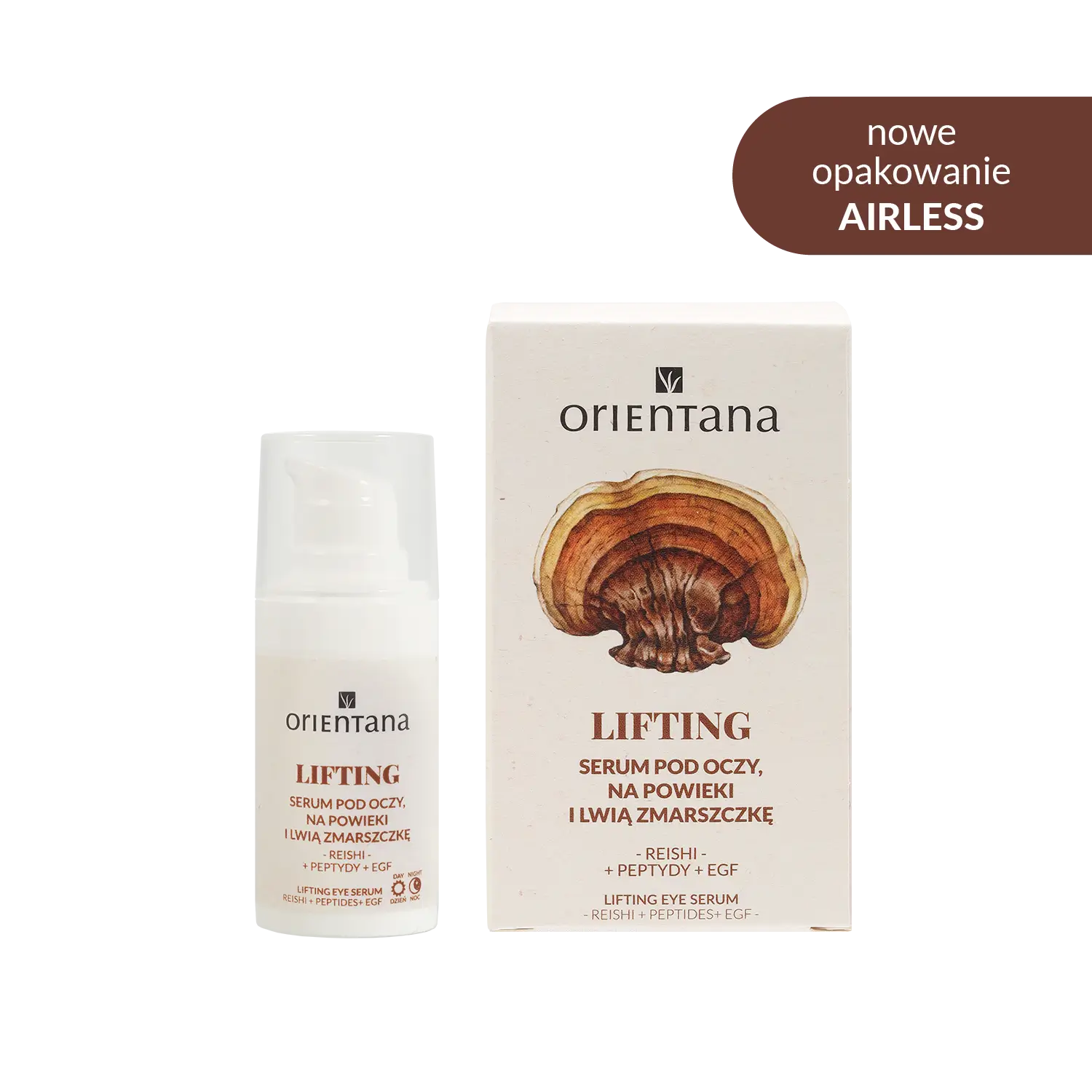
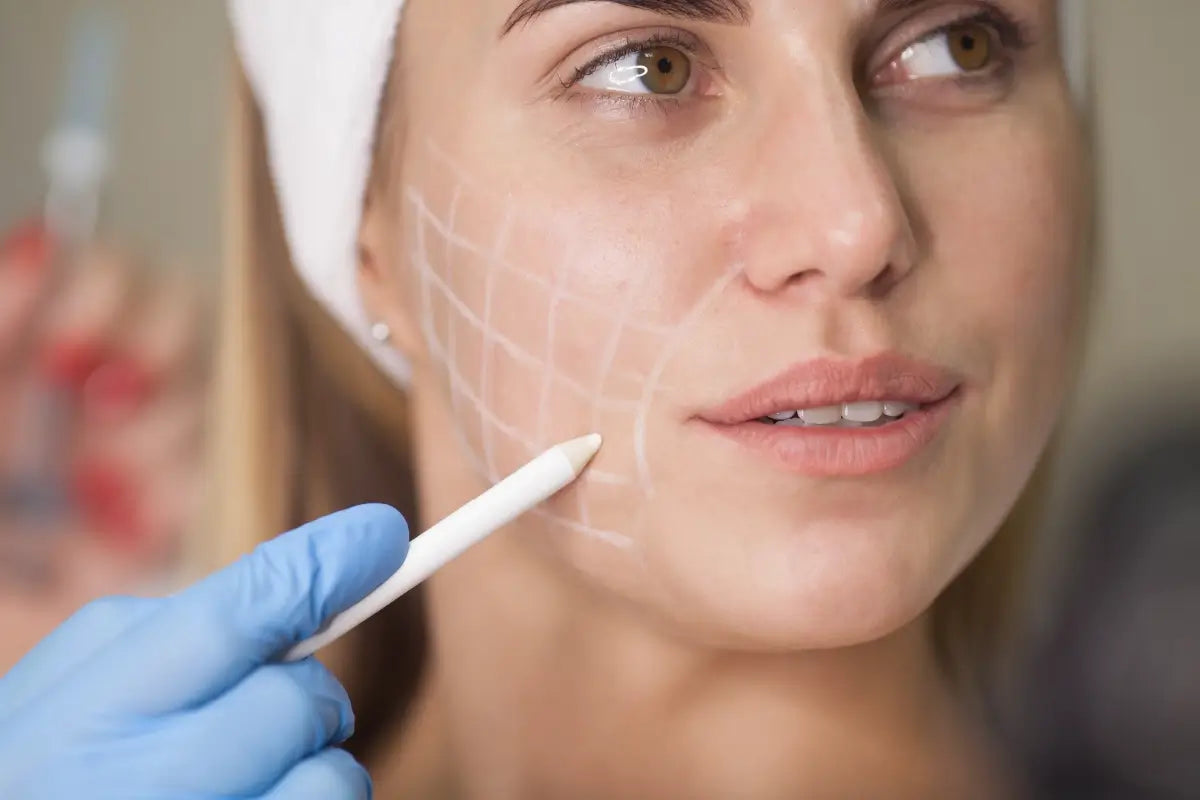
Tissue stimulators are some of the most effective, yet most "natural-looking" anti-aging treatments. Instead of "filling" wrinkles, they activate biological repair processes: they stimulate fibroblasts, thicken the skin, and improve its elasticity and quality. For full and long-lasting effects, it is worth combining treatments with smart, soothing, and antioxidant home care. In this text, I show you how to do it step-by-step – using Orientana's natural formulas.
Table of contents:
- Introduction - what tissue stimulators are and how they work
- Definition and principle of skin biostimulation
- Mechanism of action - collagen, elastin and extracellular matrix
- Types of tissue stimulators
- Indications and contraindications for the treatment
- How to prepare skin for tissue stimulators?
- Post-treatment care - stages of skin regeneration
- Orientana natural care as support after stimulators
- Most common mistakes after biostimulating treatments
- Example skin care routines after tissue stimulators
- Q&A - most common patient questions about tissue stimulators
- Summary and expert recommendations
What are tissue stimulators - definition and what "biostimulation" means
Tissue stimulators are preparations administered intradermally or subcutaneously, which activate regenerative processes without artificially changing facial features. Their task is to trigger a repair cascade in the skin: increasing collagen and elastin synthesis, improving density, firming and visibly "thickening" the skin.
They differ from classic fillers in that they do not "add volume" per se. They act like a "personal trainer" for fibroblasts - teaching the skin to work better and regenerate faster.
How they work - collagen, elastin, extracellular matrix
At the heart of anti-aging is the extracellular matrix (ECM) - a network of proteins and polysaccharides that provides the skin's "scaffolding". With age, collagen and elastic fibers weaken, and the ECM becomes depleted. Biostimulators:
• stimulate fibroblasts to produce collagen I and III and elastin,
• improve fiber organization and skin density,
• enhance angiogenesis (microcirculation), which supports tissue nourishment,
• have a remodeling effect, so the results increase over time (weeks-months).
Types of tissue stimulators
In clinical practice, you will encounter various classes of biostimulating substances. Most commonly:
• Polynucleotides (PN/PDRN) - fragments of nucleic acids with high biocompatibility; strongly biostimulate, soothe, improve skin quality and hydration.
• L-polylactic acid (PLLA) - induces collagen synthesis; provides a progressive thickening effect.
• Calcium hydroxylapatite (CaHA) - has a stimulating and biorevitalizing effect; improves skin framework and density.
• Amino acids/peptides - "building blocks" for new proteins.
• Hyaluronic acid in biostimulating/skin-booster formulas - doesn't so much fill, as it improves skin quality and supports the environment for fibroblasts.
The choice of preparation, technique, and depth of administration is up to the doctor.
Indications and contraindications
Indications:
• loss of density, laxity,
• wrinkles, "papery" skin,
• acne scars, uneven texture,
• "tired", dull skin,
• neck, décolletage, hands - also require thickening.
Contraindications (examples):
• pregnancy, breastfeeding,
• active infections/skin inflammation,
• coagulation disorders, unregulated autoimmune diseases,
• hypersensitivity to ingredients in the preparation,
• fresh tan/UV exposure (always discuss with your doctor).
How to prepare your skin for the treatment (2-4 weeks beforehand)
The goal is a soothed, hydrated, and strong epidermal barrier, as this reduces the risk of irritation and improves healing.
What to do:
• Barrier reconstruction – include ceramides + lipids:
Reishi Ceramide Serum - daily
Yuzu Ceramide Regenerating Mask (Yuzu Ceramide B) 2–3 times a week in the evening.
• Layered hydration – humectant + emollient:
Hydrating Tonic-Essence with Gluconolactone (gentle PHA) → emollient cream; if skin is reactive, tonic every other day.
• Antioxidants and soothing – reduction of oxidative stress and inflammation:
Ashwagandha + CICA + Niacinamide Serum morning or evening.
• Soothing and balance – when skin is "moody":
Sandalwood and Turmeric Cream (soothing SOS treatment).

What to avoid 5–7 days before:
• retinoids and aggressive acids,
• intensive brushing/mechanical peels,
• new, potentially irritating cosmetic products.
Post-treatment care: days 0-3, 4-7, 2-4 weeks
Days 0-3: "quiet, cool, light occlusion"
• Cleansing: only lukewarm water or very gentle foam, no rubbing.
• Toning: if skin tolerates it – 1–2 sprays of rose tonic into your palm and gentle "pressing."
• Hydration + light occlusion: HydroTremella Exosome Serum and a thin layer of HydroTremella cream.

• Barrier: in the evening Ceramide Serum and Yuzu Ceramide Repair Mask pointwise or thinly over the entire face (do not rinse until morning).
• SPF: SPF 50 (mineral/gentle), reapply during the day.
• Prohibitions: sauna, swimming pool, heavy exercise, alcohol, spicy foods, hot baths, makeup (usually 48–72 hours break).
Days 4-7: "controlled soothing"
• Cleansing foam – still gentle.
• Rose tonic – every other day (if fully tolerated, daily).
• Ceramide serum – morning or evening (seals the barrier, supports even healing).
• Yuzu ceramide mask – 2–3 times a week.
• SPF 50 – absolutely essential.
Week 2-4: "consolidation and initial strengthening"
• Gradual return to gentle PHA acids (gluconolactone) 3–4 times a week - gluconolactone essence tonic
• Adaptogenic antioxidants (Reishi/Ashwagandha) – daily.
• Eye area: Eye Cream with Ceramides (barrier + elasticity).
• Night regeneration: alternating Sandalwood and Turmeric Cream and Yuzu Ceramide Mask.
• Retinoids/strong acids: usually only after 3–4 weeks (doctor's decision).
• SPF 50 – still daily.
Orientana natural care as an "effect extender"
Combining stimulators with barrier + antioxidant + soothing care ensures that the biostimulation effect lasts longer and is more uniform (fewer "micro-flares" and irritations).
• Ceramides – "cement" for the stratum corneum; limit TEWL, increase comfort, shorten discomfort time after injections.
• Reishi – powerful "calm & repair" antioxidant; supports balance of redness-prone skin (Reishi Day Cream).
• Ashwagandha + CICA + Niacinamide – a trio for "anti-stress": soothes, supports the barrier, evens out skin appearance (Ampoule Serum).
• Gluconolactone (PHA) – "gentle exfoliation" that does not compromise the barrier; restores smoothness and radiance (Tonic-Essence).
• Turmeric – phytochemical ally for soothing and balance.
Most common mistakes after tissue stimulators
• Too quick a return to retinol and strong AHA/BHA.
• Lack of SPF – UVA radiation "eats" collagen you're trying to rebuild.
• Aggressive cleansing and rubbing skin with a towel.
• Testing novelties without a patch test.
• Sauna/pool/heavy workouts in the first few days – risk of swelling and prolonged healing.
Example morning and evening routines (3 skin scenarios)
Sensitive, reactive skin (first 7-10 days)
Morning: gentle foam → Ceramide Serum → Reishi Cream → SPF 50.
Evening: water/foam → Ceramide Mask (thin layer, as a "sleeping mask").
Combination skin with a tendency to imperfections
Morning: Foam → Tonic-essence → Ashwagandha + CICA + Niacinamide Serum → light HydroTremella moisturizing cream → SPF 50.
Evening: foam → HydroTurmeric treatment → HydroTremella Cream 2–3 times/week. HydroTremella Mask
Mature, dry skin
Morning: foam → tonic-essence → Reishi Cream → SPF 50.
Evening: gel → ceramide serum → Yuzu ceramide mask (thin layer) or richer Sandalwood and Turmeric Cream
Q&A – over 20 most common patient questions
What exactly are tissue stimulators?
Preparations that activate skin regeneration (collagen, elastin), improving its quality from within – without artificially increasing volume.
How do they differ from fillers?
A filler gives an immediate volume effect. A stimulator works biologically – the effect builds up over weeks.
What types of stimulators are there?
Polynucleotides, PLLA, CaHA, amino acid/peptide blends, selected forms of HA (skin-boosters).
When will I see the effects of stimulators?
First effects after 2–4 weeks; full effect after several–a dozen weeks (depending on the preparation and regimen).
How many treatments are needed?
Usually a series – e.g., 2–4 treatments spaced 3–6 weeks apart (doctor decides).
Does the treatment hurt?
You may feel stinging/warmth; anesthetic cream and cooling are used.
What does the skin look like immediately after?
Possible swelling, redness, small bumps – usually subside within 24–72 hours.
When can I return to makeup?
Most often after 48–72 hours (when there are no raw spots).
Can I exercise after the treatment?
Postpone intense exercise for 3–4 days.
What about saunas and swimming pools?
Avoid for 7 days (heat/water chemicals = risk of irritation).
Why is SPF 50 necessary?
UVA degrades collagen and increases the risk of discoloration; SPF 50 protects the effects of biostimulation.
What cosmetics support healing?
Ceramides (Yuzu Mask), adaptogens and antioxidants (Reishi Cream, Ashwagandha + CICA + Niacinamide Serum), PHA (Tonic-essence), turmeric (HydroTurmeric treatment).
When can I return to retinol?
Usually after 3–4 weeks, gradually – doctor's decision.
Can I use gluconolactone (PHA) immediately?
If the doctor sees no contraindications, from the end of the 1st week, every other day; assess tolerance.
What about mechanical peels?
Not recommended for at least 2 weeks – they irritate and can dilate capillaries.
Do stimulators relax facial features?
No – they don't give an "overdone" effect; they look natural.
Do they work on the neck and hands?
Yes. The neck, décolletage, and hands respond well to biostimulation.
Can I combine with mesotherapy?
Often yes, but the doctor determines the combination plan (order, intervals, areas).
What if a lump appears?
Usually resolves spontaneously; do not massage without instructions. If it persists/hurts – contact your doctor.
Does natural skincare make sense after the treatment?
Yes, if it is gentle, stable, and targeted (barrier + antioxidants + SPF). Orientana formulas fit this scheme.
Should I take a break from acids and retinol before the treatment?
Yes – usually a 5-7 day break before the procedure (or longer as advised).
I have couperose skin – is this for me?
Often yes, but the doctor makes the qualification. For skincare, focus on Reishi (soothing, antioxidation) and ceramides.
Can I use Vitamin C?
Gentle, stable forms – usually from the 2nd week; observe tolerance.
How to care for eyes after facial stimulators?
Eye cream with ceramides – morning and evening; avoid rubbing, SPF around the eyes.
Do diet and sleep matter?
Yes – collagen "likes" protein, antioxidants, hydration, and regular sleep.
How often to repeat series?
Depending on the preparation and skin age – often every 6–12 months (individual plan).
Will stimulators help with acne scars?
They can reduce and improve texture. Often combined with other techniques (laser/peels) – the doctor determines the plan.
I am prone to hyperpigmentation – how to minimize the risk?
Absolute SPF 50 + reapplication, soothing and antioxidants, cautious return to active ingredients.
Can I use oils?
If you like them – choose light, well-tolerated ones; apply to damp skin in small amounts, observe pores.
Are the effects immediate?
Some qualitative hydration improvement - yes, but remodeling builds up over time.
Summary and expert recommendations
Tissue stimulators activate the skin's internal "intelligence" – strengthening the collagen framework and improving tissue quality. To fully utilize this potential, combine treatments with consistent home care:
• Barrier: Yuzu Ceramide Regenerating Mask (night/2–3 times a week).
• Antioxidation and soothing: Reishi Cream, Ashwagandha + CICA + Niacinamide Serum.
• Gentle smoothing and hydration: Gluconolactone Tonic-Essence.
• SOS after treatment/reactivity: Soothing Smoothing Serum with Vegan Mucin
• Eyes: Eye Cream with Ceramides.
• Photoprotection: SPF 50 daily, all year round.
Remember: specific return times for retinol/acids and the plan for combining treatments are determined by your treating physician. Your role at home is calm, protection, and wise support – this way, your skin will reward you with elasticity, smoothness, and freshness for longer.