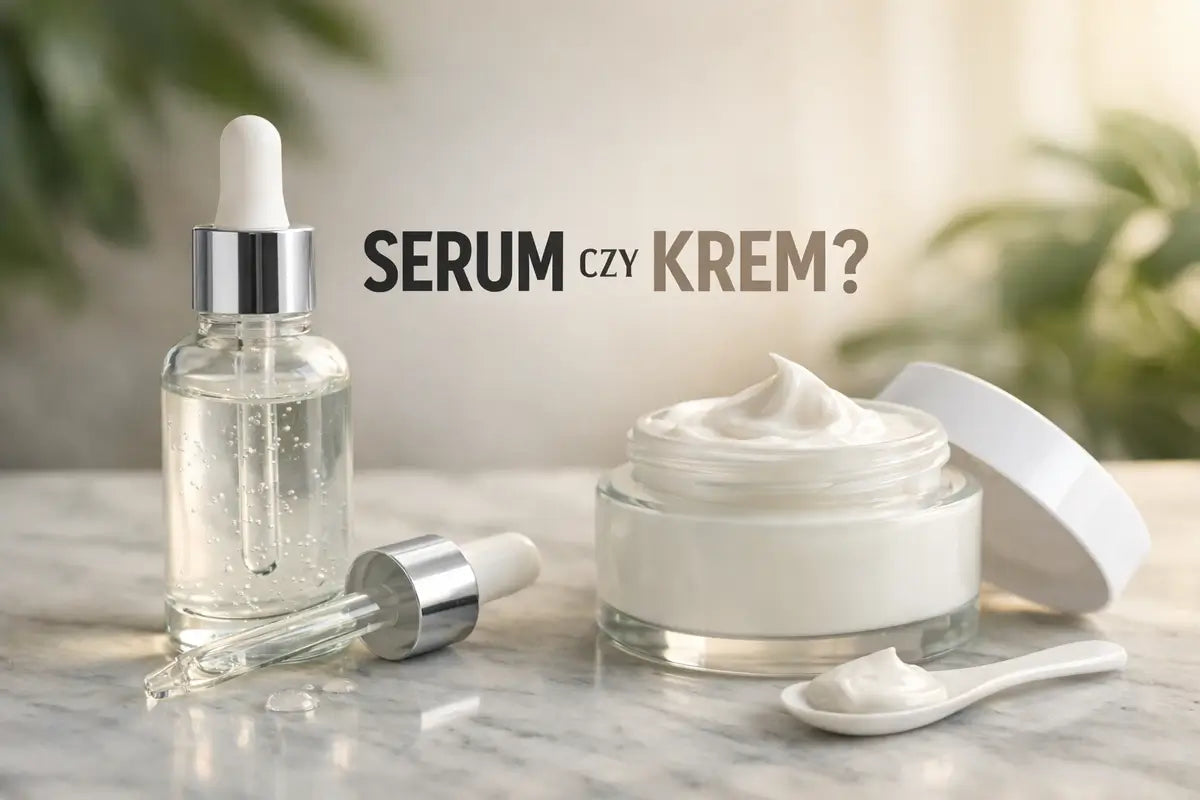
In the world of modern care, the question arises more and more often: serum vs. cream - what to choose so that the skin really benefits?
Is one of them enough? Or is it just a marketing divide?
At Orientana, we approach skincare holistically and honestly —through the prism of ingredients, skin physiology, and real-world results. Therefore, in this article, we explain the specific differences between serums and creams , present numerical data , and finally, suggest how to combine them into an effective skincare routine using Orientana cosmetics.
If you are interested in an approach based on balance and skin biology, check out our natural cosmetics section.
Contents
- Serum vs. Cream - The Shortest Answer
- What is a facial serum?
- What is face cream?
- Serum vs cream - key differences (table)
- Active ingredient concentrations - facts and figures
- Penetration of ingredients into the skin
- Can serum replace cream?
- Can cream replace serum?
- How to choose a serum that suits your skin needs?
- How to choose a cream that suits your skin needs?
- Serum + cream - the perfect combination
- Recommended Orientana skincare routine
- The most common mistakes when using serums and creams
- FAQ
- Summary
Serum vs. Cream - The Shortest Answer
The serum works intensively and purposefully because it contains high concentrations of active ingredients and smaller particles.
The cream protects, regenerates and maintains the effects because it rebuilds the skin's hydrolipid barrier.
The best choice is not "serum or cream", but "serum + cream".
What is a facial serum?
Serum is a cosmetic with a concentrated formula , designed to reach deeper than a classic cream and target a specific skin problem.
Serum characteristics:
- high concentration of active ingredients,
- light, watery or gel consistencies,
- quick absorption,
- targeted action (e.g. anti-wrinkle, brightening, regenerating).
In practice, the serum acts as an intensive treatment , not a "universal" product.
Check out all facial serums
What is face cream?
Cream is the basis of care – its main function is:
- protection of the hydrolipid barrier ,
- limiting TEWL (transepidermal water loss),
- skin comfort and regeneration.
The cream works more superficially , but it is this that makes the skin resistant, elastic and less reactive.
Serum vs. Cream - Key Differences
| Characteristic | Serum | Cream |
|---|---|---|
| Concentration of active ingredients | 5–30% | 1–5% |
| Particle size | Small | Bigger |
| Depth of action | Deeper layers of the epidermis | Mainly surface |
| Consistency | Water, gel, emulsion | Richer, emulsion |
| The main role | Intensive action | Protection and regeneration |
| Does it work independently? | In the short term | Not enough |
Concentrations of active ingredients - data
In cosmetology research it is assumed that:
- an effective serum containing several times higher concentrations of active substances than a cream,
- the cream reduces TEWL by an average of 20–30% when used regularly,
- The combination of serum and cream increases the effectiveness of care by up to 40% compared to using a single product.
Penetration of ingredients into the skin
Serum:
- smaller molecules (e.g. peptides, low molecular weight HA),
- easier penetration of the epidermis.
Cream:
- larger lipid molecules,
- creating a protective layer,
- stabilization of serum effects.
Can serum replace cream?
Not in the long run.
Serums don't contain enough lipids and emollients. Used alone, they can lead to:
- dehydration,
- skin hyperreactivity,
- weakening of the hydrolipid barrier.
Can cream replace serum?
The cream may be sufficient for skin:
- young,
- no problems,
- not requiring intensive care.
In case of wrinkles, discoloration or loss of firmness, the serum is essential .
How to choose a serum that suits your skin's needs? - Orientana recommendations
Mature skin, wrinkles, loss of firmness
Anti-wrinkle serum with phytoendorphins - supports natural regenerative processes, improves skin firmness and comfort.

Stressed, weakened skin
Ashwagandha Serum + Vitamin C + Tranexamic Acid - Vitamin C supports the skin's resistance to oxidative stress. 
Skin that requires a strong lifting
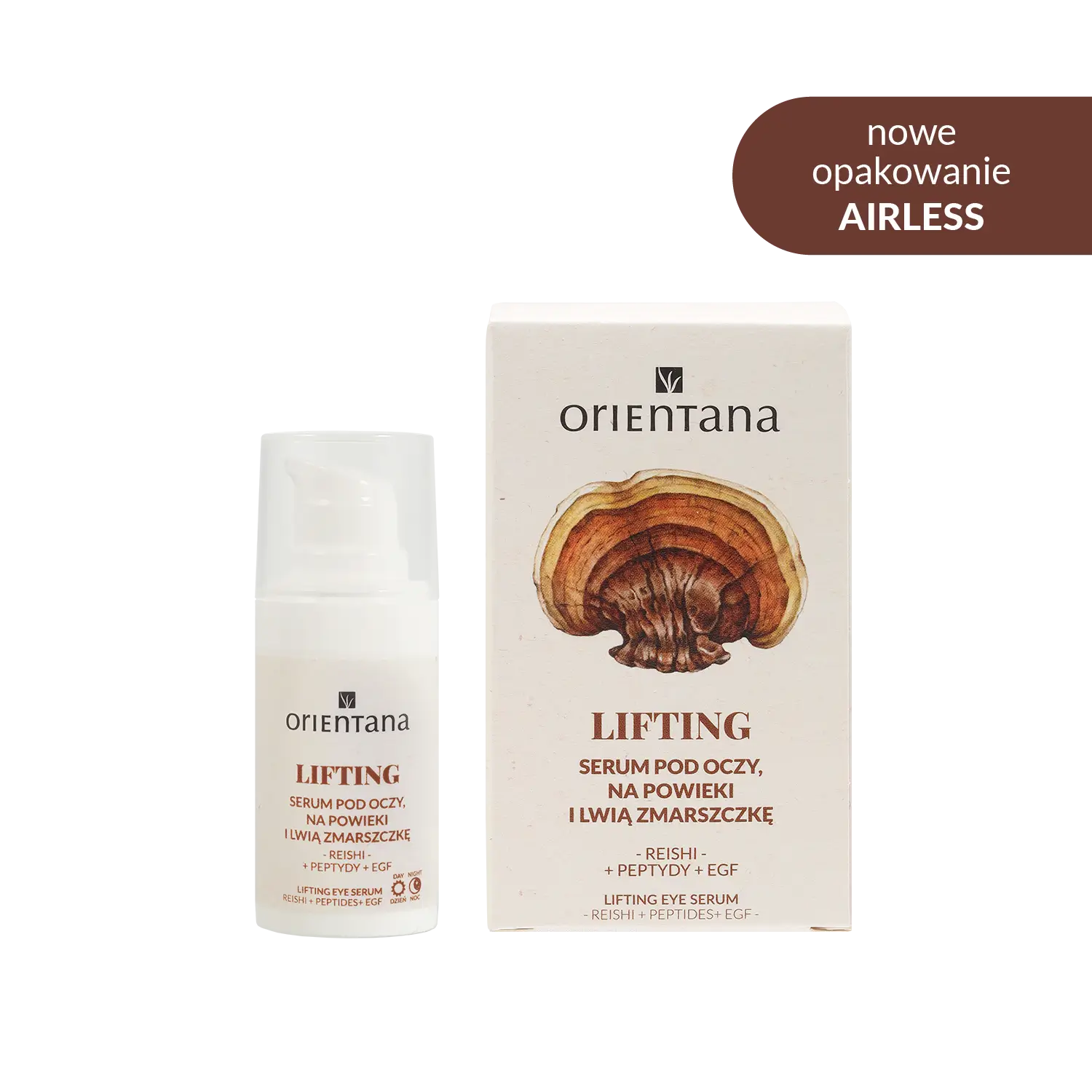
Lifting serum with biomimetic peptides - supports the synthesis of collagen and elastin.

How to choose a cream that suits your skin's needs? - Orientana recommendations
Dry, sensitive skin
Ashwagandha face cream - strengthens the hydrolipid barrier, soothes and regenerates.
All cosmetics that support the hydrolipid barrier
Mature skin
Lifting cream with microalgae collagen and biomimetic peptides - improves skin elasticity and density.

Tired, dull skin
Reishi cream - strong antioxidant and regenerating effect.
 Serum + cream = the perfect combination
It is the synergy of serum and cream that gives the best results:
- the serum initiates repair processes,
- the cream fixes and protects them.
Recommended Orientana skincare routine
In the morning:
- Gentle cleansing
- Tonic / lotion
- Serum
- Cream
- SPF
In the evening:
- Cleaning
- Tonic
- Serum
- Regenerating cream
The most common mistakes
- using serum without cream,
- applying too much serum,
- combining several strong cheeses at once,
- skipping SPF protection.
FAQ
Is serum better than cream?
No, they perform different functions and work best together.
What comes first: serum or cream?
Always serum, then cream.
Is the serum suitable for sensitive skin?
Yes, if it has the right composition.
Can I use just the cream?
Yes, but the effects will be limited.
From what age should you start using the serum?
As a preventive measure after the age of 25.
Summary
Serum vs cream is not a choice, but a duo.
The serum is responsible for the effects , the cream for the safety and durability of the care .
Only together do they create a conscious, effective routine – exactly the one Orientana promotes.