Introduction: why sensitive skin has become a civilization problem
Sensitive skin is no longer an exception – today, it's one of the most frequently reported skin problems in dermatological and cosmetic practices. Population studies conducted in Europe, North America, and Asia indicate that symptoms of sensitive skin are reported by 50 to 70% of adult women and over 50% of men . Importantly, in most cases, this is not related to dermatological conditions, but to impaired epidermal barrier function and neurosensory hyperreactivity of the skin.
In this context, natural cosmetics for sensitive skin are playing an increasingly important role, which – if properly designed – can actually reduce skin reactivity, improve its comfort and support long-term regeneration.
This article is an extensive pillar content guide that combines current scientific knowledge with a practical approach to daily care.
Contents
- What Sensitive Skin Really Is
- Mechanisms of Skin Hyperreactivity - What Science Says
- Why the hydrolipid barrier is crucial
- Natural cosmetics for sensitive skin - facts and myths
- Cleansing sensitive skin - the most common mistakes
- Toning and essences - an underestimated step
- Serum for sensitive skin care
- Creams - protection and regeneration of the barrier
- The role of adaptogens and soothing ingredients
- Sensitive skin and the skin microbiome
- How to build a safe skincare routine
- The most common mistakes in care
- Q&A
- Summary
What Sensitive Skin Really Is
Sensitive skin is not a skin type in the classic sense (like dry or oily), but a set of sensory symptoms , which include:
- baking,
- pinching,
- feeling of tightness,
- temporary redness,
- discomfort after applying cosmetics.
Importantly, these symptoms may occur without visible inflammation , which distinguishes sensitive skin from skin with rosacea or atopic dermatitis.
Mechanisms of skin hyperreactivity
From the point of view of skin biology, three mechanisms are key:
Weakened epidermal barrier
People with sensitive skin experience:
- increased TEWL (transepidermal water loss),
- reduced level of intercellular lipids,
- less integrity of the stratum corneum.
Overreactivity of nerve endings
Studies have shown increased activity of TRPV1 receptors, responsible for the sensation of burning and warmth.
Disturbed microbiome
Reduced microbial diversity promotes skin reactivity.
Why the hydrolipid barrier is crucial
The hydrolipid barrier is the skin's first line of defense. Damage to it causes even mild stimuli to become irritating. Therefore, natural cosmetics for sensitive skin should focus on restoring it , rather than on intense "actions."
Natural cosmetics for sensitive skin – facts and myths
Fact: Well-formulated natural cosmetics are statistically better tolerated.
Myth: Every natural cosmetic is safe – some essential oils may be irritating.
Fact: The formulation is key, not the source of the ingredient itself.
Cleansing sensitive skin – the most common mistakes
The most common errors are:
- too aggressive surfactants,
- washing your face with hot water,
- excessive frequency of cleansing.
Orientana delicate gel and foam

Orientana delicate facial cleansing gel and foam cleanse the skin without damaging the hydrolipid barrier , which is crucial in the care of sensitive skin.

Toning and essences - an underestimated step
Tonic is not an “add-on”, but an element:
- restoring physiological pH,
- reducing skin reactivity,
- increasing tolerance to serum and cream.
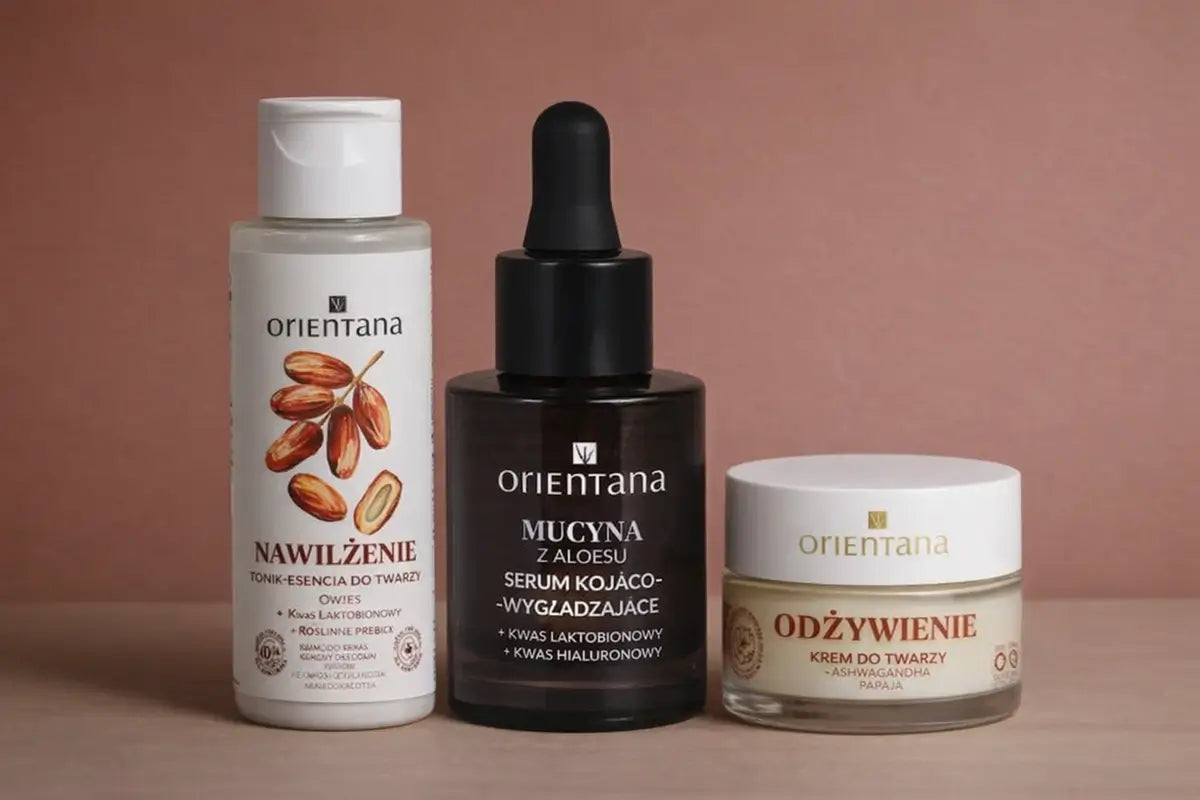
Orientana tonic-essence combines the function of toning and light moisturizing, which is particularly important for overactive skin.
Serum for sensitive skin care
Smoothing and soothing serum with mucin

Fermented aloe mucin works:
- soothing,
- regenerating,
- supports the epidermal barrier.
Ashwagandha + Trehalose Moisturizing Serum
Ashwagandha, as an adaptogen, helps the skin respond better to environmental stress, and trehalose protects cells from dehydration.
Creams - protection and regeneration of the barrier
Sandalwood and Turmeric Balance Cream
It soothes, supports the barrier and reduces the tendency to redness.
Ashwagandha Papaya Nourishing Cream

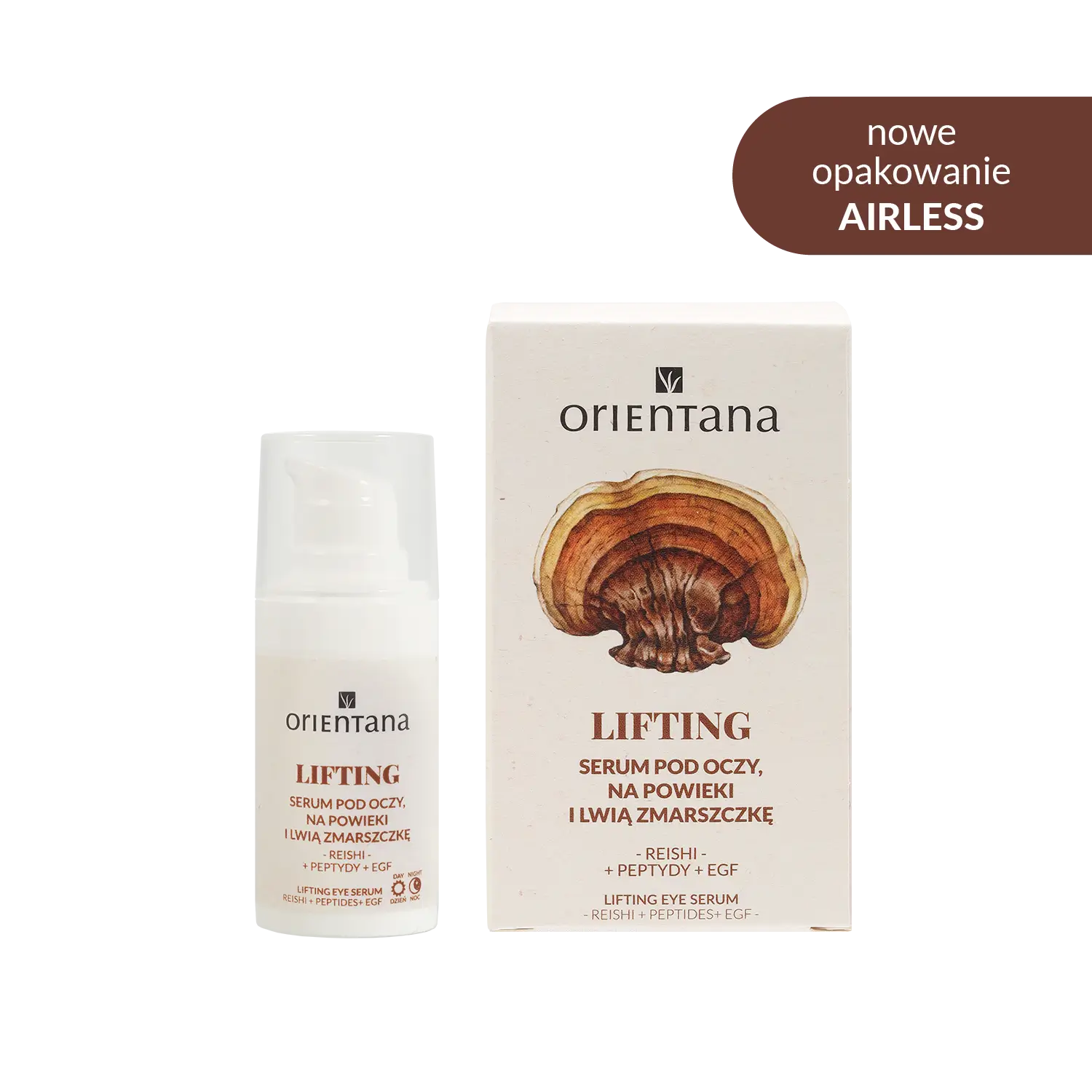
Reishi Night Cream
Reishi is an adaptogen with strong antioxidant potential, ideal for overnight regeneration of sensitive skin.
The role of adaptogens and soothing ingredients
Adaptogens help the skin:
- regulate the stress response,
- reduce the effects of oxidative stress,
- improve the biological resistance of the skin.
Sensitive skin and the skin microbiome
A growing body of research confirms that a balanced microbiome is crucial for skin tolerance. Gentle, natural cosmetics promote its stability.
How to build a safe skincare routine
- Gentle cleansing
- Tonic-essence
- Soothing or adaptogenic serum
- Protective or regenerating cream
Minimalism is an ally of sensitive skin.
The most common mistakes in care
- testing too many cosmetics at once,
- lack of consequences,
- too aggressive "treatments".
Q&A
Are natural cosmetics good for sensitive skin?
Yes, provided they are carefully formulated and do not contain ingredients with a high irritating potential.
Which ingredients are best tolerated by sensitive skin?
Soothing, moisturizing and adaptogenic ingredients that support the skin barrier and microbiome.
Does sensitive skin need a serum?
Yes – the serum provides concentrated ingredients that can actually improve skin comfort.
How long does it take to see results?
The first reduction in discomfort often occurs after 1-2 weeks of regular care.
Summary
Natural cosmetics for sensitive skin have a real, scientific justification – provided they are used consciously. Care based on gentle cleansing, tonic essence, serum, and regenerating cream is currently the most recommended cosmetology approach .