Contents
- What is retinol and why is it controversial?
- How retinol works in the skin - the mechanism at the cellular level
- Documented risks of using retinol
- Contraindications and special risk groups
- Retinol Side Effects - What the Research Says
- Retinol during pregnancy - why it is absolutely contraindicated
- Legal regulations regarding retinol in cosmetics
- Safe alternatives - bioretinol and bakuchiol
- Orientana product analysis
- Frequently asked questions
What is retinol and why is it controversial?
Retinol, a derivative of vitamin A, has been recognized for decades as one of the most effective anti-aging ingredients in dermatology. However, its growing popularity in over-the-counter cosmetics is raising increasing questions in the scientific and regulatory communities.
Retinol has shown promising results in treating skin aging, but irritant reactions such as burning, peeling, and dermatitis associated with retinoid therapy limit patient acceptance. This problem is particularly pronounced with tretonin and tazarotene, whereas other retinoids, primarily retinaldehyde and retinol, are significantly less irritating.
What exactly is retinol?
Retinol is a form of vitamin A used topically in cosmetic and dermatological products. Retinol is 20 times less potent than tretinoin and requires further conversion to retinoic acid (in vivo) to demonstrate its effect. Nevertheless, studies show that retinol may be as effective as retinoic acid in inducing histological changes typical of retinoids (such as epidermal thickening and keratinocyte proliferation), but with significantly less irritation.

How retinol works in the skin - the mechanism at the cellular level
To understand the risks of using retinol, you must first understand how it works in the skin.
Retinol conversion process
Cells requiring retinoic acid take up retinol and convert it into retinoic acid, its metabolite, via two enzymes: retinol dehydrogenases (ROLDH) and retinal dehydrogenases (RALDH). The first enzyme, ROLDH, converts retinol to retinal. The second enzyme, RALDH, converts retinal to retinoic acid.
In the cell nucleus, retinoic acid acts as a ligand activating two families of transcription factors: retinoic acid receptors (RARs) and retinoid X receptors (RXRs), which bind to retinoic acid-responsive genes.
Why might this mechanism be problematic?
The problem arises when the conversion occurs too rapidly or in individuals with impaired metabolic enzyme activity. This leads to:
- Excessive acceleration of cell renewal
- Weakening of the epidermal barrier
- Increased sensitivity to external factors
- Potential skin inflammation

Documented risks of using retinol
Skin irritation and retinization
Retinol, a derivative of vitamin A, is a highly effective ingredient for combating oxidative stress and skin aging. However, it is associated with several side effects and contraindications that are crucial to understand.
The most common problem is retinization—a set of symptoms that occurs when first using retinol. It's not uncommon to notice redness and slight peeling when first starting to use retinoid-containing products.
The main symptoms of retinization include:
- Redness of the skin (erythema)
- Peeling of the epidermis
- Dryness and tightness of the skin
- Burning and itching sensation
- Increased sensitivity
Photosensitivity - significantly increased risk of sun damage
One of the most serious and often underestimated risks of using retinol is a drastic increase in skin sensitivity to UV radiation.
Due to the numerous double bonds in its chemical structure, when retinol is exposed to UV radiation, it likely undergoes chemical degradation and is converted into reactive intermediates. As retinol undergoes oxidation, it is responsible for the release of free radicals on the skin's surface. These reactive species can damage cell membranes, proteins, and DNA, causing redness and a burning sensation, similar to those of sunburn.
Therefore, it is recommended to apply retinol in the evening and then use sunscreen the next morning. This recommendation applies to all retinoids (retinal, tretonin, adapalene, etc.).
Purging - a paradoxical exacerbation of acne
One of the most commonly reported temporary side effects of retinol use is skin purging, also known as the rebound effect. This phenomenon manifests as an outbreak of breakouts, similar to an acne flare, that occurs in the first few weeks of use.
While frustrating, purging is actually a reflection of retinol's effectiveness. It occurs after stimulating cell renewal, which explains why active ingredients like retinoids, AHAs, BHAs, or PHAs can trigger it.
The duration of purging varies from person to person, but it typically subsides within 4 to 8 weeks. To limit the severity of this reaction, it's recommended to gradually introduce retinol into your skincare routine, starting with a low concentration and spacing out applications.
Pigmentation disorders
Retinol affects melanocytes and the melanogenesis process, which can lead to undesirable changes in skin pigmentation. Retinol targets hyperpigmentation by inhibiting melanin transfer and accelerating cell renewal. However, in individuals with darker skin types (Fitzpatrick phototypes III-VI), it can paradoxically lead to post-inflammatory hyperpigmentation.
Long-term effects - osteoporosis and toxicity
While this mainly applies to oral vitamin A supplementation, it is worth being aware that excess vitamin A in the body can lead to serious health problems.
Reduced bone mineral density has been found in adults with intakes exceeding 0.6 mg RE (2000 IU) per day, a level consumed by at least half of American adults.
The NHS in the UK warns that people should not take more than 1.5mg of vitamin A a day, as too much can cause weak bones, liver damage and birth defects in pregnancy.
Retinol during pregnancy - an absolute contraindication
This is one of the most important and best documented aspects of retinoid safety.
Why is retinol teratogenic?
Retinoids are known to interfere with vitamin A signaling pathways, which play a crucial role in embryonic development, particularly of the central nervous system. Even minimal exposure, especially during the first trimester, poses a theoretical risk of causing serious abnormalities.
Clinical trial data
A study conducted between October 1984 and June 1987 identified 22,748 pregnant women. Of these, 339 had children with congenital anomalies; 121 of these children had anomalies occurring in sites originating in the cranial neural crest.
The results indicate that vitamin A is potentially teratogenic, but these findings apply only to preformed vitamin A and not to beta-carotene, the precursor of vitamin A.
The study found that women taking more than 10,000 IU of vitamin A per day during early pregnancy had several times the risk of having a baby with cranial neural crest defects.
Estimated risk
There is an estimated 35% risk of fetal retinoid syndrome in infants born to women taking isotretinoin after 15 days after conception. Some researchers believe that birth defects do not occur in women who discontinue isotretinoin one month before conception.
Medical recommendations
The American College of Obstetricians and Gynecologists, the European Gynecological Society, and the WHO unequivocally recommend avoiding all topical retinoids during pregnancy. Although systemic absorption of retinol from cosmetics is significantly lower than from oral preparations, the precautionary principle dictates complete avoidance of these ingredients.
Legal regulations regarding retinol in cosmetics
New European Union regulations (2024)
In response to growing safety concerns, the European Union introduced significant restrictions on retinol in cosmetics in 2024.
On 24-25 October 2022, the SCCS (European Scientific Committee on Consumer Safety) adopted a revised scientific opinion on vitamin A, which concluded that vitamin A is safe in cosmetic products up to a concentration of 0.05% retinol equivalent (RE) in body lotions and 0.3% RE in other leave-on and wash-off products.
Key implementation dates
From 1 November 2025, cosmetic products containing retinol, retinyl acetate or retinyl palmitate that do not meet the conditions set out in Annex III can no longer be placed on the EU market. The following maximum retinol equivalent (RE) concentrations apply: maximum 0.05% RE in body lotions and maximum 0.3% in leave-on and rinse-off products.
Products already on the market must be removed by May 1, 2027.
Mandatory marking
Mandatory labeling: "Contains vitamin A. Consider your daily intake before use."
Reasons for tightening regulations
The NHS warns that some experts believe too much vitamin A can cause weakened bones, liver damage, and birth defects in pregnancy. Research suggests that excessive vitamin A over several years can cause osteoporosis, a condition that weakens bones. This is particularly important for older people, especially women, who are already at increased risk.

Safe alternatives - bioretinol and bakuchiol
Bakuchiol - an alternative
Bakuchiol is a meroterpien phenolic derived from the plant Psoralea corylifolia, used in traditional Ayurvedic and Chinese medicine.
Groundbreaking comparative research
A randomized, double-blind, 12-week study in 44 patients compared a 0.5% bakuchiol cream applied twice daily with a 0.5% retinol cream applied once daily.
Results:
- Both bakuchiol and retinol significantly reduced wrinkle area and hyperpigmentation, with no statistically significant difference between compounds.
- Retinol users reported more peeling and burning of facial skin
- Study shows that bakuchiol is comparable to retinol in its ability to improve photoaging and is better tolerated than retinol
Key differences in operation
Volcano plots showed a strong overall similarity between the effects of retinol and bakuchiol on gene expression profiles. This similarity was confirmed by comparing the modulation of individual genes and at the protein level via ELISA and histochemistry.
After 12 weeks of treatment, significant improvements in lines and wrinkles, pigmentation, elasticity, firmness, and overall reduction in photodamage were observed, without the typical adverse effects associated with retinol therapy.
Security profile
Bakuchiol has demonstrated comparable efficacy and better tolerability than retinol in direct comparison. Additionally, an enhanced photoprotective effect may occur when formulated with other antioxidants.
The finding that RAR-β and RAR-γ were not upregulated by bakuchiol is also relevant to the safety of bakuchiol, as RAR receptors are involved in various fetal developmental processes, showing that bakuchiol mechanistically should not play a role in embryogenesis like retinol.
All studies reviewed found bakuchiol to be safe for use in pregnancy, although no clinical trials were conducted on pregnant or breastfeeding women to fully verify this.
NovoRetin™ - a natural alternative to retinol without side effects

What is NovoRetin™?
NovoRetin™ is an innovative, plant-based active ingredient developed by the Swiss company Mibelle Biochemistry. It offers a safe alternative to classic retinol. It is made from mastic, an aromatic resin extracted from the bark of the Pistacia lentiscus (mastic tree), which grows exclusively on the Greek island of Chios.
Mastic has been used in traditional medicine and skin care for centuries, but its use in modern cosmetics has been limited due to its insolubility in water. Mibelle Biochemistry has developed a unique delivery system that makes mastic bioavailable to the skin.
How does NovoRetin™ work? - innovative mechanism of action
Unlike classic retinol, NovoRetin™ works through a completely different mechanism:
Traditional retinol:
- It is applied to the skin from the outside.
- It must undergo enzymatic conversion to retinoic acid (active form)
- Adds "external" retinoic acid to that which naturally occurs in the skin
NovoRetin™:
- It is not converted to retinoic acid
- Acts as an inhibitor of CYP26A1 enzymes (cytochrome P450 family 26)
- Prevents the degradation of retinoic acid , which occurs naturally in the skin
- Increases the level of endogenous (natural) retinoic acid in the skin
Retinoic acid is the most active metabolite of retinol and is responsible for all of its beneficial effects on the skin. It occurs naturally in skin cells but is rapidly degraded by CYP26 enzymes. NovoRetin™ inhibits these enzymes, allowing the skin's own retinoic acid to remain active longer.
Confirmed effectiveness - clinical trial results
Anti-aging study (28 days)
Randomized, placebo-controlled clinical trial conducted on 18 women aged 42-70 years with signs of skin aging (crow's feet wrinkles and photoaging):
Protocol : Cream with 2% NovoRetin™ applied twice daily for 28 days
Results :
- Improvement of facial skin elasticity by 20.4%
- Increased forearm skin density by 13.8%
- Immediate effect : Reduction of wrinkles and skin roughness after a single application
Wrinkle reduction test (8 weeks)
According to research conducted by Mibelle Biochemistry:
- Wrinkle depth reduced by 14% after 8 weeks of daily use
Research on acne-prone skin
Several clinical studies in Asian and Caucasian populations have demonstrated the effectiveness of NovoRetin™:
- Anti-comedone action
- Reduction of skin shine
- Reducing pore size
- Improves skin texture and reduces imperfections
Advantages of NovoRetin™ over classic retinol
No typical retinol side effects
- Does not cause irritation or redness
- Does not cause skin peeling
- It does not cause dryness – in fact, it increases skin hydration
- No "retinoinization" period
No photosensitivity
- Does not increase skin sensitivity to UV radiation
- Does not require the mandatory use of high sun protection
- Can be used during the day
- Does not undergo photodegradation under the influence of light
Stability in formulas
- Unlike retinol, NovoRetin™ is stable in cosmetic formulas
- It does not require special packaging to protect against light and oxygen.
- Easier to formulate for cosmetics manufacturers
Immediate effects
- Reduction of wrinkles and skin roughness after a single application
- Classic retinol takes weeks to show the first results
Suitable for sensitive skin
- It can be used by people who do not tolerate classic retinol
- Safe for reactive skin
Multidirectional action
- Anti-aging effect (wrinkles, elasticity, skin density)
- Effect on acne-prone skin
- Pore refinement (beneficial for both problematic and mature skin)
- Increased skin hydration
NovoRetin™ Safety
Safety profiles in pregnancy
All studies reviewed found NovoRetin™ to be safe for use, including theoretically during pregnancy. A key point: RAR-β and RAR-γ receptors were not upregulated by NovoRetin™ , meaning that it should not mechanistically play a role in embryogenesis like retinol.
Who is NovoRetin™ for?
- People with sensitive skin
- People who cannot tolerate classic retinol
- People with vascular skin
- People looking for anti-aging effects without side effects
- People working outdoors (no need for high photoprotection)
- People with acne and combination skin
- People who cannot consistently use SPF 50+
Certificates and approvals
NovoRetin™ is certified by:
- COSMOS approved (natural and organic cosmetics)
- NATRUE approved (natural cosmetics)
- PDO (Protected Designation of Origin) for mastic from Chios
NovoRetin™ vs Retinol - comparison
| Characteristic | Retinol | NovoRetin™ |
|---|---|---|
| Mechanism | Adds external retinoic acid | Retains its own retinoic acid |
| Irritations | Frequent (peeling, redness) | Minimal to none |
| Photosensitivity | Yes - requires SPF 50+ | No - safe during the day |
| Retinization | 4-8 weeks of adaptation | No adaptation period |
| Dry skin | Yes, often intense | No - it increases hydration |
| Pregnancy | Strictly contraindicated | Theoretically safe* |
| Stability | Unstable (light, oxygen) | Stable in formulas |
| Immediate effect | NO | Yes – after 1 application |
| Time for results | 8-12 weeks | 2-8 weeks |
| Product price | Wide range | Premium (innovative ingredient) |
*Requires verification and medical consultation
Pharmacological mechanism - scientific details
NovoRetin™ acts as a natural CYP26A1 inhibitor , similar to pharmaceutical CYP26 inhibitors (liarozole, talarozole) that are being investigated in the pharmaceutical sector for the treatment of dermatological diseases.
In vitro evidence :
- Significantly reduces the activity and gene expression of CYP26A1
- In a 3D model of the epidermis, it increases the expression of involucrin (a marker of retinoic acid activity) to a degree similar to talarozole (a pharmaceutical CYP26 inhibitor)
Result : Increasing the level of endogenous retinoic acid in the skin leads to effects similar to those known from retinol application, but without the risk of side effects.
Key advantages:
- Confirmed effectiveness in clinical trials
- No typical retinol side effects
- Can be used during the day
- Suitable for sensitive skin
- Instant smoothing effects
- Increases hydration instead of drying out
- Natural, certified ingredient
NovoRetin™ is the future of anti-aging care – effectiveness without compromising safety.
Orientana product analysis
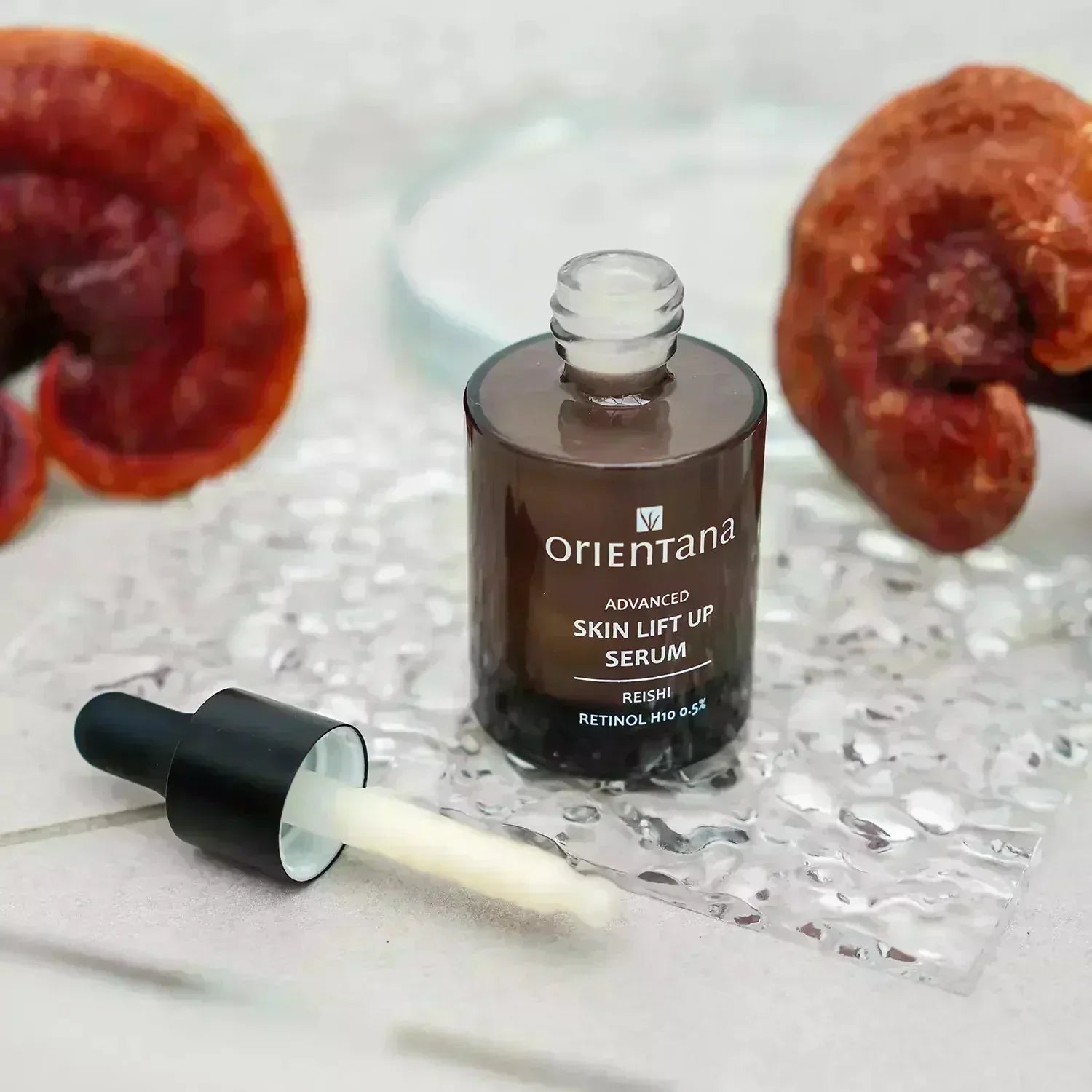
Serum with retinol H10 0.5% and reishi - Orientana
Analysis of the composition and approach to security
This product contains a stabilized form of retinol:
- Hydrogenated Retinol (0.5%) - a hydrogenated form of retinol that is more stable and potentially gentler than pure retinol
- Concentration of 0.5% H10 complex - within the permissible EU standards (maximum 0.3% for facial products from November 2025)
Supporting ingredients
Ganoderma Lucidum Extract (Reishi) - an adaptogenic mushroom with properties:
- Anti-inflammatory by inhibiting cyclooxygenase
- Antioxidant thanks to polysaccharides and triterpenoids
- Supporting the regeneration of keratinocytes
Combining retinol with Reishi makes sense from the standpoint of minimizing irritation, although it does not eliminate the basic risks associated with retinol use.
Safety recommendations
According to the manufacturer's information:
- The product should be introduced gradually (1-2 times a week)
- Mandatory use of SPF 50+ during the day
- Do not use during pregnancy or breastfeeding
- Do not combine with exfoliating acids.
Anti-wrinkle eye cream with bioretinol, caffeine and moringa - Orientana
A safer alternative
This product uses NovoRetin™ – a biotechnological equivalent of retinol derived from the resin of the Pistacia lentiscus (mastic) tree.
Key advantages of this approach:
- No typical side effects of retinol – no irritation, redness or peeling
- Does not require photoprotection - does not increase sensitivity to UV radiation
- Can be used during the day – without the risk of photodegradation
- Suitable for sensitive skin – no retinization period
Additional active ingredients
Upcycled caffeine :
- Stimulates microcirculation
- Reduces puffiness under the eyes
- It has antioxidant properties
Papaya extract (Carica Papaya) :
- Contains the enzyme papain that gently exfoliates dead cells
- It has a brightening effect
- Supports skin renewal
Moringa extract (Moringa Oleifera) :
- Protective properties against pollution
- Neutralizes the effects of smog
- Rich in antioxidants
Security profile
This product represents a modern, safer approach to anti-aging care:
- No contraindications during pregnancy (although it is recommended to verify the full composition)
- Suitable for people with sensitive skin
- No special entry procedures required
- It can be used by people who do not tolerate classic retinol
Frequently asked questions
1. Is retinol safe for all skin types?
No, retinol is not safe for everyone. Irritant reactions such as burning, peeling, and dermatitis associated with retinoid therapy limit patient acceptance. This problem is more pronounced with tretonin and tazarotene.
People with very sensitive skin, rosacea, atopic dermatitis or epidermal barrier disorders are at high risk of serious side effects.
2. Can I use retinol while pregnant or breastfeeding?
Absolutely not. All retinoids, including those used in skin care, are strictly contraindicated for pregnant women, nursing mothers, or those planning to become pregnant.
Our findings indicate that vitamin A is potentially teratogenic, and animal studies show that even minimal exposure to retinoids can affect fetal nervous system development.
3. Why does my skin become flaky and red after using retinol?
Flaking and redness are symptoms of retinization – the skin's adaptation to retinol. Retinol accelerates epidermal cell renewal, leading to intense exfoliation of the outer layers of the skin.
This process is often referred to as "normal," but new research suggests it may be a state of subclinical inflammation, not just the skin getting used to it.
4. Does retinol increase skin sensitivity to the sun?
Yes, and this is one of the most serious risks. Due to the numerous double bonds in retinol's chemical structure, when exposed to UV rays, it undergoes chemical degradation and transforms into reactive intermediates. As retinol oxidizes, it releases free radicals on the skin's surface, which can damage cell membranes, proteins, and DNA.
Therefore, it is absolutely necessary to use high sun protection (SPF 50+) when using retinol.
5. How long does retinol purging last?
The duration of purging varies from person to person, but it usually goes away within 4 to 8 weeks.
Purging is the process of accelerated protrusion of blackheads to the skin's surface due to accelerated cell renewal. This phenomenon can be particularly severe in people with acne-prone skin.
6. What are the new EU regulations regarding retinol in cosmetics?
From November 1, 2025, cosmetic products in the EU must meet new concentration limits: a maximum of 0.05% retinol equivalent in body lotions and 0.3% in facial products. Products already on the market must be removed by May 1, 2027.
Mandatory labeling must include: "Contains vitamin A. Consider your daily intake before use."
7. Is bakuchiol as effective as retinol?
The study shows that bakuchiol is comparable to retinol in its ability to improve photoaging and is better tolerated than retinol.
After 12 weeks of treatment, significant improvements in lines and wrinkles, pigmentation, elasticity, firmness, and overall reduction in photodamage were observed, without the typical adverse effects associated with retinol therapy.
8. At what age can you start using retinol?
From a medical perspective, there is no strict lower age limit, but most dermatologists recommend introducing retinol no earlier than age 25-30, when the first signs of skin aging appear. In younger people, skin still has sufficient capacity for self-renewal, and premature retinol use can lead to chronic irritation.
9. Can I combine retinol with other active ingredients?
Combining retinol with other active ingredients requires extreme caution. The risk of side effects may be greater if you use more than one retinol-containing product at the same time.
Safe combinations:
- Retinol + hyaluronic acid (recommended to minimize dryness)
- Retinol (evening) + vitamin C (morning) – after the adaptation period
- Retinol + niacinamide – may soothe irritation
Dangerous combinations:
- Retinol + AHA/BHA acids
- Retinol + benzoyl peroxide
- Retinol + high vitamin C at the same time of day
10. What are the long-term effects of using retinol?
Reduced bone mineral density has been reported in adults with intakes exceeding 0.6 mg RE (2000 IU) per day, although this mainly concerns oral vitamin A intake.
Epidemiological studies in Sweden and the USA have provided evidence that chronic intake of preformed vitamin A at amounts 2-3 times the recommended levels may increase bone mineral density loss and the incidence of hip fractures.
11. Can people with rosacea use retinol?
This is not recommended. Rosary is characterized by vascular hyperreactivity and chronic skin inflammation, which retinol can exacerbate. For those with rosary, better choices include:
- Bakuchiol
- Retinol peptide
- Alpine rose extract
12. Can retinol be used in summer?
It's recommended to apply retinol in the evening and sunscreen the next morning. This recommendation applies to all retinoids.
Using retinol in summer is possible, but requires special caution:
- Mandatory SPF 50+ every day
- Reapply the filter every 2 hours during exposure.
- Additional mechanical protection (hat, glasses)
- Consider reducing the frequency of use
Many dermatologists recommend using retinol only during the fall and winter months (October-March) to minimize the risk.
13. What is NovoRetin™ and how is it different from regular retinol?
NovoRetin™ is a biotechnological equivalent of retinol derived from the resin of the mastic tree (Pistacia lentiscus). Key differences:
- Mechanism of action : Increases the level of endogenous (naturally occurring) retinoic acid in the skin
- Safety : Does not cause typical retinol irritations
- Photostability : Does not increase UV sensitivity, can be used during the day
- No retinization : No adaptation period required
14. Does my skin get worse after I stop using retinol?
This is a common concern often referred to as "retinol addiction." In reality:
Short term (1-3 months after discontinuation) :
- Skin may appear dull and less smooth
- Slowing down the rate of cell renewal
- Fine wrinkles may become more visible
- However, there is NO sudden deterioration below the baseline
Long term (>6 months) :
- The skin returns to its natural aging rate
- The effects achieved during use (collagen, skin thickness) partially last for 6-18 months
Retinol does not cause physiological "addiction", but the skin gets used to the accelerated renewal.
15. Are there natural sources of retinol?
Too much preformed vitamin A, including retinol, retinyl palmitate, retinyl acetate, and retinyl linoleate, can cause a variety of health problems, including liver damage, brittle nails, hair loss, osteoporosis, and hip fractures in older people.
Natural sources of vitamin A in the diet include:
- Liver (very high concentration)
- Dairy products
- Eggs
- Beta-carotene from vegetables (safer form)
Important: Our findings indicate that vitamin A is potentially teratogenic, but these findings apply only to preformed vitamin A and not to beta-carotene, the precursor of vitamin A.
Important - conscious and responsible use of retinol
Retinol is undoubtedly one of the most effective anti-aging ingredients available in cosmetics, as confirmed by numerous scientific studies. However, its use is associated with a number of documented risks, which every user should be thoroughly aware of before beginning treatment.
Key conclusions from the scientific analysis:
- Side effects are common : Irritant reactions such as burning, peeling, and dermatitis associated with retinoid therapy limit patient acceptance.
- The teratogenic risk is real : All retinoids, including those used in skin care, are strictly contraindicated for women who are pregnant, breastfeeding, or planning to become pregnant.
- Photosensitivity is a serious threat : Retinol degrades under the influence of UV, releasing free radicals that can damage the DNA of skin cells.
- Regulations are becoming more stringent : the EU introduced new limits on retinol concentrations in cosmetics in 2024 – a maximum of 0.3% in face products and 0.05% in body lotions.
Safer alternatives exist
The study shows that bakuchiol is comparable to retinol in its ability to improve photoaging and is better tolerated than retinol. Modern ingredients like bakuchiol and NovoRetin™ offer similar benefits without the risk profile of classic retinol.
Orientana Products - Different Approaches to Anti-Aging
H10 Retinol Serum + Reishi : For those who consciously choose classic retinol, this product offers a stabilized form with soothing reishi extract. However, it requires adherence to all safety guidelines and may require reformulation due to new EU regulations.
Bioretinol Eye Cream (NovoRetin™) : Represents a safer, modern alternative – effective without the risk, suitable for daily use, and without a retinol treatment period. An ideal choice for those with sensitive skin or seeking safer solutions.
Final recommendation
If you decide to use retinol:
- Start with the lowest concentrations (0.1-0.3%)
- Introduce gradually (1-2 times a week)
- Be sure to use SPF 50+ every day
- Do not use if pregnant or breastfeeding
- Monitor your skin's reaction and discontinue use at the first sign of serious irritation.
If you prefer to avoid risk:
- Consider bioretinol (bakuchiol, NovoRetin™)
- Choose products with lower concentrations and supportive ingredients
- Consult a dermatologist before starting treatment
Remember: no ingredient is worth permanently damaging your skin's protective barrier or endangering your health. Conscious, responsible skincare is the key to beautiful and healthy skin for years to come.
Bibliography (selected scientific sources cited in the article)
- Typology (2025). "Are there any risks associated with the use of retinol?"
- ScienceDirect. "Retinol Intoxication - an overview"
- PubMed. "Adverse effects of retinoids"
- PMC. "Retinoids in the treatment of skin aging: an overview of clinical efficacy and safety"
- EEC. "The problem with vitamin A"
- OneSkin. "Retinol Side Effects on Skin"
- Healthline (2023). "How Does Retinol Work? Facts, Side Effects, and More"
- PMC. "Safety Evaluation and Anti-wrinkle Effects of Retinoids on Skin"
- ASU Embryo Project. "Retinoids As Teratogens"
- NEJM. "Teratogenicity of High Vitamin A Intake"
- Journal of the American Academy of Dermatology (1998). "Retinoids and teratogenicity"
- NORD. "Fetal Retinoid Syndrome"
- PubMed. "Teratogen update: Topical use and third-generation retinoids"
- PMC. "Safety of skin care products during pregnancy"
- PubMed. "Prospective, randomized, double-blind assessment of topical bakuchiol and retinol"
- Journal of Integrative Dermatology. "Comprehensive review of topical bakuchiol"
- British Journal of Dermatology. "Prospective assessment of topical bakuchiol and retinol"
- PMC. "Multidirectional activity of bakuchiol"
- PubMed. "Bakuchiol: a retinol-like functional compound" 31-40. EU regulations and regulatory documents on retinol in cosmetics (2024-2025)
- Mibelle Biochemistry (manufacturer of NovoRetin™) – technical documentation and clinical studies
- Happi Magazine (2024). "Retinol Benefits With a Natural and Safe Alternative"
- SOFW Journal (2022). "A Natural Retinol Alternative that Boosts Endogenous Retinoic Acid"
- Premium Beauty News (2022). "Mibelle's NovoRetin: The natural retinol alternative"
- Cosmetics Business. "NovoRetin - natural retinol alternative"