Why Vitamin C is one of the most overrated and underrated ingredients at the same time
When I first worked on formulating a cosmetic product with vitamin C, everything seemed perfect in theory: a strong antioxidant, anti-aging effects, skin brightening. A "dream ingredient."
In practice?
The product changed color after a few weeks. Skin reacted differently. The effects were... not always what the marketing brochures promised.
And then I understood something very important:
vitamin C is not just one ingredient - it's an entire system of dependencies: form, pH, stability, packaging, and method of application.
That's why some say "it works wonders," while others say "it does nothing."
This article is about organizing facts - without marketing hype.
What is ascorbic acid?
Ascorbic acid (L-ascorbic acid, LAA) is the biologically active form of vitamin C - a water-soluble compound that naturally occurs in the body but is not synthesized by it.
In the skin, it performs several key functions:
- participates in collagen synthesis,
- acts as an antioxidant,
- influences pigmentation.
That's why it found its place in cosmetology.
But also important - not every "vitamin C" in a cosmetic is ascorbic acid.

How does ascorbic acid work on the skin?
1. Stimulation of collagen synthesis
Ascorbic acid is a cofactor for enzymes responsible for collagen production (prolyl- and lysyl-hydroxylase).
Without it:
- collagen fibers are weaker,
- skin loses firmness,
- wrinkles appear faster.
Studies (including Pinnell, Lin) show that regular use of vitamin C increases collagen synthesis in the dermis.
2. Antioxidant action
It is one of the strongest antioxidants used in cosmetics.
Neutralizes:
- free radicals (ROS),
- effects of UV radiation,
- oxidative stress.
In practice, this means slowing down the aging process.
3. Brightening discoloration
Ascorbic acid:
- inhibits tyrosinase activity,
- reduces melanin production.
Effect:
- less discoloration,
- more even skin tone.
4. "Glow" effect
This is the effect that customers notice fastest:
- skin looks fresher,
- less "gray" complexion,
- better light reflection.
Effects of use - what really works and what is marketing
Real effects:
- improvement of skin tone (2–4 weeks),
- brightening of discoloration (4–12 weeks),
- improvement of firmness (8+ weeks).
Marketing myth:
❌ "lifting effect in 7 days"
❌ "instant rejuvenation"
Vitamin C works, but it requires time and a well-chosen formulation.
The biggest problem: instability of vitamin C
This is a key issue and the reason why many cosmetics "don't work."
Why does ascorbic acid oxidize?
- contact with air,
- light,
- high temperature,
- presence of water.
Effect:
👉 it converts into inactive forms.
How do manufacturers try to solve this?
- airless packaging,
- dark glass,
- low pH,
- using more stable forms of vitamin C
And this is where there is a huge difference between a good and an average cosmetic.
Forms of vitamin C - not all work the same way
Pure ascorbic acid (LAA)
- strongest
– unstable
– may irritate
Vitamin C derivatives
(e.g., Magnesium Ascorbyl Phosphate - MAP, Sodium Ascorbyl Phosphate - SAP, Ascorbyl Glucoside)
- more stable
- milder
– weaker action
Which one to choose?
- resilient skin → LAA
- sensitive skin → derivatives
- mature skin → often combinations
How to use ascorbic acid to make it work?
Concentration
- 5% - for beginners
- 10–15% - optimal
- 20% - advanced
pH
For LAA:
👉 below 3.5
Without it:
👉 the ingredient does not penetrate effectively
Morning or evening?
👉 preferably in the morning
Why?
- provides protective action against UV,
- enhances SPF.
What to combine with?
✔ vitamin E
✔ ferulic acid
✔ hyaluronic acid
What not to combine with? (myths)
❌ "do not combine with niacinamide" - MYTH
❌ "do not combine with retinol" - depends, but can be done at different times of the day
For which skin type is it best?
Ideal for:
- dull skin,
- discoloration,
- anti-aging,
- smoker's skin,
- urban skin (pollution).
Can ascorbic acid irritate?
Yes, especially when:
- the concentration is too high,
- the skin barrier is damaged,
- the pH is very low.
How to prevent this:
- introduce gradually,
- combine with hydration,
- do not overdo the concentration.
Ascorbic acid in natural cosmetics - does it make sense?
This is a difficult topic.
Because:
- ascorbic acid itself is not "the problem,"
- the problem is its stability.
Therefore, in natural cosmetics, often:
- its derivatives are used,
- the formula is built around plant antioxidants.
👉 And this approach often yields more stable, predictable results.
How to choose a good vitamin C serum?
Pay attention to:
- packaging (airless > dropper),
- ingredients (whether it's LAA or a derivative),
- presence of supporting antioxidants,
- product freshness
Skincare routine with vitamin C
Morning:
- gentle cleansing
- toning (e.g., moisturizing essence)
- antioxidant serum
- barrier-strengthening cream
- SPF
👉 Key: not just vitamin C, but the whole routine
Common mistakes
- too high a concentration to start
- lack of SPF
- poor storage
- using an oxidized product
- combining everything at once
Summary
Ascorbic acid:
- works,
- has huge potential,
- but only when well-formulated and applied.
👉 It's not a "magic ingredient"
👉 It's a tool - which you need to know how to use
More stable alternatives: why vitamin C derivatives often work… better in practice
Due to the low stability of ascorbic acid, it is increasingly replaced by its derivatives in modern formulations. And this is not "taking shortcuts" - it is often a more conscious technological decision.
The most commonly used are:
- 3-O-Ethyl Ascorbic Acid (EAA)
- Ascorbyl Tetraisopalmitate
- Ascorbyl Glucoside
Each of them works differently, but they have a common advantage:
👉 they are more stable, less reactive, and easier to maintain in active form throughout the product's use.
3-O-Ethyl Ascorbic Acid - a compromise that makes sense
This is one of the most interesting forms of vitamin C in cosmetology.
Why?
- it is soluble in both water and partially in lipids → better penetration
- it is much more stable than pure ascorbic acid
- it works without the need for very low pH → lower risk of irritation
- it retains high biological activity
👉 In practice, this means: more predictable effects and fewer "user disappointments."
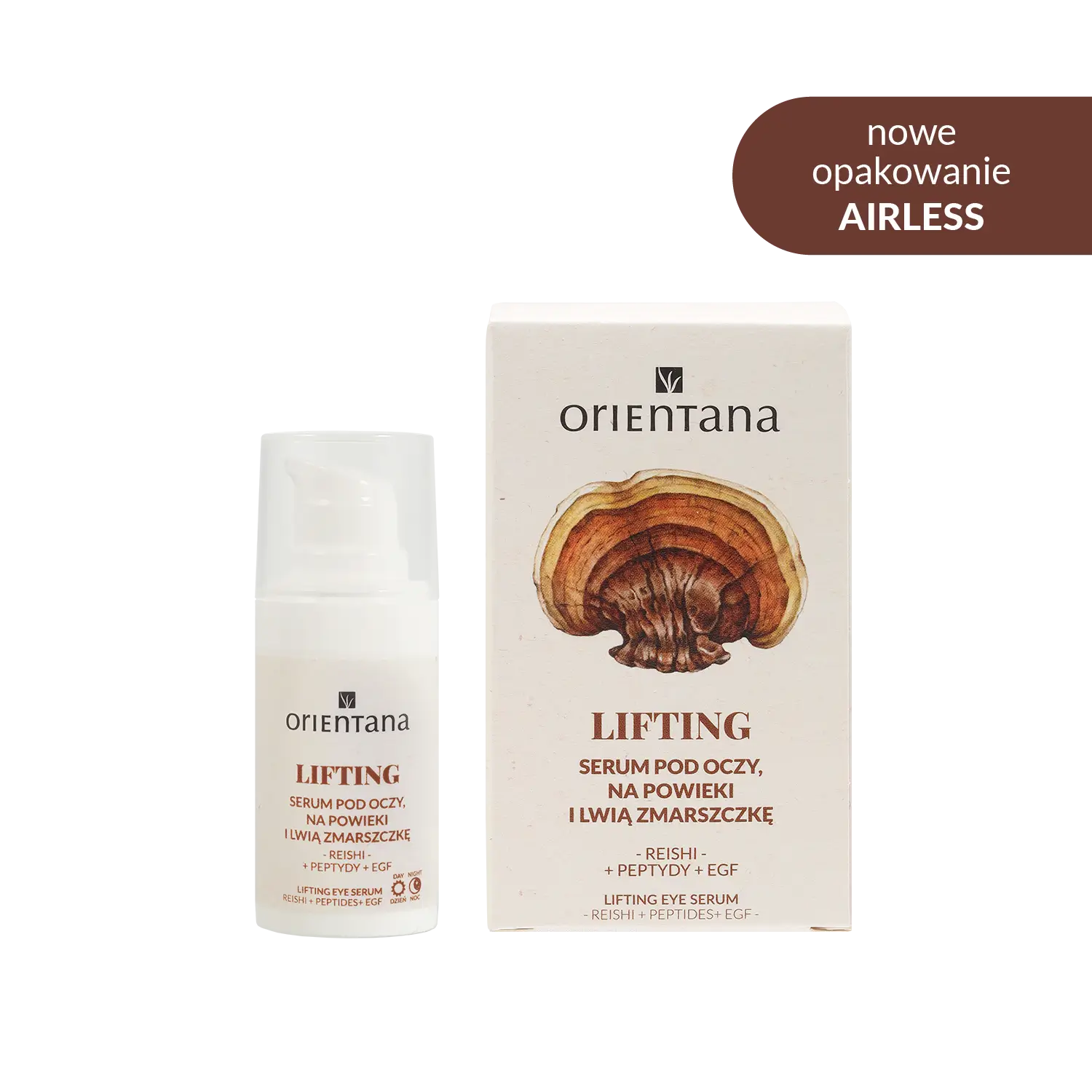
That's why this form appears in more refined, modern formulations - including Orientana products, where it has been used in:
- serum-ampoules (e.g., brightening and anti-aging lines)
- Orientana Micro-exfoliating Night Cream
- Orientana Hello Papaja Brightening Night Mask
- Orientana Hello Papaja Vitamin C Cream

These formulas are not just about vitamin C itself, but about the entire system:
👉 stability + comfort of use + real effectiveness with regular use
What about other derivatives?
Ascorbyl Tetraisopalmitate
This is a lipophilic form (fat-soluble), which:
- penetrates the stratum corneum very well
- works deeper, but slower
- is exceptionally stable
Often used in anti-aging cosmetics and for dry skin.
Ascorbyl Glucoside
- stable, gentle form
- works more superficially
- ideal for sensitive and beginner skin
👉 Requires conversion in the skin to an active form, so its action is more subtle.
Why is this approach increasingly common today?
Because the truth is:
👉 better stability = a greater chance that the ingredient will actually work on the skin, not just in theory
Pure ascorbic acid may be "the strongest on paper,"
but if it oxidizes after a few weeks — its effectiveness drops to zero.
Therefore, increasingly:
- instead of maximum power → optimal effectiveness over time is chosen
- instead of "a wow effect at the beginning" → real results with long-term use are built
And this is the moment when vitamin C ceases to be overrated —
and simply becomes a well-used tool.
FAQ
-
Is ascorbic acid vitamin C?
Yes, it is its active form. -
Does vitamin C work on wrinkles?
Yes, by stimulating collagen. -
Can it be used daily?
Yes, at the appropriate concentration. -
Does it work on hyperpigmentation?
Yes, it inhibits tyrosinase. -
Can it be used in summer?
Yes, it's even recommended. -
Morning or evening?
Preferably in the morning. -
How long should it be used?
At least several weeks. -
Is SPF necessary?
Yes, it's mandatory. -
Can it be combined with retinol?
Yes, but at different times. -
Can it be combined with niacinamide?
Yes. -
Is stinging normal?
Yes, but it shouldn't be severe. -
Can it cause allergies?
Rarely, but it can irritate. -
Is it suitable for sensitive skin?
Yes, but in lower concentrations. -
When do you see effects?
After 2–4 weeks. -
Does it give a glow effect?
Yes. -
Does it work on acne?
Indirectly. -
What pH should the serum have?
Below 3.5. -
What concentration is best?
10–15%. -
Can the serum oxidize?
Yes. -
How to recognize a spoiled serum?
Change of color. -
Should it be stored in the refrigerator?
You can, but it's not necessary. -
Is light harmful?
Yes. -
Does it work on dark circles under the eyes?
It can help. -
Can it be used during pregnancy?
Yes. -
Can it be used every morning?
Yes.
Read also Vitamin C and its effect on the skin