The phrase "Polish cosmetics" just a few decades ago was mainly associated with local, classic drugstore brands. Today, it signifies an entire ecosystem: contract manufacturing at the EU level, in-house R&D departments, exports worth billions of euros, raw material innovations (biotechnology, modern filters, advanced barrier care), and a wave of "natural, yet technological" brands – those that combine botanical inspirations with the demands of modern cosmetology.
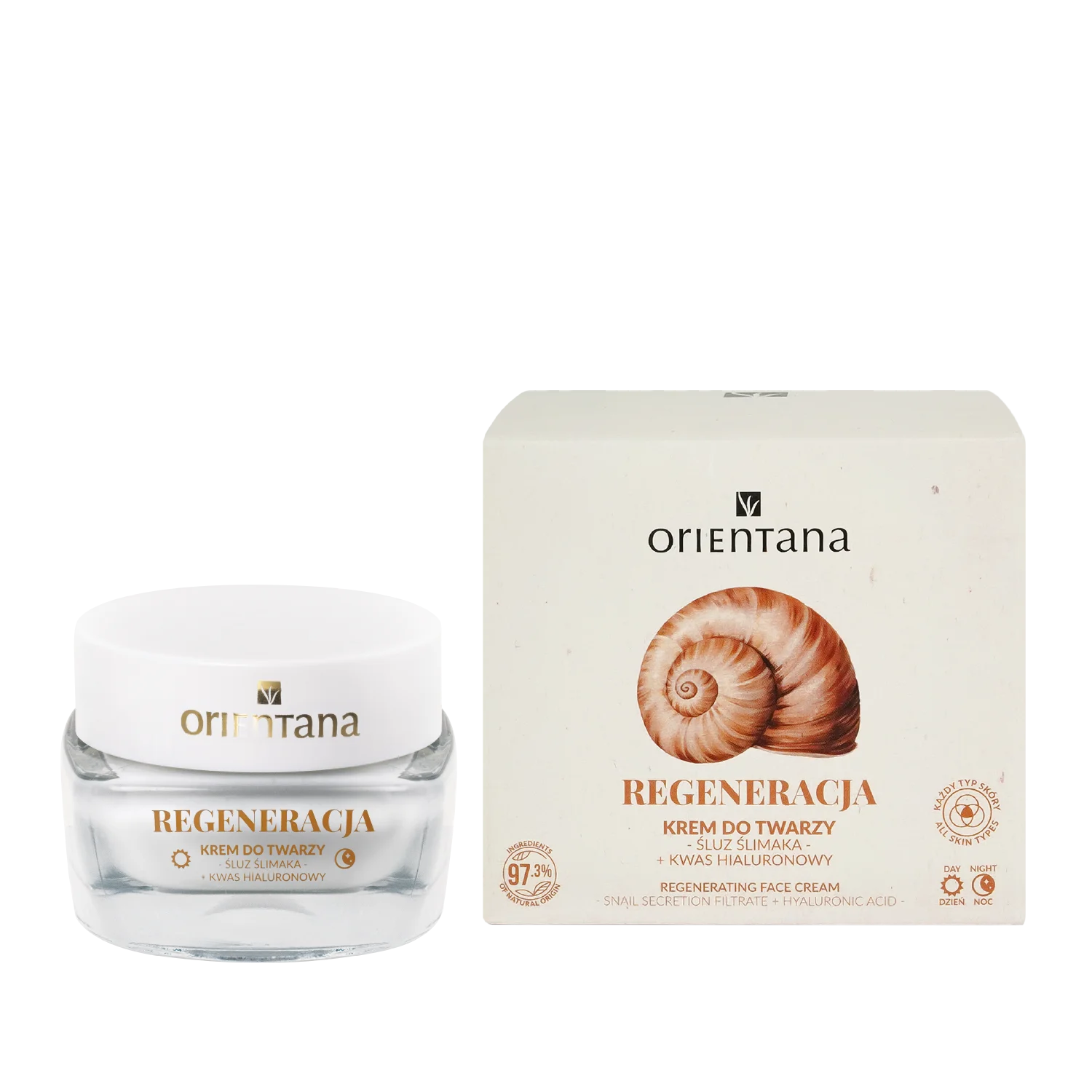
Within the "Polish cosmetics producers" trend, brands that combine local availability with global ingredient inspiration are important. A good example is Orientana – a brand associated with natural care and Asian plants, while simultaneously communicating a modern approach to skin needs.
In this article, I look at the topic broadly: historical perspective + specific numbers. I hope the article will be interesting for you.

Polish cosmetics yesterday and today: why has this industry grown so much in Poland?
The Polish cosmetic market has grown faster than many mature Western markets in the last decade. On one hand, "classical economics" is at play here: rising incomes, increased consumption, and the development of drugstores and e-commerce. On the other hand – a transformation of competencies: Poland has become a place where it is profitable to design, produce, and export cosmetics according to EU standards.
This is very clearly visible in the numbers:
- According to PAIH, the value of the cosmetic market in Poland in 2023 amounted to over PLN 25.4 billion.
- Poland is the 5th largest cosmetic market in the EU (in terms of value).
- The "Cosmetics in Poland" report indicated that in the years 2014–2023, the Polish market grew by 75.3%, and Poland's share in the EU market increased from 4.9% to 6.4%.
This is not a "temporary trend". It is the result of a long journey that can be told as a story of transition: from craftsmanship, through mass drugstore availability, to export-oriented, modern production.

A brief history: from pharmacies and recipes to industry and laboratories
Beginnings: pharmacies, recipes, and hygiene
The first "everyday" cosmetics were for years created close to pharmacy: soaps, protective creams, hygiene products. During this period, the key was not "beauty," but utility: skin protection, hygiene, comfort.
PRL (People's Republic of Poland): mass production, shortages, "classics"
In the reality of a shortage economy, availability and repeatability were important. This is when the model of strong drugstore brands was established: simple formulas, large volumes, limited choice, but mass recognition.
1990s and early 2000s: transformation, Western entry, professionalization
After 1989, the market opened up to foreign competition, new distribution channels, and quality standards. Polish companies began to invest in technology, raw materials, packaging, marketing – and gradually in R&D.
After joining the EU: acceleration of quality and export
The EU legal framework (including safety and documentation requirements) acted as a "quality filter". Poland quickly built an advantage: good quality-to-price ratio + efficient production + flexibility.
It is this flexibility that is often an underestimated superpower: in Poland, there are over 1,300 manufacturers of cosmetics and toiletries (according to the REGON register cited in PAIH materials).
A large part of the market consists of SMEs – fast, agile, ready to create short series, novelties, and "niche" products.

Key figures worth knowing
How big is the market in Poland?
Here's an important point: different sources calculate the "market" differently.
- Cosmetics Europe estimates the retail sales value of cosmetics and personal care products in Poland at approx. 5.8 billion euros in 2024.
- PAIH states the market value in Poland in 2023 as over PLN 25.4 billion.
- Industry reports may also use a broader "beauty" category (sometimes including perfumes, hygiene categories, and even services), which is why higher amounts appear in media circulation.
In practice: regardless of the methodology, one thing is clear - it is a large, growing market, and Poland is among the European leaders.
Export: Polish cosmetics as a "global" commodity
Export is today one of the strongest arguments when someone asks if "Polish cosmetics" is a serious topic.
- According to PAIH, the value of Polish cosmetics exports in 2023 amounted to 5.1 billion euros.
- In 2024, exports reached 6.0 billion euros, and Poland maintained its position as the 9th largest cosmetics exporter globally and 5th in the EU.
This means that Polish products no longer compete only "locally". They compete on quality, price, speed of implementation, and efficiency of the supply chain.
However, this does not mean that Polish cosmetic brands appear on shelves abroad. Only a handful of brands appear. The numbers above simply represent contract manufacturing for foreign brands and corporations.
Employment and competencies
The PAIH material stated that employment in the cosmetics industry grew from 14.4 thousand people (2013) to 19.8 thousand people.
This is another signal that the industry is not just marketing and packaging, but real production, quality control, safety assessment, logistics, and research. These are the people cosmetic brands must care for.
What distinguishes the Polish cosmetic industry?
Speed of implementation and "short series"
Polish manufacturers are known for their ability to quickly respond to trends: from new serum forms, to regulatory changes, to social media fads. This favors the boom of niche and specialized brands.
Competitiveness: quality vs. price
Poland is able to produce cosmetics to EU standards, often at more accessible prices than in countries with higher labor costs – while maintaining quality and compliance.
Innovation: from raw materials to packaging
Modern Polish brands increasingly combine:
- barrier technologies (ceramides, lipids, microbiome support),
- "bio-tech" ingredients (ferments, polysaccharide fractions, modern moisturizing complexes),
- botanical inspirations (adaptogens, extracts, oils) at the standard of stability and safety.
Do Korean cosmetics pose a threat to Polish cosmetic brands?
The dynamic growth of the Korean cosmetics (K-beauty) market in Europe – including Poland – is one of the most important competitive factors that Polish cosmetic brands are facing today. Just a few years ago, products from South Korea were treated as a curiosity or a niche for skincare enthusiasts. Today, they are a fully-fledged market segment that genuinely influences consumer purchasing decisions and sales structures in drugstores and e-commerce.
K-beauty as a model of innovation – a narrative advantage, not always a qualitative one
Korean cosmetics have very effectively built a narrative of "advanced future skincare." Consumers associate them with:
- rapid implementation of innovations (essences, ampoules, ferments, hydrogels),
- laboratory precision,
- spectacular textures and sensory effects,
- strong presence in social media and viral trends.
For many customers, this means automatically assuming that Korean cosmetics are more innovative than local products. Meanwhile, in practice, many technological solutions used in K-beauty (e.g., multi-step skincare, light emulsions, plant ferments) are now equally well-developed in Europe – including Poland – but simply "packaged" less effectively in terms of narrative.
The problem for Polish brands is not a lack of quality, but an uneven perception of innovation.
Price pressure and production scale
Another challenge is scale. Korean cosmetic conglomerates operate in a completely different ecosystem:
- enormous production volumes,
- strong export support,
- extensive supply chains,
- experience in global branding.
Thanks to this, they can introduce products at very attractive retail prices, often difficult to achieve by Polish cosmetic brands, which produce in shorter series and are subject to strict EU regulations at every stage (from raw materials to marketing claims).
This leads some consumers to perceive Polish cosmetics as "more expensive without a clear reason," even though the real difference results from:
- safety standards,
- certification costs,
- local production,
- quality of raw materials approved for sale in the EU.
Regulatory differences – a silent but crucial problem
One of the rarely discussed, yet very important aspects, is regulatory asymmetry. Cosmetics manufactured and registered in the European Union must meet rigorous requirements regarding:
- ingredient safety,
- PIF documentation,
- safety assessment,
- manufacturer's responsibility.
In the case of cosmetics imported from outside the EU, control often takes place at the distribution stage, rather than during the formulation process. For Polish brands, this means operating in a much more demanding legal environment – while competing with products that appear "just as modern" to the consumer.
This does not disqualify K-beauty, but it distorts a fair comparison between local and global brands.
Changing consumer expectations – a cultural challenge
K-beauty does not exclusively sell cosmetics. It sells a style of care: ritual, multi-step routines, "treating skin as a long-term project." This has changed the language consumers use to talk about skincare.
For Polish brands, this is both a threat and an opportunity. A threat – because simpler messages can be perceived as less advanced. An opportunity – because European cosmetology is increasingly returning to skinimalism, the skin barrier, and real skin tolerance, rather than the number of steps.
Brands from Poland can win not by copying K-beauty, but by offering an alternative: shorter, effective routines, tailored to the climate, lifestyle, and real problems of European skin.
Questions
1. How to tell if a brand is from Poland?
Look for clear communication on the packaging. "Made in Poland" should be mandatory.
2. Is Poland a large cosmetic market in Europe?
Yes. Poland is indicated as the 5th largest cosmetic market in the EU according to industry rankings.
3. How much is the Polish cosmetic market worth?
It depends on the methodology. PAIH states that in 2023, the market value amounted to over PLN 25.4 billion.
4. Why do different reports give different market values?
Because some count cosmetics and personal care narrowly (retail sales), while others more broadly (the "beauty" category, sometimes with additional segments).
5. Are Polish cosmetics exported on a large scale?
Yes, export is one of the pillars of the industry. In 2024, the export value was reported at 6.0 billion euros.
6. What is Poland's position in global cosmetics exports?
Poland is indicated as the 9th largest exporter of cosmetics globally (and 5th in the EU).
7. Are there many cosmetic manufacturers in Poland?
Yes. PAIH materials state over 1,300 manufacturers (according to the REGON register).
8. Does the cosmetic industry in Poland create jobs?
Yes – an increase in employment from 14.4 thousand (2013) to 19.8 thousand was indicated.
9. Why is the Polish cosmetic industry growing faster than many EU markets?
Because it combines growing domestic consumption, flexible production, competitive costs, and rapid implementation of trends.
10. Does "Polish cosmetics" only mean natural brands?
No. The Polish industry includes natural and dermo-cosmetic brands, makeup, perfumes, professional cosmetics, and contract manufacturing.
11. Do Polish cosmetics meet EU standards?
If they are legally placed on the market in the EU, they must meet the safety and documentation requirements mandated by EU law.
12. Why are consumers looking for Polish brands today?
Because they often offer a favorable quality-to-price ratio, rapid innovations, and increasingly better transparency of ingredients and effects.
13. What trends most strongly changed Polish cosmetics after 2020?
Hydrolipid barrier, "skinimalism", gentle cleansing, e-commerce development, and the significant importance of social media recommendations.
14. Can natural Polish cosmetics be "modern"?
Yes. More and more brands combine botanical inspirations with modern formulation technology (e.g., barrier solutions, innovative carriers, ferments).
15. How long has the "boom" for Polish cosmetics lasted?
This is a multi-year trend. An industry report indicated a growth of the Polish market by 75.3% between 2014–2023.
Bibliography - data on the Polish cosmetics industry
Polish Union of Cosmetic Industry & WiseEuropa - Cosmetics in Poland. Report on the State of the Cosmetics Industry, report prepared by Justyna Żerańska, PhD Eng., Ewa Starzyk, PhD Eng., Aleksandra Lau-Wyzińska and the WiseEuropa team (Krzysztof Bocian, Maciej Bukowski, PhD, Krzysztof Fal, PhD). Discusses Poland's position in the EU, strategies, and forecasts.
YouGov / Przemyslkosmetyczny.pl - analytical data on the value of the cosmetics market in Poland (over PLN 18 billion in 2025) and purchasing trends (increasing interest in ecological and Korean cosmetics). Beauty Razem (Anna Kowalska) – article on the Polish cosmetic market, valued at approx. PLN 25.2 billion and Poland's position as the fifth market in the EU.
Cosmetics Europe - Annual Report 2024, industry report on the cosmetic market in the EU and its importance for the European economy.