
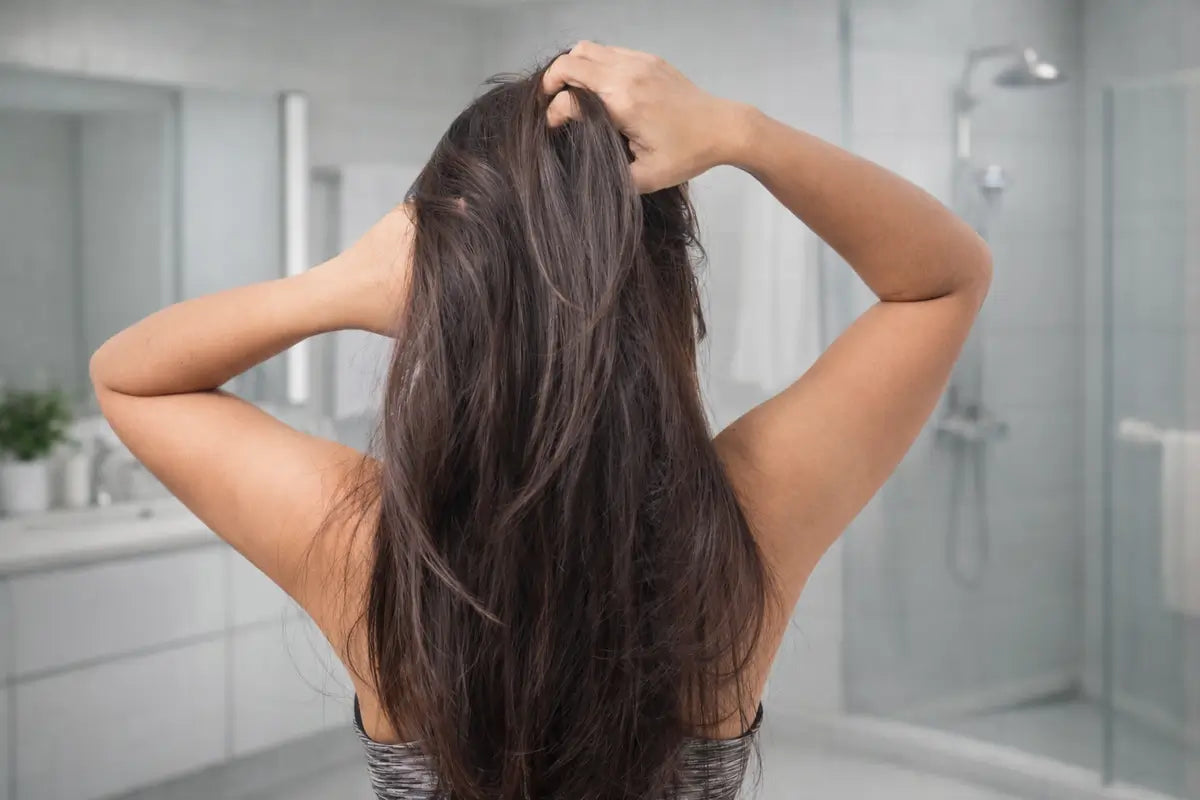
As a trichologist with years of experience, I encounter patients daily who unknowingly damage their hair through improper care. Many people invest in expensive cosmetics, yet their hair remains dull, brittle, and lifeless. Often, the problem lies not in the quality of the products, but in the fundamental mistakes we make every day. In this article, I'll discuss the most important hair care mistakes and show you how to avoid them.

Washing your hair - basic mistakes that damage your hair
Using too hot water
Hot water opens the hair cuticles, leading to moisture and protein loss. Hair becomes rough, dull, and prone to damage. This is one of the hair care mistakes we often ignore, but it has a huge impact on the health of our strands.
Solution: Wash your hair with lukewarm water and then rinse it with cold water - this will close the cuticles and add shine.
Improper application of shampoo
Many people apply shampoo directly to their hair and rub it vigorously along its entire length. This is a serious mistake! Shampoo should only be applied to the scalp, where the sebaceous glands are located.
Correct technique:
- Spread the shampoo on your hands.
- Gently massage your scalp with your fingertips (not your nails!)
- The foam that rinses out of the hair is enough to cleanse its lengths.
- Perform the massage for at least 2-3 minutes, it stimulates microcirculation
Drying and styling - when we damage our hair unconsciously
Drying your hair with a towel
Vigorously rubbing wet hair with a towel is one of the worst hair care mistakes you can make. Wet hair is extremely susceptible to mechanical damage—the cuticles are raised and the structure weakened.
How to do it right:
- Gently wrap your hair in a towel and press it lightly.
- Instead of a regular towel, use a cotton T-shirt or microfiber
- Leave your hair wrapped for 10-15 minutes to allow excess water to absorb naturally.
Combing wet hair
Brushing wet hair with a regular brush is a direct way to break it. Wet hair can stretch by up to 30 percent, damaging its keratin structure.
My recommendation: If you must detangle wet hair, use a wide-toothed comb or a brush designed for wet hair (like Tangle Teezer). Always start at the ends and gradually move upwards.
Overuse of hair dryers and straighteners
Thermal appliances are one of the main factors in hair damage. Temperatures above 180 degrees Celsius cause irreversible damage to keratin protein. Unfortunately, many people use straighteners or curling irons at maximum temperature, making one of the most serious hair care mistakes.
Rules for safe thermal styling:
- Always use heat protection before using hot tools.
- Set the temperature to a maximum of 180 degrees (fine hair: 150-160°C)
- Dry your hair from roots to ends, keeping a distance of 15-20 cm
- Do not direct the hot air stream at one place for more than 3 seconds.

Care - mistakes that prevent regeneration
Skipping the conditioner and mask
Shampoo cleanses but also lifts hair cuticles. Conditioner is essential to seal them and restore the proper pH. Skipping conditioner is a hair care mistake that leads to dryness, dullness, and static.
Basic rules:
- Apply conditioner only to the lengths and ends of your hair, away from the scalp.
- Leave it on your hair for 2-3 minutes.
- Use the intensively nourishing mask once a week.
- People with high porosity hair should also use emollients.

Using too many products at once
Applying layers of products—conditioner, serum, oil, cream—without understanding their effects is a common mistake. Hair can become weighed down, heavy, greasy at the roots, and difficult to style.
Rule of thumb: Choose products that suit your hair's porosity and needs. Not all hair types require oil – low-porosity hair may react negatively to heavy vegetable oils.
Neglecting the ends
The ends of your hair are the oldest part of your hair and the most susceptible to damage. Lack of regular trimming and proper care leads to split ends, which can progress up the hair shaft.
My advice: Trim your ends every 8-12 weeks, even if you're growing your hair out. Regular trims of 0.5-1 cm will prevent further loss.
Diet and supplementation errors
Nutritional deficiencies
As a trichologist, I always emphasize that hair condition reflects what's going on in the body. Deficiencies in protein, iron, zinc, biotin, or B vitamins lead to hair loss, weakened structure, and slower growth.
What to do:
- Check your ferritin, vitamin D3, and B vitamins levels
- Ensure adequate protein intake (1-1.2 g per kg of body weight)
- Include nuts, seeds, fish, eggs, and leafy vegetables in your diet
- Start supplementation only after consulting your doctor or trichologist.
Insufficient hydration
Drinking too little water affects the condition of your hair. A dehydrated body is unable to properly hydrate hair from within, leading to dryness and brittleness.
Styling and coloring mistakes
Dyeing too often
Chemical treatments, especially bleaching, deeply damage the hair's structure. Excessive coloring, especially in close succession, is one of the most serious hair care mistakes that can lead to permanent damage.
Safe practices:
- Dye your hair no more than once every 6-8 weeks.
- Choose ammonia-free paints if possible
- After coloring, use specialized care for colored hair.
- Consider techniques that preserve the hair structure (e.g. sombre, balayage)
Tight updos and scrunchies
Tying your hair up in a tight ponytail or bun every day can lead to traction alopecia. Metal clips and hair ties with metal elements are particularly dangerous.
Alternatives:
- Use soft, fabric bands
- Change the place where you pin it up
- At night, unbraid your hair or sleep it loosely.
- Avoid updos on wet hair
Ecological and chemical errors
Using silicones without awareness
Water-insoluble silicones can accumulate on hair, creating an impenetrable layer. Hair becomes heavy, becomes oily more quickly, and nutrients cannot penetrate its structure.
Solution: Read cosmetic ingredients. If you use silicones, use a clarifying shampoo once a month.
Chlorine and salt water
Pools and the sea are hair's worst enemies. Chlorine and salt dry out hair, dull it, and discolor colored hair.
Security:
- Before bathing, wet your hair with clean water and apply conditioner or oil.
- You wear a swimming cap in the pool
- After bathing, rinse your hair thoroughly and use conditioner.
The most common mistakes made in caring for different types of hair
Thin and delicate hair
People with fine hair often overload their hair with heavy products, thinking they'll add volume. This is a mistake! Fine hair needs light care.
Curly and wavy hair
The main mistake is combing dry hair and using products designed for straight hair. Curly hair requires the Curly Girl method and the right products.
Highly porous and damaged hair
Ignoring PEH (protein-emollient-humectant balance) is a fundamental mistake. This type of hair requires comprehensive restoration.
Summary - How to avoid hair care mistakes
Beautiful, healthy hair is the result of proper daily habits. Avoiding the hair care mistakes I've described will allow you to significantly improve the condition of your strands without having to invest in expensive treatments.
Key principles:
- Wash your hair with lukewarm water, less often than every day
- Always use conditioner and heat protection
- Be gentle with wet hair
- Take care of your diet and hydration
- Trim the ends regularly
- Adjust your care to your hair porosity
Remember that every hair is different and may require an individual approach. If, despite following the above guidelines, you don't see any improvement, it's worth consulting a trichologist, who will assess the condition of your scalp and hair and recommend appropriate treatment.
Frequently asked questions about hair care mistakes
How often should I wash my hair to avoid making mistakes in hair care?
The optimal frequency of washing depends on your hair type. Normal hair is best washed 2-3 times a week, dry hair 1-2 times a week, and oily hair can be washed more frequently, gradually increasing the intervals. Washing hair daily is one of the most common hair care mistakes, leading to excessive degreasing of the scalp and, paradoxically, faster oily hair.
Is using conditioner every time you wash your hair a necessity or a mistake?
This is an absolute must, not a mistake! Shampoo lifts hair cuticles, while conditioner seals them, restoring the proper pH and moisture. Skipping conditioner is one of the most common hair care mistakes. However, it's important to apply it correctly—only to the lengths and ends, away from the scalp.
What are the biggest mistakes when drying your hair with a hairdryer?
Common mistakes include: using too high a temperature (above 180°C), drying without a heat protectant, holding the hairdryer too close to the hair (closer than 15-20 cm), directing the airflow under the cuticle (from the ends to the roots instead of the other way around), and drying hair completely dry. These hair care mistakes lead to irreversible damage to the keratin structure.
Can I comb wet hair or is it a mistake?
Combing wet hair with a regular brush is a serious mistake. Wet hair is most susceptible to damage, can stretch by up to 30 percent, and is prone to breakage. If you must detangle wet hair, use a wide-toothed comb or a brush specifically designed for wet hair, and always start at the ends and gradually work your way up.
How often should I use a hair mask?
Intensively nourishing masks should be used once a week for healthy hair, and 2-3 times a week for damaged hair. Using them too often can weigh down the hair, which is a mistake, but completely forgoing masks is an even bigger mistake in hair care. The key is to adapt the frequency to the hair's needs.
Is using a hair straightener every day a mistake?
Yes, this is one of the most serious hair care mistakes. Daily exposure to high temperatures leads to the accumulation of micro-damage, loss of keratin protein, and permanent damage to the hair structure. If you must use a straightener frequently, always use a heat protectant, use a lower temperature (maximum 180°C), and give your hair breaks from heat styling.
What mistakes do I make when applying shampoo?
Common mistakes include applying shampoo directly to the hair instead of the scalp, using too much product, rubbing the shampoo into the lengths of the hair, rubbing aggressively, and shortening the massage time. Shampoo should be applied only to the scalp, massaged for 2-3 minutes with your fingertips, and the lather that rinses off should be sufficient to wash the lengths.
Does trimming ends speed up hair growth or is it a myth?
Trimming doesn't speed up hair growth; hair grows from the root, not the ends. This is a myth. However, regular trimming is necessary to prevent split ends, which can progress upwards. Neglecting the ends is a common hair care mistake, leading to greater length loss in the future. I recommend trimming every 8-12 weeks.
What nutritional mistakes affect the condition of your hair?
The most common mistakes include: insufficient protein in the diet, insufficient water intake, iron, zinc, and B vitamin deficiencies, restrictive diets, and supplementation without proper testing. Hair is composed of 95% protein, so protein deficiency is a fundamental mistake. Before incorporating supplements, consult your doctor or trichologist.
Can I dye my hair at home or is it a mistake?
Coloring your hair at home isn't a mistake if you do it consciously and carefully. Mistakes occur when you color your hair too often (more than every 6-8 weeks), use overly aggressive lighteners, fail to perform an allergy test, apply the dye to wet or damaged hair, and neglect professional aftercare. The biggest mistake is lightening your hair more than 2-3 shades at home.
What mistakes am I making when putting my hair in a ponytail?
Common mistakes include: tying your hair too tightly, which can lead to traction alopecia, using hair ties with metal elements, tying it up when wet, tying it in the same place every day, and sleeping with it tight. It's better to use soft fabric hair ties, change the position of the hair ties, and unbraid your hair at night.
Are hair oils suitable for all hair types?
No, this is a common hair care mistake. Heavy vegetable oils are not suitable for low porosity hair – they can weigh it down and make it greasy. Low porosity hair responds better to lightweight silicone products or mineral oils. Natural oils work great on high and medium porosity hair. Choosing the right product for your porosity is key – using the wrong product is a common mistake.
How to avoid mistakes when caring for your hair after the pool?
The most important thing is preparation and proper after-swim care. Before swimming, wet your hair with clean water and apply conditioner or oil to create a protective barrier. Wear a shower cap. After swimming, thoroughly rinse off the chlorine and apply a moisturizing conditioner or mask. It's a mistake to leave chlorine on your hair and dry it without washing it first.
Can protein hair restoration be abused?
Yes, this is a common mistake! Excess protein leads to so-called protein overload—hair becomes stiff, brittle, and difficult to comb. A proper PEH (protein-emollient-humectant) balance is crucial. Highly porous hair needs more protein, but even it also requires emollients and humectants. Apply protein every 2-3 weeks, observing how your hair reacts.
What are the mistakes in caring for curly hair?
The most common mistakes include: dry combing (which causes frizz), using products with water-insoluble silicones, using a terry towel to dry your hair, drying it without a diffuser or at too high a temperature, skipping the "scrunching" technique, and using products not designed for curly hair. Curly hair requires the curly girl method and dedicated products.