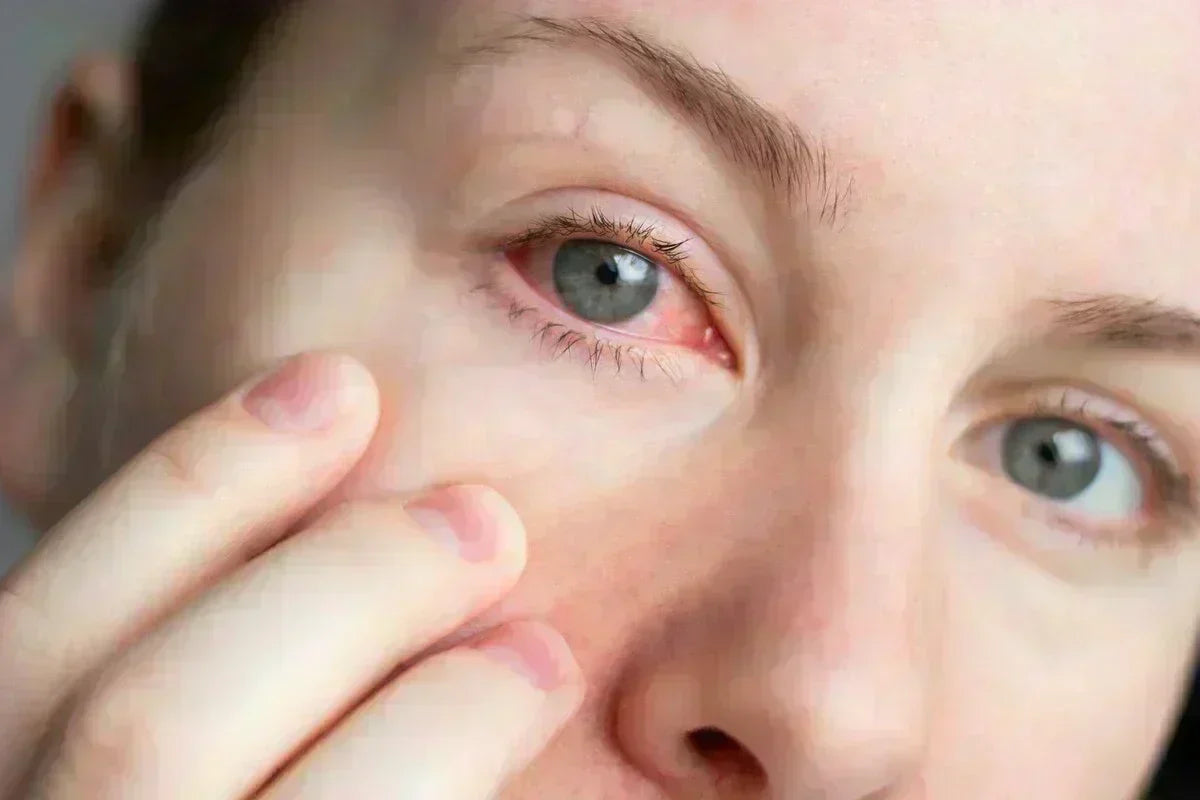
Cosmetic allergies are an increasingly common problem, associated with both the growing number of products used and the increasingly sensitive skin of many people. Dermatological studies indicate that as many as 15-20% of the population may experience allergic contact dermatitis (ACD) - an immunological reaction caused by contact with a specific substance in a cosmetic product.
Although fragrances, preservatives, and some plant extracts are most often to blame, an allergy can appear even after using a cosmetic that was previously well-tolerated. In this article, I explain how to recognize a cosmetic allergy, how to distinguish it from irritation, how to deal with an allergic reaction, and how to choose cosmetics in the future to minimize the risk of skin problems.
Table of Contents
- What is a cosmetic allergy - dermatological definition
- Most common allergy symptoms
- Causes of allergies and substances that trigger reactions
- Allergy vs. irritation - key differences
- How to recognize an allergy?
- What to do when an allergic reaction occurs
- Skincare for allergy-prone skin
- How to read INCI to avoid allergens
- How to prevent skin allergies
- When to see a dermatologist or allergist
- Frequently asked questions
- Recommended Orientana products
- Summary
What is a cosmetic allergy?
A cosmetic allergy is an immunological skin reaction to a specific ingredient or group of ingredients found in a skincare or makeup product. It most often takes the form of:
- allergic contact dermatitis (ACD) - a delayed-type reaction (48–72 h)
- immediate urticarial reaction - rarer, but possible
An allergy does not depend on whether the cosmetic is "natural," "hypoallergenic," or "dermatologically tested." It is an individual reaction, specific to a person's immune system.
According to data from the European Academy of Dermatology and Venereology, allergic dermatitis can affect up to 20% of adults. Additionally, it is increasingly affecting teenagers and children.
For allergy sufferers, I recommend:

Most common symptoms of cosmetic allergies
An allergy can manifest immediately or only after 48–72 hours.
Immediate symptoms
- burning, stinging
- sudden redness
- swelling
- rash, small bumps
- itching
This reaction occurs quickly, but it does not always mean an allergy; it can be a result of irritation.
Delayed (allergic) symptoms
- intense itching
- flaking of the epidermis
- roughness
- bumps, blisters
- erythema
- exacerbation of atopic dermatitis or rosacea
Causes of allergies and ingredients that most often cause reactions
Cosmetics contain thousands of substances, from preservatives to fragrance compositions and plant extracts. Not all are allergens, but several groups are responsible for most skin reactions.
Fragrances
These are the most common group of allergens. They can be synthetic or natural. Examples from the list of 26 EU fragrance allergens:
- Limonene
- Linalool
- Citral
- Coumarin
- Geraniol
- Eugenol
Although they sound "natural," they are among the most reactive compounds.
Preservatives
Contrary to myths, parabens rarely cause allergies. Much more often to blame are:
- Methylisothiazolinone (MI)
- Methylchloroisothiazolinone (MCI)
- Formaldehyde releasers (DMDM Hydantoin, Imidazolidinyl Urea)
UV filters
The most common allergens from organic filters:
- Octocrylene
- Oxybenzone
Natural ingredients with high allergenicity
- essential oils (e.g., cinnamon, clove, lavender)
- propolis
- lanolin
- herbal extracts
Active ingredients
They are not classic "allergens," but they can cause strong reactions:
- retinol and retinoids
- AHA/BHA acids
- vitamin C in the form of ascorbic acid
I recommend a cream with plant-based retinol

Allergy vs. irritation - key difference
Many users confuse these two reactions, leading to incorrect diagnosis.
Irritation (skin irritation)
- is not an immunological reaction
- appears quickly
- can result from acids, retinol, strong surfactants
- subsides after the skin calms down
Allergy (sensitization)
- type IV reaction
- involves the immune system
- appears after several hours or days
- recurs with every contact with the allergen
Most important: an allergic reaction does not go away after the skin "gets used to it."
I recommend cosmetics with ethylated vitamin C

How to recognize a cosmetic allergy?
Elimination test
Discontinue the product that may be causing the reaction. Allergy symptoms usually subside within 3–7 days.
Patch test
The most reliable diagnosis. A dermatoallergist applies products and individual substances on patches, which remain on the back for 48 hours.
Studies confirm that patch tests have over 70% diagnostic effectiveness.
INCI analysis
Comparing the ingredients of products that cause a reaction helps identify a common allergenic ingredient.
What to do when an allergic reaction occurs?
Immediately discontinue all newly introduced cosmetics
This is most often the fastest solution.
Thoroughly rinse the skin with water - without cleansing products
For facial skin, use lukewarm, not hot water.
Introduce soothing and barrier-restoring skincare
The most effective are:
- ceramides
- niacinamide in low concentration
- beta-glucan
- panthenol
- allantoin
- centella asiatica
- plant mucin
For severe reactions - medical consultation
A dermatologist may recommend:
- anti-inflammatory ointments
- antihistamines
- short-term topical steroid therapy
Skincare for allergy-prone skin
Cosmetic minimalism
Fewer products = less exposure to allergens.
Simple formulas and short INCI
Especially important for sensitive skin, atopic dermatitis, rosacea.
Avoidance of fragrance mixtures
Both synthetic and natural.
Choosing products labeled "dermatologically tested"
Does not guarantee absence of allergy, but reduces risk.
How to read INCI to avoid allergens?
Fragrance allergens
If you have reactive skin - avoid products that have in the end of INCI list:
- Limonene
- Linalool
- Citronellol
- Geraniol
- Citral
Preservatives with high allergic potential
Watch out for:
- Methylisothiazolinone
- Methylchloroisothiazolinone
- DMDM Hydantoin
- Quaternium-15
Plant extracts
Not all are problematic, but the most reactive are:
- cinnamon
- propolis
- clove
- calendula
- chamomile
Essential oils
Natural, but highly allergenic.
How to prevent skin allergies?
Do not test many new products at once. Changes should be introduced one at a time.
Use a patch test
On the wrist or behind the ear.
Opt for gentle formulas without intense fragrances
The fewer fragrance substances, the lower the risk.
Take care of the hydrolipidic barrier
Even the best cosmetic will irritate skin with a compromised protective layer.
When to see a dermatologist?
- when symptoms last longer than 3–5 days
- when the reaction significantly worsens
- when severe swelling, blisters appear
- when the allergy recurs despite eliminating products
Frequently asked questions
Can I become allergic to a cosmetic I've used for years?
Yes. An allergy can appear suddenly.
Do natural cosmetics cause fewer allergies?
Not always. Many essential oils are strong allergens.
Can retinol cause allergies?
Most often it causes irritation, but an allergy is possible.
Can SPF filter cause allergies?
Yes, especially chemical filters such as octocrylene.
Can children have cosmetic allergies?
Yes, and statistically more often than adults.
How long does an allergic reaction last?
From a few hours to several days, depending on exposure.
Recommended Orientana products
For sensitive, allergy-prone skin, the following products work well:
Soothing and Smoothing Serum with plant mucin
minimizes redness
brings relief to irritated skin
Hydrating Toner-Essence with Gluconolactone
gentle, for reactive skin
PHA works more gently than AHA
Ashwagandha + CICA + Niacinamide Serum
soothes and supports the barrier
restores the hydrolipidic layer
Sandalwood and Turmeric Face Cream
soothing, regenerating, without strong irritating additives
ideal for hyper-reactive skin
A cosmetic allergy is a complex immunological reaction that should not be underestimated. To reduce the risk, it is worth consciously reading labels, choosing products with simple compositions, and avoiding excessive testing of many new products at once. Early recognition and proper care allow for quick alleviation of symptoms and prevention of further reactions.