More and more people are struggling with dandruff. In this post, I would like to explain what dandruff is, how to support the fight against this problem, and which Orientana cosmetics can help.
What is dandruff and why does it occur?
Dandruff is one of the most common scalp problems – affecting up to 50% of the adult population (International Journal of Trichology, 2018). It manifests as excessive exfoliation of the epidermis, often accompanied by itching, dryness, or oily scalp.
From a trichologist's perspective, dandruff is not merely a cosmetic problem, but a disturbance in the balance of the scalp microbiome, i.e., the natural bacterial and fungal flora.

Most often, its source is the excessive growth of Malassezia globosa and Malassezia restricta yeasts, which are a natural component of the skin microbiota, but in excess, they trigger an inflammatory reaction.
According to research (J. Clin. Invest., 2019), these yeasts break down sebum into fatty acids, which irritate the epidermis, accelerating its exfoliation. As a result, uncontrolled flaking and the formation of characteristic white or yellow scales occur.
Types of dandruff – dry and oily
Dry dandruff
Occurs more frequently in people with dry or sensitive scalp. It manifests as small, white flakes that easily fall onto the shoulders. The skin may feel tight, and the hair may be dull. Dry dandruff often worsens in winter, with low air humidity and heating.
Oily dandruff
Associated with excessive sebum secretion. The flakes are larger, yellowish, adhering to the scalp and hair. It is often accompanied by itching and oily hair. In advanced stages, it can lead to seborrheic dermatitis (SD).
Studies from Dermatologic Therapy (2020) indicate that in oily dandruff, scalp lipid levels can be up to 40% higher than in people without dandruff, which promotes the proliferation of Malassezia yeasts.
Causes of dandruff formation
Scalp microbiome disorders
The natural scalp microbiome forms a protective barrier, but its balance is very delicate. Under the influence of stress, hormonal changes, improper cosmetics, or diet, an overgrowth of Malassezia can occur, resulting in dandruff and itching.
Hormonal factors and stress
High levels of cortisol (the stress hormone) exacerbate seborrhea and increase the skin's susceptibility to fungal infections. Dandruff is more common in men, which is related to the action of androgens stimulating sebum secretion.
Improper care
Too aggressive cleansing, using SLS shampoos, or washing hair less than twice a week can disturb the pH and microbiome of the scalp.
Diet poor in micronutrients
Deficiencies of zinc, B vitamins, and omega-3 acids can weaken the skin's hydrolipidic barrier, increasing its susceptibility to flaking and inflammation.
How an effective dandruff shampoo works
A good anti-dandruff shampoo not only removes flakes but, above all, eliminates the cause of dandruff and regulates the scalp microbiome. Studies from Journal of Dermatological Treatment (2020) have shown that shampoos containing antifungal extracts can reduce the number of Malassezia colonies by 70-80% within 4 weeks.
The mechanism of action of an effective shampoo includes:
- antifungal and antibacterial action,
- regulation of sebum secretion,
- alleviation of inflammation and itching,
- hydration and restoration of the hydrolipidic barrier,
- restoration of microbiome balance.
Natural active ingredients in anti-dandruff care
Neem (Azadirachta indica) – guardian of the microbiome
Neem is a plant with strong antifungal, anti-inflammatory, and antibacterial properties. The compounds it contains – azadirachtin and nimbinin – inhibit the growth of Malassezia furfur and Candida albicans.
Research from Phytotherapy Research (2019) confirms that neem extract reduces the number of Malassezia yeasts by over 75% after 14 days of use.
Green tea – antioxidant shield for the skin
Polyphenols (EGCG) contained in green tea inhibit the activity of the 5-α-reductase enzyme, which is responsible for excessive sebum secretion. Thanks to this, green tea helps reduce scalp oiliness and has a soothing effect.
Aloe – soothing and regeneration
Aloe gel soothes inflammation, regenerates the epidermis, and restores skin comfort. According to the Journal of Ethnopharmacology (2018), using aloe in scalp care increases its hydration by 36% within 2 weeks.
Piroctone olamine – microbiome balance
In natural formulas, it acts as a microbiota regulator – it inhibits the growth of fungi without disturbing the skin's balance.
Orientana Neem and Green Tea Shampoo – an Ayurvedic approach to dandruff

Orientana Neem and Green Tea Shampoo is a combination of Ayurvedic plant ingredients with modern trichological knowledge.
Its action is based on the synergy of extracts that regulate the scalp microbiome, soothe irritation, and prevent dandruff recurrence.
Key ingredients and their action:
- Neem (Azadirachta indica) – has antiseptic, antifungal, and normalizing properties.
- Green tea (Camellia sinensis) – reduces oiliness and strengthens hair follicles.
- Aloe vera – intensely moisturizes, regenerates, and soothes.
- Rice proteins – improve hair condition and add volume.
The shampoo does not contain SLS, silicones, or artificial preservatives, so it can also be used by people with sensitive scalps and after hairdressing treatments.
How to use anti-dandruff shampoo for effective results
1. Wet hair and scalp with lukewarm water.
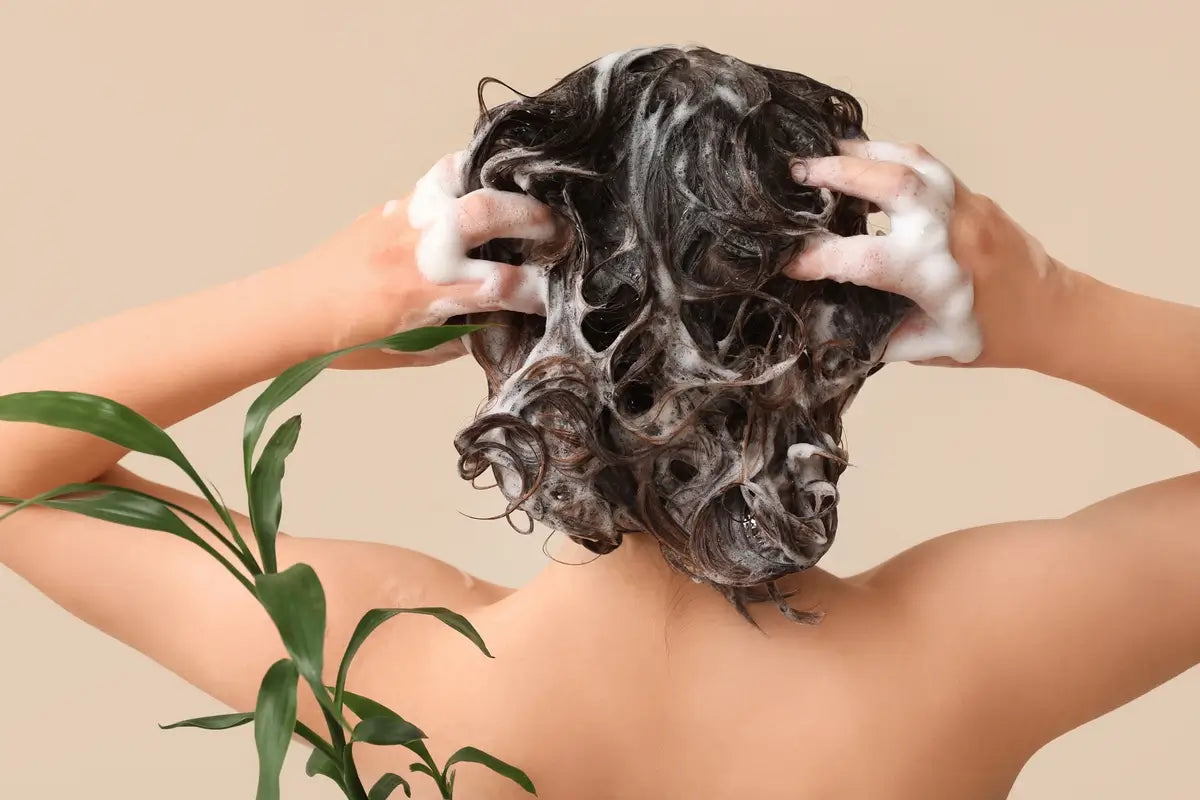
2. Apply a small amount of shampoo and gently massage for 1–2 minutes.
3. Leave the lather on for 2–3 minutes for the active ingredients to work.
4. Rinse thoroughly and repeat washing.
Trichologists recommend using the shampoo 2–3 times a week for a minimum of 4–6 weeks to restore microbiome balance.
Home remedies supporting dandruff therapy
Apple cider vinegar rinse
Diluted vinegar (1:4 with water) lowers the skin's pH and inhibits the growth of microorganisms.
Neem or nettle infusion
Can be used as a final hair rinse – strengthens follicles and soothes irritation.
Tea tree oil
Added to shampoo (2–3 drops) has antiseptic properties and relieves itching.
Scalp care after dandruff subsides
After completing the therapy, it's worth maintaining scalp balance:
• wash hair with a gentle, SLS-free shampoo,
• once a week, perform an enzymatic peel (not mechanical),
• use hair lotions with adaptogens (e.g., Ashwagandha, Reishi, Lychee) to strengthen hair follicles,
• avoid overheating the skin (drying with hot air).
Common mistakes in fighting dandruff
- Too aggressive washing
- SLS shampoos disrupt the microbiome and dry out the skin.
- Skipping moisturization
- Many dandruff sufferers avoid emollients, yet dry skin flakes even more.
- Discontinuing treatment after the first results
Dandruff can return if the microbiological balance of the skin is not maintained.
FAQ – frequently asked questions
Can dandruff shampoo be used daily?
Yes, if it has a gentle, natural formula – like Orientana Neem.
Is natural shampoo as effective as pharmacy shampoo?
Yes. Studies confirm comparable efficacy of neem extracts and piroctone olamine in reducing yeasts.
Can dandruff cause hair loss?
Yes – prolonged inflammation weakens hair follicles and shortens the anagen phase.
Do I need to change shampoo after dandruff is cured?
No, it's best to continue with a gentle product that regulates the microbiome.
Dandruff is not just an aesthetic problem, but a signal that the scalp microbiome is disturbed. The modern trichological approach is based on restoring biological balance, not just eliminating symptoms. Orientana Natural Neem and Green Tea Shampoo combines Ayurvedic tradition with modern dermatology. It has antifungal, anti-inflammatory, and regenerating properties – without disturbing the skin barrier.
Regular use brings long-term improvement in scalp and hair condition, as confirmed by application studies.