Inspirations

Exosomes in cosmetics - the future of skin regeneration and anti-aging.
Cosmetics with exosomes are becoming increasingly popular. Last year, Orientana also introduced a facial serum with exosomes from the Hydrotremella series. Find out if you are familiar with this ingredient. Table of Contents Why exosomes are a breakthrough in skin care What are exosomes – definition and structure How exosomes work at the cellular level Exosomes and the skin aging process Exosomes vs. retinol, peptides, and acids Effects of exosome use – what science says Where do exosomes in cosmetics come from? Application of exosomes in skin care Who are cosmetics with exosomes for? How to use exosomes effectively Exosomes and longevity and skin minimalism trends How to identify exosomes in INCI FAQ Why exosomes are a breakthrough in skin care For years, cosmetology developed around a single scheme: providing the skin with active ingredients to moisturize, exfoliate, or stimulate regeneration. Exosomes change this model. This is the first time that skin care begins to work not only at the biochemical level, but also at the communication level. Instead of "adding something to the skin," exosomes:🌱 transmit information 🌱 activate repair processes 🌱 restore the skin's ability to self-regenerate This is why they are increasingly referred to as a pillar of: regenerative cosmetology next-generation aesthetic medicine the concept of skin longevity Exosomes in Skin Rejuvenation: Systematic Review of Anti-Aging Effects and Clinical Applications What are exosomes - definition and structure Exosomes are nanoscale vesicles (30–150 nm) that are naturally produced by cells. They are formed in so-called multivesicular bodies and are released outside the cell, where they act as carriers of biological information. Their structure includes: lipid bilayer - protecting the contents surface proteins - enabling "recognition" of the target cell biological cargo, which includes: microRNA cytokines growth factors enzymes This means exosomes can influence the behavior of other cells. How exosomes work at the cellular level Exosomes work by: 1. Fusion with the target cell They deliver their "cargo" directly into the cell. 2. Regulation of gene expression Thanks to microRNA, they can influence the activity of genes responsible for: collagen production inflammatory response regeneration 3. Fibroblast activation Fibroblasts begin to produce more intensely: collagen elastin hyaluronic acid 4. Reduction of oxidative stress They inhibit the action of free radicals. Exosomes and the skin aging process Skin aging is not just about wrinkles. It involves: decreased intercellular communication slower regeneration chronic inflammation (inflammaging) Exosomes work precisely where the problem begins: 🌱 restore communication🌱 shorten regeneration time🌱 reduce inflammation This is why they are so effective in the concept of pro-aging / longevity, and not just classic anti-aging. Exosomes vs. retinol, peptides, and acids - key differences Retinol→ accelerates cell renewal→ can irritate Acids (AHA, PHA)→ exfoliate→ improve texture Peptides→ signal collagen production Exosomes→ manage the entire skin environment They are more like the "operating system of the skin" than a single ingredient. Effects of exosome use - what science says In vitro and in vivo studies indicate that exosomes can: increase collagen synthesis reduce wrinkles (up to ~38%) increase hydration (up to ~70%) accelerate epidermal regeneration improve skin elasticity But the most important effect is: 🌱 improving skin quality, not just its appearance Where do exosomes in cosmetics come from? In cosmetics, mainly the following are used: Plant exosomes (biotechnological) Obtained from plant cell cultures (e.g., calendula). Advantages: stability safety no ethical controversies in line with the vegan beauty trend Application of exosomes in skin care Exosomes are particularly effective for: dehydrated skin stress-fatigued skin first signs of aging discoloration acne scars regeneration after treatments Example: exosome serum as a new generation of skincare Exosome serum is one of the most advanced skincare products today. Formulations often combine exosomes with: humectants antioxidants barrier-restoring ingredients Result:🌱 immediate comfort🌱 long-term regeneration How to use exosomes for real results apply to cleansed skin apply before cream use regularly (minimum 3–4 weeks) combine with ceramides and moisturizers Exosomes and trends: longevity and skin minimalism Exosomes fit into two key trends: Longevity skin→ long-term skin health Skin minimalism→ fewer products, but more advanced How to identify exosomes in INCI Look for names of plant cell cultures This is the most common form in cosmetics. Examples: Calendula Officinalis Meristem Cell Culture Centella Asiatica Cell Culture Extract Plant Cell Culture Extract 🌱 It is from such cultures that exosomes (or complexes containing them) are obtained. This is an important signal. E.g.: Stem Cell Conditioned Media Callus Culture Extract 🌱 this means we are dealing with a "culture medium" that contains cell secretions — including exosomes. Exosomes DO NOT appear as a separate INCI name You typically won't see:🚩 "Exosomes"🚩 "Plant Exosomes" Why? Because: INCI classifies the raw material as an extract / cell culture exosomes are part of this complex, not a separate ingredient Beware of marketing Often:🌱 "exosomes" = marketing ingredient🌱 INCI = general name of the extract Therefore, always: check the raw material supplier look for information on whether exosomes are standardized / confirmed How to distinguish "real" exosomes from marketing? Ask yourself 3 questions: 1. Does the ingredient come from a cell culture?→ if yes, that's a good sign 2. Does the brand provide the source (e.g., meristem, callus)?→ increases credibility 3. Is there data on its effects / research?→ crucial for advanced ingredients If you see in INCI: 🌱 "[plant name] + Meristem Cell Culture"🌱 "Callus Culture Extract" it is very likely that:➡️ the product contains exosomes (or a complex with them) FAQ Basics What are exosomes in cosmetics?Microvesicles that transmit biological information between cells. Are exosomes natural?Yes – they are naturally produced by cells. Are exosomes stem cells?No – they are products secreted by cells. Do exosomes contain DNA?They do not contain a cell nucleus. Are they safe?Yes – especially in biotechnological form. Action How do exosomes work on the skin?They activate regeneration and collagen production. Do they have anti-wrinkle effects?Yes – by improving skin structure. Do they moisturize the skin?Indirectly – they strengthen the skin barrier. Do they reduce hyperpigmentation?Yes – they support regeneration and evening out skin tone. Do they have anti-inflammatory effects?Yes – they reduce inflammation. Usage How often should exosomes be used?Daily, morning and evening. When are effects visible?After a few days – superficial, after a few weeks – deeper. Can they be used in summer?Yes. Can they be combined with retinol?Yes, but with caution. Can they be combined with vitamin C?Yes. For Whom Are they for sensitive skin?Yes. Are they for acne-prone skin?Yes – they support regeneration. Are they for mature skin?Yes – they improve firmness. Are they for 20+?Yes – preventatively. Are they for 30+?Ideal. Effects Do they smooth the skin?Yes. Do they improve skin tone?Yes. Do they reduce pores?Indirectly. Do they firm the skin?Yes. Do they work quickly?First effects – yes. Cosmetics In what form do they appear?Most often in serums. Are they in creams?Yes, but less frequently. Are they expensive?It's a premium ingredient. Are they vegan?Yes – in plant-based versions. Are they tested on animals?No – in modern cosmetics. Advanced Do exosomes affect genes?They regulate their activity, but do not change DNA. Can they replace treatments?No – but they support them. Do they work deeply?Yes – at the cellular level. Are they better than retinol?Different, more comprehensive. Can they be used daily?Yes. Trends Are exosomes the future of cosmetology?Yes – one of the most important directions. Is this a trend or a lasting change?Rather a lasting change. Will they be in every cosmetic?No – it's a premium ingredient. Are they popular in Korea?Yes – very much so. Is it worth using them?Yes, if you care about real skin regeneration. Summary - is it worth using exosomes? Exosomes are one of the few ingredients that genuinely change how cosmetics work. They don't work superficially.They don't work aggressively. They work intelligently. And that's why they are the future of skincare: ✅ less fighting with the skin✅ more collaboration with the skin
Learn more
Natural cosmetics for wrinkles – how to effectively slow down skin aging?
The skin aging process is natural and inevitable, but the way we care for it has a huge impact on the rate of wrinkle appearance and the loss of firmness and elasticity. More and more people are consciously choosing natural wrinkle-fighting cosmetics that, instead of aggressively interfering with the skin, support its own regenerative mechanisms. Natural anti-aging care is based on plant, biotechnological, and bioactive ingredients that provide the skin with antioxidants, strengthen the hydrolipid barrier, and stimulate cell renewal processes. This leaves the skin more resistant to external factors, better moisturized, and visibly smoother. In this article, we explain how natural anti-wrinkle cosmetics work , which ingredients are key, and how to build an effective, natural skincare routine aimed at reducing wrinkles. Why does skin age and where do wrinkles come from? Skin aging is a complex biological process that occurs simultaneously on several levels. With age, the production of collagen, elastin, and hyaluronic acid—substances responsible for skin firmness, elasticity, and hydration—decreases. As a result, the skin's structure gradually weakens, and wrinkles begin to appear. The most important factors that accelerate aging include: UV radiation, oxidative stress, environmental pollution, chronic stress and lack of sleep, improper diet. That is why effective anti-wrinkle care should focus not only on smoothing existing wrinkles, but above all on protecting the skin from damage and supporting its ability to regenerate. Natural cosmetics have a multifaceted effect – they strengthen the skin's protective barrier, neutralize free radicals, and provide ingredients that stimulate skin renewal. Key natural ingredients with anti-wrinkle properties The effectiveness of natural cosmetics for wrinkles stems not from a single "miracle" ingredient, but from the synergy of several groups of bioactive substances. The best formulas combine antioxidants, adaptogens, moisturizing ingredients, and regenerative substances. Adaptogens are plants known in natural medicine that help the body—and skin—better cope with stress. They play a particularly important role in anti-wrinkle cosmetics, as oxidative stress is one of the main factors accelerating aging. In anti-aging care, the following are particularly valued: reishi extract – has antioxidant properties and supports repair processes, ashwagandha – helps reduce inflammation and strengthens the skin barrier, ginseng – improves vitality and supports natural regeneration. Regular use of cosmetics with adaptogens makes the skin more resistant, less susceptible to irritation, and slows down the aging process. Check out cosmetics with reshi. Vegetable oils rich in antioxidants and unsaturated fatty acids Natural oils are one of the pillars of anti-wrinkle care. They provide the skin with lipids that rebuild the hydrolipid barrier, prevent water loss, and smooth the epidermis. The most commonly used ingredients in natural cosmetics for wrinkles are: sesame oil, rosehip seed oil, prickly pear oil, jojoba oil. These oils contain vitamin E, phytosterols and omega fatty acids, which support skin elasticity and improve softness. See what oils we use in our cosmetics. Natural humectants - intense hydration and smoothing Hydration is essential for wrinkle prevention. Dehydrated skin loses firmness more quickly, and fine lines become more visible. The most effective natural humectants include: hyaluronic acid of biotechnological origin, trehalose, vegetable glycerin, plant polysaccharides. Their function is to bind water in the epidermis, making the skin look smoother and firmer. Ingredients that support skin regeneration and smoothness More and more often, natural cosmetics for wrinkles also include: biomimetic peptides, plant-derived ceramides, vitamin C in stable forms. These ingredients support renewal processes, improve skin structure and help gradually smooth out fine wrinkles. How do natural cosmetics work against wrinkles? Natural cosmetics for wrinkles don't work by "masking" the problem, but rather support the skin in restoring its natural functions. Their effectiveness is based on long-term strengthening of the skin's structure, not on a temporary smoothing effect. In practice, this means several key mechanisms of action: Protection against oxidative stress Free radicals damage collagen and elastin fibers, directly contributing to wrinkle formation. Natural anti-wrinkle cosmetics are rich in antioxidants, which neutralize these molecules and slow down the aging process. Regular use of cosmetics with adaptogens, vitamin C or plant extracts helps keep the skin in better condition and limits the degradation of supporting structures. If you are interested in information about oxidative stress, read: Adaptogens - what are they and why do they play a key role in protecting the skin against oxidative stress ? Strengthening the hydrolipid barrier The hydrolipid barrier is responsible for retaining moisture in the skin and protecting it from external factors. Its weakening leads to dryness, roughness, and the accelerated appearance of wrinkles. Natural wrinkle-fighting cosmetics contain plant oils, ceramides, and biomimetic ingredients that rebuild the skin's barrier and improve elasticity. This leaves the skin feeling firmer and more toned. Cosmetics to strengthen the hydrolipid barrier Stimulating regenerative processes As we age, the rate of cell renewal slows. Active ingredients of plant and biotechnological origin support natural regeneration processes, allowing the skin to renew itself faster and gradually smooth out. The result is improved skin texture, reduced fine lines and a more uniform skin tone. Moisturizing as the foundation for smoothing Well-hydrated skin looks younger. Natural wrinkle-fighting cosmetics provide humectants that bind water to the epidermis and prevent its loss. This reduces the appearance of expression lines and gives the skin a healthy, plumped-up appearance. The best natural cosmetics for wrinkles - what formulas should you look for? When choosing natural cosmetics for wrinkles, it's worth paying attention not only to individual ingredients, but above all to the entire formula and its composition. The best results are achieved with cosmetics that combine moisturizing, regenerating, and protective properties. In practice, this means reaching for cosmetics from the following categories: 👉 natural cosmetics for wrinkles - wrinkle reduction collection There you will find products designed for skin that needs smoothing, firming, and support for anti-aging processes. Natural wrinkle creams A natural anti-wrinkle cream should: intensively moisturize, strengthen the hydrolipid barrier, provide antioxidants, support skin regeneration. Creams based on plant oils, adaptogens, biomimetic peptides, and ceramides help gradually improve skin elasticity and smooth fine lines. With regular use, skin becomes firmer and more resistant to dryness. Natural anti-wrinkle serum Serum is the most concentrated step in skincare. In natural wrinkle cosmetics, it acts as a "booster," enhancing the effects of the cream. A good natural wrinkle serum usually contains: adaptogens, stable forms of vitamin C, plant polysaccharides, biotechnological ingredients supporting regeneration. The serum used under the cream accelerates the improvement of the skin's structure and increases its moisture level. Masks and regenerating treatments Natural masks are an excellent complement to anti-wrinkle care. They are designed to intensively nourish the skin and quickly restore comfort. Regular use of masks: improves skin softness, supports regeneration, enhances the smoothing effect. Why is it worth choosing ready-made anti-wrinkle collections? Cosmetics selected in a single line are formulated so that the ingredients complement each other and enhance each other's effects. This makes it easier to build a coherent and effective skincare routine without the risk of overloading the skin. Therefore, the best solution is to reach for proven natural wrinkle cosmetics available in a dedicated collection: 👉 https://orientana.pl/collections/redukcja-zmarszczek Natural anti-wrinkle skincare routine - step by step The effectiveness of natural cosmetics for wrinkles largely depends on the regularity and order in which the products are used . Even the best ingredients will not produce results if the care is chaotic or incomplete. Below you will find a simple yet effective routine that is easy to adapt to your skin's needs. Step 1: Gentle cleansing Cleansing is the foundation of any anti-aging skincare routine. Skin must be free of impurities, sebum, and makeup residue for the active ingredients to work effectively. It is worth choosing gentle cleansing cosmetics based on plant-based cleansing substances that: do not disturb the hydrolipid barrier, do not cause a feeling of tightness, prepare the skin for the next stages of care. Well-cleansed skin ages slower and responds better to anti-wrinkle ingredients. Step 2: Toning and Rebalancing After cleansing, skin needs to restore its proper pH. Toner or essence helps: moisturize the skin, increase the absorption of serum, strengthen the protective functions of the epidermis. This step is often skipped, but it is of great importance in anti-wrinkle care. Step 3: Serum as a concentrate of active ingredients Serums are a key step in the fight against wrinkles. This is where the most concentrated ingredients reach the skin: adaptogens, antioxidants, regenerating ingredients. Used every morning and evening, the serum gradually improves skin firmness and smoothes fine lines. Step 4: Natural wrinkle cream The cream completes the care and protects the skin against water loss. A well-chosen anti-wrinkle cream: strengthens the hydrolipid barrier, protects against external factors, supports nighttime regeneration or daytime protection. For evening care, it is worth reaching for richer formulas, and for day care, lighter but still nourishing creams. Step 5: Sun protection during the day UV radiation is one of the main factors accelerating skin aging. Even the best natural wrinkle-fighting cosmetics won't be fully effective if the skin isn't protected from the sun. Daily sun protection is a real investment in younger-looking skin. How often should you use natural cosmetics for wrinkles? The best results are achieved with systematic care : cleansing and cream – every morning and evening, serum – 1–2 times a day, regenerating mask – 1–2 times a week. The first effects in the form of improved hydration and smoothing can be noticed after a few weeks, while improved firmness requires longer, regular use. Frequently asked questions about natural cosmetics for wrinkles Do natural cosmetics really work against wrinkles? Yes, provided they are well-formulated and used regularly. Natural cosmetics for wrinkles don't act as "instant fillers," but support long-term skin regeneration. This improves skin hydration, elasticity, and density, gradually smoothing fine lines and reducing wrinkles. How long does it take to see the effects of using natural cosmetics for wrinkles? The first results, such as improved hydration and smoother skin, are usually visible after 2–4 weeks of regular use. Improved firmness and elasticity require longer periods of time—usually 6–12 weeks of consistent care. From what age should you start using natural anti-wrinkle cosmetics? It's best to start anti-wrinkle prevention after the age of 25, when natural collagen production begins to gradually decline. At this stage, hydration, antioxidants, and skin protection are crucial. After the age of 35, it's worth reaching for more concentrated natural anti-wrinkle cosmetics with adaptogens, peptides, and ceramides. Are natural cosmetics good for sensitive skin? In most cases, yes. Natural cosmetics typically contain gentler ingredients and fewer potentially irritating additives. Formulas with adaptogens, plant oils, and soothing ingredients are especially recommended for sensitive skin. Can you combine natural cosmetics with other forms of anti-aging care? Yes. Natural cosmetics are a great complement to anti-wrinkle care and can be used alone or as a base for other treatments. The key is moderation and consistency, and avoiding too many new products at once. Are natural wrinkle creams suitable for day and night use? Yes, but it's worth adapting the formula to the time of day. Lighter creams that work well under makeup are better for daytime, while richer, more nourishing, regenerating formulas are best for nighttime. Summary - why is it worth choosing natural cosmetics for wrinkles? Natural cosmetics for wrinkles are a conscious choice for those who want to slow down the aging process in a gentle, effective, and long-term way. Instead of aggressively interfering with the skin, natural formulas support its own regenerative mechanisms, strengthen its protective barrier, and improve skin condition on multiple levels simultaneously. Regular care based on plant ingredients, adaptogens, oils and biotechnological ingredients helps: improve skin hydration and elasticity, smooth out fine lines and wrinkles, strengthen the skin's resistance to external factors, maintain a younger appearance for longer. The key to success is consistency and selecting products tailored to the actual needs of the skin. Check out natural cosmetics for wrinkles If you are looking for ready-made, well-composed formulas based on natural ingredients and modern cosmetology, check out the collection: 👉 https://orientana.pl/collections/redukcja-zmarszczek There you will find natural anti-wrinkle cosmetics designed to smooth, firm and comprehensively support mature skin.
Learn more
Cosmetics with snail slime - how, when, and for whom?
Snail mucus has been one of the most sought-after ingredients in skincare for several years. Its unique regenerating, smoothing, and anti-aging properties make cosmetics with this ingredient extremely popular in both Korea and Europe. In this article, I have gathered the most frequently asked questions about snail mucus on the internet and answered them, based on the properties of Orientana's natural cosmetics. Table of Contents What does snail mucus help with in cosmetics? Does snail mucus work on wrinkles? What effect do cosmetics with snail mucus have on the skin? Does snail mucus help with scars and discolorations? Is snail mucus suitable for sensitive skin? How often should cosmetics with snail mucus be used? Can snail mucus be combined with other active ingredients? Which Orientana facial cosmetic with snail mucus should I choose? Does snail mucus have a scent? Are cosmetics with snail mucus suitable for summer? Can snail mucus irritate the skin? Can a cosmetic contain 90% snail mucus? What does snail mucus help with in cosmetics? Snail mucus supports skin regeneration, improves hydration, smooths wrinkles, brightens discolorations, and soothes inflammation. Snail mucus contains, among others, allantoin, collagen, elastin, glycolic acid, proteins, and vitamins, which support natural skin renewal processes. Thanks to this, it has: anti-wrinkle, moisturizing, smoothing, brightening for discolorations, soothing for inflammation. In Orientana, you will find, among others, a facial cream with snail mucus, which intensely regenerates and improves skin firmness. Does snail mucus work on wrinkles? Yes, snail mucus supports skin elasticity and helps smooth fine lines and wrinkles. Thanks to the presence of allantoin, collagen, and elastin, this ingredient supports the reconstruction of the skin's structure and improves its tension. Regular use of Orientana eye cream with snail mucus can visibly reduce the depth of wrinkles. What effect do cosmetics with snail mucus have on the skin? Cosmetics with snail mucus have regenerating, moisturizing, smoothing, and soothing effects. Intensive skin regeneration Snail mucus accelerates cell renewal and aids in healing micro-damages and acne scars. Deep hydration Mucopolysaccharides bind water in the skin, preventing its loss and improving elasticity. Wrinkle reduction Regular use helps smooth fine lines and expression wrinkles. Brightening discolorations Glycolic acid supports gentle exfoliation and evens out skin tone. Soothing inflammation The ingredient helps reduce redness and irritation. Strengthening the skin's protective barrier Improves the structure of the hydrolipid barrier, protecting the skin from external factors. Does snail mucus help with scars and discolorations? Yes, it supports epidermal renewal and the gradual lightening of discolorations and acne scars. Is snail mucus suitable for sensitive skin? It can be used for sensitive skin, but it is recommended to perform a patch test. How often should cosmetics with snail mucus be used? Cosmetics with snail mucus can be used daily – morning and evening. It is best to apply them to cleansed skin, before cream or as a standalone moisturizing and regenerating product. Check out the article - What snail mucus helps with Can snail mucus be combined with other active ingredients? Yes, it works well with vitamin C, niacinamide, and hyaluronic acid. However, caution should be exercised when combining it with strong AHA/BHA acids or retinol. Which Orientana facial cosmetic with snail mucus should I choose? The choice depends on the skin's needs - hydration, regeneration, or eye area care. Facial cream with snail mucus – for skin requiring regeneration and smoothing Eye cream with snail mucus – for anti-wrinkle action and reduction of dark circles Snail mucus essence – quick hydration and smoothing effect Does snail mucus have a scent? No, in Orientana cosmetics, the scent of snail mucus is undetectable. Are cosmetics with snail mucus suitable for summer? Yes, they support skin regeneration after sun exposure and intensely moisturize it. Can snail mucus irritate the skin? Rarely, however, reactions may occur in hypersensitive individuals. In case of redness, burning, or itching, discontinue use of the product, cleanse the skin, and apply a soothing cream with panthenol, allantoin, or ceramides. Before first use, it is advisable to perform an allergy test. Can a cosmetic contain 90% snail mucus? Most often, this means 90% solution of snail mucus filtrate, not pure mucus. Pure mucus is very thick, which is why its purified filtrate dissolved in the aqueous phase is used in cosmetics. It is worth paying attention to the full INCI composition and the brand's credibility. See the full offer of Orientana cosmetics with snail mucus and choose the product tailored to your skin's needs. Frequently asked questions about snail mucus
Learn more
Korean Skincare Steps – The Secret to Flawless Asian Skin
Korean skincare is one of the most extensive and effective skincare rituals in the world. Asian women learn the proper steps from a young age, applying natural cosmetics in the right order and with extraordinary care. The result? Smooth, firm, perfectly moisturized, and radiant skin—free from discoloration and imperfections. In this article, you'll discover all the steps of Korean skincare —from cleansing, essence, and serum to sheet masks and sunscreen. You'll learn why the order in which you apply your cosmetics is so important, the benefits of each step, and how to incorporate this ritual into your daily routine. Why is Korean skincare so effective? A Korean skincare ritual involves 10 to 18 steps, performed both morning and evening. It's crucial not only which cosmetics you use , but also the order in which you apply them . Each step enhances the effects of the next, allowing the active ingredients to better penetrate the skin. In Asia, beautiful skin is a symbol of health and harmony, which is why women invest time in daily skincare. European women are increasingly adopting these habits, delighted with the results – an even complexion, lack of imperfections, and a youthful glow. What are the stages of Korean skincare? Stage 1 – Oil Cleansing The first step is to remove makeup with an oil or oil balm. Oils dissolve sebum and makeup, removing them more effectively than water. Combine this step with a facial massage along the muscles to stimulate microcirculation and give the skin a healthy complexion. Check: Step 2 – Cleansing with gel or foam This is called two-step cleansing . After the oil, a water-based cleanser—a gel or foam—is used to remove residual oil, sweat, and impurities. Don't be fooled by the amount of foam—effectiveness depends not on the bubbles, but on the ingredients. Check: Stage 3 – Exfoliation of dead skin Mechanical or enzymatic exfoliation removes dead skin cells and unclogs pores. This leaves skin smoother, more radiant, and allows subsequent cosmetics to be absorbed more effectively. Use once or twice a week is sufficient. Try it out: Step 4 – Skin toning Toner restores the skin's normal, slightly acidic pH, soothes, and moisturizes. Choose natural, alcohol-free toners rich in humectants. Apply them by patting them in with your hands, without using a cotton pad. Reach for: Step 5 – Facial Essence Essence is the heart of Korean skincare. It has a light, watery consistency and a high concentration of active ingredients. It intensely moisturizes and regenerates, preparing the skin for the next steps. Use: Step 6 – Serum or ampoule Serums have a higher concentration of ingredients than essences. Choose one based on your skin's needs – moisturizing, anti-wrinkle, brightening, or regenerating. Check: Step 7 – Sheet mask These sheet masks are saturated with concentrated serum. Use them 1–2 times a week for intense hydration and nourishment. Step 8 – Eye cream The skin around the eyes is the thinnest, so it requires special care. Gently pat the cream in to avoid stretching the skin. Try: Step 9 – Moisturizing cream or overnight mask The cream locks in moisture, protects against water loss, and strengthens the skin's protective barrier. You can replace it with an overnight mask once or twice a week. Try: Step 10 – Sun protection The final step in your morning skincare routine is a cream with SPF . It protects the skin from photoaging and discoloration, as well as skin cancer. How to choose Korean skincare cosmetics? Choose natural active ingredients : plant extracts, ferments, vitamins. Avoid drying alcohol and strong detergents. Choose cosmetics according to your skin type and needs . Remember about regularity – it's the key to results. Frequently Asked Questions - People Also Ask - Korean Skincare Steps 1. General Questions About Korean Skincare 1. What is Korean skincare and where does it come from? Korean skincare is a multi-step skincare ritual originating in South Korea. It involves 10–18 steps, using natural Korean cosmetics in a specific order. The goal is to achieve smooth, moisturized, and radiant skin. 2. How many steps does a Korean skincare ritual have? The traditional Korean skincare ritual involves 10 steps, although some versions may have more – up to 18. Each step serves a different purpose: from cleansing to sun protection. 3. Why is the order of cosmetic application important in Korean skincare? In Korean skincare, cosmetics are applied from the lightest to the thickest to allow active ingredients to penetrate deep into the skin. Changing the order can limit the effectiveness of the entire ritual. 4. Does Korean skincare work on all skin types? Yes. Korean skincare routines can be adapted to suit dry, oily, combination, sensitive, or acne-prone skin by selecting appropriate cosmetic formulas. 5. What are the most important rules of Korean facial care? The basis is regularity, thorough cleansing (two steps), layered moisturizing, using SPF filters and avoiding irritating ingredients such as drying alcohol. 2. Step-by-step questions 6. How to start Korean skincare? The first step is an oil cleanser to dissolve makeup and sebum. Then, a water-based gel or foam is used to remove any remaining oil and impurities. 7. What is two-step facial cleansing? This is a distinctive Korean skincare method in which the skin is cleansed first with oil and then with a water-based cleanser. This leaves the complexion perfectly clean and prepared for subsequent steps. 8. How to properly use makeup removal oil in Korean skincare? Apply the oil to dry skin, massaging it along the facial muscles. Then rinse with lukewarm water and use a foam or gel. 9. What is the difference between essence and serum in the Korean ritual? The essence has a lighter consistency, intensely moisturizes and prepares the skin, while the serum is more concentrated and targets a specific problem, such as discoloration or wrinkles. 10. How often should you use peeling in Korean skincare? Peeling is performed 1-2 times a week to remove dead skin cells and increase the absorption of active ingredients. 11. Why is toner so important in Korean skincare? Toner restores the skin's proper pH after cleansing, moisturizes, and prepares it for subsequent steps. This is an essential step in the Korean ritual. 12. How often should you use sheet masks? Sheet masks are used 1–2 times a week or more often, depending on the skin's needs. They provide intense hydration and nourishment. 3. Questions about ingredients and effects 13. What ingredients are popular in Korean cosmetics? Korean cosmetics often contain ferments, plant extracts (e.g. green tea, ginseng, aloe), hyaluronic acid, ceramides, and niacinamide. 14. Why do Asian women care so much about sun protection? SPF protection prevents photoaging, discoloration, and skin cancer. In Korea, it's a daily habit, regardless of the weather. 15. What natural extracts can be found in Korean essences and serums? Popular extracts include ginseng, green tea, centella asiatica (CICA), bamboo, rice and lotus flower extracts. 16. Do Korean cosmetics contain mineral or chemical filters? You'll find both mineral filters (zinc oxide, titanium dioxide) and chemical filters (including Uvinul A Plus, Tinosorb). They're often combined for greater protection. 17. What ingredients in Korean cosmetics have anti-wrinkle properties? Retinol, peptides, ceramides, and antioxidants such as vitamin C are some of the key anti-aging ingredients. 4. Practical tips and effects 18. How long does it take to do a full Korean skincare routine? The full 10-step ritual takes an average of 15–25 minutes, depending on the number of additional masks or facial massages. 19. Is it possible to shorten Korean skincare to a few steps? Yes, you can do so-called "skinimalism" – limiting it to the key steps: cleansing, toner, serum, moisturizer, and SPF. 20. How to choose Korean cosmetics for dry, oily and combination skin? Dry skin needs cosmetics with hyaluronic acid and vegetable oils, oily skin needs light, oil-free formulas, and combination skin needs products that regulate sebum and moisturize at the same time. 21. How long does it take to see the effects of Korean skincare? The first results, such as improved hydration and smoothing, are visible after a few days. It takes 4–8 weeks of regular care to even out skin tone and reduce wrinkles. 22. Can Korean skincare help with discoloration? Yes, especially thanks to cosmetics with vitamin C, niacinamide and AHA acids, which brighten the skin and even out its tone. 23. How to combine Korean skincare with European cosmetics? They can be combined, maintaining the principle of application from the lightest to the thickest formulas. It's important not to mix strong acids with retinol in the same step. Summary The Korean skincare routine is a carefully planned ritual, with each step crucial. Incorporating it into your daily routine can transform the appearance of your skin—it will become smooth, radiant, and vibrant. Choose high-quality cosmetics, preferably natural, and apply them in the correct order. Your skin will thank you for it.
Learn more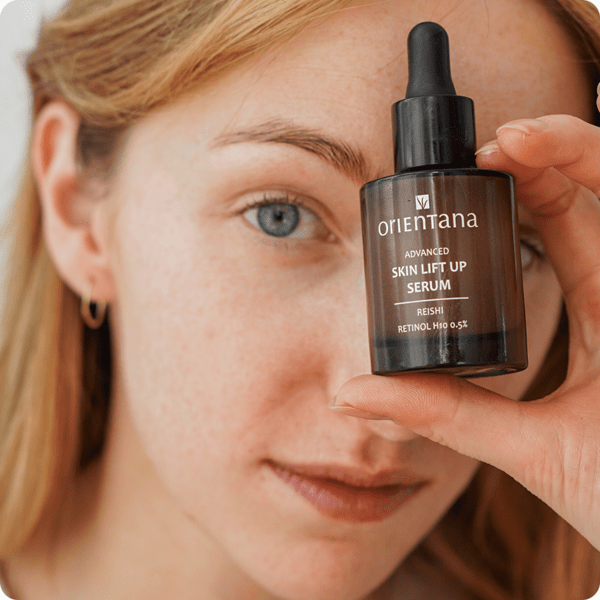
Retinol H10 – an innovation in skincare. See how Orientana's Reishi and Retinol H10 serum works.
Retinol has long been considered the gold standard in anti-aging care, but it was Retinol H10 that took its effectiveness to the next level. It's a stable, hydrogenated form of retinol that minimizes the risk of irritation while maintaining its full potency. In cosmetics such as Advanced Skin Lift Up Serum Reishi and Retinol H10 0.5% from Orientana , this ingredient is combined with the adaptogen Reishi, creating a duo that supports regeneration, hydration and even skin tone. Below you will find frequently asked questions and answers that will help you understand how Retinol H10 works, how to use it and why it can become your cosmetic ally. 25 Questions and Answers about Retinol H10 1. What is Retinol H10? Retinol H10 is a hydrogenated, stable form of retinol (vitamin A) that maintains its effectiveness while being gentler on the skin. 2. How is Retinol H10 different from classic retinol? Thanks to the hydrogenation process, Retinol H10 is more stable, less susceptible to oxidation and causes less irritation. 3. How does Retinol H10 work on the skin? It stimulates the production of collagen, elastin and hyaluronic acid, supports cell renewal and evens out skin tone. 4. Why is it worth choosing the Retinol H10 serum from Orientana? Advanced Skin Lift Up Serum Reishi and Retinol H10 0.5% combines the action of retinol with the adaptogen Reishi, which enhances the anti-aging and regenerative effects. 5. Is Retinol H10 suitable for sensitive skin? Yes, but it should be introduced gradually so that the skin can get used to it. 6. How often should I use Retinol H10? Initially, 1-2 times a week, gradually increasing the frequency to daily use in the evening. 7. When can the first effects be noticed? Typically, after 6–8 weeks of regular use, you will see improved firmness, smoother skin, and reduced wrinkles. 8. Does Retinol H10 help with discoloration? Yes, it normalizes melanin production, lightening existing discolorations. 9. Can Retinol H10 be used in summer? Yes, but only in the evening and with mandatory use of SPF filters during the day. 10. Does Retinol H10 cause skin peeling? May cause slight exfoliation in the initial phase of use – this is a natural renewal process. 11. How to combine Retinol H10 with other active ingredients? It can be used with niacinamide, hyaluronic acid or peptides; simultaneous use with AHA/BHA acids should be avoided. 12. Is Retinol H10 suitable for oily skin? Yes, it regulates the function of the sebaceous glands and helps reduce the visibility of pores. 13. Does Retinol H10 work on acne? Yes, it supports the treatment of acne by normalizing keratinization and reducing inflammation. 14. How to prepare the skin for Retinol H10 treatment? Take care of its hydration and hydrolipid barrier by introducing gentle cleansing products and regenerating creams. 15. Is Retinol H10 safe during pregnancy? No – retinoids, including Retinol H10, are not used during pregnancy and breastfeeding. 16. How to store cosmetics with Retinol H10? In a cool, shaded place, preferably in the original packaging with a pump or dark glass. 17. Does Retinol H10 work on the neck and décolleté? Yes, it can be used in these areas as well, but with caution. 18. Can Retinol H10 be used under the eyes? Yes, but only in specially developed formulas for under the eyes or in a minimal amount for the outer corners. 19. Why does Retinol H10 work better when combined with Reishi? Reishi mushroom is an adaptogen with strong antioxidant and anti-inflammatory properties, supporting skin regeneration. 20. What concentration of Retinol H10 is best to start with? 0.3–0.5% is the optimal acceptable level for most skin types. 21. Can Retinol H10 be used with vitamin C? Yes, but preferably at different times of the day – vitamin C in the morning, Retinol H10 in the evening. 22. Is Retinol H10 vegan? Yes, it is an ingredient synthesized in an environmentally friendly way. 23. Does Retinol H10 smooth out expression wrinkles? Yes, by stimulating collagen and elastin it reduces their depth. 24. Can Retinol H10 be used all year round? Yes, as long as you use SPF protection during the day. 25. What are the additional benefits of using Orientana Retinol H10 serum? In addition to smoothing wrinkles and brightening discolorations, Advanced Skin Lift Up Serum Reishi and Retinol H10 intensely moisturizes, strengthens the skin barrier and improves its elasticity. Retinol H10 is a true breakthrough in anti-aging care – effective, yet more gentle than traditional retinol. Combined with the adaptogen Reishi, as in Advanced Skin Lift Up Reishi Serum and Retinol H10 0.5% by Orientana , it creates a formula that addresses the needs of skin in need of regeneration, hydration, and rejuvenation. If you dream of smooth, firm and radiant skin, it's time to introduce Retinol H10 into your routine.
Learn more