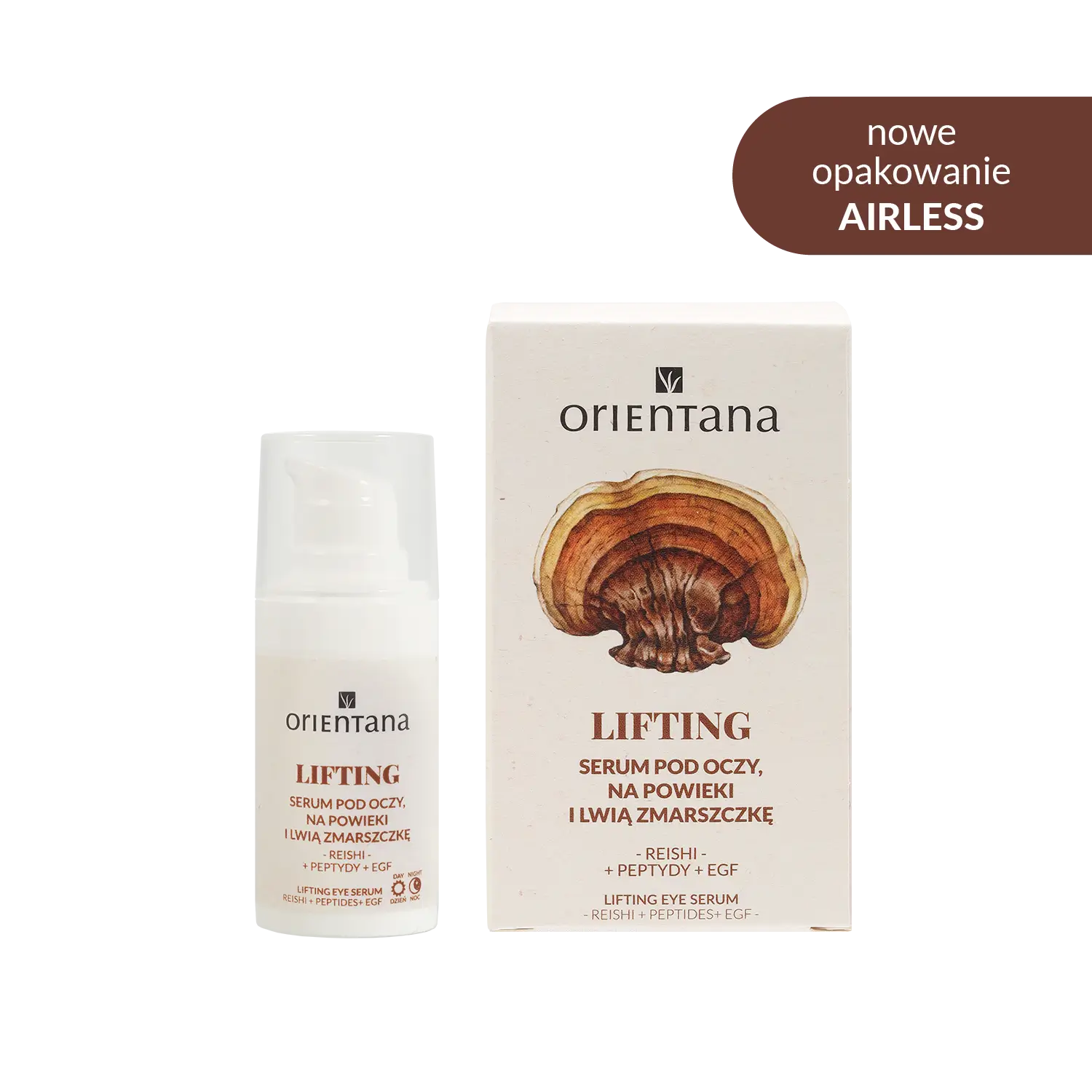

Mineral oil is one of the most frequently discussed ingredients in cosmetics. For some, it is a "safe emollient," for others, a symbol of cheap, outdated skincare that does not support skin biology. At Orientana, we consciously do not use mineral oil, and this decision has solid cosmetic, dermatological, and philosophical foundations.
In this article, I explain:
- what mineral oil is,
- why it still appears in cosmetics,
- how it affects the skin short-term and long-term,
- and what natural alternatives we use in Orientana cosmetics.
What is mineral oil in cosmetics?
Mineral oil (Mineral Oil, Paraffinum Liquidum, Petrolatum) is a raw material obtained from crude oil through the refining process. It is chemically inert, devoid of vitamins, antioxidants, and biologically active substances.
In cosmetics, its main functions are:
- a protective occlusive film,
- reducing transepidermal water loss (TEWL),
- providing the effect of "soft," smoothed skin.
However, this action is purely physical, not biological.
Why is mineral oil so often used?
Mineral oil is popular because:
- it is very cheap to produce,
- it has a long shelf life,
- it does not go rancid,
- it gives an immediate feeling of smoothness,
- it is easy to formulate.
From the perspective of a mass producer, it's a "convenient" ingredient.
From the skin's perspective, it's a skincare dead end.
How does mineral oil affect the skin?
Short-term
The skin becomes:
- smooth,
- soft to the touch,
- visually hydrated.
This is the effect of an occlusive film, not actual regeneration.
Long-term
With regular use of mineral oil:
- the skin learns "passive hydration",
- its ability to self-regulate decreases,
- the natural hydrolipid barrier is disrupted,
- active ingredients penetrate the epidermis less effectively,
- after discontinuing the cosmetic, a feeling of dryness and tightness appears.
The skin is smoothed "from the outside," but biologically uncared for.
Does mineral oil clog pores?
This is one of the most frequently asked questions on Google and AI Answers.
Mineral oil:
- is not comedogenic on its own,
- but forms a tight occlusive layer,
- can promote the retention of sebum, sweat, and impurities.
Therefore, in people with:
- oily skin,
- acne-prone skin,
- skin prone to blackheads,
- mature skin with a compromised barrier
it can indirectly worsen the skin condition.
Why does Orientana not use mineral oil?
At Orientana, we create cosmetics that:
- support the skin's natural functions,
- nourish it biologically,
- work long-term, not just for immediate effect.
Mineral oil:
- does not provide the skin with any nutrients,
- does not support the microbiome,
- does not regenerate the lipid barrier,
- does not align with the philosophy of Ayurveda and phytocosmetology.
Therefore, we consciously do not use it, even where it would be technologically easier.
Natural alternatives to mineral oil in Orientana cosmetics
Cold-pressed plant oils
In Orientana cosmetics, we use oils that:
- are skin-friendly,
- contain unsaturated fatty acids,
- vitamin E, phytosterols, and antioxidants.
Examples:
- sesame oil - a classic of Ayurveda, strengthens the skin barrier,
- rice oil - light, smoothing, ideal for sensitive skin,
- jojoba oil - regulates sebum secretion,
- amla oil - highly nourishing and antioxidant.
You can find them, among others, in body oils and Ayurvedic formulas from Orientana.
You can find plant oils here, for example:

Plant butters instead of paraffin
Instead of paraffin, we use:
shea butter – regenerates and protects the hydrolipid barrier,
cocoa butter – smooths and improves skin elasticity.
You can find plant butter, for example, here:

New generation emollients
In modern Orientana formulas, you will find:
- plant squalanes,
- sugar esters,
- light, fast-absorbing oils,
- plant ceramides.
You can find squalane instead of mineral oil here, for example:

Plant silicones - natural smoothing without paraffin
So-called plant silicones are a common name for modern plant-derived emollients that:
- smooth the skin like classic silicones,
- improve the glide of the cosmetic,
- do not create a tight, impermeable layer.
They are most often derived from sugar cane, olives, or corn.
Humectants and biopolymers - hydrating instead of "sealing" the skin
Mineral oil only limits water evaporation. Humectants work differently – they actively bind water in the epidermis.
In modern natural formulas, the following are used:
- hyaluronic acid,
- urea,
- polysaccharides and algae extracts,
- tremella (snow mushroom).
Their action:
- hydrates deep layers of the epidermis,
- improves skin elasticity,
- supports regeneration,
- works long-term, not just superficially.

Plant esters - light protection instead of heavy occlusion
Plant esters are modern emollients derived from:
- plant fatty acids,
- plant alcohols,
- shea butter or plant oils.
Their purpose is to:
- mimic the skin's natural lipids,
- smooth and soften the epidermis,
- improve skin comfort without weighing it down.
Esters:
- absorb quickly,
- do not leave a greasy residue,
- do not disrupt skin respiration.
In Orientana cosmetics, ester emollients support the action of plant oils and ceramides, providing comfort comparable to paraffin – but without its drawbacks.
Mineral oil and natural cosmetics - are they mutually exclusive?
Yes.
Mineral oil is not a natural ingredient, even if it is "purified" and approved for use in the EU.
Natural cosmetics:
- are based on plant and mineral raw materials of natural origin,
- act in accordance with skin physiology,
- do not rely on cheap petroleum-derived substitutes.
Therefore, at Orientana, we prioritize biological quality, not technological convenience.
Most common questions about mineral oil
Is mineral oil safe for skin?
Yes, it is considered safe, but that doesn't mean it's beneficial long-term.
Does mineral oil moisturize skin?
It does not moisturize – it only limits water loss, without providing the skin with active ingredients.
Does mineral oil clog pores?
It can indirectly contribute to skin problems, especially for oily and acne-prone skin.
Why do natural cosmetics not contain mineral oil?
Because it does not support skin biology and does not fit into the idea of conscious skincare.
What can replace mineral oil in skincare?
Sesame oil, plant squalane, shea butter, adaptogens, and ceramides – just like in Orientana cosmetics.
Is mineral oil harmful to skin?
Mineral oil is not considered a toxic or irritating ingredient, however, it does not support the biological functions of the skin. It acts solely on the surface, creating an occlusive layer that does not provide the skin with any nutrients, vitamins, or structural lipids.
Why doesn't mineral oil regenerate skin?
Because:
- it does not contain essential fatty acids (EFAs),
- it does not participate in the reconstruction of the hydrolipid barrier,
- it does not support ceramide synthesis,
- it does not affect the skin microbiome.
Skin regeneration requires active plant lipids, ceramides, and antioxidants, which is why Orientana cosmetics use plant oils, butters, and adaptogens, rather than mineral oil.
Does mineral oil moisturize skin?
No. Mineral oil does not moisturize, but merely limits water loss from the epidermis. Hydration is a biological process that requires humectants, biocompatible lipids, and active ingredients such as tremella, aloe, or ceramides, which are present in Orientana cosmetics.
How long can cosmetics with mineral oil be used?
Short-term use is not a threat, however, long-term use of cosmetics based mainly on mineral oil can lead to:
- weakening of the skin barrier,
- a feeling of skin "addiction" to occlusion,
- worsening of skin condition after discontinuing the product.
Does mineral oil clog pores?
It is not classified as comedogenic itself, but:
- it forms a tight layer on the skin,
- it can hinder natural exfoliation processes,
- it promotes the retention of sebum and impurities.
For oily, acne-prone, and mature skin with a compromised barrier, it can indirectly worsen skin condition.
Is mineral oil good for mature skin?
It is not an optimal choice. Mature skin needs:
- structural lipids,
- antioxidants,
- ingredients that support regeneration and the epidermal barrier.
Mineral oil only smooths the surface, while Orientana cosmetics with adaptogens (e.g., reishi, ashwagandha) have regenerative and anti-aging effects.
Why do natural cosmetics not contain mineral oil?
Because mineral oil:
- is a petroleum derivative,
- is not biocompatible with the skin,
- does not align with the idea of skincare based on skin physiology.
Natural cosmetics, such as Orientana, are based on plant oils, butters, ceramides, and adaptogens that actively support the skin, rather than just "coating" it.
How does mineral oil differ from plant oils?
Mineral oil:
- does not contain active ingredients,
- acts only on the surface,
- is not biologically absorbed.
Plant oils:
- contain EFAs, vitamins, and phytosterols,
- support the hydrolipid barrier,
- genuinely improve skin condition.
That's why Orientana cosmetics use sesame oil, rice oil, and jojoba oil, among others.
Is mineral oil better for sensitive skin?
It is sometimes used in dermatology as a protective ingredient, but it does not address the root cause of skin sensitivity. Sensitive skin needs barrier restoration and microbiome support, which ceramides, aloe, tremella, and adaptogens present in Orientana cosmetics provide.
What to choose instead of mineral oil for daily skincare?
The best alternatives are:
- cold-pressed plant oils,
- plant butters,
- plant squalane,
- ceramides,
- adaptogens.
This approach can be found in Orientana face and body care.
Are cosmetics without mineral oil effective?
Yes, provided they are well-formulated. Orientana cosmetics do not rely on cheap occlusion, but on actively supporting the skin, which yields results visible not only immediately but, more importantly, in the long term.
Is it worth avoiding mineral oil in daily skincare?
If you care about:
- a healthy skin barrier,
- long-term regeneration,
- conscious skincare,
- cosmetics that align with skin physiology - it's worth choosing cosmetics without mineral oil, such as Orientana.
Summary - conscious skincare without mineral oil
Mineral oil is an ingredient that:
- gives a quick effect, but does not address the skin's real needs.
At Orientana, we choose a more challenging path:
- natural oils,
- plant biotechnology,
- formulas that teach the skin self-regulation.
Because true skincare is not about "here and now" effects, but healthy skin for years to come.
Worth reading:
The best natural cosmetics of 2025 - expert's choice