Alopecia areata is an autoimmune disease in which the immune system "mistakes" and attacks hair follicle structures, leading to sudden, patchy hair loss – most commonly on the scalp, but also in eyebrows, beard, and eyelashes. The good news: follicles usually aren't permanently destroyed (it's not scarring alopecia), so regrowth is often possible – though the course is unpredictable, and in some people, the disease recurs or spreads. Recent years have also seen a real therapeutic breakthrough thanks to immunologically targeted drugs (including JAK inhibitors).
Practical note: as a trichologist, I assist with scalp assessment, trichoscopy, choosing proper care, and supporting the treatment process, but decisions regarding pharmacotherapy (steroids, contact immunotherapy, JAK inhibitors, etc.) belong to a dermatologist.

Table of Contents
- What is alopecia areata and what does it look like
- Why it occurs: autoimmune mechanism and "triggering factors"
- How a trichologist and dermatologist make a diagnosis
- Trichoscopy: what is seen in alopecia areata
- Prognosis: will hair regrow and what increases the risk of recurrence
- Treatment: what works for focal forms and what for severe forms
- Care and therapy support: what you can do at home
- Common mistakes and myths
- Questions about alopecia areata
- Bibliography
What is alopecia areata and what it looks like
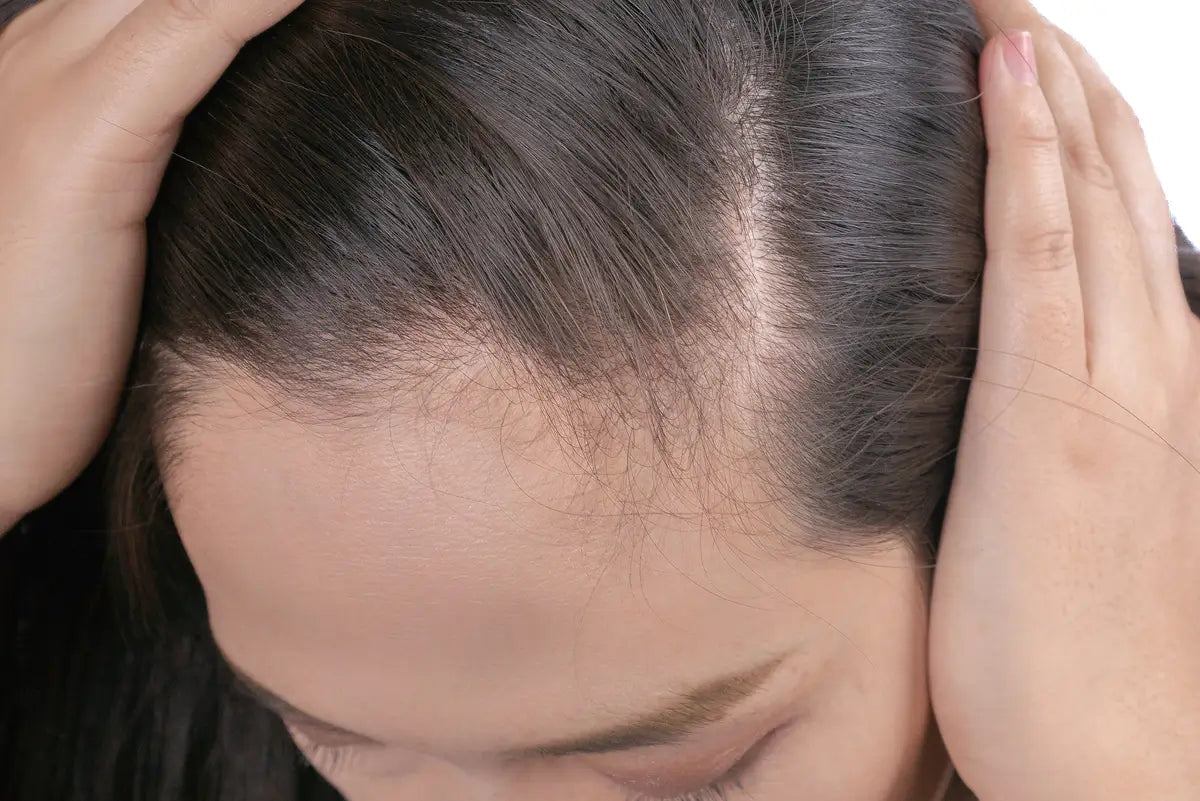
The most typical presentation is the sudden appearance of smooth, sharply demarcated patches without hair. The skin within the patch is usually "normal" (no scales, no scarring); sometimes, in the active phase, short, broken hairs are visible at the periphery of the lesion. The disease can vary in extent: from single patches to extensive loss. Clinical guidelines emphasize that this condition is inflammatory-autoimmune in nature, not "mechanical hair loss."
Epidemiology depends on research methodology and population, but large analyses show that alopecia areata is not uncommon in dermatological practice.
Why it occurs: autoimmune mechanism and "triggering factors"
In simplified terms: the hair follicle in the growth phase has a physiological "privileged" immune protection. In alopecia areata, this protection is disrupted, and lymphocytes and cytokines (inflammatory pathways) begin to inhibit hair growth and cause dystrophy within the follicle. This line of thinking also underpins the effectiveness of therapies modulating the immune response (e.g., JAK inhibitors).
What often "triggers" exacerbations? Patients frequently point to stress, infections, periods of significant hormonal changes, or psychosomatic burdens – but it's important: this is not a simple cause-and-effect relationship. The disease has an immunological and genetic basis, and environmental factors can only modulate its course.

How a trichologist and dermatologist make a diagnosis
In the clinic, key elements are:
- Medical history: sudden hair loss, recurrences, autoimmune diseases in the family, atopy, other skin complaints.
- Examination of skin and hair: localization, activity of changes at the edge of the patch, assessment of eyebrows/eyelashes/nails.
- Trichoscopy (hair dermoscopy): a quick, painless method with high diagnostic value.
Sometimes a dermatologist orders tests if the clinical picture suggests the co-existence of other problems (e.g., thyroid diseases), and in ambiguous cases, considers a skin biopsy.
Trichoscopy: what is seen in alopecia areata (and why it's important)
Systematic reviews of trichoscopy describe the most typical features that help to:
- confirm the diagnosis,
- assess the activity of the disease,
- monitor treatment response.
Classic markers include yellow dots, black dots, "exclamation mark hairs", broken hairs, vellus hairs (downy) in the regrowth phase. A systematic review emphasized that some features are more "sensitive" and others more "specific" for AA, which has practical diagnostic significance.

Prognosis: will hair regrow and what increases the risk of recurrence
The prognosis is variable. In some people, spontaneous regrowth occurs; in others, the disease recurs in waves. From a clinical practice perspective, more important than "promising regrowth" is:
- rapid confirmation of diagnosis,
- assessment of activity (trichoscopy),
- implementation of adequate treatment (especially for extensive forms),
- addressing aggravating factors (sleep, stress, inflammatory skin conditions, irritations).
Guidelines and recommendations from scientific societies emphasize the need for individualized management depending on the extent and age of the patient.
Treatment of alopecia areata: what is actually supported by research
Focal form (single/limited patches)
Local or intralesional treatment within the patch is most frequently considered. In clinical practice, intralesional steroid injections (e.g., triamcinolone) are commonly used – and meta-analyses and reviews indicate that this is one of the primary options for limited forms (with caveats regarding technique, concentration, and risk of side effects like skin atrophy). Link to research.
Extensive / severe forms
For significant hair loss, a doctor may consider immunomodulatory therapies. The biggest change in recent years has been JAK inhibitors. Phase III trials have shown the efficacy of, among others, baricitinib in severe AA over 52 weeks of observation, along with an assessment of the safety profile in these populations.
There is also strong clinical data for ritlecitinib (phase 2b/3 study involving adults and adolescents), showing significant improvement in some patients, confirming the direction of "targeted" inhibition of inflammatory pathways in AA.
Contact immunotherapy (e.g., DPCP)
In resistant or extensive cases, contact immunotherapy (e.g., diphenylcyclopropenone/DPCP) may be used. Reviews indicate moderate average response rates, but this method requires experience from the center and acceptance of side effects (contact dermatitis, itching, hyperpigmentation).
Care and therapy support at home: the role of a trichologist (without promising a "cosmetic cure")
Skincare does not replace immunological treatment but can realistically improve scalp comfort and limit factors aggravating inflammation/irritation.
What I usually recommend to AA patients:
- very gentle washing (no aggressive "degreasing" or scratching),
- avoiding intensive mechanical exfoliants and "forceful rubbing" into active patches,
- scalp protection from UV and cold (hat/sunscreen),
- minimizing friction and tension (tight hairstyles, vigorous brushing),
- if you use dermo-cosmetics for rubbing: in the active phase, less is more – tolerance and consistency matter, not "strength."
If you wish, I can suggest a skincare routine and (optionally) Orientana cosmetics solely to support the skin barrier and comfort – without suggesting that cosmetics "cure" alopecia areata. (Just send me: if the changes are active, if the skin is itchy/burning, and if you have dandruff/seborrheic dermatitis).

Common mistakes and myths I see in practice
Myth: "It's definitely a deficiency, and a supplement is enough."
Deficiencies can worsen overall hair condition, but AA is primarily an autoimmune process. In practice, diagnosis and treatment should run parallel with an assessment of general health.
Myth: "If I apply oil/warming rub, I'll stimulate the follicles."
In the active phase of AA, "stimulating" by irritation often has the opposite effect: burning, redness, skin hypersensitivity.
Mistake: delaying dermatological consultation when changes are rapidly expanding.
In severe forms, time is crucial for choosing effective therapy.
Questions about alopecia areata
Is alopecia areata contagious?
No. It's an autoimmune disease, not an infection.
Will hair always regrow in alopecia areata?
Not always. Some people experience complete regrowth, others have recurrences or a chronic course. Prognosis depends, among other things, on the extent and activity of changes assessed clinically and trichoscopically.
How to distinguish alopecia areata from scalp ringworm?
In ringworm, scales, inflammation, hair brittleness, and positive mycological tests are more common; in AA, the skin may be smooth, and trichoscopy shows typical markers (e.g., yellow and black dots, "exclamation marks").
What are "exclamation mark hairs"?
These are short hairs that narrow at the base, considered a classic sign of active AA in trichoscopy.
Does stress cause alopecia areata?
Stress is not the sole cause, but it can exacerbate the course and recurrences in some individuals. AA has an immunological basis.
Does alopecia areata hurt or itch?
Some patients report itching, burning, or tenderness in the active phase, but it can also be completely asymptomatic.
Is it possible to stop alopecia areata in the initial phase?
In many people with the limited form, local or intralesional treatment can suppress activity and promote regrowth; therefore, early diagnosis is important.
What treatment is most commonly used for single patches?
In practice, intralesional steroid injections are often used; there are also various topical treatment strategies depending on location and age.
What is contact immunotherapy (DPCP)?
This involves controlled induction of a contact reaction on the scalp to "redirect" the immune response. The method has documented effectiveness in some patients but requires specialized management.
What are JAK inhibitors and why are they a breakthrough in AA?
These are drugs that inhibit selected inflammatory pathways. Clinical trials have shown a significant response rate in patients with severe AA (e.g., baricitinib, ritlecitinib), confirming the immunological mechanism of the disease.
Are JAK inhibitors "safe"?
Like any systemic therapy, they require qualification and monitoring; publications describe both efficacy and safety profiles in studies and long-term analyses.
Can I dye my hair or get keratin treatment with alopecia areata?
In the active phase, it's better to limit irritating procedures and anything that might irritate the scalp (strong chemicals, high temperature, friction). It's safer to return to treatments after the activity has subsided.
Will diet "cure" alopecia areata?
Diet is not a causal treatment for AA, but it supports overall health and can reduce inflammatory burdens. Immunological treatment is chosen by a doctor.
When should I urgently consult a dermatologist?
When patches are rapidly enlarging, eyebrows/eyelashes are affected, diffuse hair loss occurs, nail changes appear, or severe inflammatory symptoms on the scalp are present.
Is a trichologist the right specialist for alopecia areata?
A trichologist excellently supports diagnostic imaging (trichoscopy), hair care, monitoring, and scalp comfort, but pharmacological treatment is managed by a dermatologist.
Read also:
How fast hair grows - a trichologist's perspective
Natural hair cosmetics - a trichologist advises on how to care for hair and scalp
Bibliography
- Ohyama, M., et al. (2025). Japanese Dermatological Association’s Clinical Practice Guidelines for Alopecia Areata 2024: A complete English translated version. The Journal of Dermatology.
- Kwon, O., et al. (2023). Efficacy and safety of baricitinib in patients with severe alopecia areata over 52 weeks of continuous therapy in two phase III trials (BRAVE-AA1 and BRAVE-AA2).
- Senna, M., et al. (2024). Long-term efficacy and safety of baricitinib in patients with severe alopecia areata: integrated BRAVE-AA data. Journal of the European Academy of Dermatology and Venereology.
- King, B., et al. (2023). Efficacy and safety of ritlecitinib in adults and adolescents with alopecia areata: a randomised, double-blind, multicentre, phase 2b–3 trial. The Lancet.
- Hordinsky, M., et al. (2023). Efficacy and safety of ritlecitinib in adolescents with alopecia areata: ALLEGRO phase 2b/3 trial results.
- Al-Dhubaibi, M. S., et al. (2023). Trichoscopy pattern in alopecia areata: a systematic review.
- Rakowska, A., et al. (2023/2024). Alopecia areata: Diagnostic and therapeutic recommendations of the Polish Society of Dermatology (część rekomendacji).
- Jeon, J. J., et al. (2024). Global, regional and national epidemiology of alopecia areata (analiza epidemiologiczna).
- Yee, B. E., et al. (2020). Efficacy of different concentrations of intralesional triamcinolone acetonide for alopecia areata: systematic review and meta-analysis. JAAD.
- Jang, Y. H., et al. (2017). Systematic review and quality analysis of studies on diphenylcyclopropenone (DPCP) in alopecia areata. JAAD.
- Sriphojanart, T., et al. (2017). Retrospective comparative study on DPCP in recalcitrant alopecia areata.
- Müller Ramos, P., et al. (2025). II Consensus of the Brazilian Society of Dermatology for alopecia areata – updated guidance.