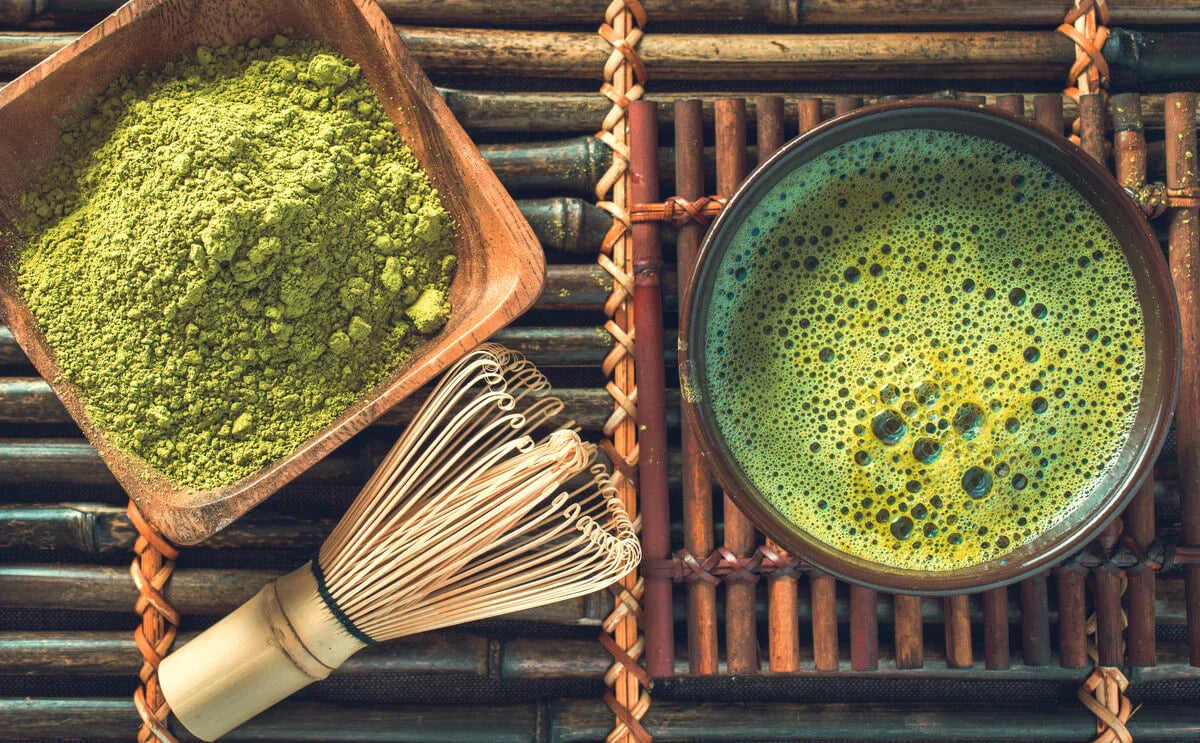
Matcha - what is it? This is one of the most frequently asked questions today by people who don't follow trends. Although it looks unassuming, like an intensely green powder, matcha is one of the most concentrated plant-based food products that humans have been drinking for hundreds of years.
Matcha is not an Instagram fad. It is a traditional Japanese tea that for centuries was consumed by Zen monks, samurai, and aristocracy. Today it returns in a new form: as an alternative to coffee, an element of functional diet, a concentration aid, and a natural source of antioxidants.
As the owner of a brand that draws from Asian traditions, I will try to explain what matcha actually is.
In this article, I explain in detail:
- what matcha is,
- how it's made,
- how it affects the body,
- how to drink it,
- how much matcha can be consumed daily,
- whether matcha is healthy and for whom,
- and why it differs from every other tea.

Matcha - what exactly does it mean?
Matcha is powdered green tea, made from the leaves of the Camellia sinensis tea plant. The key difference is that you don't brew the leaves and discard them; instead, you consume them whole.
This is a fundamental difference that makes:
- matcha have a significantly higher content of bioactive compounds,
- it act differently than regular tea,
- it provide more antioxidants, amino acids, and caffeine.
The word "matcha" in Japanese literally means "powdered tea".
Where does matcha come from?
Although the tea plant originates from China, matcha in the form we know today is a Japanese product.
History of matcha:
- 12th century - Buddhist monks bring powdered tea from China to Japan,
- Japan develops its own cultivation and grinding methods,
- matcha becomes part of the chanoyu tea ceremony,
- for centuries, it is considered an elite and ritual drink.
To this day, the best matcha comes from Japan, especially from the regions of:
- Uji (near Kyoto),
- Nishio,
- Shizuoka,
- Kagoshima.

How is matcha made? Why is its production so unique?
If you're wondering what matcha is and why it's expensive, the answer lies in the production process.
Shading of the bushes
Approximately 3-4 weeks before harvest, tea bushes are shaded. Limiting light:
- increases chlorophyll content,
- raises L-theanine levels,
- reduces bitterness,
- gives an intense green color.
Hand picking
Only the youngest, most delicate leaves are used for matcha production.
Steaming and drying
The leaves are briefly steamed to stop oxidation, then dried.
Tencha
Stems and veins are removed from the leaves - creating what is called tencha.
Grinding
Tencha is ground in stone mills. This is a very slow process – tens of grams of matcha are produced in as little as an hour.
Matcha vs. green tea - are they the same?
This is one of the most common questions. No. Matcha and green tea are not the same.
Differences:
- matcha = whole powdered leaves,
- green tea = an infusion of leaves,
- matcha has more antioxidants,
- matcha contains more L-theanine,
- matcha works longer and more steadily.
In practice:
one serving of matcha can be equivalent to several cups of classic green tea in terms of active substance content.
What properties does matcha have?
Matcha - nutritional properties
Matcha is naturally rich in:
- catechins (including EGCG),
- chlorophyll,
- L-theanine,
- caffeine,
- vitamins (A, C, E),
- minerals (iron, potassium).
Is matcha an antioxidant?
Yes. Matcha is one of the most powerful natural sources of antioxidants in the diet.
Matcha and caffeine - does matcha stimulate?
Yes, matcha contains caffeine, but its effect differs from coffee.
In matcha:
- caffeine binds with L-theanine,
- it is released more slowly,
- it acts more gently,
- it does not cause a sudden "crash".
That's why many people describe matcha as:
- "clear focus",
- "calm energy",
- "no jitters or nervousness".
Is matcha healthier than coffee?
It depends on individual needs, but:
- matcha is less taxing on the nervous system,
- it does not cause sharp energy spikes,
- it supports concentration for several hours,
- it is gentler on the stomach.
For many people, matcha becomes an alternative to coffee, not a 1:1 substitute.
What does matcha taste like?
The taste of matcha can be a surprise.
Good matcha tastes:
- creamy,
- subtly sweet,
- vegetal,
- with a hint of umami.
Poor matcha tastes:
- bitter,
- astringent,
- earthy.
The taste depends on quality, origin, and freshness.
Types of matcha - what matcha for what?
The most common classification:
Ceremonial matcha
- for drinking with water,
- highest quality,
- delicate and sweet.
Premium matcha
- for daily drinking,
- good balance of price and quality.
Culinary matcha
- for baking and cooking,
- more intense in flavor.
How to drink matcha?
How to prepare matcha classically?
- 1–2 g of matcha,
- 60–80 ml of water,
- temperature 70–80°C,
- vigorous whisking.
Can matcha be drunk cold?
Yes. Matcha is excellent as a cold beverage.
Can matcha be drunk with milk?
Yes – both with cow's milk and plant-based milk.
How much matcha can you drink daily?
The most commonly recommended amount is 1–2 servings per day, which is about 1–4 g of powder.
Can matcha be drunk daily?
Yes, provided it is in moderation.
Can matcha be drunk several times a day?
Yes, but caffeine content should be taken into account.
When is the best time to drink matcha?
Best time:
- morning,
- before noon,
- before mental exertion.
It is not recommended to drink matcha late in the evening.
How long does matcha last?
Matcha effects:
- appear after 20–40 minutes,
- last 4–6 hours,
- are stable and gradual.
Does matcha help with concentration?
Yes. The combination of caffeine and L-theanine:
- supports focus,
- improves clarity of thought,
- reduces distraction.
That is why matcha was the drink of Zen monks during meditation.
Does matcha boost metabolism?
Studies indicate that catechins in matcha:
- support thermogenesis,
- may aid metabolism,
- are an element of weight loss diets.
Is matcha good on an empty stomach?
For some people, yes, for others it can irritate the stomach.
It is best to observe your body's reaction.
Is matcha safe?
For most people - yes.
Caution should be exercised by:
- people very sensitive to caffeine,
- pregnant women (consultation),
- people with anemia (tannins).
Matcha - what is it and why is it worth drinking?
Matcha is not just tea.
It is:
- a concentrated source of bioactive compounds,
- a drink that supports mind and body,
- an element of tradition and modern lifestyle.
Read also:
Lychee - an exotic fruit in hair and scalp care
Turmeric - what does it help with? Health and cosmetic properties of the gold of Ayurveda