
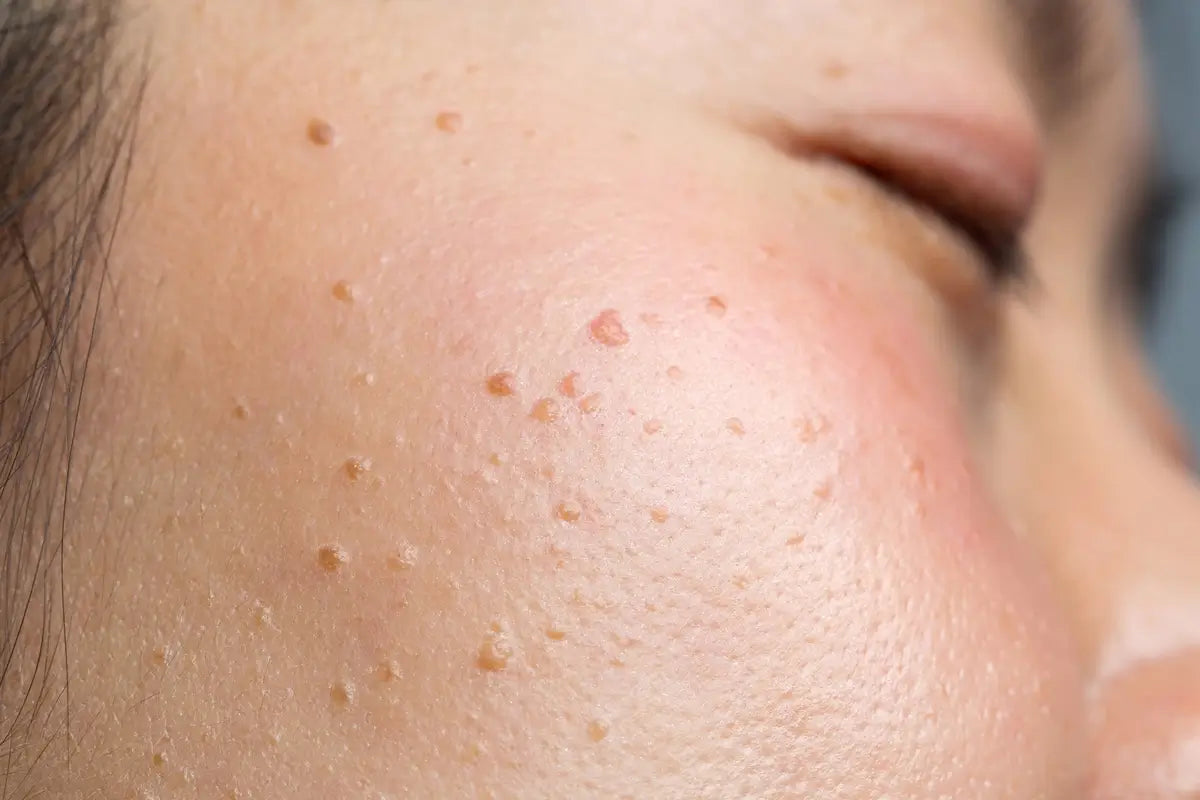
Facial papules are a common dermatological problem that affects people of all ages. They can take many forms, from small bumps to larger nodules. While most are benign, it's important to understand their causes and when to consult a specialist. In this article, we'll discuss the most common types of facial papules and effective treatments.
What are papular lesions on the face?
Facial papules are visible or palpable structures beneath the skin that differ from the surrounding tissue. They can be hard or soft, painful or asymptomatic, single or multiple. Their size ranges from barely noticeable raised bumps to lesions several centimeters in diameter.
Most papular lesions are benign and do not require immediate medical attention. However, some may indicate more serious conditions, so accurate diagnosis is crucial for appropriate treatment.

The most common types of papular lesions on the face
1. Skin cysts
Cysts are closed structures filled with fluid, keratin, or other substances. The most common type is epidermoid cyst, which results from a blocked hair follicle. They are characterized by a round shape, a smooth surface, and mobility beneath the skin.
2. Milia
Milia are small, white or yellowish lumps, 1-2 mm in diameter, containing keratin. They most often appear around the eyes, on the cheeks, and forehead. They are completely harmless but can be a cosmetic problem.
3. Soft fibromas
Soft fibromas are benign skin growths that often appear on the face, especially around the eyes and neck. They are skin-colored or slightly darker, and range in size from a few millimeters to a centimeter.
4. Pigmented moles
Some moles may be slightly raised, forming tender lumps on the skin's surface. Most are benign, but you should monitor them for changes in shape, color, or size.
5. Lipomas
Lipomas are benign fatty tumors that are less common on the face, but can still occur. They are soft, mobile, and usually painless.
6. Rosacea
In advanced cases of rosacea, lumps and nodules may form, especially on the nose, leading to the development of rhinophyma – hypertrophic inflammation of the nose.
Causes of papular lesions on the face
The causes of papular lesions are varied and may include:
• Genetic predisposition - many skin lesions have a hereditary basis
• Hormonal disorders - especially during puberty, pregnancy or menopause
• Excessive sun exposure - can lead to skin changes, including actinic keratosis
• Inflammatory processes - bacterial or viral infections can cause lumps to form
• Blockage of sebaceous glands or skin pores
• Skin aging - with age, the risk of various skin lesions increases
• Improper skin care - using comedogenic cosmetics

When should you consult a doctor?
Although most facial lumps are benign, there are situations in which a visit to a dermatologist is necessary:
• The lump grows or changes shape rapidly
• Pain, inflammation, or bleeding occurs
• The lesion has an irregular shape or an unusual color
• Multiple papular lesions occur in a short period of time
• The lesion makes functioning difficult, e.g., it is close to the eye or mouth
• You have doubts about the nature of the change
Early diagnosis is key to detecting potentially dangerous changes such as melanoma or basal cell carcinoma.
Methods of treating papular lesions on the face
The choice of treatment method depends on the type of lesion, its size, location and cause.
Observation
Many lumps do not require treatment and regular monitoring is sufficient. This is especially true for small cysts or fibromas that do not cause discomfort.
Pharmacological treatment
For inflammatory conditions such as rosacea, anti-inflammatory medications, topical or oral antibiotics, and metronidazole preparations are used. Retinoids may be recommended for certain types of skin conditions.
Dermatological treatments
The most commonly performed treatments include:
• Milia extraction - mechanical removal of keratin using a sterile needle
• Cryotherapy - freezing lesions with liquid nitrogen
• Electrocoagulation - removal of lesions using electric current
• Laser therapy - precise removal of lesions with minimal risk of scarring
• Chemical peeling - supporting skin regeneration
Surgical removal
Larger cysts, lipomas, or suspicious lesions may require surgical removal. The procedure is performed under local anesthesia, and the removed tissue can be submitted for histopathological examination.
Prevention - how to prevent the formation of papular lesions?
Although not all changes can be prevented, there are proven methods to minimize the risk of their occurrence:
• Use SPF sunscreen daily to protect your skin from UV radiation
• Use non-comedogenic cosmetics adapted to your skin type
• Cleanse your skin regularly to prevent clogged pores
• Lead a healthy lifestyle - proper diet and sleep support skin health
• Avoid squeezing the lesions yourself, which can lead to infections and scarring.
• Check moles and skin lesions regularly
Frequently asked questions
Are papular lesions on the face dangerous?
Most papular lesions are benign and pose no health risk. However, any new, rapidly growing, or unusual-looking lesion should be evaluated by a dermatologist to rule out cancer.
Can you remove papules yourself at home?
It's not recommended to remove papules yourself. Attempting to squeeze or excise them can lead to infection, scarring, and complications. Always consult a dermatologist for a safe removal method.
How much does it cost to remove lumps on the face?
The cost of removal depends on the type of lesion, the chosen method, and the location of the clinic. Simple procedures, such as milia extraction, can cost from 50 to 200 złoty, while surgical removal of larger lesions can cost from several hundred to several thousand złoty.
How long does it take to heal after lump removal?
Healing time depends on the size of the lesion and the removal method. After milia extraction, the skin heals within a few days. After laser or surgical procedures, full healing may take from one to several weeks.
Can papular lesions reappear after removal?
Yes, some lesions, such as milia and cysts, can reappear. This is especially true if the underlying cause, such as excessive keratin production, hasn't been addressed. Regular skin care can help reduce this risk.
What tests should be performed for suspicious papular lesions?
A dermatologist may recommend a dermatoscopy—a non-invasive microscopic examination of the skin. If cancerous lesions are suspected, a biopsy and histopathological examination of the collected tissue are necessary.
Summary
Papular lesions on the face are a common phenomenon, most often benign. However, proper diagnosis and follow-up are crucial, especially if the lesions grow, change shape, or cause discomfort. Modern dermatology offers a wide range of effective treatment methods, from minimally invasive procedures to surgical removal. Remember that an early consultation with a dermatologist helps rule out serious conditions and determine the optimal treatment method.
Regular skin care, sun protection, and a healthy lifestyle are the best ways to minimize the risk of papules. If you notice any disturbing symptoms, don't delay seeing a specialist—your skin deserves the best care.