
In recent years, cosmetology has increasingly embraced the term "inflammation "—a term that combines inflammation and aging . It's a chronic, low-grade inflammatory condition that doesn't produce obvious symptoms of pain or redness, but slowly destroys skin structures over the years.
Research shows that inflammation affects not only the aging of the skin but also the entire body—from the immune system to the cardiovascular system (Franceschi & Campisi, Nature Reviews Immunology, 2014). In cosmetology, however, we focus on the skin—the human body's largest organ and natural protective shield.
I wrote this post to explain in detail:
- what is inflammaging,
- what mechanisms cause it,
- what are its effects on the skin,
- what care strategies – including natural and biotechnological ingredients – help reduce it.
If you want to learn more about conscious care and discover the full philosophy of natural formulas, visit our natural cosmetics section, where we explain step by step how to care for your skin in accordance with its needs.
What is inflammaging?
The term inflammaging was coined by Claudio Franceschi in the early 2000s. It refers to a chronic, low-intensity, latent inflammation that increases with age.
Unlike acute inflammation (e.g., a wound), which quickly subsides, inflammaging is a long-term, subclinical condition. Skin cells produce an excess of proinflammatory cytokines, leading to:
- weakening of fibroblasts ,
- reduced production of collagen and elastin ,
- weakening of the hydrolipid barrier ,
- accelerated aging and the appearance of wrinkles .
Exposure to UV radiation significantly increases the levels of inflammatory mediators in the skin (including IL-6, TNF-α); the magnitude of the effect depends on the dose and exposure time.

Mechanisms of inflammaging at the skin level
Excessive production of pro-inflammatory cytokines
- IL-1, IL-6, TNF-α, which maintain chronic inflammation.
- This results in degradation of the extracellular matrix (ECM).
Oxidative stress and free radicals
- UV radiation and smog increase the production of free radicals.
- This leads to damage to DNA, lipids and skin proteins.
Activation of metalloproteinases (MMPs)
- These enzymes degrade collagen and elastin.
- Result: loss of firmness and wrinkles.
Immunosenescence
- With age, the skin's ability to provide immune defense decreases.
-
The susceptibility to infections and inflammation increases.
How does inflammaging affect skin aging?
- Accelerated wrinkle formation - degradation of type I and III collagen.
- Loss of firmness - fibroblasts produce less elastin.
- Weakening of the hydrolipid barrier - increase in TEWL by up to +40% (Skin Pharmacology and Physiology, 2019).
- Pigmentation disorders – chronic inflammation increases melanocyte activity → post-inflammatory discoloration.
- More reactive skin – itching, redness, tendency to irritation.
Factors that increase inflammation
UV radiation
- UVA penetrates the dermis and induces cytokine production.
- UVB damages the DNA of keratinocytes.
Environmental pollution (PM2.5, tobacco smoke)
- Studies in Asia found that women living in regions with higher pollution had 22% more sun spots.
A diet low in antioxidants
- Excess simple sugars and trans fats increase the glycation process, which increases inflammation.
Stress and lack of sleep
- Cortisol maintains inflammation.
-
Sleep deprivation increases serum pro-inflammatory markers by +20–30% (Sleep Medicine Reviews, 2017)
Active ingredients that support the fight against inflammation
Adaptogens
Adaptogens are plants that have been used in traditional medicine for thousands of years and are now widely used in modern cosmetology. Their unique ability to normalize skin responses to stress and regulate inflammatory processes makes them an effective weapon in the fight against inflammation.
Reishi (Ganoderma lucidum) – “mushroom of immortality”
- Contains polysaccharides and triterpenes with strong antioxidant properties.
- It inhibits the excessive production of free radicals, reducing oxidative stress.
- It regulates the secretion of inflammatory cytokines (IL-6, TNF-α), which are the main driver of inflammaging.
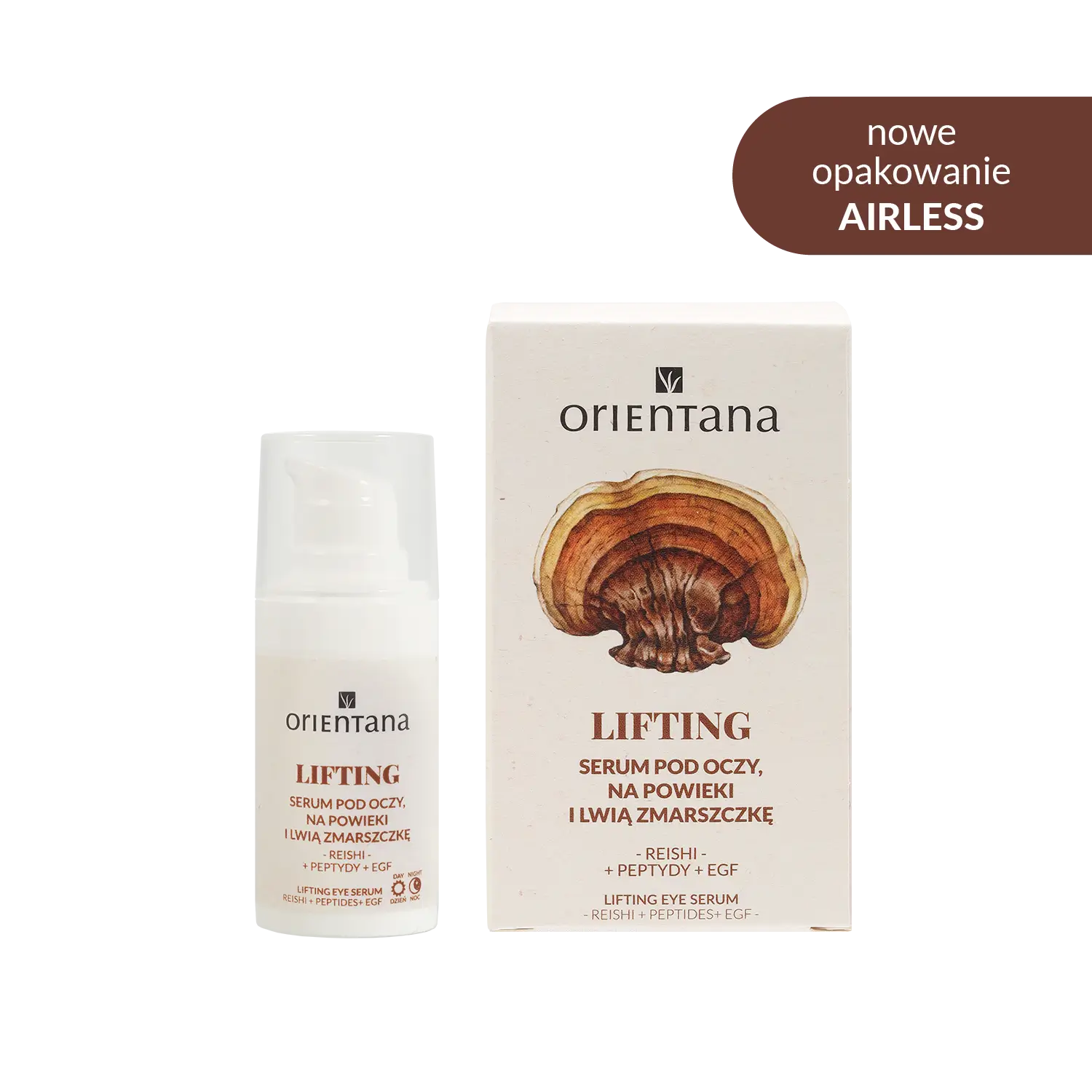
In Orientana cosmetics (e.g. Reishi creams , Reishi Illuminating Booster ) it has a rejuvenating, calming effect and restores skin balance.
Ashwagandha (Withania somnifera) + Schisandra chinensis (Schisandra chinensis) – an anti-stress duo
- Ashwagandha regulates the level of cortisol – a stress hormone that increases inflammation in the skin.
- Schisandra contains lignans with antioxidant properties that protect cells from environmental stress (UV, smog).
- The combination of these two adaptogens supports reactive, stressed skin with signs of fatigue.
In Orientana cosmetics (e.g. Ashwagandha Serum + CICA + Niacinamide ) they effectively reduce micro-inflammation, improve skin hydration and firmness.
Rhodiola rosea – an Arctic adaptogen
- It grows in extreme conditions, so it perfectly protects cells against oxidative stress.
- Contains salidrosides and rosavin, which increase the skin's resistance to stress.
- Reduces the visibility of redness and slows down the aging process caused by inflammation.
In Orientana cosmetics, it acts as a protective shield for urban skin exposed to smog and UV radiation.
Brahmi (Bacopa monnieri) – an Ayurvedic adaptogen for skin and hair
- It contains saponins (bacopasaponins), which have anti-inflammatory and antioxidant properties.
- In Ayurveda, it is considered a "calming" herb – it also helps reduce oxidative stress in skin care.
- Supports regeneration, protects cells against microinflammation and improves microcirculation.
In Orientana cosmetics, it is used in Ayurvedic products , among others, where it strengthens the skin and hair, supporting the fight against the signs of aging caused by chronic inflammation.
Thanks to adaptogens, Orientana cosmetics not only nourish but also prevent chronic inflammation. They support the skin in its fight against free radicals, oxidative stress, and microinflammation—all factors that accelerate aging.

Antioxidants
Antioxidants are substances that neutralize free radicals, protecting DNA, lipids, and skin proteins from oxidative stress. In the context of inflammation, they play a key role: they inhibit chronic microinflammation and slow the degradation of skin's supporting structures.
Vitamin C (ascorbic acid and its stable derivatives)
- Neutralizes free oxygen radicals produced by UV radiation and smog.
- Supports collagen synthesis, preventing loss of firmness.
- Lightens post-inflammatory and sun-induced discolorations and evens out skin tone.
In Orientana cosmetics (e.g. serum with stable vitamin C) it plays a dual role: antioxidant and brightening.
Turmeric (Curcuma longa)
- It contains curcuminoids that inhibit the activation of NF-κB – the main inflammatory factor responsible for chronic inflammatory processes in the skin.
- It has antioxidant, anti-inflammatory and soothing properties.
In Orientana cosmetics, you will find it in, among others, the Sandalwood + Turmeric Cream , which reduces irritation and supports skin balance.
Polyphenols (green tea, grapes, resveratrol)
- They inhibit the oxidation of lipids and proteins in the skin.
- They protect cellular DNA against oxidative damage.
- Green tea contains catechins, which also have anti-inflammatory properties and soothe redness.
In Orientana cosmetics, extracts rich in polyphenols support skin protection against the effects of smog and environmental stress.
Thanks to antioxidants, Orientana cosmetics not only improve the appearance of the skin here and now, but also protect it against chronic micro-inflammation, slowing down the inflammation process.
Barrier-rebuilding ingredients
The skin's hydrolipid barrier is its first line of defense against external factors and chronic inflammation. When it's weakened, the skin loses water faster (TEWL), becomes reactive, and more susceptible to inflammation. This is why it's so important to provide ingredients that rebuild intercellular cement, bind water, and strengthen skin elasticity.

Ceramides
- They constitute up to 50% of the epidermal lipids and are responsible for the tightness of the protective barrier.
- They rebuild intercellular cement, reducing water loss by 30–40% within 2 weeks of regular use (International Journal of Cosmetic Science, 2019).
Humectants – Tremella, hyaluronic acid, trehalose
- Tremella fuciformis – a natural alternative to hyaluronic acid, increases skin hydration by up to +49% in 1 hour (in-vitro tests).
- Hyaluronic acid – binds up to 1000 times more water than its own weight, acts like a natural sponge.
- Trehalose – a protective sugar, protects cells against oxidative stress and dehydration.
Together they act as a "hydration system" for the skin, reducing the risk of micro-inflammation typical of inflammaging.
Squalane
- Plant lipid, biocompatible with the skin.
- Seals the hydrolipid barrier and increases elasticity.
- It protects against oxidative stress by acting as a lipid antioxidant.
Emollients
- They create a protective film that prevents water from escaping and environmental pollution.
- They smooth the skin's surface, making it soft and supple.
Biomimetic peptides
- They support repair processes and stimulate collagen production.
- They improve the density of the skin, which weakens as a result of chronic inflammation.
Thanks to these ingredients, Orientana cosmetics – such as the HydroTremella series – not only improve skin comfort, but also significantly reduce the risk of inflammation by supporting a tight, well-hydrated and resistant epidermal barrier.
Soothing substances
Chronic, low-grade inflammation weakens the skin barrier and accelerates the aging process. Therefore, soothing substances that reduce microinflammation, strengthen skin immunity, and restore skin comfort are crucial in preventing inflammation.
CICA (Centella asiatica)
- Rich in madecassoside, asiaticoside and asiatic acid.
- Reduces inflammation, supports skin healing and regeneration processes.
- Increases the synthesis of type I collagen, improving the firmness of skin weakened by inflammation.
- Perfect for sensitive and acne-prone skin, which often accompanies inflammation.
Niacinamide (vitamin B3)
- It has anti-inflammatory properties and reduces skin redness.
- Improves lipid barrier function, reducing TEWL by up to +20–25% after 4 weeks of use (British Journal of Dermatology, 2017).
- It normalizes the functioning of the sebaceous glands, which is important for skin with micro-inflammations.
- Increases the skin's resistance to external factors.
Aloe (Aloe vera)
- Contains over 200 bioactive ingredients, including polysaccharides, which have a soothing and regenerating effect.
- It soothes irritation and redness, and lowers skin temperature after exposure to UV radiation.
- Supports the healing of micro-damages and accelerates the regeneration of the epidermal barrier.
- It has a moisturizing and antioxidant effect, protecting against oxidative stress that increases inflammation.
Soothing ingredients—such as CICA, niacinamide, and aloe—are the foundation of anti-inflammatory care. Orientana cosmetics offer them in products like the Ashwagandha + CICA + Niacinamide Serum and aloe-based products, which calm inflammation, strengthen the skin's barrier, and restore skin balance.
Anti-inflammation skincare routine
In the morning:
- Gentle cleansing [ Daktyl gel + inulin ]
- Antioxidant tonic [ e.g. with gluconolactone ]
- Serum [with vitamin C ].
- Barrier Rebuilding Cream [ Reishi ]
- SPF 50 – protection against UV-induced inflammation.
In the evening:
- Two-step cleansing. [ Makeup removal oil + Daktyl gel]
- Serum [ Ashwagandha + CICA + Niacinamide] .
- [ Reishi Cream ] – night antioxidant and regeneration.
I explain
What is inflammaging?
Inflammation is a chronic, low-grade inflammation that develops in the skin and throughout the body with age. It doesn't cause pain, but it weakens the skin barrier and accelerates aging.
What are the first symptoms of inflammaging on the skin?
Dullness, loss of firmness, more frequent irritations, slower healing, and earlier appearance of wrinkles and discoloration.
Does inflammaging only affect older people?
No. Although it increases with age, it can also occur in young people exposed to stress, UV radiation, or smog.
What research confirms the existence of inflammaging?
This phenomenon was described by Franceschi and Campisi in Nature Reviews Immunology (2014). Studies confirm, among other things, an increase in proinflammatory cytokines (IL-6, TNF-α) in aging skin.
Does UV radiation really increase inflammation?
Yes – UVA and UVB stimulate the production of free radicals and inflammatory cytokines.
How does smog affect chronic skin inflammation?
Particulate matter (PM2.5) and pollution toxins exacerbate oxidative stress and microinflammation. In a study, women living in regions with high smog had 22% more sun damage.
Can diet reduce inflammation?
Yes. A diet rich in antioxidants (vitamins C, E, polyphenols), omega-3 fatty acids, and vegetables reduces inflammation. Excess sugar and trans fats increase inflammation.
How does mental stress affect the skin?
It increases cortisol levels, which maintains inflammation, weakens the skin barrier and accelerates aging.
Is sleep key to preventing inflammation?
Yes. Sleep deprivation increases serum inflammatory markers by 20–30% (Sleep Medicine Reviews, 2017). Adequate rest reduces inflammation and supports skin renewal.
Which active ingredients are most effective against inflammation?
Adaptogens (Reishi, Ashwagandha), antioxidants (vitamin C, turmeric), Yuzu ceramides, Tremella, niacinamide and CICA.
Do adaptogens actually work on skin inflammation?
Yes. Reishi reduces oxidative stress and supports skin immunity, while Ashwagandha regulates cortisol and reduces microinflammation.
What effect does Reishi have in this context?
It has antioxidant and anti-inflammatory properties, reduces redness and protects fibroblasts from degradation.
How does Ashwagandha work on the skin?
It has adaptogenic properties – it supports the skin in coping with stress and reduces chronic inflammation.
Why is vitamin C crucial for inflammation?
It neutralizes free radicals, inhibits the production of inflammatory cytokines and supports collagen synthesis.
Do ceramides really rebuild the skin barrier?
Yes – they constitute approximately 50% of epidermal lipids. Replenishing them in skincare reduces TEWL by up to 35% after two weeks of use.
What does Tremella offer compared to hyaluronic acid?
Tremella binds water even better than hyaluronic acid, and also has antioxidant and anti-inflammatory properties.
Is CICA suitable for acne-prone skin?
Yes – it has anti-inflammatory properties, supports the healing of lesions and reduces the risk of scarring.
Is niacinamide safe for sensitive skin?
Yes, at 2-5% concentrations it soothes, reduces redness and improves barrier function.
How often should you use cosmetics with adaptogens?
Every day – morning and/or evening. Regularity is key to results.
Can you combine Reishi with vitamin C?
Yes – it is a synergistic combination: vitamin C has an antioxidant effect, and Reishi strengthens the skin barrier and immunity.
Does SPF really prevent inflammation?
Yes – UV radiation is one of the main factors inducing chronic skin inflammation.
What care mistakes exacerbate inflammaging?
Aggressive cleansing, lack of SPF, overuse of acids and retinol, neglect of hydration.
Are AHA acids safe for this problem?
Yes, but in low concentrations and with the simultaneous use of barrier cosmetics.
Why are PHA acids (e.g. gluconolactone) better?
Because they gently exfoliate and at the same time have an anti-inflammatory effect, without disturbing the skin barrier.
Can dermocosmetics and natural cosmetics be combined for prevention?
Yes – the most important thing is that they are biocompatible and support the skin barrier.
How long do you need to use the treatment to see results?
The first effects (improved hydration, comfort) are visible after a few days, full results after 4–6 weeks.
Can inflammaging be completely reversed?
No, but it can be significantly slowed down and its effects reduced.
Can young skin also have inflammaging?
Yes – especially with chronic stress, poor diet and high exposure to UV.
What cosmetic treatments support the reduction of inflammation?
Antioxidant mesotherapy, PHA peels, adaptogen therapies, LED treatments (red light).
Do Orientana cosmetics support the skin in fighting this process?
Yes – Ashwagandha + CICA + Niacinamide Serum reduces inflammation, Reishi Creams protect against oxidative stress, Ceramide Serum rebuilds the barrier, and HydroTremella intensively moisturizes.
Inflammaging is a slow but extremely destructive process – responsible for wrinkles, loss of firmness, discoloration and skin hypersensitivity.
The prevention strategy includes:
- sun protection (SPF 50),
- use of antioxidants (vitamin C, turmeric, polyphenols),
- adaptogens (Reishi, Ashwagandha),
- barrier reconstruction (Yuzu ceramides, Tremella, niacinamide).
Orientana cosmetics combine nature and biotechnology, making them effective support in the fight against chronic inflammation and accelerated skin aging.