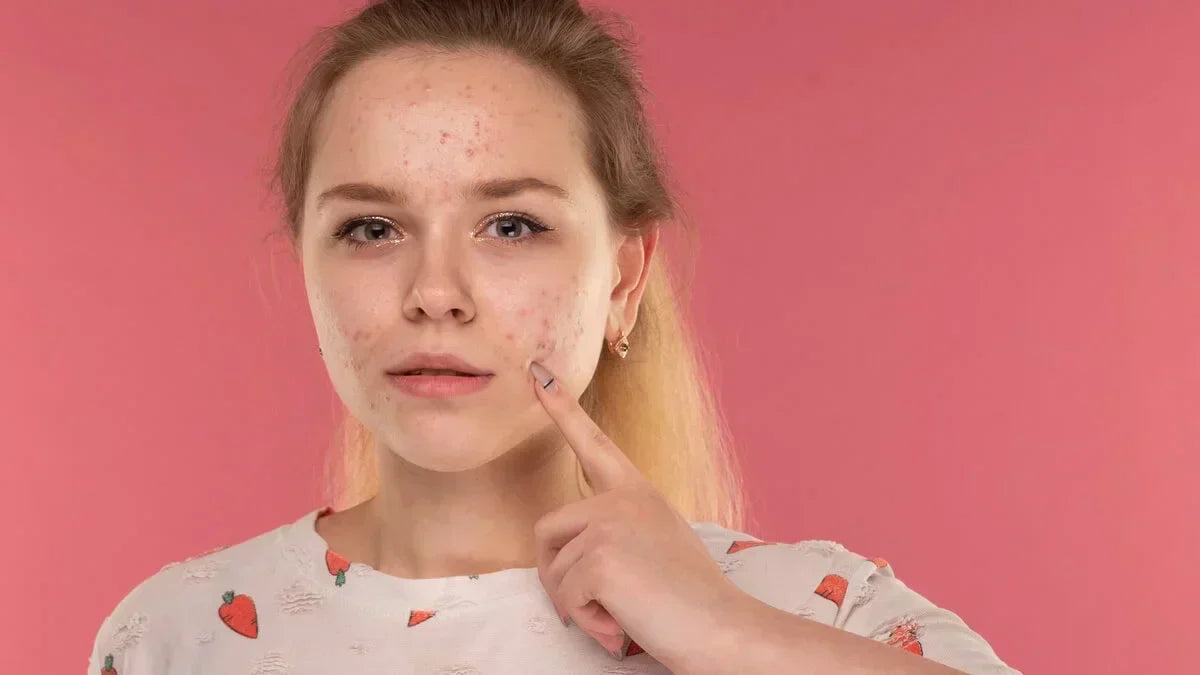
Acne is a stage that, for many people, only ends when the skin regains its balance. The problem is that it often doesn't end with the last inflammatory lesion. It leaves behind traces – scars, discolouration, and uneven skin texture.
This is when skincare should change direction.
It's no longer about "treating acne" but about skin regeneration and restoring a uniform appearance. And here arises a crucial question: what truly works?
As a cosmetologist, I'll say it plainly – an effective strategy always rests on two pillars:
exfoliation and regeneration.
In this article, I'll show you how to combine them and which ingredients have a real impact on reducing scars and discolouration.
Acne scars vs. discolouration – what's the difference?
This is the most important starting point, often overlooked.
Scars and discolouration are two completely different skin problems and require different approaches.
Acne scars
Scars form when deeper layers of the skin, mainly collagen fibres, are damaged.
Effect:
- indentations in the skin
- uneven surface
- change in skin structure
This is a structural problem, not just superficial.
Post-inflammatory hyperpigmentation
These are changes in skin colour – most commonly:
- red (fresh)
- brown (established)
They result from:
- inflammation
- melanin overproduction
This is a pigmentary problem that can be effectively reduced with proper care.
Why is this so important?
Because exfoliation works differently on discolouration and scars, but in both cases, it is fundamental.
Read also Post-inflammatory hyperpigmentation - what it is, why it occurs, and how to effectively reduce it
Why does skin "remember" acne?
Skin after inflammation does not automatically return to its "pre-acne state."
Several things happen simultaneously:
- micro-damage occurs
- the regeneration process is disrupted
- cells produce more melanin
- the cell renewal cycle slows down
The result?
The skin "retains" the trace of acne.
Therefore, it needs support, and this is where two key processes come in:
controlled exfoliation and intensive regeneration.
How does skin regeneration work?
Healthy skin renews itself on average every 28 days.
But with problematic skin, this process can extend up to 40–60 days.
What matters here?
- fibroblast activity (collagen production)
- skin hydration level
- state of the hydrolipid barrier
- presence of inflammation
If any of these elements do not function correctly, the skin cannot "repair" itself.
Therefore, skincare must work on multiple levels:
- accelerate renewal
- simultaneously support reconstruction
Exfoliation as the key to smoother skin
This is the absolute foundation for working with post-acne skin.
Exfoliation:
- removes dead skin cells
- accelerates skin renewal
- evens out skin tone
- smoothes the skin surface
Without this process:
- discolouration persists longer
- scars are more visible
- skin looks "tired"
But beware – exfoliation must be controlled and well-matched.
Which acids help with scars and discolouration?
In modern skincare, we no longer just talk about "acids" but about their precise action.
AHA - Alpha Hydroxy Acids
Example: lactic acid
Action:
- surface exfoliation
- brightens discolouration
- improves skin texture
Ideal for:
- discolouration
- uneven skin surface
Learn more from the article Lactic Acid - action, effects, and how to use it safely in skincare
BHA - Salicylic Acid
Acts deeper – penetrates pores.
Action:
- cleanses pores
- reduces blackheads
- anti-inflammatory properties
Why is it important for scars?
Because it limits the formation of new lesions that could leave further marks.
PHA - New Generation Acids
Example: gluconolactone
Action:
- very gentle exfoliation
- intense hydration
- supports skin barrier
This is a great solution for:
v sensitive skin
v couperose skin
v skin after intensive acne
You can learn more from the article PHA Acids. A Gentle Revolution in Skincare
Key takeaway as a cosmetologist:
It's not about "strong acids," but about regularity and suitability for the skin.
Snail mucin - natural skin regeneration
This is one of the most underrated ingredients in post-acne skin care.
Why?
Because it acts exactly where the skin needs it – at the regeneration level.
Contains:
- allantoin
- collagen
- elastin
- hyaluronic acid
- antioxidants
How does it work on scars?
- supports skin regeneration
- improves elasticity
- smoothes texture
How does it work on discolouration?
- accelerates epidermal regeneration
- supports evening out skin tone
- soothes inflammation
Very important distinction:
acids expose new skin, snail mucin helps rebuild it
This combination yields real results.

Learn more How the first Polish snail mucin cream was created - behind the scenes of the Orientana brand
Ingredients supporting the reduction of post-acne changes
In addition to acids and regeneration, it is worth paying attention to ingredients that work "in the background" but are crucial:
- niacinamide – brightens, regulates sebum, strengthens the barrier
- panthenol – soothes, supports regeneration
- ceramides – rebuild the hydrolipid barrier
- antioxidants – protect against oxidative stress
These are what make the skin not only look better but also genuinely rebuild itself.
How to combine exfoliation with regeneration?
This is the most common mistake in skincare – focusing only on one aspect.
The correct scheme looks like this:
- exfoliation - removal of dead epidermis
- regeneration - skin reconstruction
- hydration and protection - stabilisation of effects
If you exfoliate without regeneration - your skin weakens
If you regenerate without exfoliation - changes remain visible
Balance is key.
Most common skincare mistakes
From my cosmetological experience:
- too frequent use of acids
- lack of hydration
- lack of SPF (the biggest mistake with discolouration)
- combining too many active ingredients at once
- lack of consistency
Often, the problem is not a lack of results, but an improper approach.
How long does it take to reduce scars and discolouration?
It's a process.
- discolouration: from a few weeks to several months
- scars: longer, require patience
Most important:
- regularity
- consistency
- well-chosen skincare
Summary
Acne scars and discolouration are not problems that cannot be improved.
But it requires conscious skincare.
The most important elements are:
- exfoliation (AHA, BHA, PHA acids)
- regeneration (e.g., snail mucin)
- skin barrier support
It is precisely the combination of these three elements that yields real results.
If your skin is struggling with discolouration or uneven texture, start with the basics – introduce gentle exfoliation and simultaneously focus on regeneration. It's not a quick fix, but it's one of the most effective.