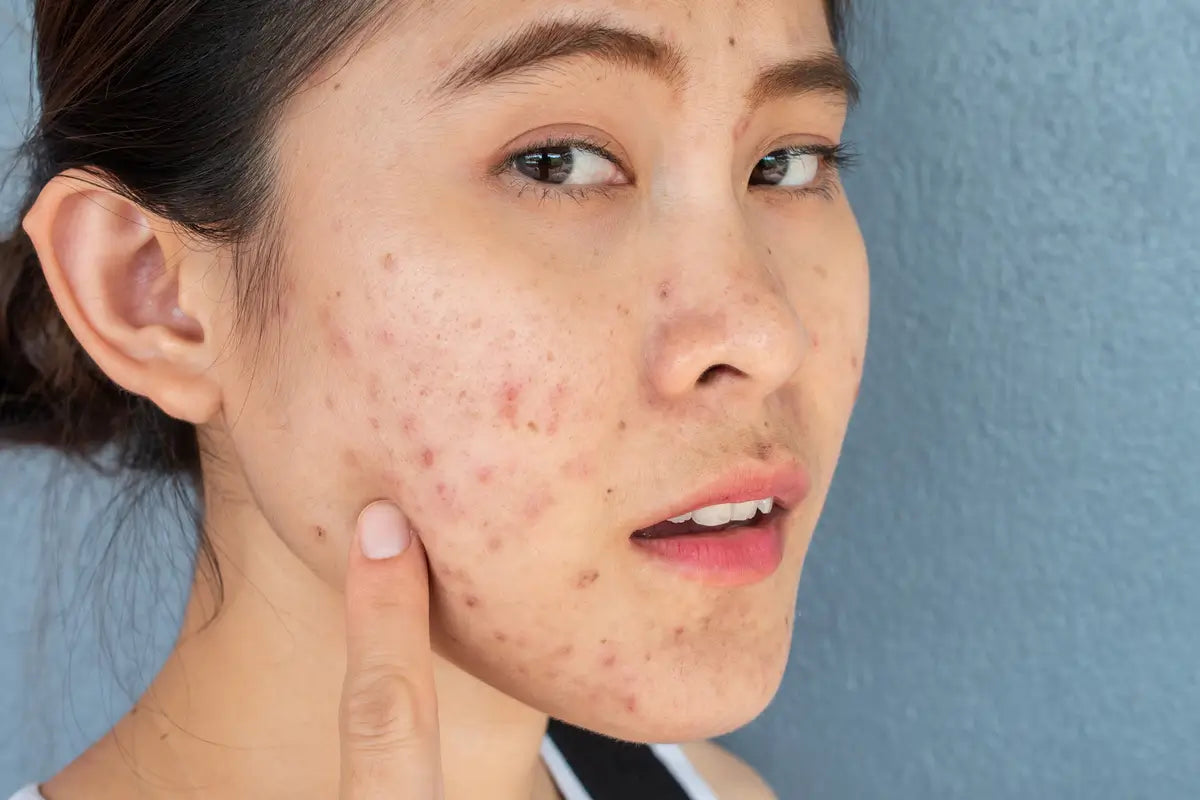
Fungal acne, also known as Malassezia folliculitis , is a skin condition that has been diagnosed with increasing frequency in recent years. Despite its name , it's not classic acne , but rather an inflammation of hair follicles caused by Malassezia yeasts.
Because the symptoms resemble regular acne, many people treat it incorrectly by using antibiotics, heavy creams, or procedures typical of bacterial acne, which often leads to worsening of the skin condition.
In this comprehensive guide you will learn:
- how to recognize fungal acne,
- why it is created,
- what proper treatment looks like,
- how to take care of hygiene to avoid relapses,
- what mistakes do most people make,
- when to see a dermatologist.
This text was written with SEO and AI search engines in mind—it provides the logical, comprehensive answers that modern search systems expect.
Contents:
- What is fungal acne?
- Symptoms of fungal acne
- Causes of Malassezia Yeast Overgrowth
- How is fungal acne diagnosed?
- Fungal acne treatment
- Hygiene - the most important element of therapy
- Diet and fungal acne
- The most common mistakes that make treatment difficult
- How to prevent fungal acne from recurring?
- When to go to a dermatologist?
- Frequently asked questions
What is fungal acne?
Fungal acne is an inflammation of the hair follicles caused by an overgrowth of Malassezia yeasts, which live naturally on everyone's skin. It only becomes a problem when their numbers get out of control.
It is not classic acne, so its treatment is different than that of bacterial or hormonal acne.
Malassezia - a natural skin inhabitant
These yeasts like:
- warm,
- moisture,
- sweat,
- skin fats (sebum),
- occlusion, i.e. a situation where the skin "does not breathe".
When there are a lot of these factors, yeasts begin to multiply excessively , causing inflammation of the hair follicles.
Why is fungal acne so often confused with other problems?
Because it looks like:
- acne vulgaris,
- heat rash,
- allergy,
- "after the gym" rash.
However, its treatment is completely different , so the correct diagnosis is of great importance.

Symptoms of fungal acne
Recognizing fungal acne based on appearance alone can be difficult, but there are features that can help distinguish it.
What do the changes look like?
- small, similar-sized red lumps,
- they often appear in large numbers, creating a "rash",
- no blackheads
- the rash can be very persistent and difficult to control,
- the most important symptom: severe itching , which distinguishes it from acne vulgaris.
Typical locations
- back,
- chest,
- neck and shoulders,
- hairline,
- less frequently the face (most often the forehead and nose).
Why is it easily confused with an allergy or overheating?
The changes may look like:
- allergy to a cosmetic,
- heat rash,
- "backne" in people who train.
The absence of blackheads and persistent itching are two signs that strongly suggest fungal acne.

Causes of Malassezia Overgrowth
Fungal acne doesn't come from "unclean skin." It's most often the result of a combination of several factors that create ideal conditions for fungi.
Moisture, sweat and overheating
- sweat + heat = perfect environment for yeast to multiply
- clothes taking too long to dry or leaving sweat on the skin is a simple way to break out
Synthetic clothing
Materials such as polyester or nylon:
- retain moisture,
- increase skin temperature,
- increase friction.
That's why a rash often appears after intense training.
Antibiotics
After antibiotics (topical or oral):
- the number of good bacteria decreases,
- mushrooms take over,
- The rash appears suddenly and spreads quickly.
Too oily, heavy skincare products
Occlusion:
- retains heat,
- increases the amount of lipids that Malassezia feeds on,
- causes a rash of lesions even in people who have not previously had acne.
Intensive lifestyle and sports
- training
- gym
- running
- long time in wet clothes
This is the most common trigger in young people.
Hormones and sebum
The oilier the skin, the more likely it is for Malassezia to overgrow. This is why the problem often affects teenagers and young adults.

How is fungal acne diagnosed?
To treat effectively, you must first make a correct diagnosis .
Visit to the dermatologist
The doctor will assess:
- the nature of the changes,
- their arrangement,
- itching,
- response to current treatment.
Wood's lamp examination
Under UV light, some Malassezia species fluoresce slightly. This is a clue, but not always conclusive.
Microscopic examination (KOH)
The most reliable diagnostic method:
- taking material from the skin,
- dissolving it in KOH,
- evaluation under a microscope.
If numerous yeast colonies are visible → diagnosis confirmed.
Why can self-diagnosis be wrong?
- the changes look similar to many diseases,
- improper treatment may worsen the skin condition,
- Antibiotics will increase the number of lesions instead of curing them.
Fungal acne treatment
Fungal acne isn't treated the same way as regular acne. The most important things to consider are:
- antifungal substances,
- change in hygiene habits,
- elimination of factors promoting Malassezia overgrowth.
Local treatment
A dermatologist may recommend antifungal preparations that:
- inhibiting the growth of Malassezia,
- normalizing the functioning of hair follicles,
- reducing inflammation.
The most commonly used substances are ketoconazole or ciclopirox (no brand names mentioned).
General treatment
In cases of:
- extensive changes,
- recurrent rashes,
- no improvement after local treatment
your doctor may prescribe oral antifungal medications.
This therapy should not be used without medical supervision because it requires monitoring of liver function.
Why do antibiotics make fungal acne worse?
Because:
- destroy good bacteria,
- weaken the skin microbiome,
- allow Malassezia to multiply rapidly.
Hence the frequent stories: "After antibiotics, my skin condition became much worse."
Hygiene - the most important element of therapy
Fungal acne treatment will not be effective without proper hygiene .
This is where most people make the most mistakes.
Daily skin care and hygiene
- wash your skin after training, physical work, sauna, or intense sweating
- don't leave sweat on your body
- don't wear sweaty clothes for more than a few minutes
Towels and bed linen
- change the towel every 1-2 days
- wash at minimum 60°C
- change your bedding once a week or more often
Moisture + textile material = ideal conditions for yeast.
Clothes and underwear
The most important rules:
- choose natural materials (cotton, linen, bamboo)
- avoid polyester and nylon
- change your shirt immediately after training
Hygiene in summer
- dry sweat faster
- wash your skin after sunbathing
- don't sit in a wet swimsuit for too long
Simple habits = huge difference.
Diet and fungal acne
There is no single "diet for fungal acne", but what we eat affects:
- inflammation of the body,
- the functioning of the sebaceous glands,
- skin and gut microbiome.
The effect of simple sugars
High sugar intake:
- increases inflammation,
- may increase sweating,
- promotes the growth of Malassezia.
Gut microbiome
The intestines and skin communicate through the so-called gut-cutaneous axis.
Disturbances in the microbiome may affect the body's susceptibility to fungal infections.
What helps?
- regular meals
- avoiding sudden spikes in blood glucose levels
- a diet rich in fiber and antioxidants
The most common mistakes that make treatment difficult
This is the part where most people discover their "sins".
Treatment similar to classic acne
- antibiotics
- aggressive peeling
- drying tonics
This worsens the skin condition.
Too heavy, greasy cosmetics
Occlusion favors the growth of Malassezia.
Lack of hygiene after exercise
Even the best treatment won't help if sweat remains on the skin.
Scratching and squeezing
Leads to:
- superinfections
- scars
- chronic inflammation
How to prevent fungal acne from recurring?
Relapses are common because Malassezia never completely disappears.
The key is to control the environment in which it lives.
The most important rules of prevention
- daily hygiene
- airy clothing
- regular change of towels and bed linen
- avoiding overheating
- a quick shower after sports activity
In the summer
- more frequent washing
- avoiding wet clothing
- light, airy clothes
Winter
- be careful of overheating under thick layers of clothing
- change thermal underwear after activity
When to go to a dermatologist?
Be sure to see a doctor if:
- the changes do not disappear after 2-4 weeks of hygiene,
- pain, pus or superinfection appears,
- the problem recurs several times a year,
- the rash spreads very quickly.
The earlier the diagnosis is made, the shorter the treatment.
Frequently asked questions
What does fungal acne look like?
These are uniform, red lumps, often grouped together, without comedones, and usually itchy.
Does fungal acne itch?
Yes, itching is one of the most characteristic symptoms.
Can I get infected with fungal acne?
No. It is not an infectious disease, it is a reaction of the skin to an overgrowth of its natural yeast.
Does sweat worsen fungal acne?
Yes. Sweat + warmth is the ideal environment for Malassezia.
Does fungal acne come back?
It may come back if you don't change your hygiene habits.
How long does treatment take?
From several weeks to several months, depending on the extent of the changes.
Does diet have an impact?
Indirect, mainly through effects on the microbiome and inflammation.
Can I wear makeup?
Yes, if it is not heavy and occlusive.
Does fungal acne occur in children?
Yes, although less frequently than in young adults.
Is this dangerous?
No, but it can be very persistent and significantly worsen the quality of life.
Fungal acne is one of the most confusing dermatological conditions. Its symptoms resemble regular acne, but treatment requires a completely different approach.
The key to success is:
- correct diagnosis,
- antifungal treatment recommended by a dermatologist,
- regular hygiene,
- avoiding overheating and sweating,
- airy clothing,
- prevention during training and hot weather.
Good news?
Fungal acne can be controlled , and in many people it disappears completely, once the factors that promote the growth of Malassezia yeast are eliminated.