
Menopause is a natural stage in a woman's life, but its symptoms can significantly reduce quality of life. It is estimated that as many as 80% of women experience hot flashes, night sweats, sleep problems, or mood swings. In 2030, there will be over 1.2 billion perimenopausal women worldwide, and this number continues to grow (NCCIH, 2024).
Hormone replacement therapy (HRT) remains the most effective method for alleviating menopausal symptoms, but not all women can or want to use it due to contraindications (breast cancer, cardiovascular diseases) or safety concerns. Therefore, there is growing interest in natural plant substances with estrogen-like effects, known as phytoestrogens, including red clover isoflavones (Trifolium pratense L.).
But does red clover really work? What are its confirmed clinical effects, and is it safe? You will find the answers in the following article.
What is Red Clover (Trifolium pratense L.)
Red clover is a leguminous plant rich in isoflavones – natural phenolic compounds with a structure similar to 17β-estradiol, the main female estrogen. The most important ones are:
- biochanin A,
- formononetin,
- genistein,
- daidzein.
These are responsible for the so-called estrogen-mimetic effect. In the human body, they can bind to estrogen receptors, particularly the ERβ receptor, which is present in bones, the vascular system, and the brain, among other places. Importantly, their activity is about 1000 times weaker than estradiol, but it helps alleviate the effects of its deficiency during menopause (Cline et al., Menopause Review, 2020).
In supplements and medications, standardized red clover extracts, such as Promensil®, are used, which provide a consistent dose of isoflavones – typically 40–80 mg daily.
How Red Clover Isoflavones Work
Red clover isoflavones are classified as selective estrogen receptor modulators (SERMs). Unlike synthetic hormones, they act selectively, capable of partially activating estrogen receptors in some tissues (e.g., blood vessels, bones) and blocking them in others (e.g., breast tissue).
Thanks to this:
- they can reduce the frequency and severity of hot flashes,
- support lipid profile (decrease LDL, increase HDL),
- potentially slow down bone density loss after menopause,
- alleviate mood swings and improve sleep quality.
This mechanism is confirmed by biochemical studies. Isoflavones activate the PI3K/Akt and ERK1/2 pathways, regulate the expression of genes related to collagen production, and exert anti-inflammatory effects (Lambert et al., PLOS ONE, 2017).
Efficacy of Red Clover - Clinical Study Results
Hot Flashes and Climacteric Symptoms
The best-studied effect of red clover is its impact on hot flashes.
A meta-analysis by Kanadys et al. (2021, Nutrients), comprising 11 randomized clinical trials with red clover extract, showed:
- an average reduction in hot flashes of 2–4 episodes daily compared to placebo,
- doses of 40–80 mg of isoflavones daily,
- the greatest effect after 12 weeks of use.
Lambert et al. (2017, PLOS ONE):
62 women aged 40–65 received fermented red clover extract (34–37 mg isoflavones/day).
After 12 weeks:
- the number of hot flashes decreased by an average of 4.3 episodes/24 h in the study group vs. +0.8 in the placebo group (p<0.01),
- sleep quality and psychological comfort improved.
Hidalgo et al. (2005, Maturitas):
90 postmenopausal women took 80 mg of isoflavones daily for 12 weeks.
Results: reduction in climacteric symptoms and improvement in lipid profile.
Conclusion: Red clover has a moderate but statistically significant effect in alleviating menopausal symptoms, especially hot flashes and night sweats.
Effect on lipid profile
Yigit et al. (2024, Eur. Rev. Med. Pharmacol. Sci.):
Postmenopausal women using red clover extract for 6 months experienced a 12% decrease in LDL and an 8% increase in HDL compared to the placebo group.
Similar effects were observed in a study by Howes et al., 2018, where isoflavones also improved the atherogenic index (LDL/HDL).
Effect on bone mineral density (BMD)
Studies are less conclusive but suggest potential benefits.
Atkinson et al. (2004, Am. J. Clin. Nutr.) – 177 postmenopausal women, 12 months: no significant changes in BMD in the entire group, but a trend towards improvement was observed in women with low BMI.
Skeletal Health Study (Tice et al., 2015): after 2 years of supplementation with 80 mg isoflavones/day, bone density in the lumbar spine was maintained (in the placebo group – a decrease of 2.4%).
Safety of Red Clover Use
Long-term studies
Powles et al. (2008, Climacteric) – 3-year safety study:
80–120 mg isoflavones/day in healthy postmenopausal women did not cause changes in endometrial thickness, breast density, or liver parameters.
Palacios et al. (2010, Gynecol. Endocrinol.) – MF11RCE extract: no endometrial hyperplasia after 2 years of use, good tolerability.
Breast cancer and hormone-dependent cancers
Fritz et al. (2013, PLOS ONE) – systematic review of women with breast cancer using soy and red clover phytoestrogens:
- no increased risk of breast cancer recurrence was observed,
- but the authors emphasize the limitations of studies and recommend caution and consultation with a doctor.
Side effects and interactions
Most common: mild gastrointestinal discomfort, headaches, rash.
Possible interactions with anticoagulants (warfarin) – theoretical risk of bleeding.
Not recommended for use in pregnant or breastfeeding women.
General conclusion:
Standardized red clover extracts are well tolerated and safe at doses of 40–80 mg of isoflavones daily for up to 3 years.
How to choose a red clover product
It's worth paying attention to a few aspects:
- Standardization - amount of isoflavones given in mg/day (e.g., 40 mg)
- Aglycone form - better absorbed than glycosidic.
- Presence of fermentation or probiotics - may increase the bioavailability of isoflavones.
- Safety and clinical study declarations - e.g., products based on MF11RCE, Promensil, Menoflavon extracts.
Red clover and other methods for alleviating menopausal symptoms
| Method | Effectiveness | Notes |
|---|---|---|
| HRT (estrogen + progestogen) | ★★★★★ | Strongest effect, requires medical supervision |
| Red clover (40–80 mg isoflavones/day) | ★★☆☆☆ | Moderate effect, good tolerability |
| Soy (isoflavones) | ★★☆☆☆ | Similar effect, but requires higher doses |
| Black cohosh (Cimicifuga racemosa) | ★★☆☆☆ | Non-estrogenic mechanism, possible interactions |
| Lifestyle changes (sleep, stress, activity) | ★★★☆☆ | Supportive – effective in some women |
Practical Tips
- First effects are observed after 8–12 weeks.
- If no improvement is seen after 3 months, it is worth considering other options.
- Can be combined with vitamin D, calcium, and probiotics that support isoflavone metabolism.
- Do not exceed the recommended dose – higher amounts do not increase effectiveness.
Red Clover in Cosmetics - Natural Skin Support during Menopause

Red Clover - The Plant Secret to Female Balance
Menopause is a time of intense changes, not only hormonal but also visible on the skin. A decrease in estrogen levels leads to loss of elasticity, dryness, sagging, and deepening of wrinkles. This is why cosmetics increasingly use phytohormones and phytoestrogens, which can naturally support mature skin. One of the best-studied sources is red clover.
This unassuming meadow plant harbors isoflavones, compounds with a structure similar to female hormones, which gently interact with estrogen receptors in the skin. Thanks to this, they can support regeneration, promote collagen synthesis, and improve skin density, without causing a hormonal effect in the body.
Studies (Lambert et al., PLOS ONE 2017; Kanadys et al., Nutrients 2021) confirm that red clover isoflavones can alleviate the effects of estrogen deficiency both in the context of menopausal symptoms and skin condition.
How Does Red Clover Affect the Skin?
Natural Phytoestrogens
Isoflavones, such as biochanin A, formononetin, genistein, and daidzein, can activate ERβ receptors in the skin. This is what increases skin firmness and elasticity, and slows down the aging process.
Antioxidant Action
Red clover extract neutralizes free radicals, which accelerate the degradation of collagen and elastin. It protects the skin from oxidative stress, which is one of the key mechanisms of aging.
Support for the Hydrolipid Barrier
The polyphenols and minerals contained in clover help maintain proper hydration and protect against excessive water loss (TEWL).
Orientana Serum with Red Clover and Phytohormones
Modern Formula Inspired by Happiness Hormones
Orientana's skin renewal activating serum with phytoendorphins, red clover, and vitamin E is an advanced cosmetic created for mature skin that loses firmness and radiance due to hormonal changes.
It is based on a combination of phytohormones, red clover extract, lactic acid, quinoa, caffeine, and vitamin E.
This composition works on several levels:
- Red clover - a source of isoflavones with phytoestrogenic effects; supports skin density and elasticity.
- Phytoendorphins - plant analogues of happiness hormones, which improve microcirculation and skin tone.
- Lactic acid (AHA) - gently exfoliates dead cells, smoothing the skin's texture.
- Caffeine - improves microcirculation and firms the skin.
- Vitamin E - a powerful antioxidant protecting against oxidative aging.
- Quinoa extract - regenerates and supports the epidermal barrier.
Results of Application Tests
DEEP REGENERATION (100%)
"The product makes the skin regenerated" - 100%
"The product gives a feeling of nourished skin" - 100%
For menopausal skin, regeneration is key (slowed renewal, oxidative stress, lipid loss).
STRONG SMOOTHING AND TEXTURE IMPROVEMENT (100%)
"The product gives a smoothing effect/feeling to the skin" - 100%
"The product eliminates skin roughness" - 100%
Roughness and uneven texture are typical symptoms of mature skin - a 100% result here is very strong.
INTENSE HYDRATION (100%)
"The product gives a hydrating effect/feeling to the skin" - 100%
"The product makes the skin less tight" - 96%
During menopause, hydration levels drop sharply - this is one of the most valuable results.
IMPROVEMENT OF SKIN FIRMNESS AND DENSITY
"The product gives the effect/feeling of improved skin density to the touch" - 76%
"The product makes the skin better firmed (gives the effect of improved skin firmness)" - 84%
In the context of menopause (estrogen drop) - firmness and density are the most important anti-aging parameters.
Results of 76–84% are very good clinically for a perceptible effect.
OVERALL IMPROVEMENT OF SKIN QUALITY AND APPEARANCE
"Skin is fresh" - 100%
"Skin is pleasant to the touch" - 100%
"Skin has a silky finish" - 100%
For mature skin, the "freshness effect" and tactile comfort are particularly important - they give a quick sense of rejuvenation.
Why Red Clover is a Future Ingredient in Mature Skin Care
Safe alternative to retinol and HRT
Phytoestrogens from red clover do not cause side effects typical of synthetic hormones and do not irritate like retinoids.
Effectiveness confirmed by research
Isoflavones have been shown to increase the expression of collagen I and III in skin fibroblasts (Cosmetic Dermatology Journal, 2022).
Naturalness and alignment with Orientana philosophy
98.5% ingredients of natural origin, without silicones, parabens, PEGs, or artificial colorants.
Synergy with other plant ingredients
The combination with phytohormones and vitamin E intensifies the effect of skin regeneration and renewal.
Other cosmetics for menopausal skin
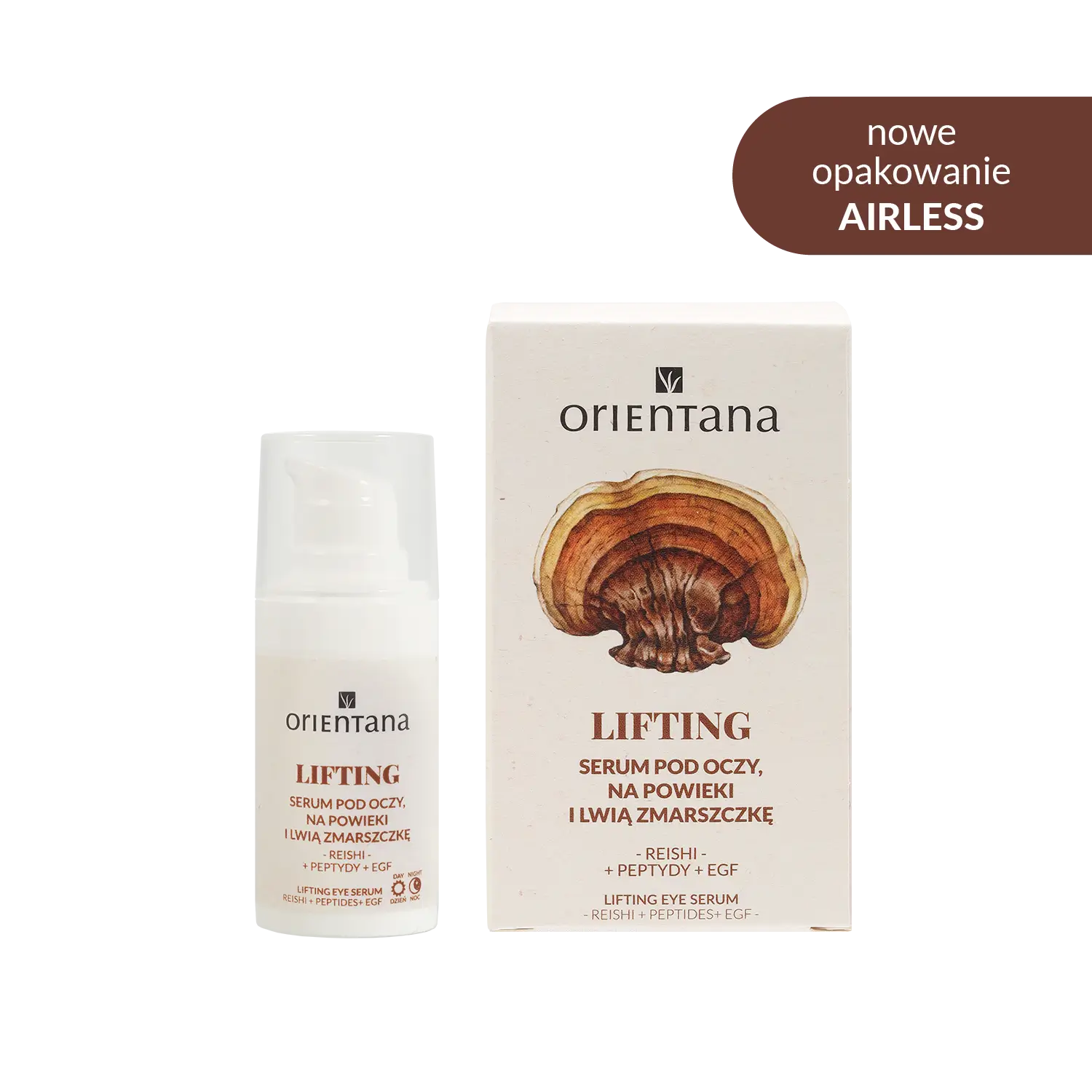
The decrease in estrogen during menopause causes the skin to become thinner, drier, and less elastic. At Orientana, you will find a series of cosmetics based on the Reishi adaptogen, which is exceptionally effective for menopausal and mature skin.

Check out
A good face cream after 50 - natural proposals from Orientana supporting mature skin
4 mistakes in mature skin care that accelerate skin aging
Reishi Mushrooms - Treasure of Eastern Medicine
Summary
Red clover is a herbal source of isoflavones that can alleviate menopausal symptoms – especially hot flashes and mood disturbances.
Clinical studies confirm moderate effectiveness, comparable to soy phytoestrogens, but with a good safety profile.
This is a solution for women who:
- cannot use HRT,
- are looking for natural support,
- want to improve their quality of life in a gentle and balanced way.
However, it is not a substitute for hormone therapy – the effects are more subtle and require regularity.
Red clover is not only a symbol of femininity and nature – it is also a modern active ingredient that supports mature skin during the challenging period of hormonal changes. In cosmetology, it acts as a phytohormonal guardian of youth, working gently but effectively.
Orientana's anti-wrinkle serum with phytoendorphins and red clover is an example of how a traditional plant can become part of biotechnological skincare of the future – a combination of nature and science.
FAQ – frequently asked questions about red clover
Does red clover really work for hot flashes?
Yes, studies show a reduction in the number of hot flashes by 2–4 episodes daily compared to placebo after 12 weeks of supplementation (Nutrients, 2021; PLOS ONE, 2017).
How long does one need to use red clover to see effects?
Usually after 8–12 weeks of regular use at doses of 40–80 mg of isoflavones daily.
Is red clover safe for women after breast cancer?
There is no conclusive evidence of harm, but caution and consultation with a doctor are recommended (Fritz et al., 2013).
Do red clover infusions have the same effect as capsules?
No. The isoflavone content in infusions is significantly lower and not standardized – clinical effects are observed only with standardized extracts.
Can red clover be combined with HRT?
There are no conclusive data – always discuss this with a gynecologist. Theoretically, it may enhance the estrogenic effect.
Can red clover be used for years?
Three-year studies have shown no side effects, but longer periods are not well-researched. It is advisable to take breaks or monitor the endometrium.