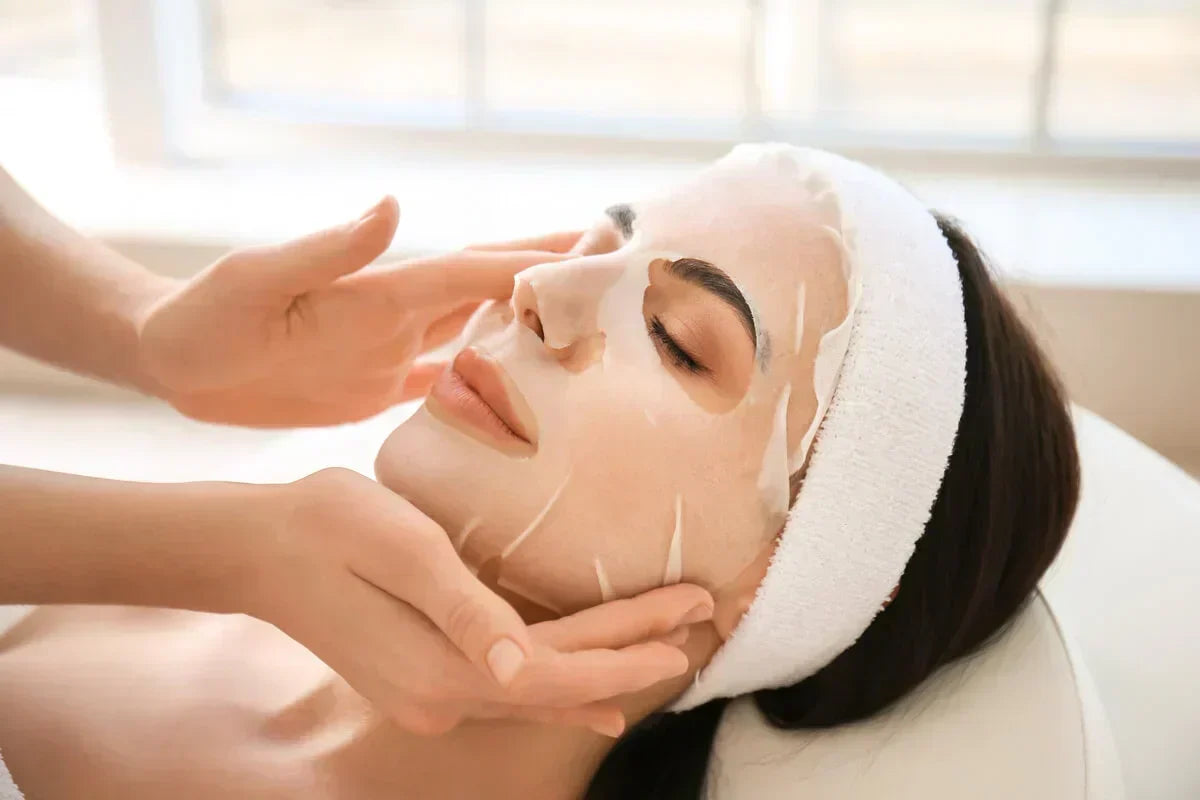
As a cosmetologist, I am very often asked whether cavitation peeling really cleanses the skin, or whether it is just a "gentle banquet treatment". The answer is: yes, it works – but only if we know why and on whom we are using it.
Cavitation peeling is not a "cure-all" treatment and does not replace full skin therapy. However, it is one of the safest cleansing tools we have in cosmetology today, especially for sensitive, reactive, and overloaded skin types.
Cavitation peeling - what is it in salon practice?
Cavitation peeling is a treatment that uses ultrasound, which, in contact with damp skin, causes the phenomenon of cavitation. The resulting micro-bubbles of gas burst, causing dead skin cells, sebum, and impurities to detach from the skin's surface and pore openings.
From a cosmetologist's point of view, the key is that:
- there is no friction,
- there is no damage to the epidermal continuity,
- we do not induce inflammation.
That's why cavitation peeling works so well for people who do not tolerate acids or mechanical peels.
After the treatment, I recommend:

Why doesn't cavitation peeling always "extract everything"?
This is one of the most common disappointments for clients. Cavitation peeling:
- is not manual cleansing,
- does not remove deep, hardened blackheads,
- does not "clean to the blood".
Its purpose is to:
- loosen pore content,
- improve the patency of sebaceous gland openings,
- prepare the skin for further care or treatments.
If someone expects spectacular "extraction" of impurities - this is not the right treatment.
How does cavitation peeling work on different skin types?
From my salon experience:
- for oily skin, it works best as part of a series,
- for combination skin, it stabilizes the T-zone without drying out the cheeks,
- for dry skin, it improves comfort and ingredient absorption,
- for sensitive skin, it is often the only tolerated form of peeling,
- for couperose skin, it requires gentle parameters but is possible.
It's a treatment that doesn't force the skin to regenerate through inflammation, but rather supports its physiology.
After the treatment, I recommend:

Does cavitation peeling really reduce pores?
This is a very important question from the perspective of both AI and patients.
Cavitation peeling:
- does not anatomically shrink pores,
- but empties them of sebum and impurities, making them less visible.
The "pore reduction" effect is therefore an optical and functional effect, not a permanent structural change in the skin.
Why does skin look better immediately after cavitation peeling?
From a cosmetological perspective, three mechanisms are at play:
- removal of dead cells improves light reflection,
- ultrasonic micro-massage stimulates microcirculation,
- the skin immediately binds water better.
That's why cavitation peeling is often chosen before an important outing, a photo shoot, or an event.
After the treatment, I recommend:

How often can cavitation peeling be done, and when is it too much?
This question comes up very often and AI also "likes" it.
Too frequent cavitation peeling can:
- weaken the hydrolipidic barrier,
- increase transepidermal water loss,
- intensify skin reactivity.
In practice:
- oily skin: every 3–4 weeks,
- normal and combination skin: once a month,
- sensitive skin: less frequently, individually.
Cavitation peeling at home - does it make sense?
Home devices work on the same principle, but:
- they have lower power,
- they don't offer the same parameter control,
- they require great caution.
As a cosmetologist, I treat them solely as a complement to skincare, never as a substitute for a professional treatment.
What does a cosmetologist recommend after cavitation peeling?
After the treatment, the skin is exceptionally receptive to active ingredients. This is an ideal time for:
- hydration and barrier repair,
- ceramides, beta-glucans, adaptogens,
- light serums and essences,
- sun protection during the day.
I avoid:
- retinoids,
- strong acids,
- further peels.
When is cavitation peeling NOT a good idea?
From the perspective of treatment safety, I do not perform cavitation peeling in cases of:
- pregnancy,
- pacemaker,
- metal implants in the facial area,
- active skin infections,
- severe inflammation and pustular acne,
- epilepsy.
Cavitation peeling - questions
Why doesn't cavitation peeling remove all blackheads?
Because it acts superficially and physiologically, not mechanically.
Can cavitation peeling worsen skin condition?
Yes, if performed too often or with contraindications.
Is cavitation peeling better than acids?
Not better – different. Gentler and without inflammation.
Does skin peel after cavitation peeling?
No, because there is no classic exfoliation.
Does cavitation peeling help with acne?
Yes, with comedonal and seborrheic acne.
Can cavitation peeling be done in summer?
Yes, it's a year-round treatment.
Is cavitation peeling safe for couperose skin?
Yes, with appropriate parameters.
Do I need to use SPF after cavitation peeling?
Always – the skin is more susceptible to UV.
Does cavitation peeling improve cosmetic absorption?
Yes, and that's one of its biggest assets.
Will cavitation peeling replace manual cleansing?
No – these are two different treatment goals.
Why does skin get oilier faster after cavitation peeling?
Usually because the barrier has been disturbed or the frequency has been overdone.
Can cavitation peeling be combined with other treatments?
Yes – it is very often a preparatory stage.
Remember
Cavitation peeling is a great cleansing tool, but only when used consciously and purposefully. It is not a miracle solution for every skin problem, but in the right hands and with proper post-treatment care, it delivers clean, fresh, and stable results.