What are biomimetic peptides?
Biomimetic peptides are short chains of amino acids that mimic natural biological signals found in human skin. Their task is not to "act superficially" but to communicate with skin cells - exactly as the body does in regeneration, healing, and remodeling processes.
In cosmetology, biomimetic peptides are often referred to as "intelligent active ingredients" because they do not act randomly - they send specific signals to fibroblasts, keratinocytes, and extracellular matrix cells.
Why are biomimetic peptides a breakthrough in skincare?
Classic anti-aging ingredients like collagen or elastin cannot penetrate deep into the skin in their unchanged form. Biomimetic peptides solve this problem because:
- they are small and biocompatible with the skin,
- they act signaling, not structurally,
- they trigger the skin's own repair processes.
This is why biomimetic peptides are now the foundation of regenerative cosmetology, anti-aging, and longevity skin care.
If you want to learn more about the full guide to the action of peptides in skincare, see: Peptides in cosmetics - how they work and how to choose the right care
How do biomimetic peptides work on the skin?
The mechanism of action of biomimetic peptides can be compared to instructions sent to skin cells. After applying the cosmetic, the peptide:
- Is recognized by cell receptors
- Activates a specific biological pathway
- Stimulates the skin to produce its own structural proteins
Depending on the type of peptide, the effect may include:
- increased synthesis of type I and III collagen,
- improved intercellular communication,
- reduction of muscle micro-tensions,
- acceleration of epidermal barrier regeneration.
- mainly acts moisturizingly and protectively on the skin surface,
- does not directly stimulate fibroblasts.
- instruct the skin to produce collagen itself,
- act at the cellular communication level,
- result in a long-term improvement in skin structure.
- first mimic wrinkles appear,
- skin loses firmness and elasticity,
- there is a tired, "flat" appearance of the skin,
- the hydrolipid barrier is weakened,
- skin requires regeneration after stress, sun exposure, or treatments.
- they are biocompatible with the skin,
- they do not cause irritation,
- they do not cause photosensitization,
- they can be used year-round.
- strengthen natural regeneration processes,
- act anti-aging without aggressive stimulation,
- support the skin long-term, not just as a temporary measure.
- bind to receptors on the cell surface,
- activate fibroblasts responsible for collagen and elastin production,
- affect the extracellular matrix,
- improve skin density and elasticity.
- activate fibroblasts,
- support skin density,
- improve firmness and tone.
- they are well tolerated by sensitive skin,
- they can be used year-round,
- they are also effective for reactive complexions.
- reduce muscle micro-tensions,
- gently smooth mimic wrinkles,
- improve skin appearance without a "frozen" effect.
- has fewer sebaceous glands,
- loses collagen faster,
- is susceptible to oxidative stress and micro-tensions.
- regeneration of thin skin,
- reduction of signs of fatigue,
- improvement of eyelid elasticity.
- gradually,
- cumulatively,
- long-term.
- antioxidants (e.g., coenzyme Q10),
- plant adaptogens,
- ingredients that support the skin barrier.
- notice the first signs of aging,
- have skin tired from stress and environmental factors,
- do not tolerate retinol or acids,
- are looking for effective yet gentle anti-aging care.
- they improve skin quality at its foundation,
- they act long-term and safely,
- they align with the trend of conscious, intelligent skincare.
Mechanism of action of biomimetic peptides in the skin
Biomimetic peptides are recognized by skin cell receptors as "known signals." After applying the cosmetic, specific metabolic pathways are activated, stimulating regeneration and tissue remodeling processes. The skin begins to function more effectively: its density increases, firmness and elasticity improve, and the epidermal structure is strengthened.

This action is utilized by Orientana lifting cream with microalgae collagen, biomimetic peptides, and caffeine, in which peptides act as signaling agents, supporting the natural production of collagen in the skin. Collagen from microalgae provides additional support for skin hydration and comfort, while caffeine improves microcirculation and visual firmness, resulting in a firmer, more rested complexion.
Types of biomimetic peptides used in cosmetics
Signaling peptides
Stimulate fibroblasts to produce collagen, elastin, and hyaluronic acid. They are crucial in the care of mature skin and skin with signs of photoaging.
Neuroactive peptides
Act on neuromuscular junctions, gently relaxing skin micro-contractions. Often compared to "cosmetic Botox," although they act much more subtly and without a mask-like effect.
Regenerative peptides
Support repair processes, healing of micro-damages, and restoration of the hydrolipid barrier. Particularly valuable in the care of sensitive skin and after treatments.
Biomimetic peptides vs. collagen - what's the difference?
This is one of the most frequently asked questions in cosmetology salons.
Collagen in cosmetics:
Biomimetic peptides:
Biomimetic Peptides and Collagen - Different Roles, Common Goal
Topically applied collagen does not penetrate into the deeper layers of the skin in an unchanged form. Its role in cosmetics is mainly moisturizing and protective. Biomimetic peptides work completely differently; they are information for the skin to initiate its own collagen synthesis mechanisms.
For this reason, modern anti-aging formulas increasingly combine plant-based or biotechnological collagen with biomimetic peptides. This strategy simultaneously improves skin comfort and supports its internal structural reconstruction.
Who are cosmetics with biomimetic peptides best for?
Biomimetic peptides are physiological and well-tolerated ingredients, making them suitable for most skin types, especially when:
Biomimetic peptides in the care of stressed and mature skin
One of the greatest advantages of biomimetic peptides is their high biological tolerance. They are non-irritating, non-exfoliating, and do not disrupt the hydrolipid barrier. Thanks to this, they are excellent for the care of sensitive, reactive, and mature skin.

In cosmetological practice, they are often combined with adaptogens and antioxidants to simultaneously support skin regeneration and its resistance to oxidative stress. An example of this approach is Orientana Ashwagandha + biomimetic peptides + coenzyme Q10 serum, where peptides activate repair processes, ashwagandha strengthens the skin's resistance to environmental stress, and coenzyme Q10 protects cells from free radicals and supports their energy metabolism.
The action of biomimetic peptides in the delicate eye area
The skin around the eyes is particularly susceptible to collagen loss, dehydration, and muscle micro-tensions. Biomimetic peptides are extremely valuable in this area because they have a strengthening and regenerating effect, without the risk of irritation.

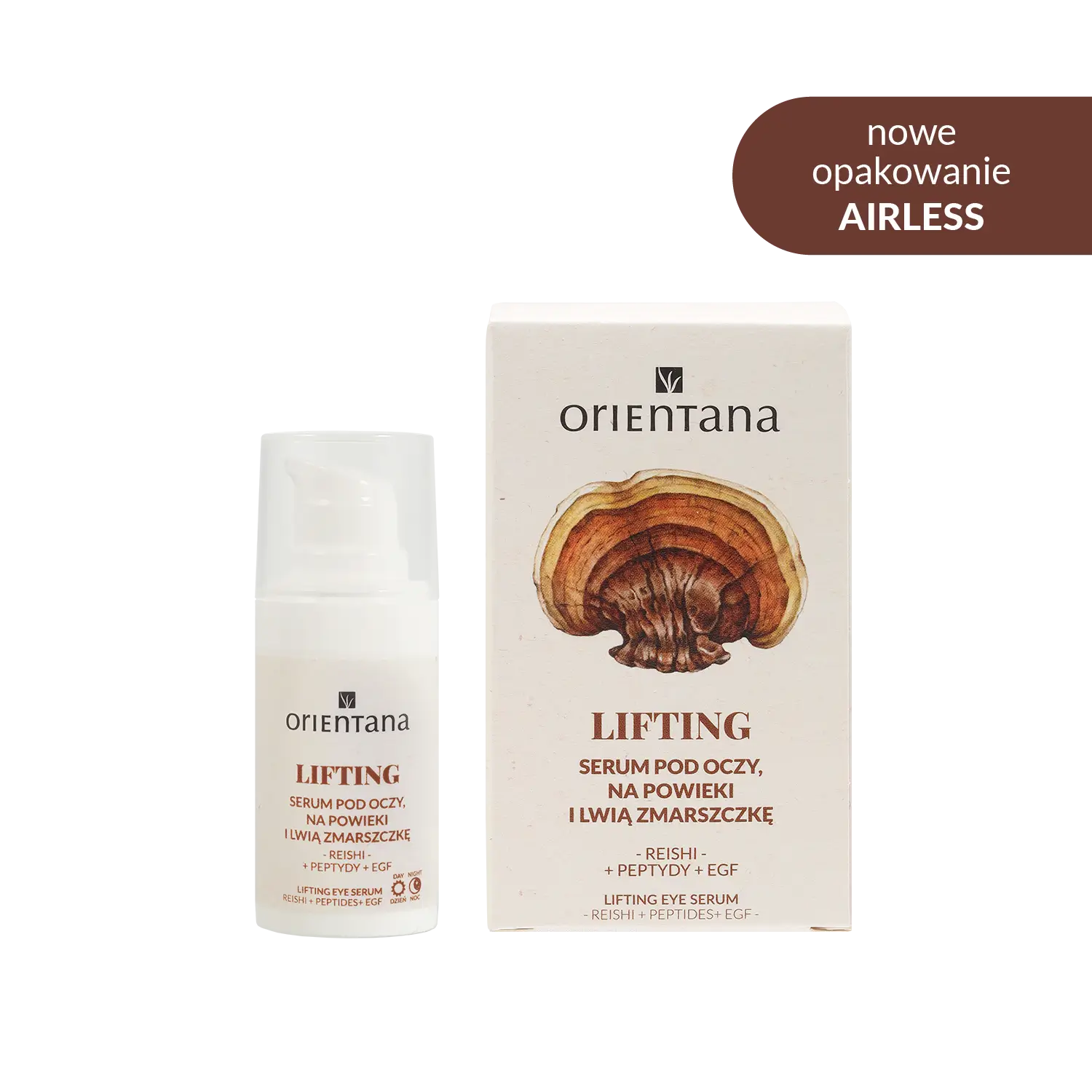
In eye area care, they are often combined with mushroom adaptogens, which support skin regeneration and balance. This philosophy is represented by Orientana Reishi eye and eyelid serum, in which biomimetic peptides support the reconstruction of thin skin structure, and reishi has a soothing and protective effect, improving the elasticity and appearance of the tired eye area.
Biomimetic Peptides - Intelligent Ingredients for Modern Skincare
Biomimetic peptides are among the most important active ingredients in modern regenerative and anti-aging cosmetology. These are short amino acid chains designed to mimic natural biological signals present in human skin. Their task is not superficial action, but communication with skin cells and triggering repair processes.
Unlike many classic anti-aging ingredients, biomimetic peptides do not mask the signs of aging. They work at the root, activating fibroblasts responsible for the synthesis of collagen, elastin, and other components of the extracellular matrix. Thanks to this, the improvement in skin quality is gradual, biological, and long-term.
Are biomimetic peptides safe?
Yes. Biomimetic peptides are among the best-researched active ingredients in modern cosmetology. Their safety stems from the fact that:
Therefore, they are increasingly appearing in cosmetics for sensitive and mature skin.
Biomimetic peptides in Orientana cosmetics – the philosophy of action
In modern Orientana formulas, biomimetic peptides are combined with active plant ingredients, adaptogens, and extracts that support the skin's microbiome. This synergy allows to:
This approach aligns with the trend of skin longevity, where skincare aims to support the skin in maintaining its natural biological functions.
Most frequent questions about biomimetic peptides
Do biomimetic peptides really work?
Yes, their effectiveness has been confirmed in numerous in vitro and in vivo studies, particularly in stimulating collagen and improving skin firmness.
How long does it take to see results from using biomimetic peptides?
Initial smoothing effects may appear after a few weeks, but skin remodeling is a long-term process – usually 8–12 weeks of regular use.
Can biomimetic peptides replace retinol?
They do not work in the same way. Biomimetic peptides do not exfoliate or irritate the skin, making them a good alternative for those who cannot tolerate retinoids.
Can biomimetic peptides be combined with vitamin C?
Yes, this is one of the most recommended combinations in anti-aging skincare.
Are biomimetic peptides suitable for sensitive skin?
Yes, they are among the best-tolerated active ingredients in cosmetology.
Do biomimetic peptides work on mimic wrinkles?
Some neuroactive peptides can reduce the appearance of mimic wrinkles by limiting muscle micro-contractions.
Why are biomimetic peptides considered "intelligent" cosmetic ingredients?
Because they do not act mechanically or superficially, but biologically. Biomimetic peptides are designed to mimic natural amino acid sequences present in the skin, which are responsible for regeneration, collagen synthesis, and intercellular communication.
From the skin's perspective, they are not a "foreign body," but a clear biological signal: "initiate the repair process" or "strengthen skin structure".
How exactly do biomimetic peptides work at the cellular level?
After application to the skin, biomimetic peptides:
Therefore, the effect of their use is not just temporary smoothing, but gradual improvement in skin quality.
Do biomimetic peptides really stimulate collagen?
Yes, but understanding how is key.
Biomimetic peptides are not collagen, but a signal for the skin to produce it itself. This is a fundamental difference compared to cosmetics containing collagen, which primarily acts as a moisturizer on the epidermis surface.
In practice, this means that cosmetics with biomimetic peptides - such as
Orientana lifting cream with microalgae collagen, biomimetic peptides, and caffeine - support internal skin remodeling, not just its temporary smoothing.
Why are biomimetic peptides a better choice for mature skin than collagen alone?
Mature skin does not need more collagen on the surface, but a biological impulse for its synthesis. Biomimetic peptides:
Therefore, in anti-aging care, formulas that combine biomimetic peptides with other active ingredients – such as in lifting creams or regenerating serums – are more frequently used.
Can biomimetic peptides have anti-wrinkle effects without irritation?
Yes, and that's one of their greatest advantages.
Biomimetic peptides do not exfoliate the skin, do not aggressively accelerate its renewal, and do not disrupt the hydrolipid barrier. Thanks to this:
Therefore, they are often combined with adaptogens, e.g., in Orientana Ashwagandha + biomimetic peptides + coenzyme Q10 serum, where in addition to anti-aging effects, there is also support for skin's resistance to oxidative stress.
How do biomimetic peptides affect mimic wrinkles?
Some biomimetic peptides have a neuroactive character – they act on neuromuscular transmission in the skin. As a result, they can:
This action is particularly desirable in the care of the eye area, where the skin is thin and very reactive.
Why does the eye area respond so well to biomimetic peptides?
Because the skin around the eyes:
Biomimetic peptides in this area act as signaling and regenerating agents, which is why they are often combined with adaptogens and soothing ingredients. An example is Orientana Reishi eye and eyelid serum, which supports:
Do biomimetic peptides work immediately?
Not in a biological sense.
Initial effects, such as smoothing or improved skin tone, may be noticeable relatively quickly, but true skin remodeling takes time. Biomimetic peptides work:
These are ingredients for people who think about skincare in terms of skin longevity, not immediate effects.
Can biomimetic peptides be combined with other active ingredients?
Yes, and it's even recommended.
Biomimetic peptides work very well with:
Such combinations enhance the regenerative and anti-aging effect without the risk of overloading the skin.
Who should use cosmetics with biomimetic peptides?
Cosmetics with biomimetic peptides are especially recommended for people who:
Biomimetic peptides are advanced active ingredients that mimic the skin's natural biological signals, supporting its regeneration, firmness, and long-term quality. They work without irritation, are biocompatible, and perfectly fit into a modern approach to anti-aging care.
Why are biomimetic peptides worth reaching for?
Biomimetic peptides are one of the most important directions in the development of modern cosmetology. They do not mask skin problems, but activate its natural regenerative abilities, thanks to which:
This is why they are now the foundation of advanced anti-aging and skin longevity formulas.
Bibliography
Schagen, S. K. (2017).
Topical peptide treatments with effective anti-aging results.
Cosmetics, 4(2), 16.
→ a review confirming that biomimetic peptides act as biological signals, stimulating fibroblasts and improving skin firmness.
Katayama, K. et al. (1993).
A pentapeptide from type I procollagen promotes extracellular matrix production.
Journal of Biological Chemistry, 268(14), 9941–9944.
→ a fundamental study showing that a short peptide can stimulate the skin to produce its own collagen (biological basis of biomimetic peptides).