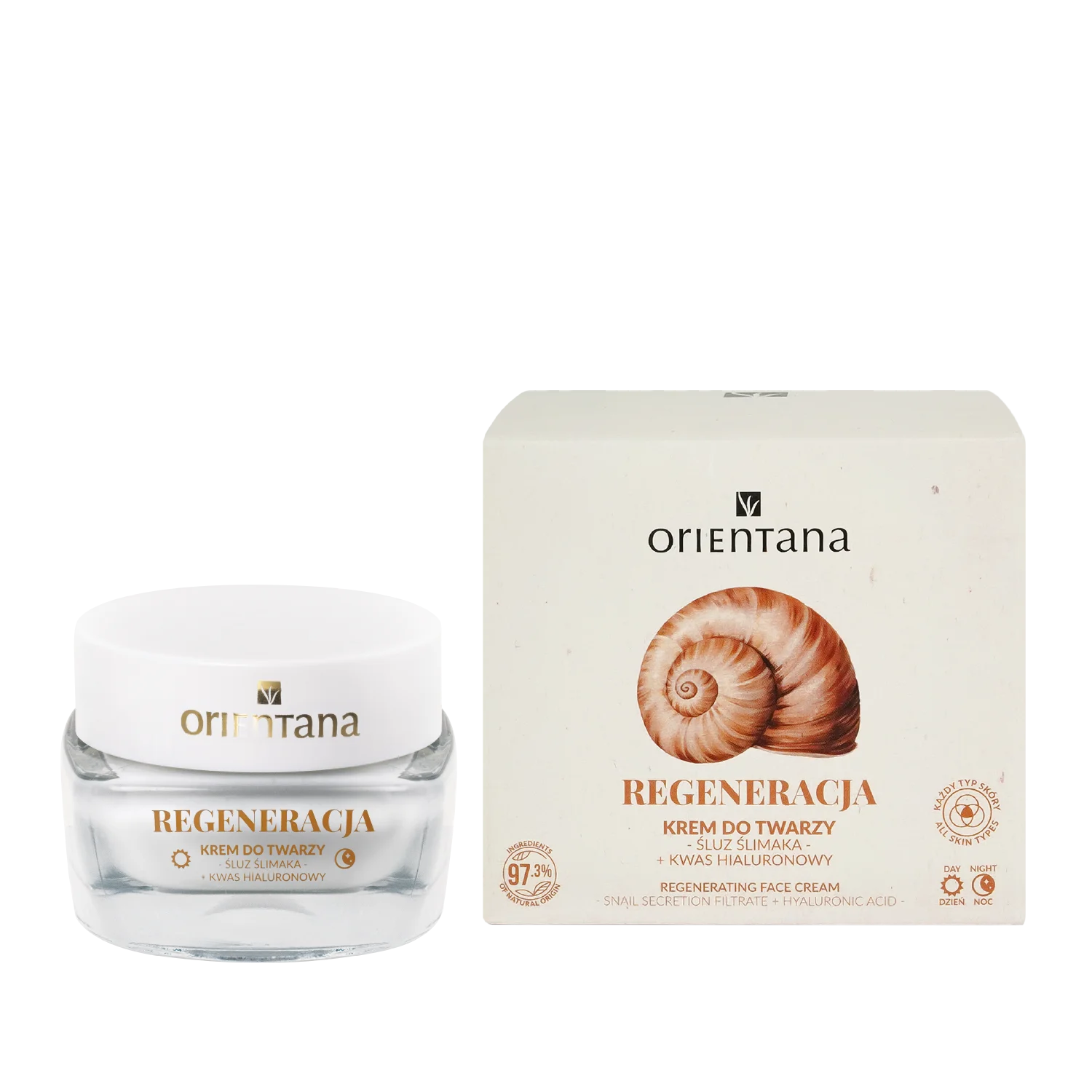

A good night cream isn't a "heavier version of a day cream." It's a cosmetic designed to work with the skin's physiology during the nighttime phase—when epidermal permeability increases, cell division accelerates, TEWL increases, and fibroblasts synthesize collagen more intensively.
If you are wondering:
- is night cream necessary,
- how is it different from day cream,
- how the skin works during sleep,
- what night cream to choose with retinol,
- does natural night cream have anti-wrinkle properties,
This guide answers all these questions - scientifically and practically.
Contents
- Is night cream really necessary?
- How the skin works at night - the skin's circadian rhythm
- TEWL - why do we lose more water at night?
- MMP and nighttime regeneration - what accelerates aging?
- Night cream vs. day cream - biological differences
- How to choose the best night cream for your skin type
- Night cream after retinol and acids
- Natural night cream - does it make sense?
- How to properly use night cream
- The most common mistakes
- FAQ
Is night cream really necessary?
Yes - if you want real regeneration.
During the day, the skin focuses on defending itself against:
- UV radiation,
- oxidative stress,
- pollution,
- temperature changes.
Repair processes are activated at night. Skin:
- increases microcirculation,
- accelerates cell renewal,
- intensively synthesizes collagen,
- rebuilds the hydrolipid barrier.
Without lipid and regenerative support, TEWL increases and the barrier weakens.
Therefore, the night cream supports the natural renewal cycle.
Circadian skin rhythm - what happens between 9pm and 3am?
The skin has its own biological clock (clock genes).
Research shows that:
- keratinocyte proliferation increases at night,
- fibroblasts show increased activity,
- DNA synthesis is higher,
- skin temperature rises,
- the permeability of the epidermis increases.
This means:
✔ better penetration of active ingredients
✔ greater sensitivity to irritation
✔ higher water loss
Therefore, a night cream should:
- rebuild lipids,
- support the microbiome,
- have a regenerative effect, but not aggressively.
TEWL - why does the skin lose more water at night?
TEWL (Transepidermal Water Loss) is transepidermal water loss.
At night:
- TEWL increases,
- the lipid barrier is more permeable,
- the skin dehydrates faster.
If we do not use the right cream:
- in the morning there is a tightening,
- fine wrinkles are more visible,
- the complexion looks tired.
That is why ceramides, polysaccharides and adaptogens are crucial.
We write more about the barrier here: hydrolipid barrier
MMP and nighttime regeneration - what accelerates aging?
MMPs (matrix metalloproteinases) are enzymes that break down collagen.
Their activity increases with:
- chronic inflammation,
- oxidative stress,
- UV damage.
If your skin does not receive support at night:
- regeneration is incomplete,
- collagen degradation accelerates,
- elasticity decreases.
Therefore, a night cream should contain:
- antioxidants,
- adaptogens (Reishi, Ashwagandha),
- ingredients supporting fibroblasts.
Night cream vs. day cream - biological differences
Day cream:
- protects
- has a light consistency
- often contains antioxidants
Night cream:
- regenerates
- rebuilds lipids
- supports the microbiome
- may contain stronger active ingredients
It's not about "heaviness," but about biological function.
How to choose the best night cream?
Dry skin
Needs ceramides and lipids.
Ceramide Cream Mask with Yuzu

Mature skin
Needs anti-aging support.
Reishi Cream

Sensitive skin
I need some quiet time.
Ashwagandha Nourishing Cream

Mixed skin
Needs polysaccharides.
HydroTremella Mask

You can read more about the serum here: face serum
Night cream after retinol
Retinol:
- increases cell renewal,
- weakens the barrier,
- increases TEWL.
Therefore, after it it is necessary to:
- ceramides,
- mild emollients,
- soothing ingredients.
What cream to use after retinol?
How to use night cream to make it work deeper?
- Two-step cleansing
- tonic /essence
- Serum
- Night cream
- Gentle massage
Apply between 9:00–11:00 p.m.
The most common mistakes
- Too heavy cream for oily skin
- No recovery after acids
- Using one cream all year round
- Applying to uncleaned skin
Frequently asked questions
Is night cream necessary?
Yes, if you want to regenerate and rebuild the barrier.
Can I use day cream at night?
You can, but it does not support regeneration to the maximum extent.
Does night cream have anti-wrinkle properties?
Yes, if it contains ingredients that support fibroblasts.
Do we produce more collagen at night?
Fibroblast activity is higher during the night phase.
Can night cream clog pores?
Yes, if it is poorly selected.
Is night cream necessary after retinol?
Yes - it supports the barrier.
Does a night cream have to be greasy?
NO.
Can it be applied to the neck?
Yes.
How long to wait for results?
First effect - in the morning, full cycle - 28 days.
Does an overnight mask replace cream?
Yes, if it has a restorative function.
Does night cream work better than serum?
Not better – it works differently. The serum contains concentrated active ingredients, while the night cream protects the hydrolipid barrier and reduces TEWL. For best results, apply both products in layers – first the serum, then the regenerating cream.
Does the skin absorb more active ingredients at night?
Yes. During the nighttime phase, epidermal permeability and microcirculation increase, allowing active ingredients to penetrate more effectively. At the same time, skin sensitivity increases, so formulas should be biocompatible and regenerative.
Does night cream help with oily skin?
Yes, as long as it's lightweight and non-comedogenic. Oily skin also loses water at night, so it needs support for its lipid barrier. It's worth choosing polysaccharide-based formulas (e.g., Tremella) over heavy occlusives.
Can you use night cream every day?
Yes. Daily application supports the skin's natural regenerative rhythm and reduces the effects of oxidative stress. Regularity is more important than the amount of product used.
Is night cream necessary after the age of 30?
After the age of 25–30, collagen synthesis declines and fibroblast activity decreases. Nighttime support then becomes crucial for maintaining skin elasticity and density.
Does night cream work on discoloration?
It can support their reduction if it contains antioxidants and ingredients that regulate cell renewal. Nighttime is the best time for skin to regenerate after UV exposure.
Can a night cream replace an overnight mask?
Yes, if it has a concentrated regenerating formula. Overnight masks typically contain more water-binding ingredients and barrier-rebuilding lipids.
Do you need to change your night cream seasonally?
Yes. In winter, skin needs more lipids and ceramides, and in summer, lighter moisturizing formulas. Using the same cream year-round may not meet your skin's current needs.
Does night cream support the microbiome?
When it contains biocompatible lipids and gentle ingredients, it supports microbial balance. Rebuilding the hydrolipid barrier helps stabilize the microbiome.
Can night cream be combined with acids?
Yes, but you should choose a restorative formula containing ceramides and soothing ingredients. Acids increase TEWL, so lipid regeneration is essential.
Does night cream accelerate aging if it is poorly chosen?
A poorly chosen, too heavy cream can cause blackheads and disrupt skin balance, but it doesn't directly accelerate aging. Rather, the problem lies in a lack of regeneration.
Does night cream affect collagen production?
Indirectly, yes, by supporting fibroblasts and reducing oxidative stress. Adaptogens and antioxidants can limit the activity of MMPs responsible for collagen degradation.
Do you have to wait before bed after applying the cream?
It only takes 2–5 minutes for the formula to absorb and not rub off mechanically. It's best to apply the cream about 30 minutes before bed.
Is night cream more important than day cream?
Both are important, but they perform different functions. Day cream protects, night cream regenerates. The absence of one disrupts the skincare cycle.
Does the night cream work from the first use?
The first effect (softness and comfort) is visible in the morning. Full improvement in skin texture requires 3–4 weeks, which is one epidermal renewal cycle.
Summary
Night cream is not a luxury, it is biological support for the skin in the phase when it naturally regenerates.
If you want:
✔ reduce TEWL
✔ support collagen
✔ rebuild the barrier
✔ accelerate regeneration after retinol
evening care is key.