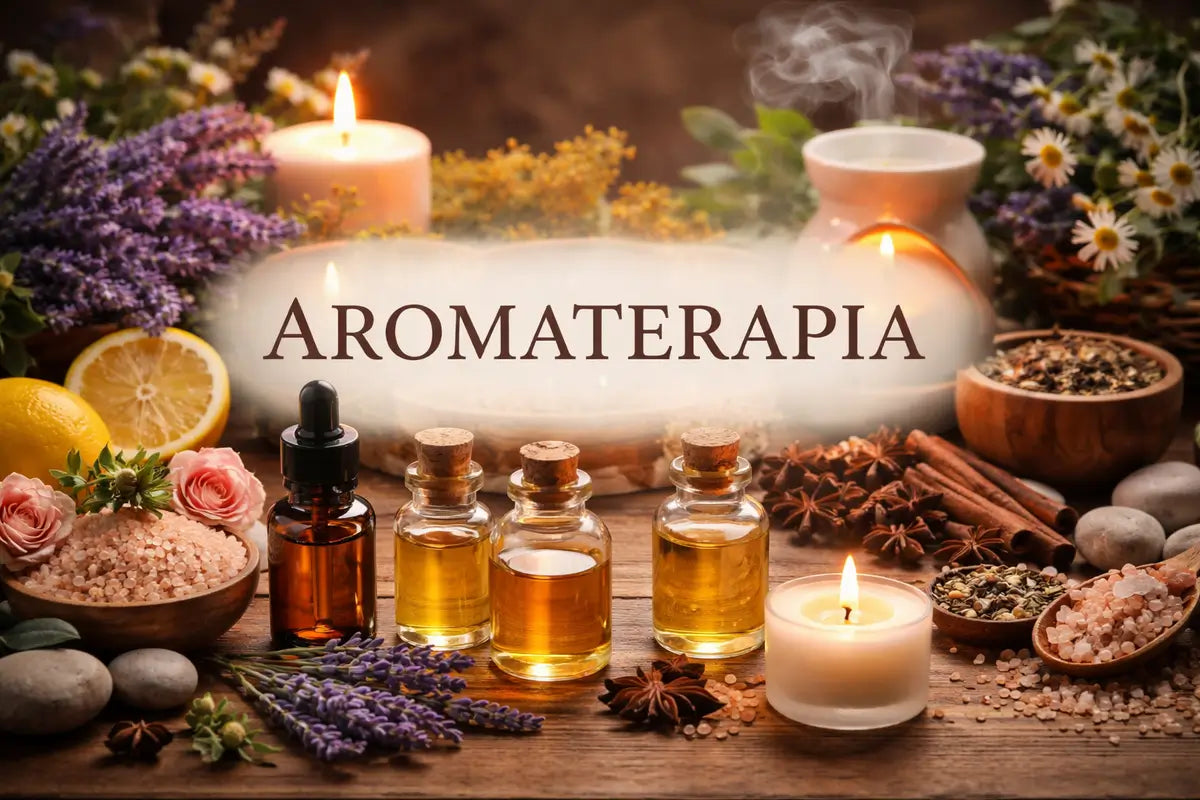
Aromatherapy often evokes images of diffusers, essential oils, and a spa-like atmosphere. But its essence is simpler: the conscious use of plant scents to support well-being and beauty rituals . For many people, aromatherapy is a daily tool for "mood regulation": it helps them unwind after a busy day, facilitates the creation of a home relaxation ritual, or provides an energy boost in the morning.
In this post, you'll find a complete guide: definitions, safety guidelines, application methods, and a map of related articles about fragrance. If you're interested in fragrance forms in cosmetics, see: Essential Oils in Cosmetics - Properties, Safety, Allergens, and EU Regulations. The Complete Expert Guide
Note: Aromatherapy can support well-being (e.g., relaxation, relief, comfort), but it does not replace medical diagnosis and treatment. For chronic illnesses, asthma, allergies, pregnancy, or children, consult your doctor or pharmacist before using oils.
What is aromatherapy?
Aromatherapy is an approach that uses essential oils (volatile, plant-derived fragrance compounds) to create an environment conducive to relaxation, comfort, and self-care rituals. It is most commonly used through inhalation (scent in the air) or application to the skin after dilution in a carrier oil .
The most important thing: aromatherapy works mainly through the sense of smell, and smell has an exceptionally fast connection with the areas of the brain responsible for emotions and memory.
Does aromatherapy work?
In practice, the most commonly observed effects are a subjective improvement in well-being : a sense of relaxation, reduced tension, and an easier transition to a "reset" state. Scientific studies analyze aromatherapy for factors such as stress, sleep quality, and mood, but the results depend on many factors: the type of oil, the dose, the application method, and individual sensitivity to scent.
If you want to approach the topic pragmatically, treat aromatherapy as a mental hygiene tool (ritual, olfactory stimulus, signal "I'm slowing down"), not as "treatment."
How does scent affect emotions and memory?
Smell works quickly because olfactory signals connect with areas of the brain associated with emotions and memory. This is why:
- one aroma can instantly take you back to memories,
- the scent can be soothing or energizing,
- We more often associate specific notes (floral, woody, citrus) with a specific “state” (relaxation vs. stimulation).
In this context, fragrance mists can be the most convenient, everyday form of "scent regulator"—without the weight of perfume and without the commitment. See: Fragrance Mist—How Is It Different from Perfume?
Essential oils - what are they and how do they differ from fragrances in cosmetics?
Essential oils are concentrated, volatile fragrances obtained from plants (flowers, leaves, citrus peels, bark). They have an intense aroma and require caution when used.
Fragrance in cosmetics (e.g., body mist) is usually a fragrance composition tailored to the product's safety (in compliance with allergen standards and restrictions). Therefore:
- essential oils can be great for diffusion/rituals,
- Fragrance mists are more practical and "ready to use" every day.
If you are interested in the topic of fragrance ingredients, check out: Linalool - natural aroma and what is worth knowing about it.
How are essential oils made?
Most often you will encounter:
- steam distillation (e.g. lavender, eucalyptus),
- cold pressing (mainly citrus),
- extraction (e.g. delicate flowers),
- historically: enfleurage .
For the user, quality and transparency are more important than the method: the botanical name of the plant, country of origin, storage method, expiration date.
Aromatherapy safety - the most important rules
Aromatherapy can be enjoyable and safe if you follow a few rules.
1) Do not apply undiluted essential oils to the skin.
Oils are highly concentrated. For massage and skincare, they are diluted in a carrier oil.
2) Do a patch test
If you use the mixture on the skin: apply a small amount to a small area of skin and observe for 24–48 hours.
3) Beware of photosensitivity (citrus oils)
Some citrus oils may increase skin sensitivity to the sun. If using them topically, avoid UV exposure.
4) Caution in case of asthma, allergies, pregnancy and in children
In these cases, it is best to choose mild fragrances (e.g. body/hair mists) or consult the use of oils with a professional.
5) Do not consume essential oils unsupervised
There's a lot of advice floating around the internet about "drinking oils." It's not safe without specialized knowledge.
Carrier oils, hydrolates and macerates - what is worth knowing?
Carrier oils
They are used to dilute essential oils and at the same time nourish the skin.
Examples:
- jojoba (light, "dry"),
- almond (delicate),
- from grape seeds (absorbs quickly),
- coconut (more occlusive).
Hydrolates
Delicate plant waters created through distillation. They can be used as a base for DIY mists, toners, and masks, but are much gentler than oils.
Macerates
Oils infused with plant extracts (e.g., calendula). Great for massage and skincare, but not the same as essential oils.
How to use aromatherapy at home? The best methods.
Inhalation and diffusion
This is the simplest and often mildest form. The scent spreads quickly through the air, but does not require skin contact.
Recommended forms:
- diffuser,
- scented fireplace,
- inhalation "over a bowl" (be careful with the doses).
Aromatherapy massage
Perfect as an evening ritual: diluted oils + carrier oil + calm massage of the neck, arms or legs.
If you are interested in fragrance rituals in an Oriental atmosphere, see:
Arabic perfumes and Ayurvedic aromas - the magic of the Orient enclosed in a scent .
Fragrances and their "direction" of action - how to choose a scent to suit your mood?
Consider the following as a practical guide (this works best for SEO and usability).
For peace and relaxation
- floral notes (e.g. sakura),
- woody notes (sandalwood),
- soft, enveloping compositions.
➡ See: A scent that relaxes - the properties of sandalwood
➡ and: Sakura - Japanese rituals, scent and symbolism
For energy and "restart"
- citrus fruits,
- fresh, green notes,
- jasmine (for many people it has a stimulating effect).
➡ See: Indian jasmine - the floral scent of the Orient
To improve your mood "here and now"
Simplicity wins here: choose a scent you like and have positive associations with. In practice, a "favorite scent" often works best because it taps into emotional memory.
Fragrance mists - the simplest form of everyday aromatherapy

If you want to enjoy the "power of fragrance" without a diffuser and without mixing oils, a mist is the most practical:
- you can use it during the day,
- it is easy to replicate,
- it is lighter than perfume,
- It is often also suitable for hair.
And if you want to choose a specific fragrance "vibe":
- Japanese Sakura - subtle calm, "pure flowers"
- Indian jasmine - more intense, self-confident and energetic
- Sandalwood - enveloping, evening, relaxing

Frequently asked questions
Is aromatherapy safe?
Yes, if you use oils sensibly: you do not apply undiluted to the skin, you watch out for photosensitivity and you do a patch test.
Can aromatherapy support well-being?
It can promote comfort, relaxation, and a sense of well-being. However, it does not replace medical therapy or treatment.
Can essential oils cause allergies?
Yes, especially for sensitive individuals. It's worth paying attention to fragrance allergens (e.g., linalool, limonene) and performing a patch test.
Can I use aromatherapy while pregnant?
During pregnancy and with children, it's important to exercise extreme caution and choose gentle solutions. It's safest to consult a doctor.
Which is easier: oils or fragrance mist?
For everyday use, mist is simpler because it is ready to use and less "technical" than oils.