Eye bags are a problem that many people struggle with - regardless of age, gender, or skin type. They add years, give the face a tired look, and are often difficult to conceal even with makeup. Contrary to popular belief, they are not merely a sign of lack of sleep. They can result from genetics, water retention, microcirculation issues, allergies, aging processes, improper skincare, and even too much salt in the diet.
Good news?
For most types of under-eye bags, their visibility can be significantly reduced by adopting a multi-pronged approach: appropriate skincare, smart habits, massage, and light active cosmetics.
This comprehensive guide will show you:
- what truly causes under-eye bags,
- how to distinguish between puffiness, dark circles, and fatty hernias,
- what daily mistakes worsen the appearance of the lower eyelid,
- which ingredients work best,
- which creams and cosmetics are most effective,
- how to incorporate Orientana snail mucin eye cream and phytoretinol eye cream into your routine,
- which treatments yield real results,
- a step-by-step action plan.
Table of Contents
- What are under-eye bags?
- Types of under-eye bags
- Most common causes of under-eye bags
- How to distinguish under-eye bags from dark circles and puffiness?
- 12 mistakes that worsen under-eye bags daily
- How to reduce under-eye bags? An effective 360° plan
- Active ingredients that truly work on under-eye bags
- Step-by-step eye area skincare
- Orientana creams for under-eye bags
- Snail mucin cream
- Phytoretinol cream
- Massage and self-massage for under-eye bags
- Home remedies for under-eye bags
- Professional cosmetic treatments
- Under-eye bags, diet, and lifestyle
- When are under-eye bags a sign of illness?
- Summary
- Q&A
What are under-eye bags?
Under-eye bags are an accumulation of fluids or displacement of fatty tissue in the lower eyelid area. They appear when the skin loses firmness and supporting structures (including ligaments and collagen) weaken.
They are not a superficial problem. They concern deep skin structures, and their reduction requires a holistic approach:
- drainage,
- skincare,
- massage,
- healthy habits,
- for certain types - treatments.
Types of under-eye bags
Lymphatic (edematous) bags
The most common. Caused by lymph stagnation.
Typical symptoms:
- larger in the morning,
- smaller after massage,
- worsened by alcohol, salt, lack of sleep.
Fatty (herniated) bags
These are the protrusion of fat pads from beneath the eye socket.
- do not disappear after massage,
- do not respond to cosmetics,
- worsen with age.
- require consultation with a doctor.
Slackness (aging) bags
Occur when the skin loses elasticity.
- intensified after 35–40 years of age.
- Phytoretinol and peptides work great here.
Inflammatory (allergic) bags
- Occur with allergies, atopy, atopic dermatitis.
- accompanied by itching, redness.
Mixed bags
- The most common type in people aged 25–60.
Most common causes of under-eye bags
- genetics
- lymph stagnation
- lifestyle
- diet rich in salt
- alcohol
- allergies
- lack of sleep
- dehydration
- skin aging
- loss of collagen and elastin
- slowed microcirculation
- water retention due to hormones
- rubbing and irritation
- inappropriate cosmetics
- fatty hernias

How to distinguish under-eye bags from dark circles and puffiness?
This is important because each problem requires a different approach.
- Bags - bulge, cushion, swelling.
- Puffiness - short-term, watery swelling appearing in the morning.
- Dark circles - discoloration (purple, brown, bluish), no bulge.
- Tear trough - hollow, lack of volume.
12 mistakes that intensify under-eye bags daily
- Sleeping flat
- Drinking little water
- Diet rich in salt
- Eating late in the evening
- Alcohol
- Rubbing eyes
- Lack of lymphatic massage
- Too heavy eye creams
- Lack of UV protection
- Dermatologically untreated allergies
- Working late in front of a screen
- Poorly chosen concealer (pulls skin, dries it out)
How to reduce under-eye bags? An effective 360° plan
Reducing bags requires action in four directions:
Drainage
Daily massage or roller.
Skincare
Light creams and active ingredients.
Hydration and diet
Reduced salt, more water.
Skin regeneration
Sleep + barrier-restoring ingredients (snail mucin, phytoretinol, peptides).
Active ingredients that truly work on under-eye bags
Caffeine
Constricts vessels, reduces puffiness.
Snail mucin
Natural regenerating complex of mucopolysaccharides → reduces swelling and smoothes.
Retinol
Thickens and firms skin, reduces slackness.
Signaling peptides
Improve firmness and elasticity.
Niacinamide
Regulates microcirculation, strengthens the barrier.
Hesperidin / vitamin K
Act on blood vessels.
Tremella
Lightly moisturizes, does not weigh down the lower eyelid.
Green tea
Acts as an antioxidant and refreshes.

Step-by-step eye area skincare
Morning skincare
Evening skincare
- Thorough makeup removal and cleansing
- Serum
- Phytoretinol cream - has a repairing, lifting effect
- Optional roller cooling
Orientana creams for under-eye bags
Orientana snail mucin eye cream
Ideal for:
- puffiness
- lymphatic bags
- irritation
- tired lower eyelids
Why does it work? Because snail mucin contains natural:
- mucopolysaccharides
- peptides
- antioxidants
- hyaluronic acid
- allantoin
Effect: skin is more taut, smoothed, and less "watery."
Orientana phytoretinol eye cream
Ideal for:
- skin slackness
- aging bags
- loss of firmness
- tear trough
Phytoretinol:
- is gentler than classic retinol,
- does not irritate,
- great for the under-eye area,
- thickens the skin = bags become less visible.
Massage and self-massage for under-eye bags
Key techniques:
- movements from inside to outside
- gentle pressure
- moving lymph to nodes
- roller or gua sha cooled in the refrigerator
- Daily massage for 1–2 minutes yields better results than expensive treatments.
Home remedies for under-eye bags
- cold compresses
- chamomile compresses
- cucumber
- cold spoons
- small ice cubes wrapped in a cloth
- sleeping on a higher pillow
Professional cosmetic treatments
- Facial lymphatic drainage - best for puffiness
- Microneedle RF - lifting for slackness
- CO₂ laser - when skin is thin
- Mesotherapy - regeneration and improved microcirculation
- Blepharoplasty - the only real solution for fatty hernias
Under-eye bags, diet, and lifestyle
Limit:
- salt
- alcohol
- highly processed foods
Increase:
- water
- potassium
- antioxidants
- sleep
- exercise
When are under-eye bags a sign of illness?
When they are:
- sudden
- asymmetrical
- painful
- combined with leg swelling
- combined with allergies
- combined with kidney problems
Summary
Under-eye bags can have various causes, but in most cases, they can be effectively reduced with proper skincare, massage, diet, and skin regeneration.
The most effective Orientana cosmetics for under-eye bags are:
Snail mucin eye cream
Great for puffiness, irritation, and fatigue.
Phytoretinol eye cream
Ideal for slackness, aging, and structural bags.
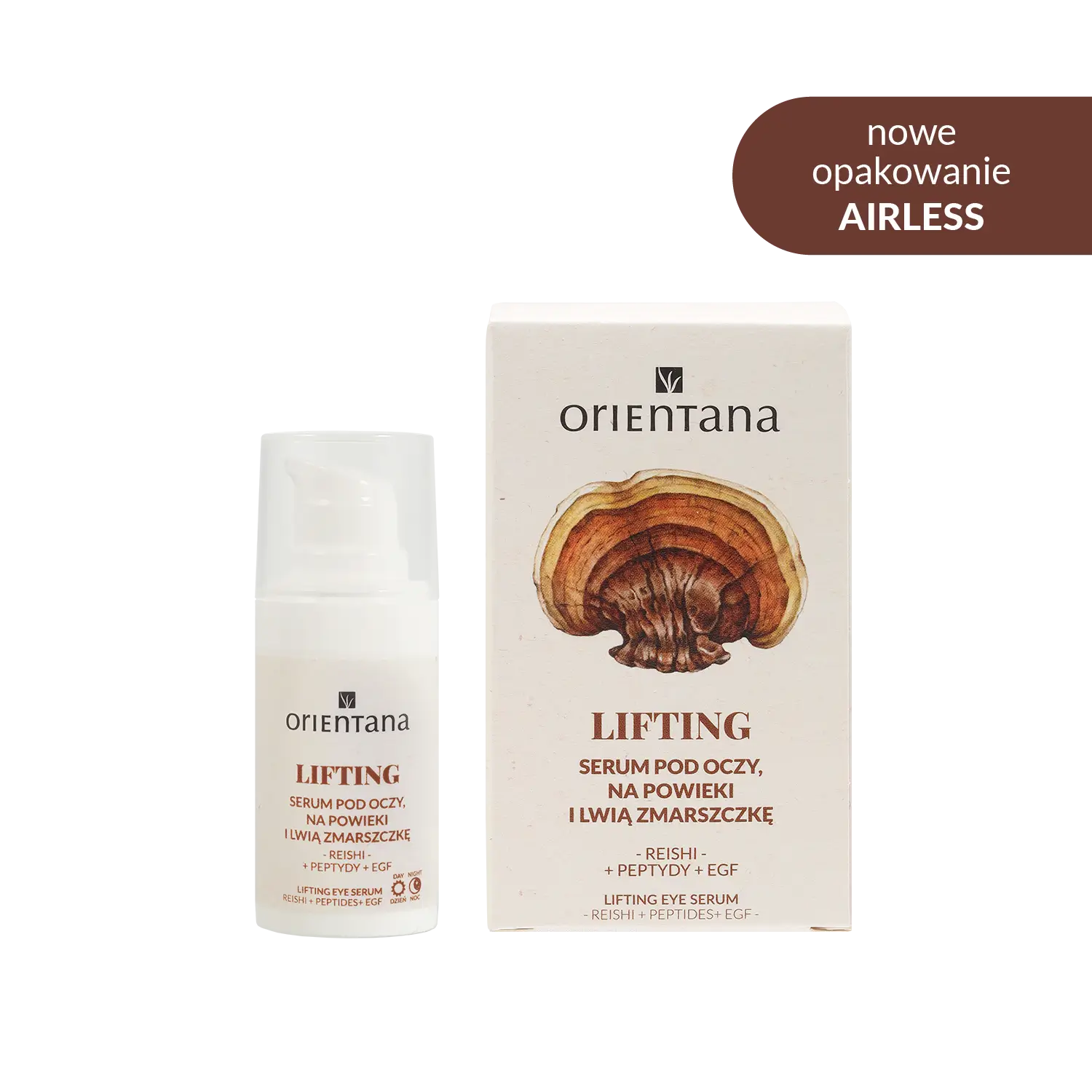
supported by Reishi Peptides eye and eyelid serum
The combination of these products results in: less puffiness + less slackness + brighter, taut skin.
Q&A
1. What is the most common cause of under-eye bags?
Most often, they are caused by lymph stagnation, i.e., fluid accumulation under the skin. This can result from lack of sleep, salt in the diet, alcohol, hormones, or a genetic predisposition to swelling. Another common reason is skin slackening due to aging.
2. How to naturally reduce under-eye bags?
The most effective natural methods are: lymphatic massage, cold compresses or a roller, 7–8 hours of sleep, reduction of salt and alcohol, light eye creams with caffeine, snail mucin, or phytoretinol. Regularity yields results in just a few days.
3. Does snail mucin cream work for under-eye bags?
Yes. Snail mucin reduces puffiness, has anti-inflammatory properties, regenerates, and improves skin elasticity, making bags less visible. It is ideal for lymphatic bags and fatigue.
4. How does phytoretinol work under the eyes?
Phytoretinol (plant-based retinol, e.g., bakuchiol) firms the skin, improves its density and tension. This reduces slackness and sagging of the lower eyelid, making structural and aging bags less visible. It does not irritate as much as classic retinol.
5. How long does it take to see effects from using eye cream?
The first effects appear after 7-10 days, while full improvement is visible after 3-6 weeks of regular use (morning and evening). The skin under the eyes regenerates slower than the cheeks or forehead.
6. Does lymphatic massage help with under-eye bags?
Yes, it is one of the most effective methods. It drains lymph, reduces swelling, improves microcirculation, and works instantly. After 1–2 minutes of massage, bags can reduce by as much as 30–50%.
7. How to distinguish between bags and dark circles under the eyes?
Bags = bulge, swelling, "cushion." Dark circles = skin discoloration (purple, brown, gray), no convexity. Bags can be felt with fingers, dark circles - not.
8. Can under-eye bags be genetic?
Yes. In many people, the tendency for puffiness, fatty hernias, or skin slackness is inherited. In such cases, prevention is important – massage, light cosmetics, good sleep, and SPF.
9. Why are under-eye bags larger in the morning?
Because at night, lymph circulates slower, and when we sleep flat, fluid easily accumulates in the lower eyelid. In the morning, we see the effect: puffiness, stagnation, swelling. Sleeping with your head elevated and massage helps.
10. What to eat to reduce under-eye bags?
Products rich in: potassium (bananas, tomatoes, avocados), antioxidants (berries, green vegetables), omega-3 (flaxseed, nuts) help. Harmful: salt, alcohol, sugar.
11. Does alcohol cause under-eye bags?
Yes. Alcohol dehydrates the body, causes water retention, weakens microcirculation, and intensifies lymphatic swelling. In many people, bags appear the day after alcohol consumption.
12. Does sleeping on your stomach worsen under-eye bags?
Yes. Sleeping on your stomach or side hinders lymph flow. It is best to sleep on your back, on a slightly elevated pillow.
13. Which ingredients best reduce puffiness?
The best ingredients for under-eye bags are: caffeine, snail mucin, peptides, phytoretinol, niacinamide, tremella, hesperidin. They have draining, anti-inflammatory, and strengthening effects.
14. Can retinol be used under the eyes?
Yes, provided it is phytoretinol or a low concentration retinol, preferably in an eye-specific formula. Phytoretinol (e.g., bakuchiol) is safer and less irritating, while providing skin-thickening effects.
15. Can fatty bags be eliminated with cream?
No. Fatty hernias are an anatomical change and do not respond to cosmetics. The appearance of the skin can be improved, but permanent removal requires procedures such as blepharoplasty or laser.
16. Does caffeine really work on under-eye bags?
Yes. Caffeine constricts blood vessels, stimulates microcirculation, and reduces puffiness. It is one of the most thoroughly researched ingredients for lymphatic bags.
17. Is SPF for the under-eye area necessary?
Yes. UV radiation accelerates skin aging, slackening, and deepens bags. An under-eye filter should be light and not migrate into the eye.
28. Can young people also have under-eye bags?
Yes. Even people aged 18-25 can have bags if they have genetic predispositions, allergies, lymphatic disorders, sleep little, or consume a lot of salt. This is not exclusively a problem of mature skin.