
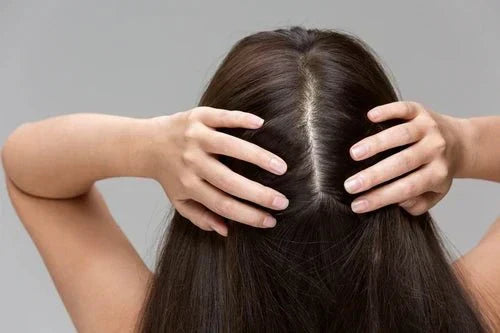
Thinning hair is a common problem that affects both women and men, regardless of age. While often associated with the natural aging process, its causes can be much more complex. Genetic factors, hormonal imbalances, chronic stress, nutritional deficiencies, or improper care—all these elements can affect the weakening of hair follicles and a visible reduction in hair volume.
In this post, I will take a closer look at the phenomenon of hair thinning—how it differs from baldness, what its most common causes are, and why a quick reaction and accurate diagnosis are crucial for effective treatment. I will also advise on what steps to take to stop this process and restore hair density and a healthy appearance.
Check out Hair loss - causes, stages and effective care.
Thinning hair - how to recognize and what to do?
Why does hair thin?
Hair loss and thinning is a topic that causes anxiety for many people – especially when more and more strands are found on the brush or pillow every day. The causes of this phenomenon can be very numerous, and often they overlap, creating a domino effect. Understanding why hair begins to lose density is the first step to effective action. Let's take a closer look at the most common culprits.
Hormonal factors - hair sensitive to internal changes
One of the most common causes of hair thinning, especially in women, is hormonal imbalance. So-called androgenic hair loss (androgenic alopecia) comes to the fore, which is related to the hypersensitivity of hair follicles to androgens – male sex hormones, such as DHT (dihydrotestosterone). Although androgens are also naturally present in a woman's body, their excess or increased scalp sensitivity can cause gradual thinning and shortening of the hair's life cycle.
Other hormonal disorders that affect hair condition include thyroid diseases (hypothyroidism and hyperthyroidism), polycystic ovary syndrome (PCOS), and hormonal fluctuations associated with pregnancy, menopause, or the use of hormonal contraception.
Nutritional deficiencies - hair needs fuel
Hair is one of the first "indicators" of our body's condition. When it lacks essential nutrients, the body focuses on vital functions, and processes such as hair growth are relegated to the background. The most common deficiencies that affect hair thinning include:
- Iron – its deficiency can lead to anemia and weakening of hair follicles.
- Zinc – supports tissue regeneration and hormonal balance.
- Vitamin D – supports the function of hair follicles, especially during the growth phase.
- Biotin (vitamin B7) – known as the beauty vitamin, it is of great importance for the hair structure.
A diet poor in protein, B vitamins, omega-3 acids, or antioxidants can also weaken hair and affect its life cycle.
Stress, sleep and autoimmunity - silent saboteurs
Stress not only deprives us of peace but can also significantly contribute to excessive hair loss. In situations of emotional overload, the body enters "survival" mode, and hair enters the resting phase (telogen) faster, resulting in excessive hair loss – this is then referred to as telogen effluvium.
Chronic lack of sleep works similarly – hair follicle regeneration occurs mainly at night, so sleep deprivation disrupts this natural process. Autoimmune diseases such as alopecia areata, discoid lupus erythematosus, and Hashimoto's also deserve attention – in their course, the immune system mistakenly attacks hair follicles, causing their weakening and thinning.
Lifestyle and care - beauty at the expense of hair health?
Although we want our hair to always look perfect, some hair care habits can seriously weaken it. Frequent coloring, bleaching, straightening, or styling with hot tools (hairdryers, curling irons, straighteners) damage the hair structure, making it brittle and prone to breakage.
Tight hairstyles – ponytails, braids, updos – can be equally harmful, as they exert mechanical pressure on the hair follicles, leading to so-called traction alopecia. If, in addition, there is insufficient scalp cleansing, lack of exfoliation, or cosmetic residues, hair follicles can become blocked, and hair growth – inhibited.
Genetics and the natural aging process
We also cannot forget about genes. Genetic predispositions have a huge impact on how thick our hair will be and how long it will stay in good condition. In some families, a tendency to hair thinning appears early – even before the age of thirty.
Additionally, with age, the activity of hair follicles naturally slows down. Hair grows slower, becomes thinner, and its life cycle shortens. This is a physiological process, but its course can be slowed down by proper care, supplementation, and a healthy lifestyle.
It is also worth mentioning rarer, genetically determined cases, such as hypotrichosis. This is a condition in which there is significant hair thinning - often from early childhood - despite normal development of other physical features. Hypotrichosis can take various forms and genetic backgrounds, and treatment usually focuses on alleviating symptoms and supporting hair growth, if possible. In such cases, consultation with a trichologist and geneticist is extremely important.
Hypotrichosis due to estrogen deficiency is a rarely described condition that refers to hair thinning or loss (hypotrichosis) caused by a deficiency of estrone, one of the three main estrogens in the body (along with estradiol and estriol).
What is estrone? Estrone (E1) is one of the natural estrogens, occurring mainly in postmenopausal women, when estradiol (E2) levels drop significantly. Estrone plays an important role in hormonal regulation, also affecting the condition of the skin and hair.
The effect of estrone on thinning hair
Estrogens are a group of hormones that play a significant role not only in regulating the menstrual cycle but also in the condition of the skin, nails, and hair. One of these hormones is estrone (E1) – a less active form of estrogen, which nevertheless has a significant impact on the health of hair follicles, especially in women.
Estrone, like other estrogens, prolongs the anagen phase, which is the active hair growth phase. This means that hair stays on the head longer, is less prone to premature shedding, and has a better chance of reaching its full length. It is thanks to this mechanism that women during pregnancy – when estrogen levels are high – often notice thickening and improvement in hair appearance.
Another advantage of estrone is the slowing down of hair follicle miniaturization. Miniaturization is a process in which follicles become smaller and smaller and produce thinner, weaker hair – until they eventually stop working. Estrone acts protectively, preventing this degeneration and supporting the natural density of the hairstyle.
The effect of estrone on microcirculation is also important. This hormone improves blood circulation in the scalp, which in turn promotes better oxygenation and nourishment of hair follicles. Better circulation = better conditions for hair growth.
What happens when there is a lack of estrone?
Estrone deficiency – which can occur, for example, during menopause, after childbirth, or due to hormonal disorders – often manifests as gradual hair thinning, especially on the crown of the head. Hair becomes thinner, weaker, and more brittle, and regeneration after shedding takes much longer.
Individuals with low estrone levels may notice that their hairstyle loses volume, and hair does not return to its previous state even after the period of intense shedding ends. This is due to the shortening of the anagen phase and less support for hair follicles at the hormonal level.
Therefore, in cases of chronic hair thinning – especially in women in the perimenopausal period – it is worth considering hormonal diagnostics, including assessment of estrone, estradiol, and other estrogen levels. Early intervention can help stop adverse changes and support the restoration of a healthy hairstyle.
Who can be at risk? Women after menopause are particularly susceptible to estrone deficiency, as the decline in ovarian function leads to a natural drop in estrogen levels, including estrone. A similar effect is observed in women who have undergone surgical removal of the ovaries – in their case, we speak of so-called induced menopause, whose hormonal effects appear suddenly and are often more severe. Women with hypogonadism, a condition in which the ovaries produce insufficient amounts of sex hormones, may also suffer from disorders related to low estrone levels. Although less common, this problem can also affect young women with congenital enzymatic defects that affect estrogen synthesis. In each of these situations, the weakening of hormone-dependent structures, such as hair follicles, can result in noticeable hair thinning.
How to assess the condition of hair and scalp?
Hair loss or its visible thinning can cause concern – especially when we are unsure whether the situation is still within normal limits or already requires specialist intervention. Fortunately, there are both home methods for initial hair assessment and professional diagnostic methods that help get to the root of the problem.
Home methods: tests for density and shedding
The first step can be a simple observation – the daily amount of hair shedding. On average, we lose 50 to 100 hairs a day, so single hairs on the brush or in the shower should not be a cause for panic. However, a sudden increase in hair loss, noticeable thinning of the hairstyle, or difficulty in rebuilding volume can be alarming.
 You can also perform a pull test: grasp a section of about 50–60 hairs and gently pull. If more than 5–6 hairs remain in your hand, this may indicate a problem with excessive shedding. When assessing density, it is also worth paying attention to so-called thin spots, especially in the area of the parting and the crown of the head – their widening can indicate gradual thinning.
When to see a trichologist or dermatologist? If home observations cause concern or you notice hair density loss lasting longer than a few weeks, it is worth consulting a specialist. A trichologist (a specialist in scalp and hair health) or dermatologist can help determine the cause of the problem and propose appropriate treatment.
A visit is particularly recommended when:
- hair loss is sudden or intense,
- alopecia areata or patchy baldness appears,
- the scalp is irritated, itchy, or flaky,
- hair does not regrow despite changes in care.
Diagnostics: laboratory tests and trichoscopy
The specialist may order blood tests to help detect deficiencies or hormonal disorders affecting hair condition. The most commonly performed tests include:
- Complete blood count – general health status and possible anemia,
- Ferritin – iron stores indicator, crucial in hair loss problems,
- TSH, FT3, FT4 – thyroid function assessment,
- Estradiol, estrone, testosterone, DHEA-S, prolactin – hormone levels,
- Vitamin D, zinc, biotin – affect hair growth and quality.
Additionally, the doctor may perform trichoscopy, which is a non-invasive examination of the scalp and hair under high magnification. This allows for assessing hair density, hair follicle condition, signs of miniaturization, and the state of skin blood vessels, among other things.
Regular observation and quick reaction to alarming changes are key to stopping the hair thinning process and effective therapy. The sooner you identify the cause, the greater the chance of restoring hair health and volume.
Effective hair strengthening methods
Thinning, weakened hair is a sign that the body needs support – both from within and without. To effectively strengthen hair, it is worth taking a multi-pronged approach: ensure a proper diet, hair care, regular massages, and – if necessary – resort to professional treatments. Below are proven methods that support the restoration of hair density and health.
A trichologist advises on how to care for hair and scalp with natural cosmetics
Diet and supplementation – what to eat and what to avoid
What we eat directly affects the appearance of our hair. Hair needs protein (keratin), iron, zinc, B vitamins, biotin, selenium, and omega-3 acids. In your daily diet, it is worth including:
- Eggs, fish, nuts, pumpkin seeds, legumes, dark green leafy vegetables.
- Products rich in vitamin C (e.g., bell peppers, berries), which promote iron absorption.
- Whole-grain cereals – a source of B vitamins.
Avoid processed foods, excess sugar, and trans fats, which can exacerbate inflammation and disrupt hormonal balance.
In cases of deficiencies, supplements containing biotin, zinc, vitamin D3, silicon, and collagen work well.
Herbs and adaptogens – natural support for hair follicles
Not only diet, but also phytotherapy can significantly support hair condition. Herbs and adaptogens known from Ayurvedic medicine and traditional Chinese medicine show strengthening and regenerating effects:
- Amla – rich in vitamin C, acts as an antioxidant and stimulates hair growth.
- Ashwagandha – an adaptogen that helps regulate cortisol levels (stress hormone), protecting follicles from weakening.
- Gotu kola (Centella asiatica) – supports scalp microcirculation and accelerates hair follicle regeneration.
These herbs can be taken in the form of supplements, infusions, or applied topically – e.g., as ingredients in hair tonics and oils.
Oiling and scalp massages – natural growth therapy
Regular oiling and scalp massages are one of the simplest and most effective ways to improve blood circulation and oxygenation of hair follicles. Massage (preferably performed with fingertips for 3–5 minutes daily) stimulates microcirculation and promotes the absorption of active ingredients.
It is worth reaching for natural oils.
- Orientana Ayurvedic hair oil – contains amla, bhringraj, and neem, which strengthen roots, reduce hair loss, and stimulate growth.
- Gotu Kola hair therapy – known for its thickening and anti-inflammatory properties.
The oil should be massaged into the scalp, left for at least 30 minutes (or overnight), and then washed thoroughly with a mild shampoo.
Strengthening cosmetics – gentle care without chemicals
In daily care, it is worth opting for products with natural ingredients that do not irritate the scalp or weigh down the hair. The following work well:
- Shampoos without SLS and SLES – gentle cleansing agents do not disturb the skin's hydrolipidic barrier.
- Herbal hair tonics – contain extracts from Ayurvedic plants (e.g., amla, bhringraj, tulsi), strengthen hair follicles, and stimulate growth.
- Conditioners with keratin, rice proteins – regenerate hair structure and increase its elasticity.
It is also important to avoid silicones, parabens, and drying alcohols (e.g., Alcohol Denat.), which can irritate and dry out the scalp.
Trichological cosmetics

Trichological treatments – professional support
When home methods do not bring the desired results, it is worth resorting to specialized trichological treatments that stimulate circulation and activate hair follicles:
- Scalp mesotherapy – microinjections of a cocktail of vitamins, amino acids, and minerals directly into the bulb area.
- Carboxytherapy – introduction of carbon dioxide under the scalp, which improves oxygenation and microcirculation.
- Oxygen infusion – non-invasive delivery of active ingredients using pure oxygen under pressure.
Daily habits that matter
Sometimes it's not genes, hormones, or diet, but rather small daily habits that determine the condition of our hair. While easy to underestimate, it is precisely the way we comb, the quality of our sleep, and protection from external conditions that can effectively support (or sabotage) the fight against thinning. Good news? Many of these habits can be changed immediately – and see results quickly!
How to comb and style hair to avoid weakening it
Although combing seems simple, improper technique can lead to mechanical damage to the hair. First of all, avoid tugging – always start from the ends and gradually move towards the roots. It is worth investing in a brush with soft bristles or a wide-toothed comb, especially if you have fine or tangled hair.
Styling also matters – frequent use of straighteners, curling irons, or hot air from a hairdryer can strain the hair structure and contribute to its brittleness. Therefore, always use heat protection, dry your hair with cooler air, and choose hair ties that do not pull or break hair (e.g., silk scrunchies or spiral ties).
The importance of adequate sleep, relaxation, and stress reduction
Hair grows best when the body is in balance – and this cannot be achieved without regenerative sleep and stress reduction. Chronic psychological tension can cause minor hormonal disturbances and raise cortisol levels, which negatively affects hair follicles. Stress is the enemy of thick hair – it's no coincidence that people talk about "hair falling out from nerves."
Aim for at least 7–8 hours of sleep, preferably at regular times, and if possible, incorporate moments of calm into your day – yoga, meditation, a walk without your phone, or perhaps a bath with essential oils? Even 15 minutes a day can bring real relief to your nervous system and... hair follicles.
Hair protection against sun, frost and pollution
Our hair is daily exposed to external factors that weaken its structure and accelerate aging processes. In summer, UV radiation is the main threat, drying and destroying keratin – so it is worth wearing a head covering and reaching for cosmetics with UV filters, especially if the hair is colored.
In winter, on the other hand, hair is exposed to frost, dry air, and sudden temperature changes. Wear a hat made of natural materials (e.g., cotton, wool with a lining), but do not put it on damp hair – this is a sure way to make it brittle and frizzy.
In cities, an additional factor is smog and air pollution, which settle on hair and scalp. It is worth regularly washing hair with gentle cleansing shampoos and using conditioners with antioxidants, e.g., green tea extract or aloe vera, which neutralize the action of free radicals.
Everyday life consists of small details – but it is precisely these that make a difference. Conscious combing, protection from weather conditions, sleep, and peace of mind are simple, free methods that support healthy hair growth every day.
When can hair regrow, and when is specialized therapy needed?
Hair loss can be alarming, but it doesn't always mean permanent loss of density. Many cases of thinning are reversible, and the key to success is proper diagnosis, consistency in action, and... patience. Sometimes, however, the situation requires specialist intervention – especially when there is permanent damage to the hair follicles.
Hair follicle regeneration time
Hair follicles do not regenerate overnight – this process takes time. On average, hair grows about 1 cm per month, and a full growth cycle (anagen) can last from 2 to 6 years. After intense shedding (e.g., after stress, pregnancy, illness), at least 3 months are needed to notice the first regrowing hairs – the so-called "baby hair."
If the cause of thinning has been eliminated (e.g., hormones regulated, deficiencies supplemented, stress reduced), and hair follicles are still active, hair has a good chance of regrowth. During this period, it is worth supporting its growth with diet, supplementation, and gentle care, and not overloading the scalp with aggressive treatments.
Differences between reversible thinning and permanent hair loss
Not every hair thinning ends in success in the form of full regrowth. The condition of the hair follicles plays a key role – if they are miniaturized, damaged, or atrophy, the chance of their reactivation decreases.
Reversible thinning occurs, for example, with:
- telogen effluvium (stress, deficiencies, infections, childbirth),
- mild hormonal disorders,
- improper care.
Permanent hair loss can occur with:
- androgenetic alopecia in advanced stages,
- scarring alopecia,
- long-untreated autoimmune diseases,
- mechanical damage to the scalp.
In such cases, specialized therapy is often necessary – trichological or dermatological – which may include pharmacological treatment, regenerative treatments, or light therapy and mesotherapy.
The role of patience and consistency in care
Strengthening hair is a marathon, not a sprint. Changes in care, diet, or lifestyle will not bring results overnight – which is why consistency is so important. Daily routine: gentle washing, avoiding hot styling, regular scalp massages, supplementation, and avoiding stress – all this works, but it takes time.
It is also worth avoiding frequently changing cosmetics and "testing" everything at once – hair likes stability. The key is careful observation, patience, and specialist support if the effects do not appear despite efforts.
FAQ – thinning hair, shedding and baldness
Does thinning hair always mean baldness?
No. Thinning hair is often the result of temporary disturbances – stress, vitamin deficiencies, or thyroid diseases. Baldness, on the other hand, means permanent hair loss associated with damage to hair follicles. Therefore, in many cases, thinning can be reversed.
Can hair regrow after menopause?
Yes, if the hair follicles have not undergone permanent miniaturization. In postmenopausal women, a decrease in estrogen levels (estrone and estradiol) weakens the hair, but appropriate hormone therapy, supplementation, and care can improve its density.
How to distinguish natural hair shedding from thinning?
On average, we lose 50–100 hairs a day. If more hair falls out, the hairstyle loses volume, and you can see sparse areas at the parting or on the crown of the head – this is a sign that we are dealing with thinning.
What tests should be done for thinning hair?
Most often recommended are: complete blood count, ferritin (iron), TSH and thyroid hormones, vitamin D, zinc and biotin levels, as well as sex hormones (estradiol, estrone, testosterone, DHEA-S). Trichoscopy is also helpful.
Do hair tonics and oils really work for thinning hair?
Yes, provided they are used regularly. Herbal hair tonics, Ayurvedic oils (e.g., amla, bhringraj, neem) or cosmetics with gotu kola improve microcirculation and support hair follicles, but they should be part of a broader therapy.
When to go to a trichologist?
If hair loss lasts longer than 2–3 months, hair does not regrow despite changes in care, or you notice sparse areas and alopecia areata – trichological or dermatological consultation is necessary.
Does stress really cause hair thinning?
Yes. Chronic stress raises cortisol levels and can cause telogen effluvium. That's why sleep, relaxation, and stress reduction are so important in daily life.
More practical tips for conscious product selection can be found in the natural cosmetics section.