Inspirations
What is the difference between natural facial toner and micellar water?
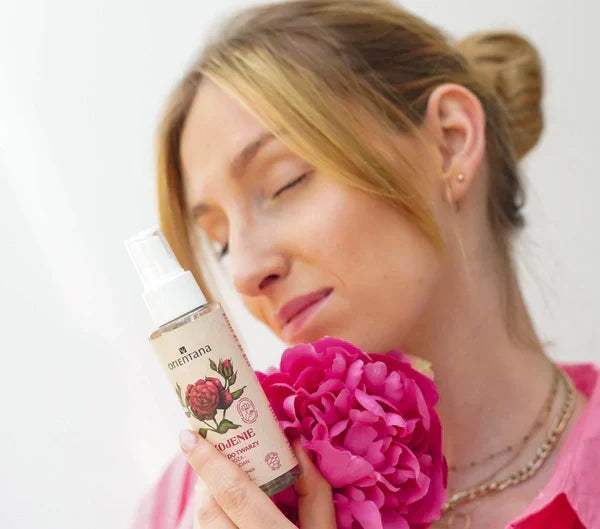
Daily facial care consists of several steps, which - although they may seem similar - perform completely different functions. Among the most frequently confused cosmetics are facial toner and micellar water. Although both appear in the skin care ritual, their role, composition, and method of action are different. What is micellar water and how does it work? Micellar water is a cleansing cosmetic whose main task is to remove makeup, impurities, and excess sebum from the skin's surface. It contains micelles – microscopic particles that bind fat and dirt, effectively dissolving colored cosmetics and impurities. However, it should be remembered that micellar water must be rinsed off. It cannot remain on the skin. When to use? At the beginning of your skincare routine, as the first step of makeup removal. Effect: The skin is cleansed, but may require restoring its natural pH and additional hydration. What is a facial toner? Toner is a skincare product used after cleansing the skin to restore its natural pH, moisturize, and prepare it for subsequent skincare steps. Unlike micellar water, it does not remove makeup, but acts as a bridge between cleansing and serum or cream. Natural toner – why is it worth it? Natural toners, such as Orientana Hydrating Toner Essence or Soothing Facial Toner Japanese Rose and Pandan, are distinguished by their high content of active plant ingredients. Thanks to this: They moisturize and soothe the skin - the plant extracts contained in them support regeneration and reduce the feeling of tightness. They strengthen the hydrolipid barrier - which is crucial for the skin to be resistant to dryness and irritation. They prepare the skin for further care - increasing the absorption of active ingredients from serums and creams. Orientana Moisturizing Toner Essence - a multifunctional cosmetic Combines toner and essence functions. It is based on date extract, gently exfoliating and water-binding gluconolactone, and rice proteins supporting skin regeneration. Ideal for daily use - even for sensitive skin - it provides deep hydration, soothing, and restoration of the hydrolipid barrier. Soothing toner Japanese Rose and Pandan – soothing and freshness Japanese Rose and Pandan Toner is a proposition for those seeking gentle but effective skin support. Japanese rose extract has moisturizing and antioxidant properties, while pandan provides a feeling of freshness and soothes irritation. Feature Micellar water Toner Main function Makeup and impurity removal pH restoration, hydration and skin preparation When to use First step of skincare After cleansing, before serum/cream Key ingredients Micelles, cleansing agents Plant extracts, humectants, antioxidants Effect after use Clean skin, ready for toning Hydrated, soothed skin, ready for skincare FAQ – questions and answers from you 1. What is the difference between a toner and micellar water?Micellar water removes makeup and impurities, while toner restores the skin's pH, moisturizes, and prepares it for further care. 2. Can facial toner replace micellar water?No. Toner does not remove makeup – its task is to care for the skin after cleansing. 3. Why choose a natural facial toner?Natural toners, such as the Hydrating Toner Essence and the Soothing Rose Toner, contain active plant extracts that soothe, moisturize, and support skin regeneration. 4. When is the best time to use facial toner?After thorough skin cleansing, and before applying serum or cream, to enhance the absorption of active ingredients. 5. Is Orientana Toner Essence suitable for sensitive skin?Yes. Thanks to its delicate formula with date extract and gluconolactone, this toner is ideal even for sensitive skin. If you want to take comprehensive care of your complexion, remember: micellar water cleanses, and toner cares. Natural toners, such as Orientana Essence Toner or Orientana Japanese Rose and Pandan Toner, provide the skin with hydration, soothing, and support in regeneration – this is a step not to be missed. Choose a toner tailored to your skin's needs, and you will notice that your skin becomes more radiant, soft, and full of glow.
Learn more
What is inulin and how does it work in cosmetics?
Inulin is an ingredient that has gained enormous recognition in the world of natural skincare in recent years. Although mainly associated with dietetics as a fiber supporting intestinal flora, it is increasingly appearing in cosmetic formulations – especially those that focus on a holistic approach to skin health. Why is inulin so popular in cosmetology? It is a natural prebiotic that supports the balance of the skin microbiome, has moisturizing properties, and at the same time soothes irritation and strengthens the hydrolipid barrier. In times when we increasingly value plant-derived ingredients that are safe for the skin and the environment, inulin perfectly fits the needs of conscious consumers. In this article, we will explain what inulin is, how it affects the skin, and why it's worth looking for it in cosmetics. What is inulin? Inulin is a natural polysaccharide from the fructan group, found in many plants, especially in chicory root, Jerusalem artichoke, artichoke, garlic, and onion. In botany, it serves as a storage material, while in cosmetics and dietetics, it is primarily known as a prebiotic – a substance supporting the growth of beneficial microorganisms. From a chemical point of view, inulin is a chain of fructose molecules terminated with glucose. It is a white, water-soluble powder that easily integrates into cosmetic formulas. Significantly, inulin is not chemically synthesized – it is obtained from plant raw materials, making it an ingredient consistent with the philosophy of clean beauty and eco-skincare. In the cosmetic industry, inulin performs several important functions: supports the development of a beneficial skin microbiome while limiting the growth of pathogenic bacteria. improves consistency and formula stability, has a conditioning effect on the skin, supports the skin's protective barrier, As a result, we increasingly find it in natural cosmetics, dermocosmetics, and products for sensitive, dry, atopic, or problematic skin. Inulin as a cosmetic ingredient Inulin is increasingly appearing on the list of ingredients (INCI) of consciously formulated cosmetics, especially natural, vegan, and those intended for sensitive skin. Its presence in products is not accidental – it is a multifunctional substance that combines caring, biotechnological, and sensory effects. Skin care properties of inulin The most important asset of inulin in cosmetics is its prebiotic role – it provides nourishment for good bacteria living on the skin's surface. By strengthening the microbiome, inulin helps maintain skin balance, supports its immunity, and counteracts dysbiosis (imbalances in bacterial flora), which can lead to irritation, dryness, or acne. Inulin also acts as: a humectant – binds water molecules, improving skin hydration, a skin and hair conditioner – smoothes, softens, and improves texture, a soothing substance – reduces feelings of tightness, burning, and dryness. Thanks to this, it is ideal for skin care after treatments, in dermatological therapies, and in cosmetics for dry, hypersensitive, and dehydrated skin. Natural origin and compliance with eco-trends Inulin aligns with current cosmetic trends, such as: clean beauty – a clean, safe formulation without unnecessary additives, skin microbiome-friendly – care that supports the skin's natural flora, less-is-more – minimalist formulas with high efficacy, sustainable beauty – ingredients sourced in an environmentally responsible manner. Due to its plant origin, inulin is fully acceptable in vegan and naturally certified cosmetics. How does inulin affect the skin? Inulin is not just a functional ingredient and a plant thickener – its action has been documented in scientific studies. In skin care, it exhibits prebiotic, soothing, moisturizing, and epidermal barrier-strengthening effects, making it a particularly valuable ingredient in cosmetics for sensitive, dry, and problematic skin. Prebiotic action of inulin Inulin does not act as a probiotic (it does not contain bacteria), but as a prebiotic – it provides nutrients for beneficial bacteria residing on the skin, such as Lactobacillus or Staphylococcus epidermidis. Their proper development contributes to: reduction of irritation, inhibition of pathogen growth, improvement of skin immunity. A 2018 study published in the "International Journal of Cosmetic Science" showed that after 14 days of using an emulsion with 2% inulin: the number of Staphylococcus epidermidis increased by 63%, the skin's pH level stabilized within 5.0–5.3, and itching and burning sensations were reduced in 72% of subjects with AD (Atopic Dermatitis). Source: P. Hachem et al., IJCS, 2018 Effect on the skin microbiome The balance of the skin microbiome is one of the key factors for healthy skin. Inulin supports its homeostasis, as confirmed, among others, in a study conducted by Evonik Industries, a manufacturer of cosmetic raw materials. In a study on 20 volunteers with acne, after 28 days of using a cream with 1.5% inulin: the number of Cutibacterium acnes bacteria (responsible for acne lesions) decreased by 38%, while beneficial bacteria Staphylococcus epidermidis increased by 49%. Source: Evonik R&D Dossier (2020), Moisturizing and soothing properties Inulin also acts as a natural humectant – it binds water in the epidermis, supporting long-lasting skin hydration. In combination with other sugars (e.g., glucose, fructose), it forms a thin film on the skin, protecting against moisture loss. An application study conducted by Givaudan (formerly Soliance) on the ingredient Inutec® (high-purity inulin) showed that: after just 1 application, skin hydration levels increased by an average of 23.5% (measured with a corneometer), after 7 days of use, hydration increased by 42%, 90% of participants experienced a reduction in feelings of tightness and irritation. Source: Givaudan Active Beauty – Technical Dossier Effect of action Result Source Increase in beneficial bacteria (S. epidermidis) +63% IJCS 2018 Decrease in pathogens (C. acnes) –38% Evonik R&D Increase in skin hydration after 7 days +42% Givaudan Reduction of irritation in people with AD 72% IJCS 2018 Inulin in Orientana's face wash gel In Orientana Date + Inulin + Green Tea Gel, inulin plays a key role as a soothing prebiotic that supports the skin already at the cleansing stage – precisely when it is most exposed to disturbances of the hydrolipid barrier and microbiome. Unlike many traditional cleansing gels, this product not only removes impurities but also actively strengthens the skin's natural defense mechanisms. How does inulin work in this gel? Strengthens the skin microbiome – acts as a natural food source for beneficial bacteria, thereby supporting the balance of bacterial flora. Minimizes irritation and dryness – during cleansing, the skin does not lose moisture or lipids, which is a common problem with traditional detergents. Supports a feeling of relief – according to the application study cited on the packaging, as many as 96% of subjects reported noticeable comfort and skin soothing after using the gel – which can be partly attributed to the presence of inulin. Maintains natural pH – which is crucial for maintaining skin immunity and reducing inflammation. Inulin in the INCI list of Orientana's face wash gel: Appears as: InulinIt is accompanied by fructose, which also has moisturizing properties, potentially enhancing inulin's effect as a humectant. Why is this important? Most cleansing gels rely solely on cleansing agents that can compromise the skin's protective barrier. The inclusion of inulin in the formula makes the product gentle yet effective – it cleanses and simultaneously cares for the skin. This is particularly important for: sensitive skin, skin prone to irritation, skin with symptoms of dryness, skin after dermatological treatments. For which skin types is inulin recommended? Inulin, as a mild prebiotic ingredient, has very broad applications in the care of various skin types – both healthy and those with a compromised protective barrier. Thanks to its biocompatibility and natural origin, it can be used even in formulas for the most demanding complexions, including products for children and skin after cosmetic treatments. Sensitive and reactive skin Inulin is an ingredient exceptionally well tolerated by hyperreactive skin. Thanks to its soothing and microbiome-rebuilding properties, inulin: reduces burning, itching, and tightness, strengthens the skin's natural immunity, helps reduce allergic reactions and hypersensitivity to external factors. In in vivo studies, cosmetics with inulin have been shown to soothe redness and irritation even in people with AD (atopic dermatitis) after just a few days of use. Dry and dehydrated skin Inulin acts as a natural humectant – it binds water in the stratum corneum, thereby: improving hydration levels, smoothing the skin's surface, contributing to the reduction of roughness and tightness. Importantly – inulin works synergistically with other sugars (e.g., fructose) and plant lipids, thereby supporting the reconstruction of the hydrolipid barrier, which is often weakened in people with dry skin. Oily and acne-prone skin While it may seem surprising, inulin is also effective in the care of oily and acne-prone skin. Why? It strengthens the skin's physiological flora, which naturally limits the proliferation of Cutibacterium acnes bacteria. It helps reduce inflammation and redness without irritating effects. It does not clog pores and has no comedogenic properties. Mature skin With age, the epidermal barrier and skin microbiome become less stable. Inulin supports: the balance of the skin's ecosystem, which becomes depleted with age, the maintenance of appropriate pH, essential for enzymatic epidermal renewal, smoothing and softness, which positively influences the perception of a younger-looking skin. Inulin is a universal ingredient, but above all, ideal for skin requiring soothing, regeneration, and restoration. It also works great as a preventive ingredient in daily care for normal skin, as it protects the microbiome from disturbances caused by stress, smog, detergents, or an excess of preservatives. Summary - why choose cosmetics with inulin? Inulin is not just a trendy cosmetic additive – it is an active ingredient with proven, multidimensional effects that supports skin health, balance, and resilience. Unlike many synthetic or aggressive ingredients, it acts gently but effectively, supporting the skin's natural protective mechanisms. Why is it worth it? Strengthens the skin microbiome – acts as a natural prebiotic, supporting beneficial bacteria and limiting the growth of pathogens. Rebuilds the protective barrier – supports the regeneration of damaged epidermis, soothes irritation, and reduces skin hypersensitivity. Moisturizes and smoothes – as a humectant, it binds water in the epidermis, improving its elasticity and softness. Supports all skin types – from dry and sensitive, through acne-prone, to mature and couperose skin. Trend-compliant – perfectly meets the expectations of conscious consumers: clean beauty, microbiome-friendly, vegan, sustainable. In cosmetics, such as Orientana's Soothing Face Wash Gel with date, inulin, and green tea, the presence of inulin makes the formula not only effective but also caring for delicate skin. This is an example of modern skincare, where cleansing is not just about removing impurities, but also the first step towards healthy, balanced skin.
Learn more