Soap nuts have gained immense popularity over the past few years among people seeking natural, gentle, and effective laundry solutions. This phenomenon is part of a broader trend in eco-friendly home and body care—a trend that also encompasses natural cosmetics, biodegradable active ingredients, and skin and hair care based on gentle plant-based surfactants.
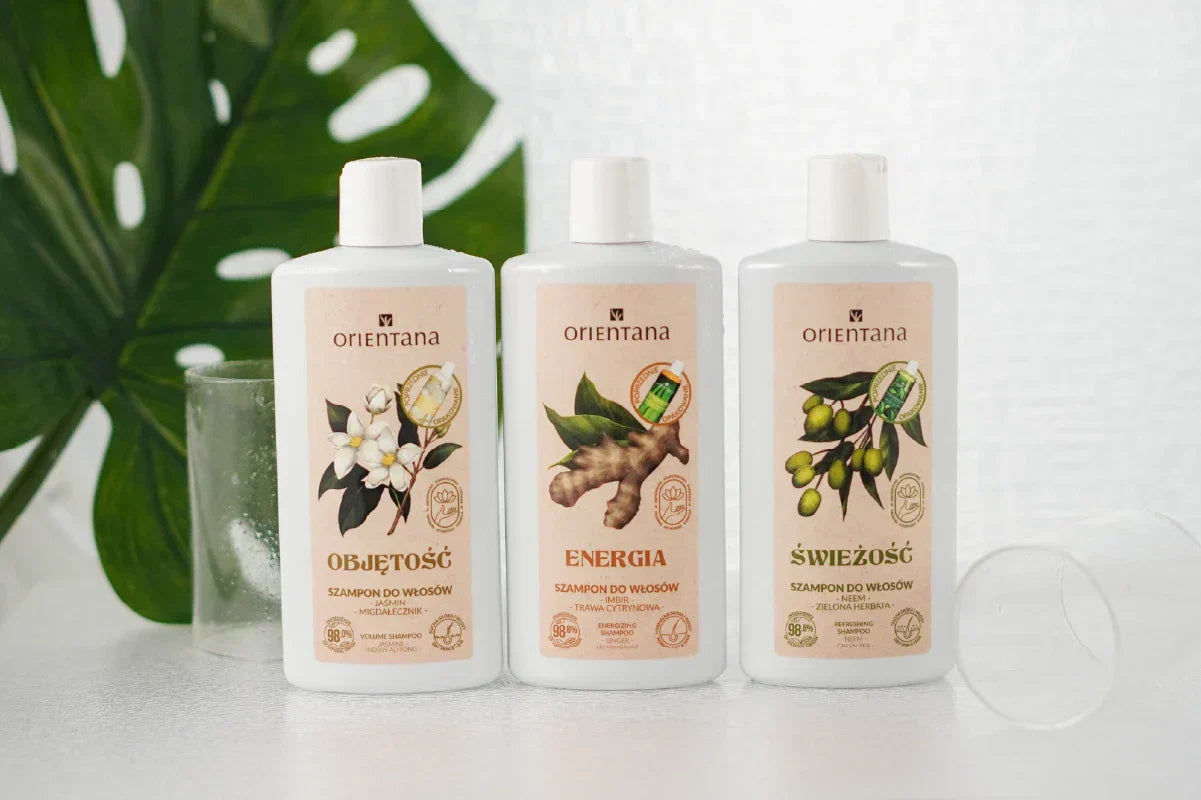
It's safe to say that soap nuts combine two values sought by today's consumers: ecology and effectiveness. On the one hand, they allow you to avoid irritating synthetic detergents, and on the other, they actually clean. They utilize the natural mechanism of action of saponins, which in fact works similarly to modern plant-based detergents used in natural cosmetics, such as Orientana Ginger, Indian Jasmine, and Orientana Neem shampoos .
In this article I will explain:
- what are soap nuts and where do they come from,
- how saponins work and whether their effectiveness has been confirmed,
- what are their advantages and disadvantages,
- how to best use them,
- are they suitable for allergy sufferers and children,
- and how this natural washing method combines with plant-based, Ayurvedic hair care.
What are soap nuts?
Soap nuts are the dried husks of the fruit of the Sapindus mukorossi tree, which grows primarily in India and Nepal. Despite their name, they are not edible nuts; they contain neither fat nor a kernel. They are just empty shells, but their uniqueness lies in their high content of saponins, natural cleansing substances.
The tree from which soap nuts come has a long history of use in Ayurvedic medicine. For hundreds of years, they were used not only for washing fabrics but also for washing the body, hair, and cleaning dishes. In India, these shells are known as "Reetha" or "Aritha." In Europe, their popularity began to grow around 2010, when the zero-waste trend began to dominate among younger consumers, and eco-friendly home remedies became a viable alternative to drugstore detergents.
In a world where more and more people suffer from allergies, rashes, and detergent irritations, or simply want to reduce the amount of chemicals in their homes, soap nuts seem like the perfect solution. But do they actually work?

How do saponins work? (science, mechanism, effectiveness)
The magic of soap nuts lies in their natural saponins, chemical compounds with surface-active properties. Saponins lower the surface tension of water, allowing it to better penetrate dirt and fabrics. This is precisely what surfactants do in modern cosmetics.
Their mechanism of action is as follows:
1. Reducing the surface tension of water - water becomes "softer", spreads better on fabrics.
2. Breaking down fat molecules - saponins act as emulsifiers, binding to fatty dirt.
3. Creation of micelles - microscopic balls that trap dirt inside.
4. Rinsing micelles - dirt is safely removed during rinsing.
This is the same mechanism used by, among others, mild plant surfactants such as:
- decyl glucoside,
- coco-glucoside,
- sodium cocoyl glutamate,
i.e. ingredients known, for example, from Orientana natural shampoos.
Scientific research on saponins confirms their properties:
- have cleaning properties,
- have antibacterial properties,
- have antifungal properties,
- may have a mild anti-inflammatory effect.
This makes saponins not only a detergent but also a skin-friendly substance, especially compared to SLS and highly foaming synthetic detergents. This is why soap nuts are recommended for atopic dermatitis, allergies, and young children.

Do Soap Nuts Really Clean? (An Honest Effectiveness Analysis)
This is one of the most common questions. You can find both enthusiastic and skeptical opinions online, so let's take an objective look at it.
YES - soap nuts do indeed wash, but their effectiveness:
- works best on lightly soiled fabrics,
- falls off on greasy stains,
- depends on the temperature (they work best from 40°C),
- is highly dependent on water hardness.
In practice, their action is most similar to that of very gentle detergents. They are brilliant for:
- everyday clothes,
- children's clothes,
- clothes for allergy sufferers,
- delicate fabrics,
- washing bed linen and towels,
- washing sports clothes (without aggressive perfumes).
At the same time, it must be honestly added:
Those accustomed to "perfumed," strong washes may be disappointed because soap nuts are fragrance-free. They don't stain laundry with synthetic fragrances, leave no aftertaste, and don't "mask" dirt. Their action is natural and gentle.
However, this is a huge advantage for people with sensitive skin, the lack of fragrances means no risk of allergies.

Why are soap nuts so popular? (market and social reasons)
- Zero waste and minimalism are trending. One bag of nuts replaces dozens of plastic bottles.
- Allergies and skin problems. More and more people are reacting to detergents. Soap nuts are practically hypoallergenic.
- Ecological and biodegradable. After use, the shells can be thrown away… in the compost.
- Economical. 1 kg of nuts is enough for up to 100–150 washes.
- Inspired by Asian culture
The growing interest in Ayurveda, natural skincare, and Asian ingredients is making people more willing to reach for traditional solutions—both in laundry and cosmetics. This is where Orientana cosmetics naturally transition to, also based on plant-based cleansing substances that respect the hydrolipid barrier.
Benefits of soap nuts - why do so many people choose them?
Soap nuts have a wide following, especially among those who care about their health, the environment, and home minimalism. Their benefits are both practical and ecological, and the growing zero-waste trend is causing more and more people to consciously choose natural alternatives to toxic detergents.
Below you will find a complete list of benefits, each explained in detail so that the user and search engine understand the full potential of soap nuts.
100% natural composition
Soap nuts are solely the dried shells of the fruit of Sapindus mukorossi.
They do not contain:
- phosphates,
- SLS,
- SLES,
- bleach,
- optical brighteners,
- synthetic perfumes,
- preservatives,
- microplastics.
This makes them one of the cleanest ecological detergents available on the market.
Hypoallergenic - ideal for sensitive skin, atopic dermatitis and babies
Soap nuts are extremely gentle on the skin because:
- do not contain irritating substances,
- they do not have fragrance compositions,
- do not leave a synthetic film on clothes,
- are completely natural and biodegradable.
Therefore, they are recommended for people with:
- atopic dermatitis (AD),
- psoriasis,
- eczema,
- contact allergies,
- reactive skin.
Parents very often choose soap nuts for washing baby clothes, reusable diapers and bedding.
Biodegradability and environmental friendliness
This is one of the most important arguments, especially for people following the zero waste philosophy.
Soap nuts:
- are 100% decomposable,
- they do not pollute soil or water,
- they do not generate plastic,
- they do not leave toxic residues in wastewater.
At a time when ocean pollution and microplastics have become a global problem, choosing soap nuts is the responsible thing to do.
Economical - one package lasts for several weeks
The efficiency of soap nuts is impressive - 1 kilogram is enough for about 100-150 washes.
It's much cheaper than:
- laundry capsules,
- premium powders,
- perfumed liquids,
- eco-drugstore products.
In practice, 4-6 half shells are used per wash, and the same set can be used several times (usually 3-4 washes).
The lack of intense scent is an advantage for sensitive people
Many detergents mask dirt with synthetic perfumes. Soap nuts do not. After washing:
- the clothes are neutral,
- they don't smell "chemically",
- are safe for allergy sufferers' skin.
This is an advantage, although for some users the neutral scent may be a disadvantage - more on that below.
Fabric safety
Saponins act gently:
- do not damage the fibers,
- do not wash out colors,
- do not create a coating on clothes,
- they do not cause stiffness of the material.
That's why they are perfect for washing:
- wool,
- flax,
- silk,
- viscose,
- organic cotton,
- sportswear.
Disadvantages of soap nuts - honestly and expertly
Every natural solution has its limitations. Soap nuts aren't ideal for every situation, so it's worth knowing their weaknesses.
They do not cope with greasy, heavy stains
Stains from:
- oil,
- makeup,
- butter,
- olive oil,
- chocolate,
- sauces
most often require additional stain remover.
They work best in warm water
At temperatures below 30°C, saponins are released less rapidly.
Therefore, the following are better for washing in cold water:
- Castile soap,
- soda,
- soapnut liquid (heated).
The lack of scent may be a disadvantage for people accustomed to "scented laundry"
Not everyone likes neutral scents.
Solution: a few drops of essential oil (e.g. lavender, jasmine) into the liquid compartment.
Efficiency depends on water hardness
They perform less well in very hard water.
Helps:
- vinegar,
- citric acid,
- half a teaspoon of baking soda.
We will not achieve a snow-white effect on white fabrics**
The absence of optical brighteners means that:
- shirts,
- linen,
- towels
may have a more natural shade of white, not "optical white".
However, this is a huge advantage for people with allergies, as optical brighteners are one of the most common allergens in detergents.
How to use soap nuts? Step-by-step instructions
Step 1: Measure out the appropriate amount of peels
For standard washing we use:
4-6 soap nut halves,
for very hard water: 6-8 halves.
Step 2: Place the shells in a cotton bag
The bag protects the shells from falling apart and being scattered throughout the drum.
Step 3: Place the bag directly into the drum next to the clothes
This is very important - soap nuts are activated by contact with water and the movement of the washing machine.
Step 4: Set the temperature above 40°C
At ideal temperatures (40-60°C) saponins are released best.
Step 5: After washing, remove the bag and dry the shells.
Nuts can be used multiple times, usually 3-4 washes.
When the shells become:
- soft,
- gray,
- matte,
this means that they have lost their properties.
Step 6: Throw the used shells into the compost
Natural, biodegradable waste.
Soap nuts, allergies and sensitive skin
This is one of the strongest points of soap nuts, they work gently, leaving no allergens on fabrics.
Why are they good for allergy sufferers?
- They have no fragrance compositions.
- They do not contain alcohol, preservatives or optical brighteners.
- They do not damage the skin's hydrolipid barrier.
- Their saponins are natural surfactants.
For these reasons, they are recommended:
- for babies,
- for people with atopic dermatitis,
- for people with psoriasis,
- for people with eczema,
- for people allergic to chemical detergents.
Other uses for soap nuts - not just for washing
Soap nuts are incredibly versatile. Thanks to their high saponin content, they can also be used for eco-friendly cleaning and body care.
Dishwashing liquid
Enough:
- 10 half shells,
- 500 ml of water,
- cooking 10 minutes.
After cooling, you get a natural dishwashing liquid.
Universal cleaning fluid
The combined soapnut infusion acts as a natural detergent:
- for countertops,
- bathrooms,
- kitchen,
- mirrors,
- tiles.
Washing floors
Add 100 ml of nut liquid to a bucket of water.
Effect: clean, degreased surfaces without chemicals.
Washing hair and scalp (Ayurvedic tradition)
In India, soap nuts have been used for hair care for hundreds of years.
Their delicate properties:
- degrease the scalp,
- have antifungal properties,
- reduce dandruff,
- cleanses hair without weighing it down.
Natural cleansing substances in cosmetics - how do they combine with the action of soap nuts?
Soap nuts have become popular not only because they're eco-friendly. Their success also stems from the fact that they perfectly fit the modern trend of gentle, plant-based cleansing—both at home and in skin and hair care .
The mechanism of action of saponins in soap nuts is very similar to that of mild plant surfactants used in natural cosmetics. Therefore, consumers who choose soap nuts for laundry often also choose cosmetics that follow the same principle: effective yet gentle, biodegradable, and based on plant extracts.
Orientana shampoos and the idea of gentle cleansing - Ginger, Indian Jasmine, Neem
All Orientana Ayurvedic shampoos are based on soap nuts - they cleanse without destroying the hydrolipid barrier.
They contain:
- plant extracts,
- mild surfactants,
- Ayurvedic active ingredients,
- They do not contain SLS, SLES and silicones.
This is why they perfectly fit the lifestyle of a person who also chooses natural detergents.
Orientana GINGER Shampoo - stimulating, plant-based cleansing
Orientana ginger shampoo is one of the products in which we used soap nuts, thanks to which it cleanses, but in a way that is gentle to the skin.
Effects on hair and scalp
- reduces oiliness,
- reduces dandruff,
- refreshes the scalp,
- leaves hair soft, light and fragrant.
Orientana INDIAN JASMINE Shampoo - smoothing and natural softness
This shampoo also contains soap nuts. It cleanses gently, respects the fiber structure, and doesn't dry out the scalp. It's perfect for fine hair.
Effects on hair and scalp
- lifts hair at the roots,
- softens hair
- reduces tangling,
- perfectly cleanses
Orientana NEEM Shampoo - natural action against oily hair
Neem is one of the most important ingredients in Ayurveda. It's called the "medicinal tree." This shampoo, based on soapnut extract, gently soothes the scalp.
The shampoo refreshes the hair, acts on the oily scalp and helps keep it balanced.
Effects on hair and scalp
- relieves dandruff,
- reduces oiliness,
- soothes inflammation,
- regulates the scalp.
Why do people who use soap nuts often also choose natural shampoos?
It's a logical, consistent choice. People who use soap nuts typically have similar needs:
- reduce chemical detergents in the environment,
- take care of the environment,
- protect sensitive skin,
- choose minimalism and clean composition,
- avoid allergenic fragrances.
Frequently asked questions about soap nuts
1. What are soap nuts?
These are the dried husks of Sapindus mukorossi fruit, which contain saponins - natural cleansing substances.
2. How do soap nuts work?
Thanks to saponins, they reduce the surface tension of water, dissolve dirt and grease, create micelles and rinse away dirt.
3. Do soap nuts really wash?
Yes. They work best on light to medium dirt and at temperatures above 40°C.
4. How many soap nuts should I use per wash?
Standardly 4-6 halves, and in hard water 6-8.
5. How long can you use the same shells?
Usually 3 to 4 washes until the husks are soft and pale.
6. Are soap nuts suitable for white laundry?
Yes, but they don't optically whiten. White fabrics will be naturally white, not "paper white."
7. Can you add fragrance to laundry with soap nuts?
Yes, preferably a few drops of essential oil in the liquid compartment.
8. Do soap nuts work in cold water?
Unfortunately, it's weak. Saponins are released minimally in cold water.
9. Are soap nuts safe for babies?
Yes, this is one of the best washing methods for newborns and allergy sufferers.
10. Do soap nuts cause allergies?
Rarely, people with extremely sensitive skin should do a contact test.
11. What do soap nuts smell like?
Neutral, slightly herbal. No odor after washing.
12. Can you wash wool with soap nuts?
Yes, it is one of the safest detergents for delicate fibers.
13. Do soap nuts damage the washing machine?
No. They are completely safe, do not foam excessively and do not create residue.
14. Are soap nuts organic?
Yes, they are 100% biodegradable and do not generate chemical waste.
15. What to do if the laundry is very dirty?
Add baking soda, Marseille soap or natural stain remover.
16. Do soap nuts work on greasy stains?
Poor, it is better to add a cleaning booster to the fat.
17. Can I use soap nuts in the dishwasher?
No - the dishwasher requires a different type of detergent.
18. Are soap nuts safe for septic tanks?
Yes, they do not disturb the septic tank microbiome.
19. Can I make laundry detergent from soap nuts?
Yes, just boil the peels in water and strain.
20. How to store soap nuts?
In a dry place, preferably in a cotton bag or cardboard box.
Soap Nuts and Natural Cleansing as a Lifestyle
Soap nuts aren't just a fashion trend. They're a conscious lifestyle choice. They enable eco-friendly laundry, don't irritate skin, don't pollute the environment, and are incredibly efficient. Their secret? Saponins, natural compounds with cleansing properties.
The mechanism of action of soap nuts perfectly aligns with the philosophy of modern, conscious skin and hair care. This is where Orientana comes in. Our Ginger, Indian Jasmine, and Neem shampoos are based on soap nut saponins.
For someone who chooses natural detergents, switching to natural shampoos is the most logical and consistent decision. It's the same philosophy: fewer chemicals, more plant power, and greater concern for health and the environment.