Working with skin - whether in a salon or when creating cosmetic formulas - you very quickly begin to see a pattern. There are faces that age "typically," slowly, harmoniously. And there are those that look tired of life much sooner than their age would suggest.
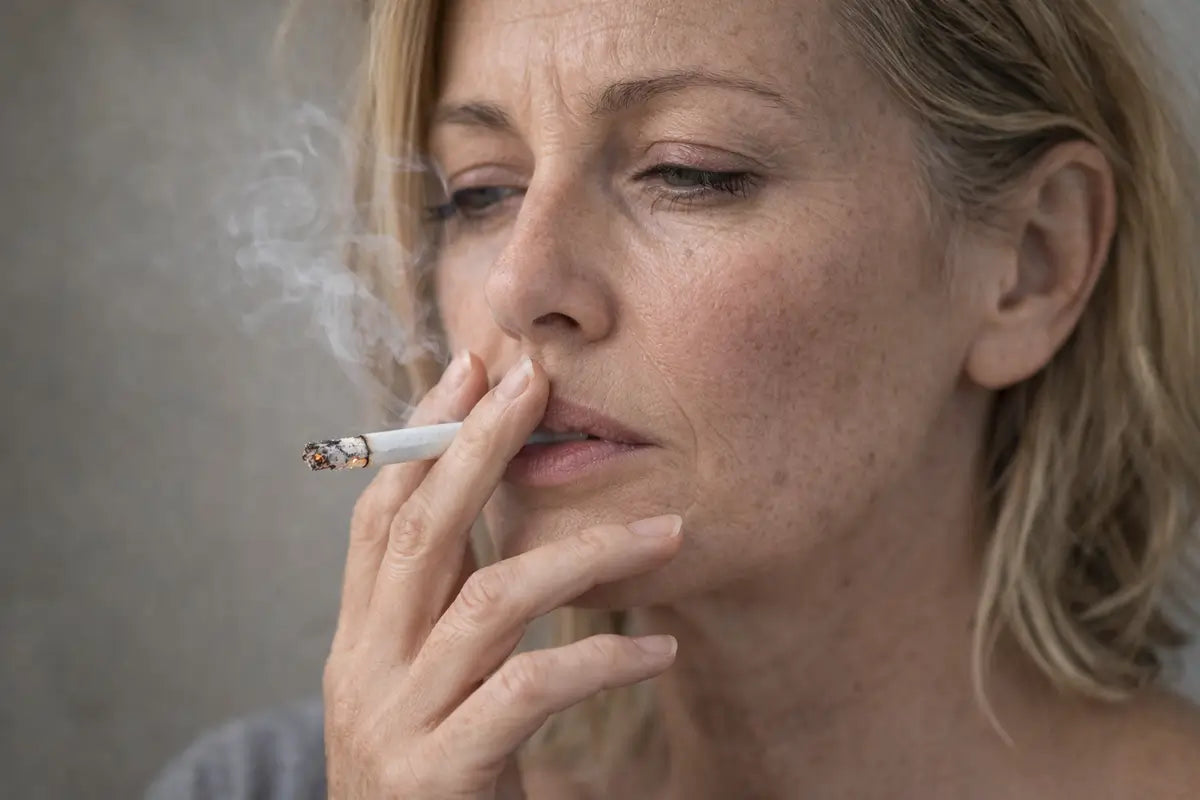
Grayness, lack of radiance, thin skin structure, characteristic wrinkles around the mouth - this is the image that in cosmetology we refer to as smoker's skin.
And importantly: this does not only apply to people who smoke cigarettes. I see this type of skin more and more often today also in people living in large cities, exposed to smog, oxidative stress, and chronic fatigue.
Good news?
This is one of those problems that can be genuinely influenced - if you understand the mechanisms behind its formation.
What is smoker's skin?
Smoker's skin is a skin condition resulting from chronic oxidative stress, tissue hypoxia, and impaired microcirculation, most often caused by exposure to tobacco smoke.
In practice, this means one thing:
the skin loses its ability to regenerate and begins to age faster than it should.
What does smoker's skin look like? - symptoms I see most often
This type of skin has a very characteristic "visual language." Even without a history, I can often recognize that the skin has been exposed to tobacco smoke for a long time.
The most common symptoms are:
- gray, sallow complexion
- lack of natural glow
- decreased elasticity
- thin, "parchment-like" texture
- visible wrinkles around the mouth (so-called smoker's lines)
- enlarged pores and uneven texture
- dryness, even though the skin may produce sebum
What is most striking is not a single symptom - but the overall impression of tired, "withdrawn" skin.
Why does smoking damage the skin so severely?
There isn't one single mechanism here. It's a complex process that operates on several levels simultaneously.
1. Vasoconstriction
Nicotine causes blood vessels to constrict, limiting the supply of oxygen and nutrients to the skin.
The effect?
The skin literally "starves."
2. Tissue hypoxia
Carbon monoxide in tobacco smoke binds to hemoglobin more strongly than oxygen.
This means that skin cells receive less oxygen - and without it, there is no regeneration.
3. Free radicals and oxidative stress
Tobacco smoke contains a huge amount of reactive oxygen species (ROS).
These:
- damage cell DNA
- destroy lipids in the skin barrier
- degrade collagen and elastin
Studies show that smoking accelerates collagen breakdown by activating metalloproteinases (MMPs).
You can learn more about free radicals in the post: Free radicals - how do they affect the skin and how to protect against them?
4. Decrease in vitamin C levels
Smokers have significantly lower levels of vitamin C - crucial for collagen synthesis.
It's like building a house without cement.
5. Fibroblast damage
Fibroblasts (cells that produce collagen) lose their ability to function.
And this means one thing:
the skin stops renewing itself.
Oxidative stress - the main culprit
If I had to point to one key mechanism, it would be oxidative stress.
This is a state where the amount of free radicals exceeds the body's defense capabilities.
In the skin, this means:
- faster aging
- loss of firmness
- worsening of complexion
- damage to the hydrolipid barrier
Importantly - the effect accumulates.
Smoking + UV + smog = exponentially accelerated aging.
Learn more from the post Oxidative stress - what it is, how it affects the skin and our body?
Smoker's skin vs. dehydrated skin - how to distinguish them?
This is a common mistake - many people think they only have dehydrated skin.
The difference is subtle, but crucial.
Dehydrated skin:
- is tight
- often looks tired
- responds well to hydration
Smoker's skin:
- has a gray complexion
- is less elastic
- responds less well to standard care
- has deeper structural damage
In practice, they often occur together.
Can smoker's skin be regenerated?
Yes, but to be honest:
not everything can be reversed 100%.
What can be improved:
- complexion
- hydration
- regeneration level
- partially firmness
What is more difficult:
- deep wrinkles
- loss of volume
I always see the biggest change within the first 3 months of well-managed care.
How to care for smoker's skin - a cosmetological approach
Random skincare doesn't work here. A plan is needed.
Cleansing - but without aggression
Smoker's skin already has a damaged barrier.
Therefore:
- we avoid strong detergents
- we choose gentle formulas
- we support the microbiome
Gentle but effective cleansing is fundamental.
Antioxidation - an absolute must-have
This is the most important step.
Without antioxidants, you won't stop the aging process.
Key ingredients:
- vitamin C
- niacinamide
- adaptogens
In practice, this is the stage that "brings skin back to life."
Hydration and barrier reconstruction
Smoker's skin has a disturbed hydrolipid barrier.
Therefore, it needs:
- humectants (e.g., hyaluronic acid, gluconolactone)
- emollients
- lipids
Without this, the skin will not regenerate.
Night regeneration
Night is when the skin works most intensively.
Here it is worth introducing:
-
renewal-stimulating ingredients
-
gentle exfoliation
-
rebuilding formulas
Best active ingredients for smoker's skin
In my experience, the best performers are:
Vitamin C
Brightens, neutralizes free radicals, supports collagen.
Niacinamide
Improves the skin barrier and reduces grayness.
Adaptogens (reishi, ashwagandha)
This is a very underrated group of ingredients.
They have anti-inflammatory and antioxidant properties, helping the skin to "return to balance."
PHA acids
Gently exfoliate without disrupting the barrier.
Peptides
Support regeneration and improve firmness.
Lifestyle – without it, there are no results
Here, it must be said directly:
the best cosmetic will not neutralize continuous oxidative stress.
Key elements:
- reducing smoking
- diet rich in antioxidants
- sleep
- hydration
Skin is a system - it does not function in isolation.
What cosmetics to choose for smoker's skin?
Look for products that:
- have antioxidant properties
- support regeneration
- improve complexion

In practice, formulas work great:
- with adaptogens (e.g., reishi, ashwagandha)
- with niacinamide
- with gentle acids
Well-chosen skincare can truly change the appearance of the skin - not superficially, but structurally.

What cosmetics to choose for smoker's skin? Cosmetologist's tips
Caring for smoker's skin is not about "one cream."
It must be a system that works on several levels simultaneously: antioxidation, regeneration, and barrier reconstruction.
In my experience, formulas based on adaptogens and ingredients that support the skin's microbiome work best.
Cleansing - the first step to regeneration
Choose gentle yet effective cleansing products that do not disrupt the hydrolipid barrier.
For a person who smokes cigarettes, the best solution is two-step facial cleansing.
You can read more here Two-step facial cleansing - Complete guide 2026.
➡️ Gentle facial cleansing gel
Cleanses the skin without feeling tight, preparing it for further care and supporting microbiome balance.

Toning and moisturizing - restoring balance
Smoker's skin very often has disturbed pH and problems maintaining hydration.
➡️ Revitalizing toning lotion (toner-essence)
Combines the function of toner and essence - intensely moisturizes, supports the skin barrier, and improves its ability to regenerate.
Antioxidation – key step
This is the most important moment in caring for smoker's skin.
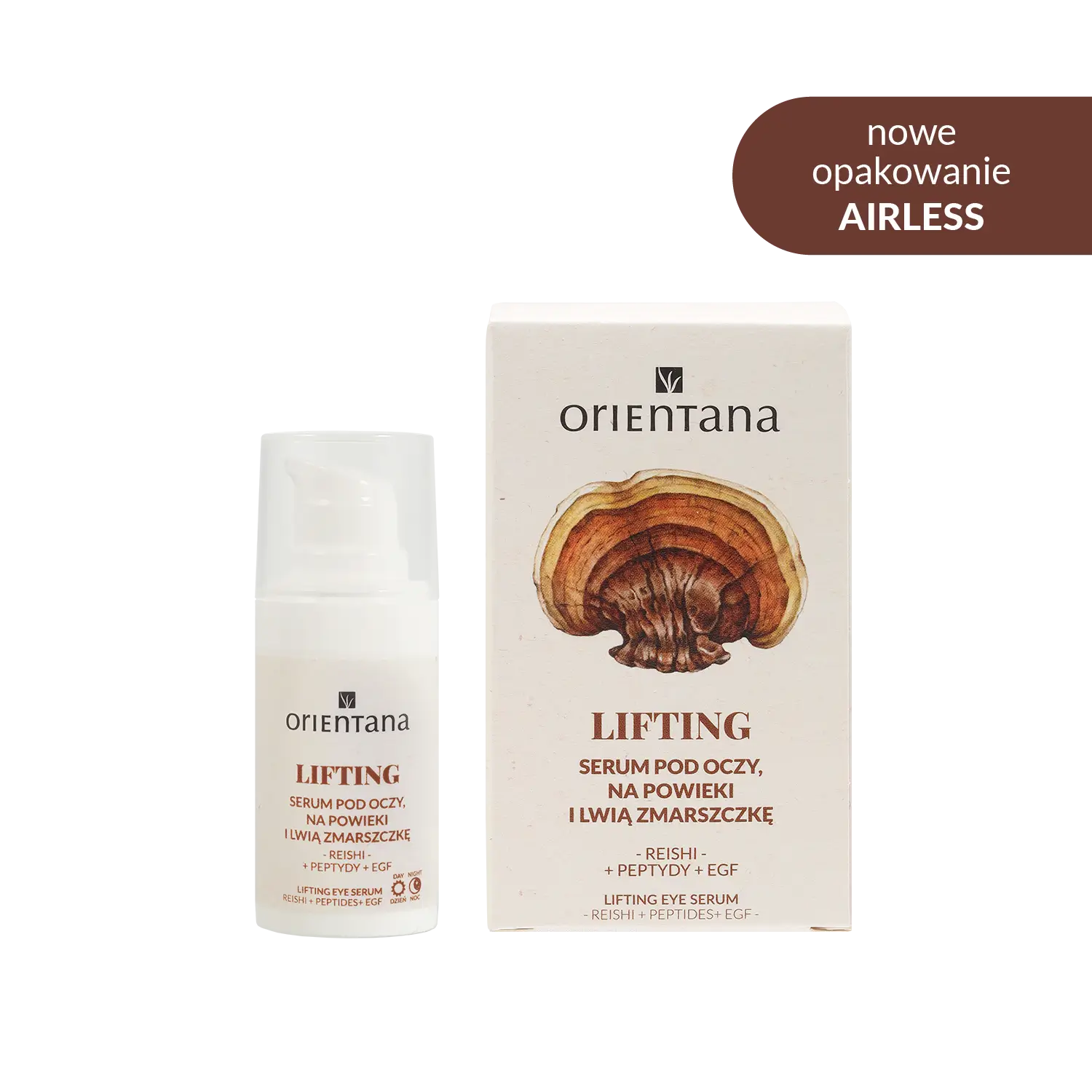
➡️ Serum with adaptogens (e.g., ashwagandha, reishi)
Neutralizes free radicals, reduces signs of skin fatigue, and restores a healthy appearance.

Adaptogens act as a "protective shield" for skin overloaded with oxidative stress.
Regeneration and rebuilding
The skin needs support in rebuilding its structure.
➡️ Cosmetics with niacinamide and moisturizing ingredients
Strengthen the hydrolipid barrier, improve complexion, and help the skin regain balance.
The effect you can expect
With regular use of well-chosen skincare:
- skin regains radiance
- complexion becomes more even
- hydration and elasticity improve
- the visibility of signs of fatigue decreases
This is not a quick "one-day" change - but one of the most spectacular transformations I observe in cosmetology.
FAQ - frequently asked questions
What does smoker's skin look like?
It is gray, dull, less firm, and ages faster.
Does skin regenerate after quitting smoking?
Yes, especially complexion and hydration levels improve relatively quickly.
How quickly are results visible?
First changes even after a few weeks, fuller regeneration after several months.
Does vitamin C help?
Yes, it is one of the key ingredients.
Do e-cigarettes also affect the skin?
Yes - they still generate oxidative stress.
What does smoker's skin look like?
Smoker's skin has a gray, sallow complexion, is dull, thinner, less elastic, and ages faster.
Why is smoker's skin gray?
The gray complexion results from tissue hypoxia and impaired microcirculation caused by nicotine.
Does smoker's skin age faster?
Yes, because free radicals destroy collagen and elastin, accelerating the aging process.
Does skin regenerate after quitting smoking?
Yes, especially complexion and hydration improve, though deep wrinkles may remain.
How long does skin regenerate after smoking?
First effects are visible after a few weeks, fuller improvement can take several months.
Can the effects of smoking on the skin be completely reversed?
Not entirely, but its appearance and condition can be significantly improved.
What damages smoker's skin the most?
Oxidative stress, hypoxia, and collagen degradation.
Do e-cigarettes also affect the skin?
Yes, they also generate oxidative stress and accelerate aging.
Is smoker's skin always dry?
No, it can be simultaneously dry and produce excess sebum.
What wrinkles are typical for a smoker?
Vertical wrinkles around the mouth and deepened nasolabial folds.
How to improve smoker's skin?
The most important is antioxidant care, hydration, and skin barrier regeneration.
What ingredients help smoker's skin?
Vitamin C, niacinamide, adaptogens, peptides, and PHA acids.
Does vitamin C work on smoker's skin?
Yes, it brightens the skin, supports collagen synthesis, and neutralizes free radicals.
Is niacinamide good for smoker's skin?
Yes, it strengthens the hydrolipid barrier and improves skin tone.
Do adaptogens help smoker's skin?
Yes, they have anti-inflammatory and antioxidant effects, supporting skin regeneration.
Are acids safe for smoker's skin?
Yes, but it's best to choose gentle acids, e.g., PHA.
Does exfoliation help smoker's skin?
Yes, it removes dead skin cells and improves complexion.
Is retinol indicated for smoker's skin?
Yes, but it's worth choosing milder forms, especially for sensitive skin.
Does smoker's skin need hydration?
Yes, intense - it's one of the key elements of care.
Can the radiance of smoker's skin be restored?
Yes, thanks to antioxidants and regenerating care.
Does diet affect smoker's skin?
Yes, a diet rich in antioxidants supports skin regeneration.
What vitamins are important for smoker's skin?
Vitamin C, E, and B vitamins.
Does drinking water improve the condition of smoker's skin?
Yes, it supports hydration and regenerative processes.
Does stress affect smoker's skin?
Yes, it increases oxidative stress and worsens skin condition.
Does smog act similarly to smoking?
Yes, it also generates free radicals and accelerates skin aging.
Is SPF important for smoker's skin?
Yes, UV radiation further intensifies skin damage.
Can you have smoker's skin without smoking?
Yes, e.g., due to smog, stress, and lifestyle.
Is smoker's skin thin?
Yes, it often loses thickness and elasticity.
Does smoker's skin wrinkle faster?
Yes, due to collagen degradation.
Can smoker's skin be sensitive?
Yes, the skin barrier is weakened.
How to care for smoker's skin daily?
Use gentle cleansing, antioxidants, hydration, and regeneration.
What are the best cosmetics for smoker's skin?
Antioxidant, regenerating, and skin barrier-strengthening.
Is toner important for smoker's skin?
Yes, it helps restore pH and supports hydration.
Is serum necessary?
Yes, it is the most concentrated stage of care.
Is cream enough for smoker's skin?
No, comprehensive care is needed.
Does smoker's skin need cleansing in the morning?
Yes, but gently.
Does smoker's skin need night care?
Yes, it's a key moment for regeneration.
Do natural cosmetics work on smoker's skin?
Yes, especially if they contain active ingredients like adaptogens.
Can smoker's skin look healthy?
Yes, with proper care and lifestyle.
Is it worth starting care even after years of smoking?
Absolutely - skin has the ability to regenerate throughout life.
Summary
Smoker's skin is not just the result of smoking - it's a signal that the skin is overloaded with oxidative stress and has stopped regenerating properly.
But it's also one of those conditions that we can genuinely influence.
If you choose the right skincare - based on antioxidation, regeneration, and barrier reconstruction - your skin can regain:
- radiance
- elasticity
- healthy complexion
And that's the moment I like most in cosmetology - when the skin "comes back to life."