Retinol has been one of the most valued ingredients in anti-aging cosmetology for years. Dermatologists and cosmetologists refer to it as the "gold standard" of anti-aging, as its effects are confirmed by numerous scientific studies. It supports cell renewal, stimulates collagen production, reduces discoloration, and smooths wrinkles.
However, this effectiveness has another side to the coin. Many people experience typical side effects of retinol: irritation, dryness, flaking, or redness. Therefore, there is increasing talk of safe alternatives that offer similar results without the risk of unwanted reactions. One of them is Retinol H10 Orientana, and the other is Phytoretinol, which is plant-derived retinol obtained from mastic.
What exactly is retinol and how does it work?
Retinol is a derivative of vitamin A, a key ingredient for skin health. In the body, it converts into retinoic acid, which regulates the cell renewal cycle, influences the synthesis of collagen, elastin, and hyaluronic acid, and brightens discolorations.
In cosmetics, it comes in various forms: from delicate retinol esters to potent retinoids, which require conversion in the skin. The effects are spectacular, but often come at the cost of a so-called adaptation phase, during which the skin reacts with redness, tightness, and flaking.
Retinol side effects - causes and symptoms
Despite its immense benefits, retinol is an ingredient that requires caution. Too high a concentration, too frequent application, or lack of proper hydration can lead to severe irritation.
The most common side effects of retinol:
- dryness and flaking of the skin,
- redness and burning sensation,
- irritation around the eyes and mouth,
- sun hypersensitivity,
and in some cases, a phenomenon known as retinol purge, which is an outbreak of small pimples in the initial phase of use.
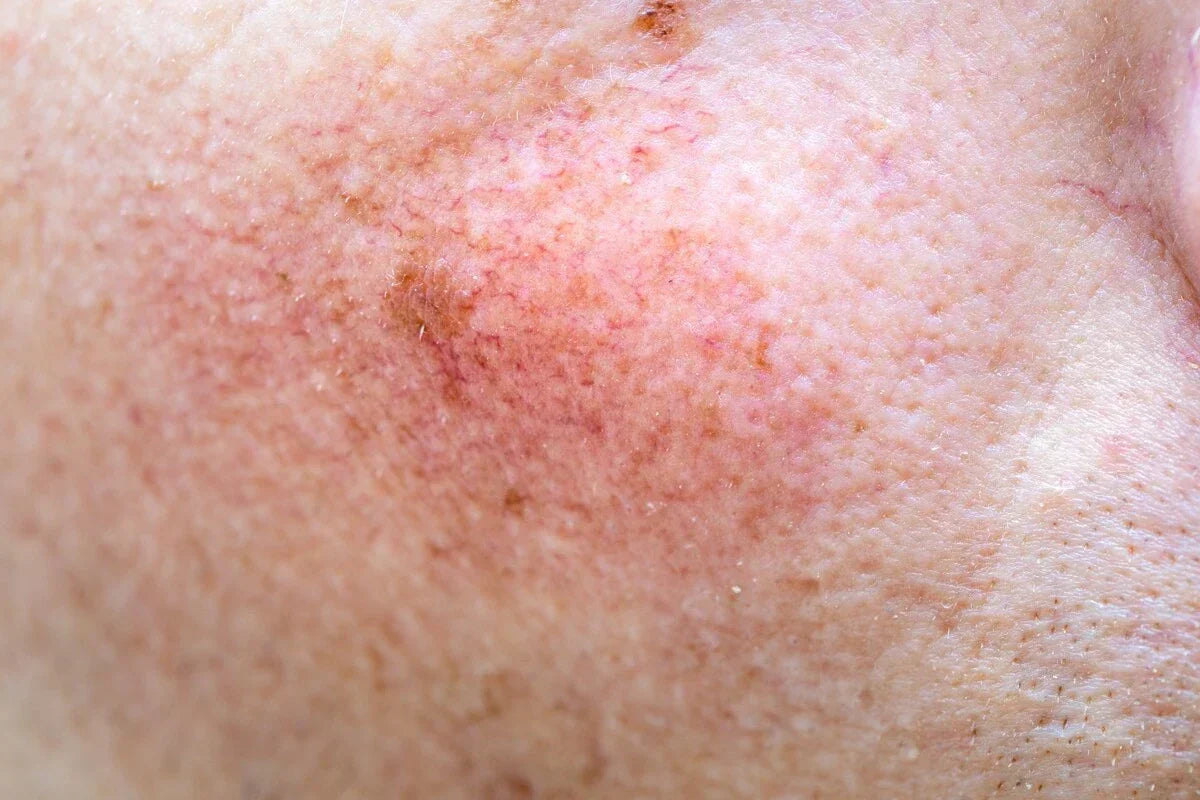
These reactions are not dangerous, but they can discourage further treatment. Importantly, for individuals with thin, couperose, or reactive skin, classic retinol may be too intense.
New European Union regulations on retinol (2024/2025)
In 2024, the European Union updated its list of restricted substances in cosmetics, including retinol and its derivatives (retinyl palmitate, retinyl acetate). The changes came into force under Commission Regulation (EU) 2024/996, and manufacturers must adapt cosmetic formulations by 2025.
New retinol concentration limits:
- up to 0.3% retinol in products for the face, neck, and hands,
- up to 0.05% in body products.
The aim of the regulation is to limit the accumulation of vitamin A in the body, as it can also be supplied through diet and supplements. The European Commission recognized that excessive doses – though rare – could potentially affect long-term health.
This means that cosmetic brands must control the content of retinoids even more precisely and choose milder derivatives that maintain effectiveness without the risk of toxicity. This is precisely the direction Orientana has taken, introducing Retinol H10 and Phytoretinol as natural and regulation-compliant alternatives.
How to avoid retinol side effects?
Many side effects can be minimized with conscious skincare and gradual introduction of products.
1. Introduce retinol in stages
Initially, use it 1–2 times a week, then increase frequency as your skin adapts.
2. Apply to dry skin
Moist skin increases the penetration of active ingredients, which can intensify irritation.
3. Use the "sandwich" method
First, apply a light moisturizer, then retinol, and finally, a nourishing cream again – this creates a protective barrier.
4. Always use SPF 30+ filters
Retinol increases sun sensitivity, so sun protection is mandatory even in winter.
5. Do not combine with AHA/BHA acids and strong vitamin C
Such combinations can exacerbate irritation. Instead, it is worth combining retinol with niacinamide, ceramides, and peptides.
Safe alternatives: Retinol H10 and Orientana Plant Retinol

Retinol H10 – technology without irritation
Retinol H10 is a modern, hydrogenated form of retinol (Hydrogenated Retinol; INCI: hydrogenated retinol), a vitamin A derivative developed for gentle yet effective anti-aging care. It is characterized by very high stability. It is resistant to temperature, light, and oxidation, which minimizes the risk of irritation and photoactive reactions, even when used in summer.
Why is Retinol H10 unique?
- does not cause flaking and redness,
- supports skin cell renewal,
- reduces wrinkles and improves firmness,
- has antioxidant properties, protecting against oxidative stress,
- compliant with new EU regulations – safe concentration and tested formula.
This cream is an ideal choice for people who were previously afraid of retinol or had negative experiences with its effects. It can be used even by people with sensitive or couperose skin.
Orientana Phytoretinol - NovoRetin
NovoRetin is an innovative active ingredient of plant origin, a natural alternative to retinol, developed based on mastic resin (Pistacia lentiscus). Its uniqueness lies in the fact that it is not a retinoid, but it exhibits retinol-like effects by increasing the amount of naturally occurring retinoic acid in the skin. It inhibits the CYP26 enzyme responsible for its degradation.

Advantages of Phytoretinol:
- stimulates collagen production,
- improves skin elasticity and firmness,
- reduces discoloration,
- regulates sebum production, reducing shine and the number of blackheads,
- safe for pregnant and breastfeeding women.
Creams with phytoretinol can be used all year round, including summer, without the risk of photosensitivity. This is a solution for those who want rejuvenating and smoothing effects without a recovery period. They can also be used during pregnancy and breastfeeding.
Retinol and complementary care
To reduce retinol side effects, it is worth combining it with regenerating and soothing cosmetics. Products rich in:
- niacinamide - strengthens the hydrolipid barrier,
- ceramides - rebuild the skin's protective layer,
- hyaluronic acid - provides intense hydration,
- adaptogens (e.g., Reishi, Ashwagandha) - reduce oxidative stress.
It is therefore worth reaching for complementary products from Orientana's offer, which naturally support skin repair processes during retinol treatment.
Frequently asked questions about retinol and its side effects
Can retinol be used in summer?
Yes, but only at night and with daily SPF 30–50. An alternative is Phytoretinol, which can be used all year round.
Does everyone experience irritation after retinol?
No. Much depends on the form. Retinol H10 has a low risk of irritation, and Phytoretinol practically does not cause any.
Can retinol be used during pregnancy?
Classic retinol is not recommended during pregnancy. A safe equivalent is Phytoretinol (bakuchiol).
How long does skin adaptation take?
Usually 3–6 weeks. After this time, the skin gets used to it, and the side effects subside.
Do the new EU regulations mean that retinol is dangerous?
No – the regulations are preventive. Their aim is to limit the excessive supply of vitamin A from various sources, not to ban its use.
Can I combine retinol with niacinamide?
Yes, this is one of the best combinations – niacinamide soothes potential irritations and strengthens the skin barrier.
What to do if the skin peels after retinol?
Take a break, apply a regenerating cream, and return to using it every 2–3 days.
Does Phytoretinol work the same as retinol?
Studies show that bakuchiol activates the same genes responsible for cell renewal and collagen synthesis, thus giving similar effects.
Can retinol be used with acids?
Not at the same time – it is best to separate them into different days to avoid irritation.
What are the long-term benefits of using retinol?
Wrinkle smoothing, improved skin density, reduction of discoloration, and evening of skin tone – effects confirmed by clinical studies.
Summary
Retinol is an ingredient that truly works – but it requires knowledge and moderation. However, its side effects do not have to be an obstacle if we reach for modern forms and gentle alternatives.
Orientana Retinol H10 combines the power of retinol with ease of use even for sensitive skin, while Phytoretinol (Bakuchiol) provides anti-wrinkle action without the risk of irritation and photosensitivity. Both products are compliant with new EU regulations, making them a safe and modern choice for all skin types.
Discover safe forms of retinol with Orientana
👉 Retinol H10 Serum – efficacy without irritation, compliant with EU regulations
👉 Eye Cream with Phytoretinol - a natural alternative for sensitive and mature skin