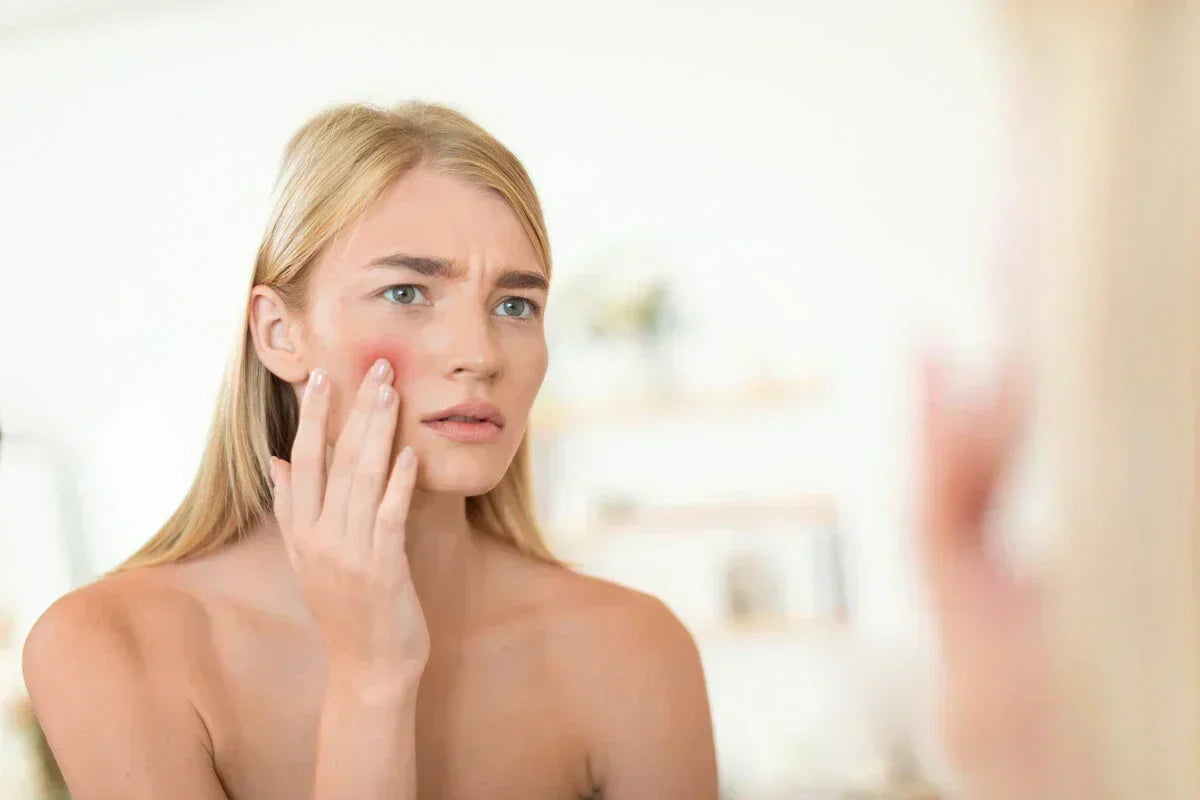
Red spots on the face are one of the most common skin problems reported in cosmetology clinics. They can be a symptom of irritation, vascular hyperreactivity, allergies, or inflammation related to the hydrolipid barrier. Many patients look for quick solutions, but it is regular care that brings lasting effects.
In this article, as a cosmetologist, I explain what red spots on the face mean, how to recognize them, and how to soothe the skin with Orientana Ashwagandha + CICA + Niacinamide Serum Ampoule and Reishi creams, which combine nature with scientific precision.
Table of Contents
- Why do red spots appear on the face?
- How to distinguish between types of erythema and irritation?
- The influence of the hydrolipid barrier on skin condition
- Common mistakes in the care of red skin
- Ashwagandha + CICA + Niacinamide – a combination of soothing ingredients
- Smoothing and soothing serum with mucin
- Reishi – the mushroom of longevity for red skin
- Natural remedies for red spots – home and professional
- Step by step: Orientana skincare routine for red spots
- Frequently Asked Questions (FAQ)

Why do red spots appear on the face?
Red spots can have various causes – from allergic to vascular. The most common causes include:
- hyperreactivity of blood vessels (telangiectasias, erythema),
- damage to the hydrolipid barrier due to improper care,
- reactions to external factors – wind, temperature changes, sun,
- cosmetic intolerances or contact allergies,
- oxidative stress and skin inflammation.
From a scientific perspective, the key factor is neurogenic – the nervous system's reaction to stress, which increases the release of neuropeptides causing redness. Here, Ashwagandha, an adaptogen that reduces skin reactivity, comes to the rescue.

How to distinguish between types of erythema and irritation
Not all redness is the same:
- Persistent erythema – permanent dilation of vessels; often associated with persistent hyperreactivity (rosacea).
- Flushing erythema – transient redness after heat or alcohol.
- Red spots after cosmetics – reaction to irritating substances.
- Irritation after treatments – after acids, lasers, or retinol.
Proper diagnosis allows for the selection of an appropriate skincare strategy.
The influence of the hydrolipid barrier on skin condition
The hydrolipid barrier is a natural protective layer composed of lipids and moisturizers. Its damage is the most common cause of redness. It manifests as a feeling of tightness, burning, and flaking.
Barrier reconstruction is a priority in the care of red skin – that is why Orientana combines niacinamide, CICA extract, and phytoceramides in formulas that restore microbiome balance.
Common mistakes in the care of reddened skin
- Using overly aggressive gels or peels.
- Lack of UV protection.
- Using alcohol in cosmetics.
- Applying too many active substances at once.
- Lack of moisturizing after cleansing.
Ashwagandha + CICA + Niacinamide – a combination of ingredients with soothing and skin-strengthening effects
This is one of Orientana's most advanced serums, a synthesis of tradition and biotechnology.
Ashwagandha (Withania somnifera) – an adaptogen that lowers cortisol levels, reduces reactivity and erythema.
CICA (Centella asiatica) – stimulates fibroblast regeneration and improves microcirculation.
Niacinamide (5%) – strengthens the barrier, brightens spots, and evens out skin tone.
Clinical application tests confirm that after 5 weeks of regular use, 92% of subjects observed a reduction in redness, and 96% a reduction in irritation.
Smoothing and soothing serum with mucin
This serum stands out with its soothing and regenerating formula, ideal for skin prone to redness or irritation. Thanks to carefully selected active ingredients, it moisturizes, strengthens the skin barrier, and supports regeneration processes.
Phytomucine from aloe - is a plant-based, biotechnological equivalent of snail mucus, obtained from fermented aloe. It provides intense moisturizing and soothing, supports epidermis regeneration, strengthens the skin's hydrolipid barrier, and soothes irritations. As a result, the skin becomes soft, calm, and less reactive.
Lactobionic acid - is a gentle PHA acid that helps smooth the skin, improve its structure and elasticity. It has soothing properties and supports the skin's protective barrier, which helps reduce redness and the feeling of tightness/pulling, often accompanying the problem of red spots.
Hyaluronic acid (in various molecular forms) - is responsible for deep and multi-level skin hydration. Thanks to it, the skin regains elasticity, firmness, and smoothness; minor irregularities and roughness are smoothed out, and the skin becomes soft and radiant, which often helps when red spots are more visible on dry, dehydrated areas.
melisa.pl
Regular use - combined with a gentle and "skin-friendly" composition, promotes the equalization of skin structure, its elasticity, and overall calming of the complexion, which can contribute to reducing the intensity and visibility of red spots.

Reishi – the mushroom of longevity for irritated skin
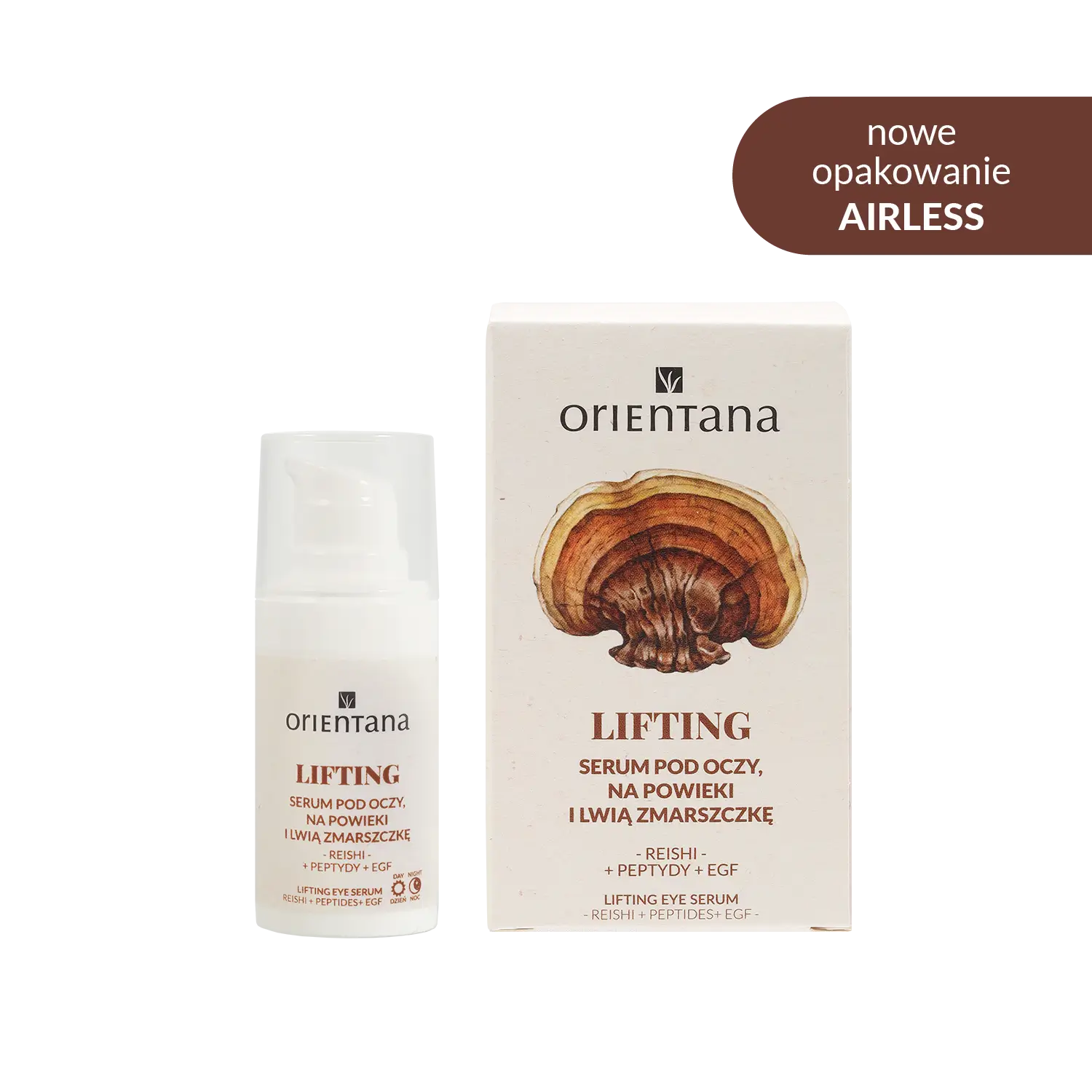
Ganoderma lucidum, or Reishi, is a natural treasure of Asian medicine. It contains beta-glucans, triterpenes, and polysaccharides with antioxidant and anti-inflammatory effects. In Orientana cosmetics, Reishi appeared in the day and night cream line, which acts as a compress for irritated skin.
The effect is a clear calming of redness and greater resistance to external factors.
Natural remedies for red spots
In addition to daily care, it is worth:
- avoiding sudden temperature changes,
- using SPF 50 filter all year round,
- drinking ashwagandha or licorice infusions,
- performing a gentle massage with a cooling roll-on.
Step by step: Orientana routine for red spots
Cleansing: Soothing Face Wash Gel Date + Inulin + Green Tea.
Toning: Moisturizing Toner-Essence
Serum: Ashwagandha + CICA + Niacinamide.
Cream: Reishi day or night.
Protection: SPF filter.
Frequently Asked Questions
Are red spots a sign of allergy?
Not always - often it is a vascular reaction or barrier irritation.
Is Ashwagandha suitable for oily skin?
Yes, because it regulates cortisol and sebum secretion.
Can Reishi cream be combined with retinol?
Yes, it has a soothing effect and reduces redness after retinol.
Soothe your complexion naturally. Try Orientana Ashwagandha + CICA + Niacinamide and Reishi Cream to regain comfort, balance, and radiance without redness.