Post-inflammatory hyperpigmentation is one of the most common and frustrating skin problems. It often appears after acne, irritations, cosmetic procedures, and even minor inflammations that have seemingly disappeared. Although not a skin condition, they can persist for months or even years, affecting mental well-being and self-esteem.
Importantly, post-inflammatory hyperpigmentation is not an aesthetic defect in the traditional sense. It's the result of the skin's biological response to inflammation —a trace of repair processes that didn't always proceed perfectly. Therefore, effective reduction of post-inflammatory hyperpigmentation requires not only "brightening" but, above all, understanding the mechanisms behind its formation and appropriate, long-term care.
In this article we explain:
- what exactly are post-inflammatory hyperpigmentation (PIH),
- why they arise and why it is so difficult to get rid of them,
- how to care for skin with PIH in an effective but safe way,
- what active ingredients really make sense,
- and what role regeneration, the skin barrier and adaptogens play.

What are post-inflammatory hyperpigmentation?
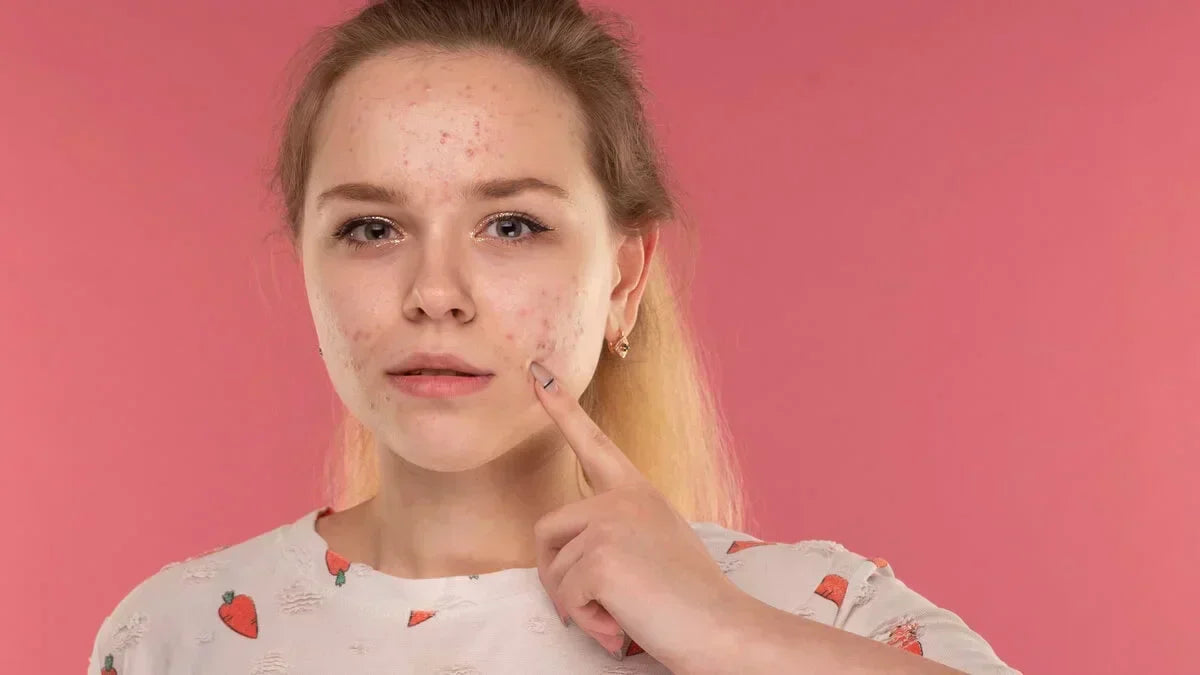
Post-inflammatory hyperpigmentation ( PIH) is a skin pigmentation disorder that appears at the site of previous inflammation. It can range in color from pink and red to brown and even gray-brown, depending on the depth of the lesion and the skin type.
The most important thing is this: post-inflammatory hyperpigmentation is not scarring . The skin in this area is smooth, without any defects or lumps, but it contains an excessive amount of melanin or its distribution is disturbed.
Post-inflammatory hyperpigmentation and other types of hyperpigmentation
In practice, PIH is often confused with other pigmentary changes:
- melasma (hormonal disorder),
- sun discoloration ,
- or permanent age spots.
The difference is the cause: with PIH, the starting point is always inflammation – acne, allergic, mechanical or chemical.
How post-inflammatory hyperpigmentation occurs - biological mechanism
To effectively reduce post-inflammatory hyperpigmentation, you need to understand that it is the result of melanocyte overactivity , not just "pigment accumulation."
Inflammation and melanogenesis
During inflammation, inflammatory mediators are released in the skin, such as:
- interleukins (IL-1, IL-6),
- prostaglandins,
- tumor necrosis factor (TNF-α).
These substances stimulate melanocytes to increase melanin production . Furthermore, melanin can be transported not only to the epidermis but also to the dermis, significantly prolonging its elimination time.
Why do post-inflammatory hyperpigmentation often appear after acne?
Inflammatory acne is one of the most common triggers of PIH. This is because:
- inflammatory changes are deep,
- they are often accompanied by micro-injuries (squeezing, scratching),
- the hydrolipid barrier is weakened.
The longer the inflammation lasts and the more severe it is, the greater the risk of post-inflammatory discoloration.
Skin phototype and the risk of PIH
People with higher skin phototypes (Fitzpatrick III–VI) are particularly susceptible to PIH. Their melanocytes respond more strongly to inflammatory stimuli, producing more melanin even with minor irritation.

The most common causes of post-inflammatory hyperpigmentation
Post-inflammatory hyperpigmentation may appear as a result of:
- inflammatory and hormonal acne,
- cosmetic treatments (peelings, laser),
- allergic reactions and irritations,
- damage to the hydrolipid barrier,
- improper photoprotection,
- aggressive active care.
It is worth emphasizing that even cosmetics with healing potential , if used at the wrong time, may contribute to the development of PIH.
Why do post-inflammatory discolorations take so long to disappear?
One of the biggest myths is the belief that post-inflammatory hyperpigmentation will "go away on its own" quickly. In reality, this process can be lengthy because:
- the epidermis renewal cycle lasts approximately 28 days,
- melanin deposited in the dermis is removed very slowly,
- a weakened skin barrier promotes recurrence of inflammation.
Any further irritation may reactivate the melanocytes , making the problem worse.
Post-inflammatory discoloration and the hydrolipid barrier
The condition of the hydrolipid barrier is crucial in the treatment of PIH. Skin with a damaged barrier:
- is more reactive,
- becomes inflamed more quickly,
- reacts more intensely with pigmentation.
That's why regeneration and relief are more important than aggressive lightening .
In this context, ingredients that support skin regeneration play a huge role, such as:
- mucin,
- purnanava,
- hyaluronic acid,
- mild acids with moisturizing and antioxidant properties.
A good example of this approach is a cream or essence with snail slime , which:
- support the regeneration of the epidermis,
- improve flexibility,
- creates optimal conditions for gradual evenness of skin tone.

How to care for skin with post-inflammatory hyperpigmentation - a step-by-step approach
Stage 1 - relief and regeneration
The first step should always be to calm the inflammation. Skin can't "clear up" if it's constantly fighting irritation.
Cosmetics are key at this stage:
- regenerating,
- moisturizing,
- supporting the barrier.
Products containing mucin have a multifaceted effect: they soothe, accelerate regeneration and improve skin quality, which indirectly reduces post-inflammatory discoloration.
Stage 2 - antioxidant and regulation of melanogenesis
Once the skin is calm, ingredients that regulate melanin production can be introduced. Antioxidation is crucial here, as oxidative stress exacerbates PIH.
In this context, the following combinations work great:
- vitamin C (brightening, protection against free radicals),
- ashwagandha (adaptogen that reduces the effects of stress on the skin).
The serum-ampoule with ashwagandha and vitamin C works not only on the pigmentation level, but also:
- supports inflamed skin,
- improves cellular immunity,
- works more gently than classic depigmentation treatments.
Stage 3 - Protection and Consistency
Without daily sun protection, even the best-planned skincare routine will be ineffective. UV radiation:
- enhances melanogenesis,
- fixes existing discolorations,
- may cause the formation of new PIH.
What ingredients should be avoided for post-inflammatory hyperpigmentation?
Paradoxically, one of the most common mistakes is overstimulating the skin . With PIH, it's worth paying attention to:
- excess exfoliating acids,
- poorly selected retinoids,
- denatured alcohol,
- intensive mechanical peelings.
Skin with post-inflammatory discoloration needs a long-term strategy, not quick, aggressive solutions.
Facts and myths about post-inflammatory hyperpigmentation
Myth: post-inflammatory discoloration will disappear on its own.
Fact: Without proper care, they can last for years.
Myth: the stronger the cosmetic, the faster it will work.
Fact: Overstimulation often worsens PIH.
Myth: Only dermatological treatments are effective.
Fact: well-planned home care can bring very good results.
How long does it take to reduce post-inflammatory discoloration?
The time it takes to reduce PIH depends on:
- depth of change,
- skin phototype,
- consequences of care,
- UV protection.
Most often, these are months, not weeks . And patience is one of the most important "active ingredients."
Post-inflammatory hyperpigmentation - a holistic approach
The skin responds to stress, sleep deprivation, and an overloaded stress-cortisol axis. Therefore, adaptogens like ashwagandha play an increasingly important role in PIH care, supporting the skin not only topically but also systemically.
Summary
Post-inflammatory hyperpigmentation is a sign of inflammation, not a skin defect. Reducing it requires:
- regeneration,
- reconstruction of the barrier,
- gentle regulation of melanogenesis,
- sun protection,
- and consequences.
Care based on ingredients such as mucin, aloe, ashwagandha and vitamin C allows for effective but safe action, supporting the skin in its natural repair processes.
Post-inflammatory hyperpigmentation - client questions and cosmetologist answers.
What are post-inflammatory hyperpigmentation?
These are pigmentation changes that occur after skin inflammation.
Are post-inflammatory discolorations permanent?
No, but reducing them requires time and proper care.
How to distinguish post-inflammatory discoloration from scars?
PIH do not change the structure of the skin – they are flat and smooth.
Does vitamin C help with post-inflammatory hyperpigmentation?
Yes, especially when combined with barrier regeneration and protection.
Is natural care effective for PIH?
Yes, if it is based on ingredients that support regeneration and antioxidants.