What is fragrance layering?
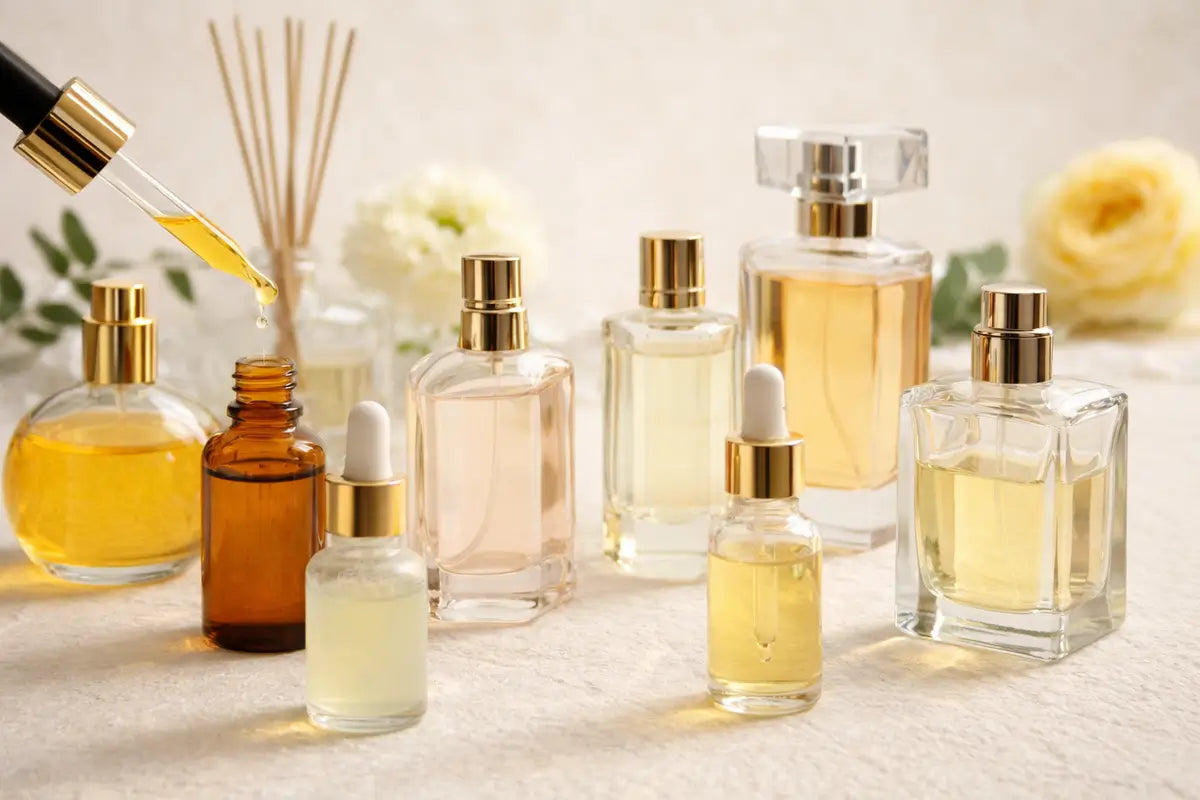
Fragrance layering is a technique of applying several perfumes or scented products in a specific order to create a cohesive, multi-dimensional composition on your skin. Popularized by niche perfume houses and beauty influencers, it is now available to everyone – regardless of budget.
Perfume layering is not about random mixing – it's a thoughtful process based on how scents interact with body heat, skin hydration, and evaporation time.
I've been testing layering techniques for over 6 years, attended perfumery workshops in Grasse, France, and regularly consult with Polish perfumers. In this article, you will find both theory and proven combinations that I use daily.
Why perfume layering works – the basics of fragrance chemistry
Each fragrance consists of three layers, called fragrance notes:
Top notes – citrus, herbal, and fresh accents. You smell them first, but they dissipate after 30-60 minutes. Heart notes – floral, fruity, and spicy. They form the identity of the fragrance for 3-5 hours. Base notes – woody, resinous, and musky. They last longest on the skin, up to 12 hours.
Fragrance layering works because you can consciously strengthen individual layers, e.g., by adding a heavy base under a light floral scent that doesn't last long on its own.

Step-by-step: how to properly apply fragrance layers
1. Prepare your skin – the base is the foundation
Before reaching for perfume, ensure your skin is moisturized. Dry skin "swallows" fragrance up to twice as fast as moisturized skin. Use:
- unscented or lightly scented body lotion (e.g., vanilla or musk),
- a scented oil thematically matched to the perfume,
- vaseline on pulse points – it will create a "stopper" slowing down evaporation.
2. Start with the heaviest scent
The rule of perfume layering: from heavy to light, from the base to the top of the fragrance pyramid. This means:
- Scented oil or perfume with dominant wood/musk notes → directly on the skin
- Eau de parfum with heart notes (flowers, spices) → 20-30 seconds later
- Light body mist or Eau de Cologne with citrus notes → last, from a distance
Check out face oils with beautiful fragrances.

3. Application areas for fragrance layering
Apply layers to so-called pulse points: wrists, inner elbows, neck just below the ear, décolletage, behind the knees. Body heat in these areas naturally activates and blends the scents.
Note: Do not rub your wrists together – this destroys top notes and accelerates their evaporation.
Check out perfumed body and hair mists

Proven combinations for perfume layering
Below are combinations that I have personally tested and received positive feedback from perfumery communities.
Combination 1: Fresh and long-lasting (ideal for daytime)
- Layer 1 (base): sandalwood or cedarwood oil
- Layer 2 (heart): light floral perfume (peony, magnolia)
- Layer 3 (top): bergamot or green tea mist
Effect: The fragrance starts with freshness, gradually transitioning into the warmth of wood. Longevity: up to 8 hours.
Combination 2: Sensual and deep (evening, date)
- Layer 1 (base): patchouli or amber perfume
- Layer 2 (heart): rose, ylang ylang, or jasmine
- Layer 3 (top): a hint of vanilla mist
Effect: Warm, enveloping scent with a floral soul. Longevity: over 10 hours.
Combination 3: Minimalist single-ingredient layering
If you want to practice fragrance layering without the risk of an unsuccessful combination, start with one brand – many perfume houses (e.g., Jo Malone, Le Labo) design their fragrances to blend perfectly with each other.
Common mistakes in perfume layering
Impatience – applying subsequent layers too quickly doesn't give the skin time to absorb the previous one. Wait at least 30 seconds between layers.
Too many scents at once – a maximum of 3 scents in one composition. More leads to "perfume white noise," where individual notes drown each other out.
Ignoring the season – in summer, when the skin is warmer, scents are stronger. In winter, you can apply more layers to achieve a similar effect.
Forgetting about clothes – fabrics (especially wool and cotton) hold scent well, but once absorbed, it's difficult to remove. For layering on clothes, choose light mists.
Check out The hit fragrance - JAPANESE SAKURA

Fragrance layering and budget – do you need to spend a fortune?
No. Perfume layering is one of the few beauty techniques where products from different price ranges truly work well together. A 40 PLN oil from a natural cosmetics store under a 400 PLN niche perfume can extend longevity by several hours and enrich the composition with new notes.
I recommend starting with:
- unscented lotion as a base (any pharmacy or drugstore),
- one perfume you already own and like,
- inexpensive jojoba or almond oil – it creates an ideal base for any fragrance.
FAQ – frequently asked questions about fragrance layering
Does perfume layering ruin fragrances? No, as long as you apply them to your skin. Fragrances react with your body chemistry, so each combination will be individual.
How long does the scent last with layering? It depends on the composition, but well-executed fragrance layering can extend longevity by 30-50% compared to applying a single fragrance.
Can you combine perfumes from different brands? Yes. There is no "brand rule" in layering. Complementarity of notes matters, not the label.
Where can I learn more about perfume layering? Polish perfumery communities (e.g., on Fragrantica.pl), online courses by Polish perfumers, and workshops organized by perfume houses in larger cities.
Summary
Fragrance layering is an art, but like any art, it primarily requires practice and the courage to experiment. Start with simple combinations, learn to read fragrance structures, and gradually build your own olfactory "signature."
The most important rules of perfume layering in a nutshell: apply from heavy to light, moisturize your skin before application, do not rub fragrances, a maximum of 3 layers, and above all, trust your own nose.
Nina - perfume consultant
The author is a certified perfume consultant and has been conducting workshops on conscious selection and combining fragrances since 2018.