Collagen is one of the most important structural proteins in the human body. It is responsible for the skin's elasticity, firmness, and smoothness, and its gradual loss leads to the appearance of wrinkles and loss of firmness.
With age, collagen synthesis naturally declines – already after the age of 25, fibroblasts produce less and less of it, and after the age of 40, this process becomes particularly noticeable. Therefore, modern cosmetology seeks solutions that can supplement or stimulate its presence in the skin.
Table of contents:
- What is collagen and why is it crucial for the skin?
- Types of collagen in cosmetology
- How does collagen work in face cosmetics?
- Skin aging and collagen decline
- Collagen effectiveness - what do scientific studies say?
- Cream with collagen and microalgae - a modern approach
- How to use collagen in face care?
- Frequently asked questions
What is collagen and why is it crucial for the skin?
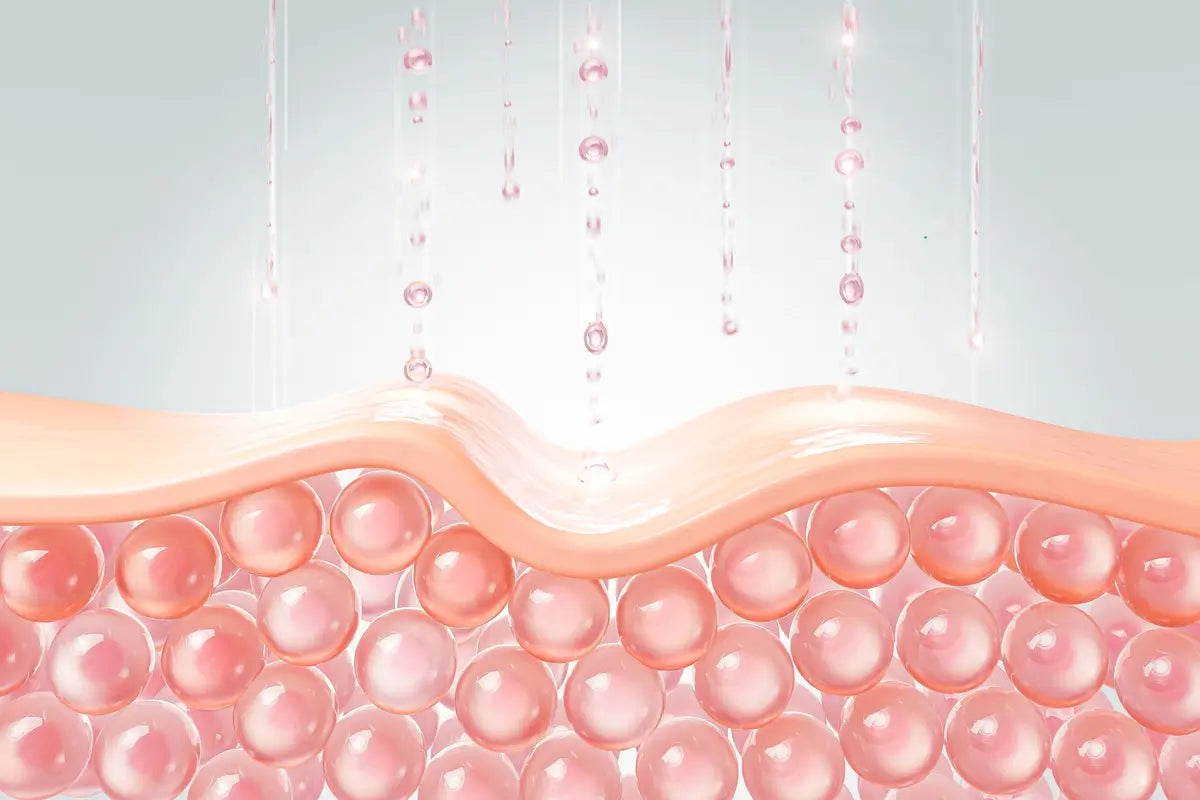
Collagen is a fibrous protein found in connective tissue, which acts as the "scaffolding" of the skin. It provides its mechanical strength, firmness, and resistance to external factors.
Without an adequate amount of collagen, the skin becomes lax, thinner, and more prone to wrinkle formation. Therefore, its presence is crucial not only in young skin but also in anti-aging prevention and therapy.
Types of collagen in cosmetology
Native collagen
Native collagen exists in its natural form and has large molecules that do not penetrate the skin. It forms a protective layer on its surface, which binds water and provides immediate smoothing.
Its action is primarily superficial – it improves skin comfort, reduces dryness, and provides a protective function.
Hydrolyzed collagen
Hydrolyzed collagen is a form broken down into smaller peptides and amino acids. This allows it to penetrate the superficial layers of the epidermis more easily, influencing its hydration and elasticity.
Regular use of cosmetics with hydrolyzed collagen improves the skin's ability to bind water, and thus its smoothness and softness.
Collagen peptides
Collagen peptides are short sequences of amino acids with signaling properties. Their task is to stimulate fibroblasts to more intensive synthesis of collagen and elastin.
They are particularly valued in modern creams and serums because they have a real impact on the biological processes occurring in the skin. You can find them in

How does collagen work in face cosmetics?
Moisturizing and protection
Collagen forms a protective film on the skin that reduces transepidermal water loss. Thanks to this, the skin is better hydrated, more elastic, and pleasant to the touch.
For people with dry skin, regular use of collagen can significantly improve skin comfort and reduce the feeling of tightness.
Strengthening the epidermal barrier
The hydrolipid barrier is a key element protecting the skin from external factors. Collagen supports its integrity, which translates into less susceptibility to irritation and redness.
Thanks to this, cosmetics with collagen are also suitable for people with sensitive and vascular skin.
Fibroblast stimulation
Some collagen fragments can act as an "alarm signal" for fibroblasts, stimulating them to work. It is this mechanism that makes collagen in cosmetics support the natural synthesis of collagen in the skin.
This process improves skin density, reduces sagging, and helps smooth wrinkles.
Wrinkle reduction
Clinical studies have proven that the use of collagen preparations improves elasticity and reduces fine wrinkles. The effect is especially visible with regular use for several weeks.
This makes collagen applicable in lifting creams and products intended for mature skin.
Skin aging and collagen decline
Chronoaging – natural aging process
Chronoaging is the biological aging of the body, which also affects fibroblasts. Over time, these cells produce less and less collagen, and the fibers become thinner and less organized. This process is inevitable, but it can be slowed down by proper skin care and protection.
Photoaging – the effect of UV radiation
UV radiation is one of the most important factors destroying collagen. It activates enzymes – matrix metalloproteinases (MMPs) – which degrade the supporting fibers of the skin.
The result is a loss of elasticity and an earlier appearance of wrinkles in people excessively exposed to the sun.
Oxidative stress
Free radicals generated in the skin damage proteins, lipids, and cell DNA. Collagen is one of the first targets of their action, leading to weakening of the skin structure.
Therefore, in anti-aging care, it is important to combine collagen with antioxidants.
Collagen effectiveness – what do scientific studies say?
Studies on hydrolyzed collagen
Clinical studies have shown that the use of cosmetics with hydrolyzed collagen increases skin hydration and reduces dryness after just 8 weeks of regular application.
An improvement in skin elasticity and smoothness was also observed in the tested groups of women.
Collagen and antioxidants
The combination of collagen with vitamin C or astaxanthin has a synergistic effect. Collagen has a rebuilding effect, and antioxidants protect its fibers from further oxidative degradation.
Such solutions are used in modern anti-aging creams.
Collagen and biomimetic peptides
Biomimetic peptides, such as Pentapeptide-48, mimic natural protein fragments and act as signals to fibroblasts. They stimulate the synthesis of collagen, elastin, and other components of the extracellular matrix.
Thanks to this, cosmetics with collagen and peptides show particularly high effectiveness in combating the signs of aging. You can find these ingredients in Orientana Lifting Cream
Cream with collagen and microalgae – a modern approach
Orientana lifting cream with collagen and microalgae is an example of an advanced cosmetic combining the action of many active ingredients.
The formula is based on collagen amino acids, the biomimetic peptide Pentapeptide-48, and an extract of Haematococcus pluvialis microalgae – a rich source of astaxanthin. Thanks to this, the cream acts multidimensionally: it moisturizes, firms, protects, and stimulates the skin to regenerate.
How to use collagen in face care?
Collagen in the morning
Using collagen cream in the morning strengthens the skin's protective barrier and protects it from the harmful effects of environmental factors. In combination with antioxidants, it acts as a shield against free radicals.
This is especially important in urban care, where the skin is exposed to smog and oxidative stress.
Collagen in the evening
In the evening, it is worth reaching for cosmetics with collagen supported by the addition of peptides or retinol. At night, the skin has the greatest regenerative abilities, so active ingredients work most intensely then.
Thanks to this, an improvement in skin elasticity and hydration is noticeable more quickly.
Supporting treatments
Collagen can also be combined with masks or ampoules with concentrated action. Using them 2-3 times a week intensifies the effects of daily care.

In combination with professional cosmetology treatments (e.g., mesotherapy), collagen can significantly improve skin condition.
Frequently asked questions
Does collagen in creams really work?
Yes – although it does not work the same as collagen in the skin, its fragments and peptides have a proven effect on fibroblasts and improve hydration.
Can collagen cause allergies?
Collagen has high dermatological tolerance, so allergic reactions are rare.
Does collagen in cosmetics come from animals?
In most cases, unfortunately, yes. However, biotechnological collagen or plant-based collagen peptides are increasingly used. Orientana cream uses collagen amino acids, which are suitable for vegans.
From what age is it worth introducing collagen?
Already after the age of 25, to act prophylactically and slow down the aging process.
Can collagen be combined with retinol?
Yes – such a combination brings excellent results. Retinol stimulates renewal, and collagen supports the reconstruction of the skin structure.
Does collagen help reduce scars?
Yes, by supporting tissue regeneration, it can accelerate healing and improve the appearance of post-acne scars.
Do collagen supplements work the same as creams?
No – supplements work systemically, and creams locally. The best results are achieved by combining both methods.
Is collagen cream suitable for oily skin?
Yes, especially if it has a light consistency. Collagen does not clog pores and improves the skin barrier.
How long does it take to use collagen to see results?
The first effects are visible after a few weeks, but lasting results require regular, multi-month care.
Does collagen help with dry skin?
Yes – thanks to its ability to bind water, it effectively reduces the symptoms of dryness and tightness of the skin.
Does collagen only have an anti-wrinkle effect?
No – it also has moisturizing, regenerating, and soothing effects. It supports the skin in combating many signs of aging.
Can collagen in cosmetics be used in summer?
Of course – especially in combination with SPF filters, which protect collagen fibers from UV degradation.
After reading this entry, you now know that collagen is the pillar of healthy, young, and elastic skin. Its loss is the main cause of wrinkles, loss of firmness, and deterioration of skin condition. That is why cosmetics with collagen play such an important role in anti-aging care.
Orientana phyto collagen cream is an example of a modern formula that combines collagen amino acids, biomimetic peptides, and astaxanthin from microalgae. Thanks to this, it not only improves skin hydration and elasticity but also protects it from free radicals and stimulates it to self-regenerate.
If you want to effectively support your skin in combating the signs of aging, a cream with collagen and microalgae should become the basis of your daily care.