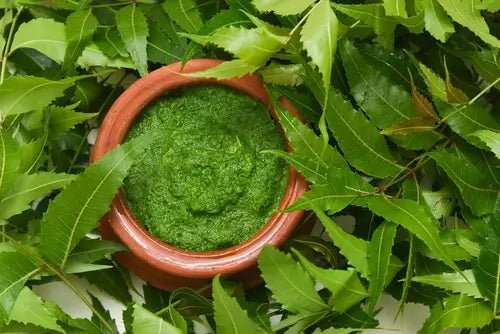
Indian lilac (Azadirachta indica), commonly known as neem, is a plant with exceptional medicinal properties, widely used in Ayurveda and natural cosmetics. Originating from India, it is often called the "tree of life" due to its numerous health benefits. Its leaves, bark, seeds, and oil have strong antibacterial, antifungal, anti-inflammatory, and antioxidant properties, making it a valuable ingredient in skin and hair care.
Indian lilac is primarily valued for its ability to cleanse the scalp, strengthen hair follicles, and soothe irritation and inflammation. Modern cosmetology increasingly uses it as a natural active ingredient in shampoos, conditioners, oils, and hair masks.
Traditional use in Ayurveda and natural medicine
In Ayurveda, Indian lilac has been known for thousands of years as one of the most powerful natural cleansing and protective agents. Its medicinal properties are used in the treatment of various ailments, from skin problems to bacterial infections. Used in the form of a paste, oil, or infusions, it helps in treating dandruff, skin inflammation, excessive oiliness of hair, and hair loss.
Neem was traditionally used to cleanse and strengthen the scalp, as well as a natural remedy against head lice and scalp fungus. In India, washing hair with a decoction of neem leaves is still popular today, which helps maintain a healthy appearance and prevents irritation.
Indian lilac was also used as an ingredient in henna, helping to enhance color and improve hair condition, and in nourishing oils, such as traditional hair oil, which supports hair growth and protects it from damage.
Why is Indian lilac a popular ingredient in hair care cosmetics?
Modern research confirms the effectiveness of neem in hair care, which has contributed to its growing popularity in natural cosmetics. The high content of nimbin, nimbidin, and azadirachtin – bioactive compounds with antibacterial and antifungal properties – makes neem excellent for caring for scalps prone to dandruff, irritation, and oiliness.
Due to its properties, Indian lilac is often added to anti-dandruff shampoos, Ayurvedic hair oils, and henna mixtures that strengthen the hair structure and give it a healthy shine. Its versatility and natural origin make it one of the key ingredients in cosmetics dedicated to conscious hair care.
Properties of Indian lilac for hair
Anti-dandruff action
Indian lilac (Azadirachta indica) exhibits strong antifungal action, effectively combating Malassezia yeasts, which are one of the main causes of dandruff. The limonoids, azadirachtin, and nimbin contained in it have antibacterial properties, eliminating bacteria and pathogens responsible for scalp inflammation.
Studies have shown that neem extract can reduce dandruff by up to 50% after four weeks of use in anti-dandruff cosmetics. Additionally, Indian lilac not only eliminates the causes of dandruff but also relieves itching and moisturizes the scalp, preventing excessive flaking.
Strengthening hair follicles
Neem extract supports the health of hair follicles by improving circulation in the scalp, which promotes better oxygenation and nourishment of hair follicles. Thanks to its high content of flavonoids and antioxidants, neem protects hair from damage caused by oxidative stress, which can lead to weakening and excessive hair loss.
Studies show that regular use of neem oil can reduce hair loss by 35% after six weeks. Furthermore, neem has a strengthening effect on the hair structure, making hair more resistant to breakage and split ends.
Sebum secretion regulation
An oily scalp results from the overproduction of sebum by the sebaceous glands, which can lead to excessive weighing down of hair and the formation of inflammation. Active ingredients in neem, such as nimbidol and gedunin, help regulate sebum secretion, reducing its excessive production without drying out the scalp.
Clinical studies have proven that shampoos containing neem can reduce scalp oiliness by 40% after three weeks of use. As a result, hair stays fresh longer, and the scalp is balanced and less prone to the development of inflammation and bacterial infections.
Soothing irritation
Indian lilac is rich in fatty acids, vitamin E, and anti-inflammatory plant compounds that help regenerate the scalp and reduce irritation. Studies have shown that neem oil reduces skin inflammation by 32% after two weeks of use.
Thanks to its soothing and anti-itch properties, neem is an effective ingredient in cosmetics for people with eczema, scalp psoriasis, and atopic dermatitis. Using cosmetics with neem improves scalp comfort, reducing redness, tightness, and itching.
Regular use of hair care products with Indian lilac brings multi-dimensional benefits, from fighting dandruff, through regulating sebaceous glands, to strengthening hair follicles and soothing irritation. Thanks to numerous studies confirming neem's effectiveness, its popularity in cosmetics is growing, and products based on this ingredient are becoming an indispensable part of scalp and hair care.
Hair cosmetics with Indian lilac – which ones to choose?
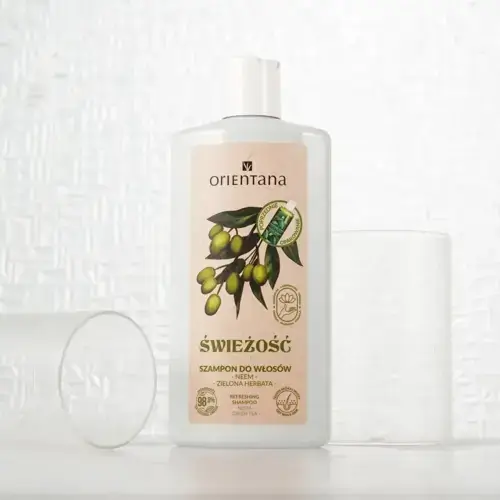
Orientana shampoo with Indian lilac
Shampoo containing Indian lilac extract (Azadirachta indica) has strong cleansing, anti-dandruff, and sebum-regulating properties. Thanks to its richness in active substances such as azadirachtin, nimbidol, fatty acids, and antioxidants, it works multidimensionally on the scalp, improving its condition and supporting healthy hair growth. Regular use of neem shampoo eliminates irritation, reduces excessive oiliness, and helps fight dandruff.
Shampoo with Indian lilac exhibits strong antibacterial, antifungal, and anti-inflammatory properties, making it an effective solution for problematic scalp care. Its action includes several key aspects:
- Dandruff reduction – active substances in neem eliminate Malassezia yeasts, which are responsible for the development of dandruff. Studies have shown that neem extract can reduce the amount of dandruff flakes by 50% after four weeks of use.
- Scalp cleansing and detoxification – the shampoo removes impurities, sebum, and toxins, which helps keep the scalp balanced and prevents excessive hair oiliness.
- Soothing irritation and inflammation – neem contains anti-inflammatory compounds that help alleviate itching, redness, and scalp discomfort. Regular use of the shampoo can reduce itching by up to 60% after three weeks of use.
- Strengthening hair follicles – thanks to its high content of antioxidants and flavonoids, neem protects hair follicles from oxidative stress and supports healthy hair growth.
- Sebum secretion regulation – neem helps normalize the function of sebaceous glands, which is particularly important for people with oily scalps. Studies indicate that using neem shampoos can reduce sebum secretion by 40% within three weeks.
Neem shampoo is an excellent choice for people struggling with various scalp and hair problems. It is particularly effective in the following cases:
- People with dandruff – it has antifungal properties and eliminates the cause of dandruff, reducing its symptoms and preventing recurrence.
- People with oily scalps – it normalizes sebum secretion, keeping hair fresh for longer.
- People suffering from seborrheic dermatitis – it soothes irritation and inflammation, reducing itching and redness.
- People with sensitive and itchy scalps – it calms irritation, reduces discomfort, and improves the overall condition of the scalp.
- People with weakened and falling hair – it strengthens follicles, providing nutrients essential for proper hair growth.
Neem shampoo can be used by people with various hair types, but it is especially recommended for oily, fine, weakened hair prone to oiliness or dandruff.
Ayurvedic hair therapy
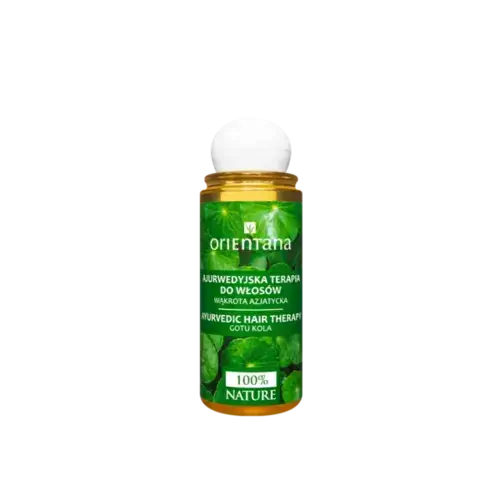
Ayurvedic hair care is based on a holistic approach that combines natural plant ingredients with traditional scalp and hair care methods. One of the most valued products in Ayurvedic hair therapy is Sesa oil, known for its richness in nourishing ingredients and multi-dimensional effects on the scalp and hair.
Ayurvedic hair therapy is a traditional Ayurvedic preparation based on a unique blend of 18 herbs and 5 plant oils, aimed at strengthening, nourishing, and protecting hair from damage. It is particularly popular in India and known for its regenerative and hair growth-stimulating effects.
One of the key ingredients in the oil is Indian lilac (neem), which was added to the formula due to its strong antibacterial, antifungal, and anti-inflammatory properties. Neem effectively cleanses the scalp, reduces dandruff, and regulates sebum secretion, making hair grow healthier and less oily. Additionally, its antioxidant action protects hair follicles from oxidative stress, which can lead to hair weakening and loss.
In addition to neem, the oil also contains other Ayurvedic ingredients, such as:
- Bhringraj – known as the "king of hair," it intensely nourishes follicles and stimulates hair growth.
- Brahmi – strengthens hair structure, prevents breakage, and adds shine.
- Sesame oil – deeply moisturizes and nourishes the scalp and hair.
Thanks to the combination of these ingredients, Ayurvedic therapy not only strengthens hair but also improves its condition, giving it a healthy appearance and shine.
Hair oiling is a key element of Ayurvedic care, which helps strengthen hair follicles, improve hair elasticity, and prevent breakage. Regular use of the oil can significantly improve the condition of the scalp and hair structure.
Step-by-step hair oiling instructions
STEP 1
Warming the oil – Before use, it is worth slightly warming the oil (e.g., by placing the bottle in warm water for a few minutes), which will increase its penetration into the scalp.
STEP 2
Scalp massage – A small amount of oil should be massaged into the scalp with circular movements for about 5-10 minutes. Massage stimulates circulation and improves the absorption of active ingredients. The remaining oil can be gently rubbed into the ends and length of the hair, which will help moisturize and protect it from damage.
The best results are achieved by leaving the oil on the hair for at least 1-2 hours, and preferably overnight.
STEP 3 Washing off the oil – In the morning, thoroughly wash your hair with a mild shampoo, preferably without SLS and silicones. If necessary, you can wash your hair twice to completely remove any oil residue.
How often to use Ayurvedic Therapy?
- Dry, damaged, brittle hair – 2-3 times a week.
- Normal hair – 1-2 times a week.
- Oily hair – once a week (avoid excessive application to the scalp).
Oiling should be adapted to individual hair needs – the more damaged and dry they are, the more frequent application can bring better results.
Regular use of Ayurvedic therapy brings noticeable effects after just a few weeks. Studies and user reviews indicate a range of benefits:
- Reduced hair loss – the oil stimulates hair follicles and promotes the growth of new, stronger hair. After 6 weeks of use, hair loss can decrease by up to 35-40%.
- Strengthening hair structure – regular oiling improves hair elasticity, reducing its fragility and susceptibility to mechanical damage.
- Intensive hydration and nourishment – the oil deeply moisturizes the scalp and hair, making them softer and smoother. After 4 weeks of use, an increase in hair hydration of 30% can be observed.
- Better protection against pollution and oxidative stress – neem and other oil ingredients protect hair from negative environmental influences, pollution, and UV radiation.
- Reduction of dandruff and irritation – thanks to neem's antifungal properties, the scalp becomes healthier, which reduces the risk of dandruff formation by up to 50%.
Ayurvedic therapy is one of the best Ayurvedic hair care preparations, combining the action of Indian lilac with other hair-strengthening herbs. Thanks to its regenerating, nourishing, and protective properties, hair becomes stronger, shinier, and more resistant to damage. Regular oiling brings long-lasting effects and allows for natural restoration of hair structure and improvement of scalp condition. Incorporating it into your care routine is an excellent way to achieve healthy and beautiful hair in harmony with nature.
INDIAN LILAC in henna
Henna with added Indian lilac (neem) is a natural solution that combines the coloring and conditioning properties of henna with the medicinal effects of neem. Traditional henna is valued for its strengthening and shining effects on hair, but the addition of neem makes its action even more comprehensive and effective.
Henna with neem is better than regular henna primarily due to its antibacterial, antifungal, and soothing properties. Neem acts as a natural antiseptic, eliminating bacteria and fungi responsible for various skin problems, including dandruff and excessive scalp oiliness. Additionally, it soothes irritation, reduces redness, and accelerates skin regeneration.
The combination of henna and neem positively affects both hair and scalp. Hair becomes stronger, thicker, and more resistant to damage, and also gains a natural shine and softness. Henna thickens the hair shaft, which optically increases its volume, and neem regulates sebum levels, so the hairstyle stays fresh longer. The scalp gains better balance – it is properly moisturized, less prone to dryness or excessive sebum secretion.
Henna with neem has a particular advantage in caring for sensitive scalps. People with sensitive skin often suffer from itching, dryness, dandruff, or a burning sensation, and neem effectively soothes these ailments. It promotes the healing of minor wounds, reduces inflammation, and prevents infections. Regular use of the henna and neem mixture helps maintain the scalp in good condition, which translates into healthier-looking hair.
In summary, henna with neem is a natural alternative to synthetic cosmetics, which not only beautifies hair but also cares for scalp health. Thanks to its antiseptic, soothing, and strengthening properties, it is an ideal solution for people with problematic skin, helping to restore its balance and healthy appearance.
How to use Indian lilac in homemade hair care?
Neem can be used in various forms – as a powder, oil, or infusion – adapting the application method to individual hair and scalp needs. Neem is particularly recommended for people with skin problems such as dandruff, irritation, excessive scalp oiliness, or weakened, falling hair.
Recipe for a homemade hair mask with neem powder
A mask based on neem powder is an excellent way to cleanse the scalp, strengthen follicles, and give hair a healthy appearance. Regular use of the mask helps combat dandruff, soothes irritation, and supports the growth of strong hair.
Ingredients:
- 2 tablespoons of neem powder
- 2 tablespoons of henna (optional, for a strengthening effect)
- 1 tablespoon of natural yogurt or aloe (for hydration)
- 1 teaspoon of honey (for nourishment)
- Water or rose/St. John's wort hydrosol to achieve the right consistency
Preparation method:
- Mix all ingredients in a bowl until a smooth paste is obtained.
- Apply the mask to the scalp and hair, especially at the roots.
- Leave on for 20-30 minutes. If you have a very dry scalp, do not keep it longer than 15 minutes.
- Rinse with lukewarm water and wash hair with a mild shampoo.
- Use once a week to improve scalp and hair condition.
How to prepare a scalp rinse? A neem rinse is a quick and effective way to strengthen hair and soothe scalp inflammation. It acts antiseptically, cleansing and regulating the skin, while also preventing excessive hair oiliness.
Ingredients:
- 2 tablespoons of dried neem leaves or 1 tablespoon of neem powder
- 500 ml of water
- 1 teaspoon of apple cider vinegar or lemon juice (optional, for an additional cleansing effect)
Preparation method:
- Boil water and add neem. Simmer on low heat for 10 minutes.
- Let cool, then strain the liquid through a sieve.
- If you want to add apple cider vinegar or lemon, do so at the end.
- After washing your hair, gently pour the rinse over your scalp and hair. Do not rinse off.
- Use 1-2 times a week, especially if you have a problem with dandruff or excessive scalp oiliness.
Ayurvedic Amla and Bhringraj Oil
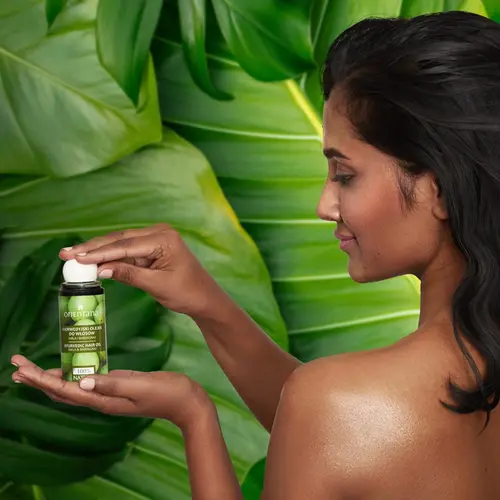
Ayurvedic hair oil is a natural cosmetic designed for comprehensive hair and scalp care. It is used before washing hair, applied to the scalp and the entire length of the hair, to provide intense nourishment and regeneration. Thanks to carefully selected plant and herbal ingredients, the oil accelerates hair growth, strengthens it from root to tip, and prevents excessive hair loss.
Regular use of Ayurvedic oil supports the natural renewal processes of the scalp, improving its condition and eliminating problems such as dryness, itching, or irritation. It has a soothing, moisturizing effect and supports a healthy balance of the scalp, which is crucial for proper hair growth.
One of its unique properties is delaying the graying process in people with dark hair and intensifying their natural color. Thanks to the richness of antioxidants and nourishing ingredients, the oil helps maintain a youthful appearance of hair for longer.
After use, hair becomes soft, smooth, more shiny, and elastic. The oil effectively seals hair cuticles, smoothing their structure and giving them a healthy appearance. Regular oiling makes strands better hydrated, less prone to breakage and split ends, making them look stronger and more well-groomed.
Ayurvedic hair oil is an excellent solution for people seeking natural care, based on centuries of Ayurvedic knowledge, which supports hair health and beauty in harmony with nature.
Orientana rub-in tonic
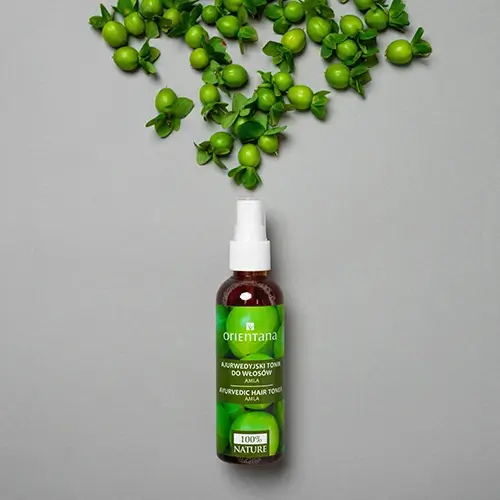
Water-based tonic-rub with amla in spray is a unique cosmetic for scalp and hair care, combining the nourishing power of natural ingredients with the convenience of daily use. Thanks to its light, water-based formula, it is extremely easy to apply, does not weigh hair down, and does not require rinsing, making it ideal for both daily care and a quick hairstyle refresh throughout the day.
The main ingredient of the tonic is amla, valued in Ayurveda for its strengthening and regenerating properties. Regular use of the rub-in tonic helps inhibit excessive hair loss, stimulates follicles to grow, and improves their condition, making them stronger, thicker, and more resistant to damage.
Additionally, the tonic has a refreshing and soothing effect on the scalp. It reduces feelings of tension, itching, and irritation, restoring the skin's natural balance. It is ideal for people with sensitive scalps prone to dryness, redness, or oiliness.
Thanks to its light and non-greasy formula, the tonic does not cause a heavy hair effect, does not clump hair, and does not leave a greasy film. Regular use makes hair look healthier, more lifted at the roots, and its structure becomes smoothed and full of shine.
The rub-in tonic is universal and comfortable to use, suitable for both women and men. The convenient spray form allows for even distribution of the product on the scalp without the need for rubbing with hands, making the application quick, hygienic, and pleasant.
Thanks to regular use of the water-based amla tonic, the scalp regains balance, hair becomes stronger and healthier, and you can enjoy natural care that effectively supports their beauty and vitality.
We hope this entry was interesting and comprehensively presented the benefits of Indian lilac, encouraging its use in hair care.