Melasma is one of the most difficult skin pigmentation problems. It's often confused with common sun spots, but its mechanism of development is much more complex, and treatment requires patience and consistency. Melasma tends to recur, is strongly hormone-related, and is highly sensitive to UV radiation and blue light.
In this article I explain:
- what exactly is melasma,
- how to distinguish it from other discolorations,
- which active ingredients are best tested,
- what should skin care for melasma look like,
- which Orientana cosmetics actually support the reduction of discoloration and skin protection.
What is melasma?
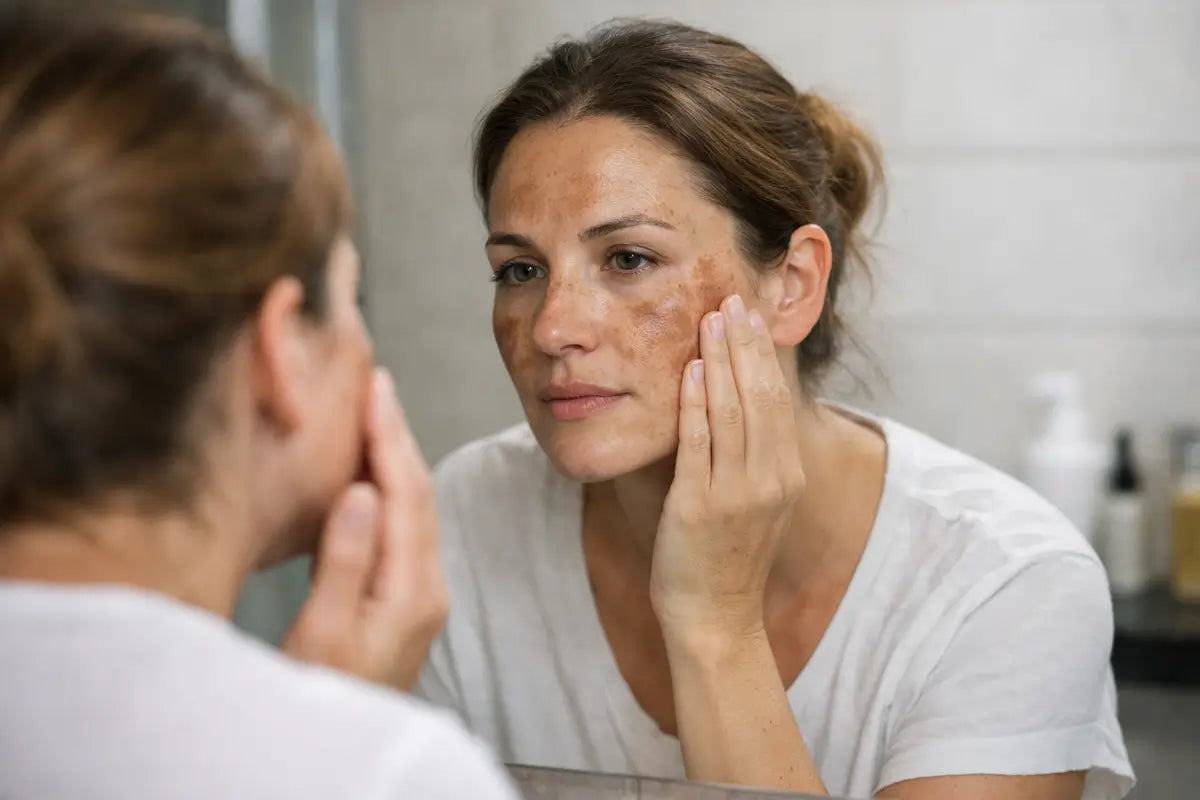
Melasma is a chronic hyperpigmentation of the skin , manifesting itself as irregular, symmetrical pigment spots, most often:
- on the cheeks,
- forehead,
- above the upper lip,
- along the jaw line.
The lesions range in color from light brown to gray-brown and often become more severe in the summer, even despite the use of SPF filters.
Melasma and other discolorations - key differences
Melasma:
- is hormonally dependent ,
- has a recurrent nature,
- often involves the deeper layers of the skin (dermis),
- responds more slowly to classic brightening treatments.
Causes of melasma
Melasma never has a single cause. Most often, it results from the interaction of several factors :
- hormonal fluctuations (pregnancy, hormonal contraception, menopause),
- exposure to UV and HEV radiation (blue light),
- chronic inflammation of the skin,
- damaged hydrolipid barrier,
- genetic predisposition,
- aggressive care and excessive exfoliation.
Therefore, effective melasma care is not just about "lightening spots" , but about comprehensive skin support.
How to care for skin with melasma - key pillars
1. Sun protection (absolutely essential)
Without daily UV and HEV protection , no melasma treatment will work . Even the best brightening serum will not be effective if melanocytes are constantly stimulated by light.
2. Regulation of melanogenesis
The purpose of care is:
- inhibiting the overproduction of melanin,
- relieving inflammation,
- supporting natural skin regeneration processes.
3. Rebuilding the barrier and microbiome
Skin with melasma is often:
- reactive,
- dried out,
- hypersensitive.
A damaged barrier contributes to the deepening of discoloration.
Active ingredients recommended for melasma
Ingredients with multi-faceted action work best in melasma care:
- vitamin C - brightens, has antioxidant properties, supports collagen synthesis,
- tranexamic acid - one of the best-studied ingredients for melasma,
- niacinamide - regulates melanin transport and strengthens the skin barrier,
- adaptogens (e.g. ashwagandha, reishi) - reduce oxidative stress,
- mild acids (PHA) - improve skin tone without irritating the skin.
Orientana cosmetics supporting the care of skin with melasma
When caring for melasma, it is worth using cosmetics that combine brightening with protective and regenerative effects .
Ashwagandha Serum + Vitamin C + Tranexamic Acid

This is one of the best-suited skincare products for melasma:
- vitamin C brightens and evens out the skin tone,
- tranexamic acid supports the regulation of melanogenesis,
- Ashwagandha has antioxidant properties and soothes the skin.
The serum is also suitable for sensitive and vascular skin, which is of great importance in the case of melasma.
Brightening creams and masks
Products from the Hello Papaja line support the gradual lightening of discolorations:
- improve skin tone,
- smooth out,
- give the skin freshness without being aggressive.
Gentle nighttime exfoliation
Micro-exfoliating creams with mild acids help:
- improve the penetration of active ingredients,
- brighten the skin without the risk of irritation,
- support the regeneration of the epidermis.
What to avoid with melasma?
- intensive mechanical peelings,
- high concentrations of acids used without control,
- irritating and drying cosmetics,
- breaks in sun protection,
- "shock treatments" without the support of the skin barrier.
Melasma does not like aggression - it responds best to regularity and gentleness.
Questions about melasma
Is melasma the same as discoloration?
No. Melasma is a specific, hormonally dependent type of recurring discoloration.
Does melasma go away on its own?
Usually not. It may fade, but without proper care, it often returns.
Does vitamin C help with melasma?
Yes, especially in combination with other ingredients that regulate melanogenesis, e.g. tranexamic acid.
Can melasma get worse in the summer?
Yes. Even brief exposure to the sun without protection can worsen it.
Does melasma only affect women?
No, but it is much more common in women due to the influence of hormones.
Can retinoids be used for melasma?
Yes, but carefully and preferably under the supervision of a specialist, as irritation can make the problem worse.
How long does it take to lighten melasma?
The first results usually appear after 8–12 weeks of regular care.
Are natural cosmetics effective for melasma?
Yes, if they contain ingredients with proven effectiveness and are used consistently.
Summary
Melasma is a challenging, but not hopeless, skin problem. The key to success is:
- patience,
- sun protection,
- skin barrier support,
- active ingredients with proven effectiveness.
Well-chosen, natural care, such as Orientana cosmetics, can actually improve the appearance of the skin and reduce the recurrence of melasma.