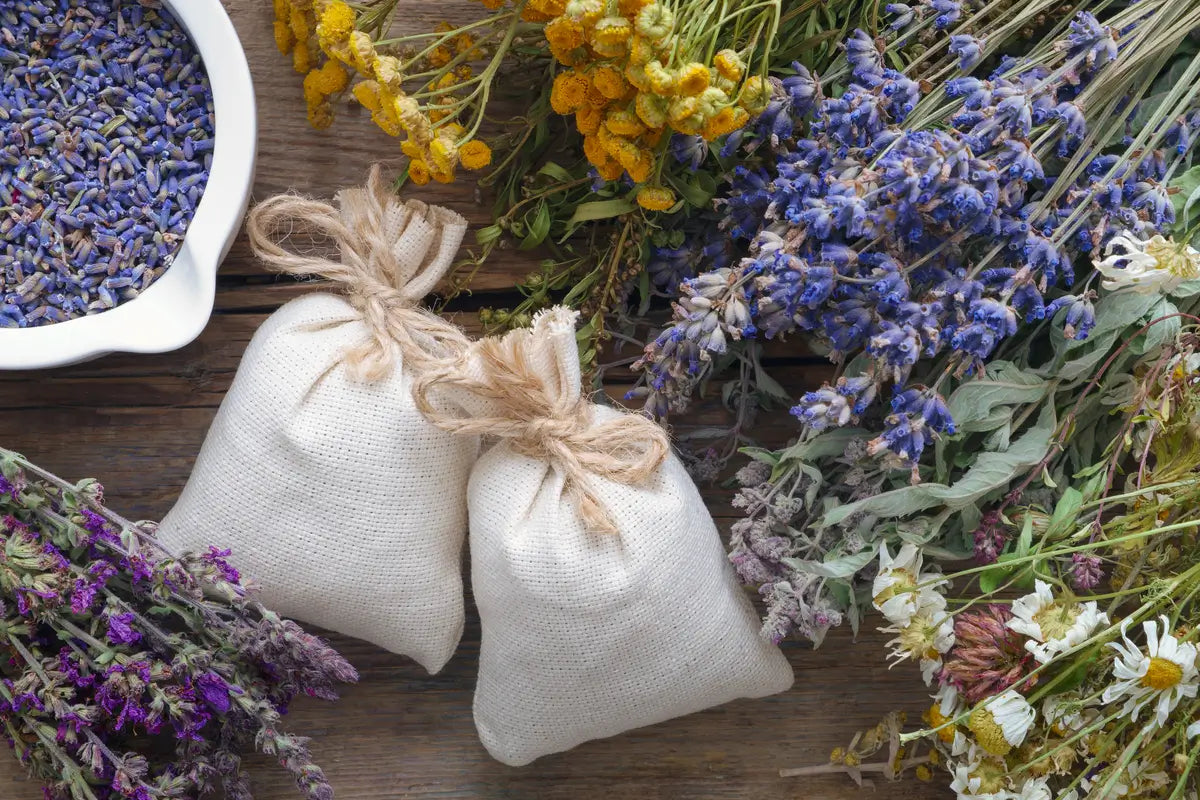
Have you ever wondered what makes lavender smell so wonderful? Or why the scent of fresh basil has such a soothing effect? The answer is linalool – a chemical compound that has been present in nature, cosmetics, and everyday life for centuries.
What is linalool?
Linalool is a natural terpene responsible for the characteristic floral aroma of many plants. It can be found in lavender, mint, basil, spices, and even citrus peels. It gives essential oils their recognizable scent and is one of the most common components in the plant world.
Chemically, it's classified as a monoterpene alcohol, but don't let the name fool you; it has nothing to do with the alcohol we drink. Its chemical formula is C₁₀H₁₈O, and at room temperature, it's a colorless liquid with a sweet, floral scent.

Natural or synthetic?
It's worth noting that linalool can be both natural and synthetic . Natural linalool is extracted from plants like lavender or rosemary, while synthetic linalool is produced in laboratories. Chemically, both forms are identical—they have the exact same molecular structure. In the cosmetics and perfume industries, the synthetic version is more commonly used due to its lower price and greater availability, but both forms have the same effects.
Where do we find linalool in everyday life?
Linalool is practically everywhere, often without us even realizing it. It occurs naturally in over 200 plant species, so we find it in:
Herbs and spices: basil, coriander, oregano, thyme, mint
Flowers: lavender, jasmine, roses, geranium
Fruits: mangoes, peaches, grapes
Trees: rosewood, citrus trees, sandalwood
Industry uses linalool in many everyday products - perfumes (it is an ingredient in about 60-80% of modern fragrances), body creams and lotions, shampoos and conditioners, scented candles, and even detergents and laundry liquids.

Properties that attract scientific attention
Linalool has been the subject of scientific research for years, which reveals its various properties:
Calming Effects – Studies indicate that lavender's scent, rich in linalool, can help reduce stress and improve sleep quality. This is why lavender oils are so popular in aromatherapy.
Anti-inflammatory properties - Some studies suggest that linalool may have anti-inflammatory effects, although most of these studies are conducted on animals or in laboratory settings.
Analgesic effect - preliminary studies indicate a potential analgesic effect, especially in cases of inflammation.
Antimicrobial activity - linalool can inhibit the growth of some bacteria and fungi, making it an interesting ingredient in natural preservatives.
However, it is worth remembering that most of these studies are in the early stages, and the effects observed in the laboratory do not always translate directly into action in the human body.
Linalool in cosmetics - what is worth knowing?
If you've read cosmetics labels, you've likely come across the name "linalool" on the label. According to European Union regulations, linalool is classified as a fragrance allergen and must be listed in the ingredients list if its concentration exceeds 0.001% in non-rinseable products (like creams) or 0.01% in rinse-off products (like shampoos).
Important note: Linalool must be listed on the packaging even if it's not added directly to the product , but occurs naturally in the essential oils used in the cosmetic. This means that if a cream contains lavender oil, you'll see both "Lavandula Angustifolia Oil" (lavender oil) and "Linalool" listed separately at the end of the ingredients list.
Why is this happening? The European Union has a list of 26 fragrances considered potential allergens, which must be clearly labeled on packaging. Linalool is one of them. This regulation aims to protect consumers with contact allergies, who may consciously avoid products containing these substances.
Therefore, a cosmetic advertised as "natural" or "with essential oils" will still list linalool and other fragrance allergens present in these oils on the label. This doesn't mean the manufacturer has added synthetic ingredients—it's simply a legal requirement for ingredient transparency.
It's also worth knowing that linalool in its unoxidized form is generally well-tolerated. The problem arises when this compound oxidizes upon exposure to light and air, where it can be more irritating to the skin.
For people with sensitive skin or a tendency to allergies, it is worth performing a patch test before using a new product containing linalool, as with any new cosmetic.
Linalool and the environment
As a natural plant component, linalool is biodegradable and will normally break down in the environment. It is primarily obtained from lavender, rosemary, and other aromatic plants, making it a renewable resource.
However, it's worth remembering that even natural substances can impact the environment if they enter it in high concentrations. This is especially true when unnecessary cosmetics or detergents are released directly into the environment.
Is linalool safe?
Linalool is recognized as a safe ingredient by major regulatory organizations, including the FDA (U.S. Food and Drug Administration) and EFSA (European Food Safety Authority). It has been present in the human diet for thousands of years through natural sources such as herbs and fruits.
Like most substances, linalool can cause allergic reactions in predisposed individuals, but this is relatively rare. It is estimated to affect 1-3% of the population. By comparison, nickel allergy affects approximately 10-15% of the population.
People with a confirmed allergy to linalool should avoid products containing it, just as people with nut allergies avoid nut products. For others, it is a safe ingredient that can be safely used as part of daily skincare or fragrance products.
Practical applications at home
If you want to utilize the properties of linalool at home, you have many options. You can use lavender or rosemary essential oils in diffusers (remembering to air out the rooms), add a few drops of lavender oil to the bath for a relaxing effect, use dried lavender flowers in your closets for a pleasant scent, and plant linalool-rich plants like lavender or basil in your garden or on your balcony.
Summary
Linalool is a fascinating example of how natural plant ingredients can enrich our lives. From the relaxing scent of lavender to its uses in cosmetics, this unassuming terpene plays a larger role than you might think.
The fact that it's classified as an allergen and must be listed on cosmetics labels doesn't mean it's dangerous—it's simply a sign of concern for the safety of consumers with contact allergies. For the vast majority of us, it's a safe and pleasant everyday companion that connects us with nature and its aromas.
Like any ingredient, it requires careful use, especially by people with sensitive skin. However, it's worth remembering that the presence of linalool on the label of a "natural" product doesn't mean it contains synthetic additives—it's simply a legal requirement to label fragrance allergens, regardless of their source.
Did you know that linalool must be listed separately, even if it's derived from natural essential oils? Perhaps now, when you read cosmetics ingredients, you'll look at them from a new perspective.
If you want to delve deeper into the topic and consciously develop your care routine, check out our natural cosmetics zone, where we combine cosmetology knowledge with natural formulas.