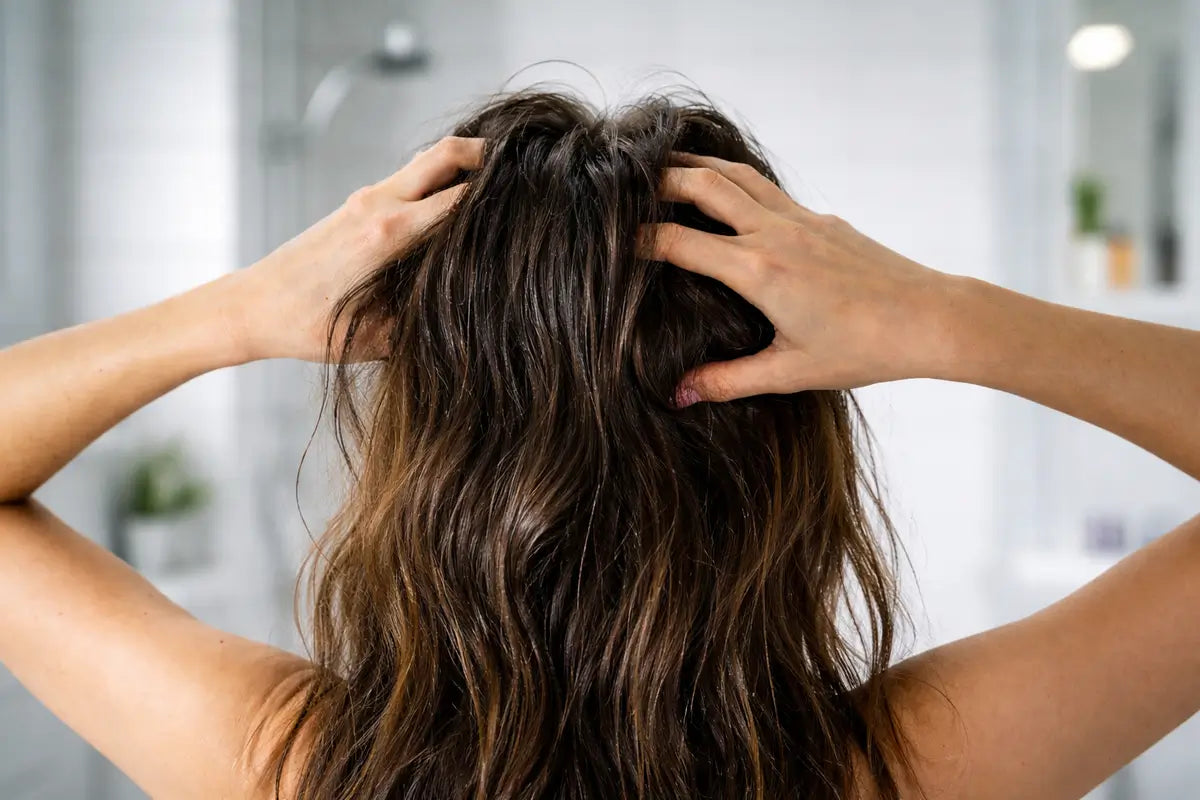
Oily hair is a problem that many people struggle with, regardless of age or gender. As a trichologist, I see patients every day who complain about hair becoming oily just hours after washing. I know how frustrating this experience can be and how it significantly impacts quality of life and self-confidence. In this post, I'll explain the causes of excessive sebum production, how to effectively care for it, and what solutions can bring lasting improvement.
What causes hair to become oily?
Oily hair is a direct result of overactivity of the sebaceous glands located in the scalp. Each hair grows from a hair follicle, which is home to a sebaceous gland that produces sebum—a natural oily substance that protects the scalp and hair. The problem occurs when these glands overwork.
Common causes of oily hair:
Hormonal factors – fluctuations in hormones, especially androgens, can significantly affect the activity of the sebaceous glands. Therefore, oily hair is particularly common during puberty, pregnancy, and menopause.
Genetic predisposition - if your parents had a problem with oily hair, you will probably be more susceptible to this condition too.
Improper care – paradoxically, washing your hair too often can lead to excessive oiliness. The scalp, deprived of its natural protective layer, begins to produce more sebum to restore balance.
Diet and lifestyle – excess processed foods, simple sugars, and fatty foods can exacerbate the problem. Stress, lack of sleep, and smoking also negatively impact the condition of the scalp.
Inappropriate cosmetics - heavy conditioners, masks or stylers applied to the scalp can block the sebaceous glands and aggravate the problem.
How to recognize oily hair?
Although it may seem obvious, it is worth knowing the characteristic symptoms that distinguish oily hair from hair with dry ends but an oily scalp - these are two different cases that require different care.
Oily hair is characterized by becoming shiny at the roots, drooping, losing volume, and appearing dirty within a few hours of washing. It can also be accompanied by an itchy scalp, dandruff, and unpleasant odor. In extreme cases, hair requires daily washing, which can lead to a vicious cycle of excessive sebum production.
Effective care for oily hair
The key to managing oily hair is restoring the scalp's balance. It's a process that requires patience and consistency, but the results are worth the effort.
The right shampoo is essential
Choosing a shampoo is crucial in the fight against oily hair. It should gently cleanse the scalp without irritating it or stimulating excessive sebum production. I especially recommend shampoos with a normalizing effect, containing natural ingredients that regulate sebum secretion.

A perfect example is the Ayurvedic Neem Shampoo by Orientana , which utilizes the power of natural ingredients in its formula. Neem, also known as Indian neem, has been used in Ayurveda for centuries to regulate sebum secretion and cleanse the scalp. It has antibacterial and anti-inflammatory properties, which are particularly important for oily hair, which often accompanies dermatological issues. The shampoo also contains other natural ingredients that soothe irritation and restore a healthy balance to the scalp.
How to properly wash oily hair?
Washing technique is crucial. Here are a few rules I always emphasize with my patients:
Use lukewarm or cool water – hot water stimulates the sebaceous glands to work more intensively. Apply shampoo directly to the scalp, massaging with your fingertips, not your nails. Rinse your hair thoroughly to remove any product residue. Apply conditioner only to the lengths and ends of your hair, avoiding the scalp. Avoid vigorously rubbing your hair with a towel – gently blot it dry.
Washing frequency
Contrary to popular belief, there's no one-size-fits-all answer to how often to wash oily hair. It all depends on individual needs. If your hair requires daily washing, there's nothing wrong with that—as long as you're using the right shampoo. Over time, as your scalp balances, you can try extending the intervals between washes.
Daily care accessories
In addition to proper washing, it is worth introducing a few additional treatments to support the health of the scalp:
Scalp exfoliation - Once a week, a gentle exfoliation helps remove dead skin cells and clogged sebaceous glands. You can do it yourself using fine-grained sea salt mixed with conditioner.
Clay masks – green or white clay is excellent at absorbing excess sebum. Apply the mask only to the scalp and leave for 10-15 minutes before washing.
Toning rinses - a rinse with apple cider vinegar (1 tablespoon per liter of water) or herbal infusions (nettle, rosemary, sage) will help restore the proper pH of the scalp.
Diet and supplementation to combat oily hair
It's important to remember that hair health starts from the inside. A diet rich in omega-3 fatty acids, zinc, B vitamins, and antioxidants supports the proper functioning of the sebaceous glands. It's worth limiting highly processed foods, white flour, sugar, and dairy, which can exacerbate the problem.
If you suspect that the underlying problem is hormonal imbalance or nutritional deficiencies, it is always worth consulting a doctor and undergoing appropriate tests.
What to avoid?
To keep oily hair healthy, we should give up a few habits:
Don't touch your hair during the day—you transfer sebum and bacteria from your hands. Avoid tight hats, which restrict airflow. Limit your use of hairdryers and straighteners—high temperatures stimulate the sebaceous glands. Don't use heavy styling products with silicones. Avoid brushing your hair with a natural-bristle brush, which distributes sebum along its entire length.
When to see a specialist?
If, despite proper care, your oily hair problem worsens or is accompanied by significant hair loss, persistent itching, inflammation, or dandruff, be sure to schedule an appointment with a trichologist or dermatologist. This may indicate a more serious health problem requiring diagnosis and treatment.
Frequently asked questions about oily hair
Does washing your hair every day make it oilier?
This is a myth that needs to be debunked. Washing your hair daily doesn't make it more oily, as long as you use the right, gentle shampoo. The problem arises when you use overly aggressive products that dry out the scalp – then it can actually start producing more sebum as a defense mechanism.
How long does it take to regulate sebum secretion when changing skincare?
The scalp needs time to adapt to a new routine. Typically, the first results are visible after 2-3 weeks, but full adjustments can take up to 2-3 months. Consistency and patience are key.
Are dry shampoos a good solution for oily hair?
Dry shampoos can be helpful as a temporary solution between washes, but they shouldn't replace regular washing. They absorb sebum but don't cleanse the scalp, which, with prolonged use, can lead to clogged pores and worsen the problem.
Can oily hair be a sign of health problems?
Yes, excessive sebum production can be related to hormonal imbalances (e.g., PCOS, thyroid disorders), nutritional deficiencies, or dermatological conditions such as seborrheic dermatitis. If the problem is severe, it's worth consulting a doctor.
Which shampoo ingredients are best for oily hair?
Look for shampoos containing: neem, which regulates sebum production and has antibacterial properties; rosemary, which stimulates microcirculation and normalizes glandular function; nettle, which strengthens and cleanses; lemon, which has astringent properties; and clay, which absorbs excess sebum. Avoid heavy oils, silicones, and parabens.
Can stress cause oily hair?
Absolutely. Stress leads to hormonal imbalances, which directly impact the activity of the sebaceous glands. It can also weaken the immune system, which contributes to dermatological problems. Relaxation techniques, regular physical activity, and healthy sleep not only help combat stress but also improve the condition of your hair.
Remember, oily hair isn't a death sentence. With the right knowledge, consistency, and the right products, you can effectively manage this problem and enjoy healthy, fresh hair all day long. If you have additional questions or the problem persists, it's always worth consulting a specialist who will tailor the treatment to your individual needs.
Read also:
Pityriasis versicolor - what is it, why does it occur and how to get rid of it effectively?
Hair Growth Lotion - A Natural Way to Get Stronger, Thicker Hair