
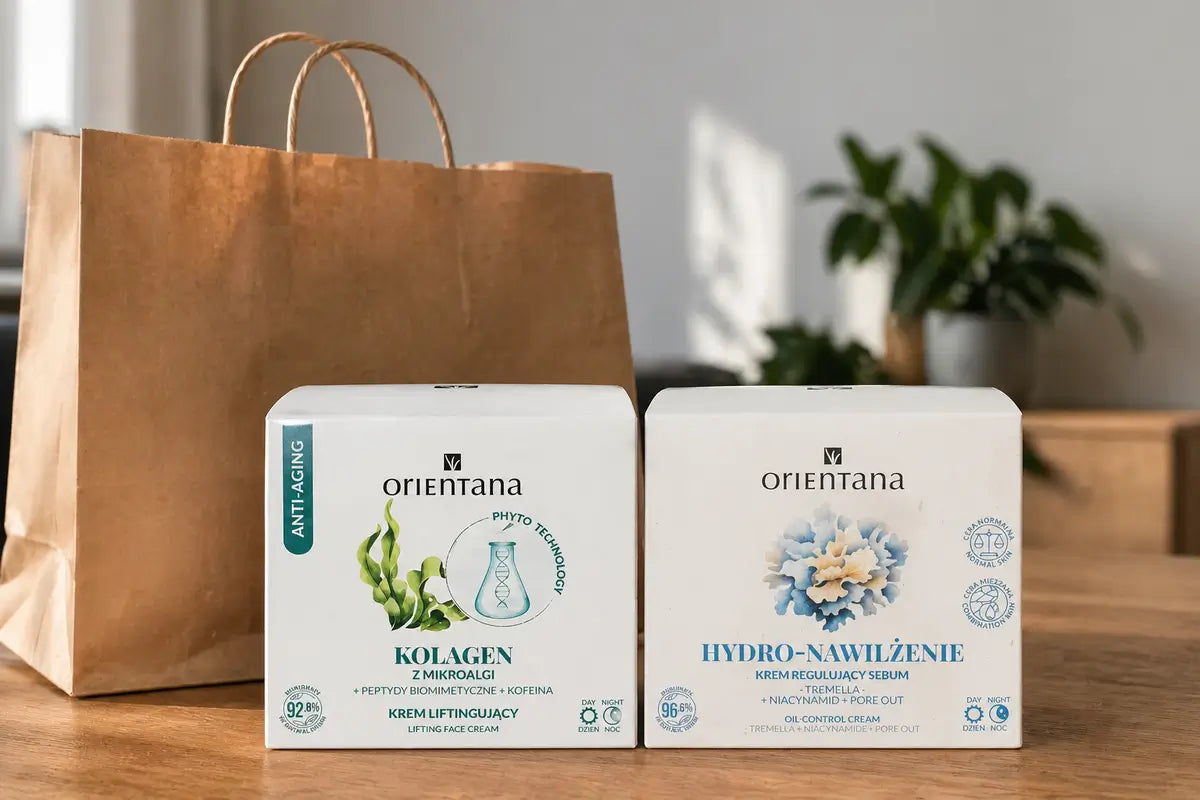
With the arrival of spring, not only the weather changes, but also the physiology of the skin. After months of winter stress - exposure to low temperatures, wind, and dry air - the skin requires a completely different approach to care.
This is a transitional moment when many people make the same mistake: they continue to use heavy, winter creams or, conversely, reach for formulas that are too light and unable to rebuild the hydrolipid barrier.
The result?
Blackheads, dryness, loss of radiance, or overproduction of sebum.
Therefore, choosing the right moisturizing cream for spring is not a matter of aesthetics – it is a decision that affects the skin's condition for the coming months.
Table of Contents
- Why does skin need a different cream in spring?
- How does skin change after winter?
- What moisturizing cream for spring - key features
- Best active ingredients for spring
- How to choose a cream for your skin type?
- Common spring skincare mistakes
- How to apply cream for best results?
- Summary
Why do you need to change your face cream in spring?
In winter, the skin operates in "protective" mode. This leads to:
- slowing of cell renewal,
- disruption of the hydrolipid barrier,
- increased transepidermal water loss (TEWL),
- hypersensitivity and reactivity.
In spring, environmental conditions stabilize, but the skin does not automatically return to balance. On the contrary – it is often:
- dehydrated,
- thickened,
- lacking radiance,
- more susceptible to oxidative stress.
Therefore, a spring cream should simultaneously:
- moisturize,
- regenerate,
- protect against free radicals,
- not weigh down the skin.
How does skin change after winter? (biological perspective)
From a cosmetology perspective, three mechanisms are key:
1. Disrupted hydrolipid barrier
A reduced amount of lipids in the stratum corneum leads to water loss and increased sensitivity.
If you want to know more about the hydrolipid barrier, check out what it is and how to care for it.
2. Increased TEWL (transepidermal water loss)
The skin loses moisture faster, causing a feeling of tightness despite using creams.
3. Oxidative stress
With increasing sunlight, the amount of reactive oxygen species (ROS) increases, which accelerates skin aging.
This is why a spring cream must act on multiple levels.
Learn what oxidative stress is.
What moisturizing cream for spring - key features
Light, yet functional texture
Ideal formulas include:
- O/W emulsions,
- gel creams,
- hydro-creams.
They do not weigh down the skin, but provide adequate hydration.
Light creams with excellent moisturizing properties include snail mucin cream or tremella cream.
Multi-level hydration
A good cream:
- delivers water (humectants),
- retains it (emollients),
- rebuilds the barrier (lipids).
Presence of antioxidants
Key for protection against:
- UV radiation,
- pollution,
- environmental stress.
Microbiome support
Modern skincare considers:
- postbiotics,
- ferments,
- soothing ingredients.
Best active ingredients for spring
Humectants
- hyaluronic acid
- glycerin
- trehalose
- tremella (plant equivalent of HA)

Antioxidants
- vitamin C
- niacinamide
- plant extracts (moringa, reishi)
Adaptogens
- ashwagandha
- reishi

They have anti-inflammatory properties and support skin regeneration under stress conditions.
Regenerative ingredients
- snail mucin
- panthenol
- allantoin
How to choose a cream for your skin type?
Dry skin
Look for:
- lipids, ceramides,
- intensive humectants.
👉 See: Nourishing cream with ashwagandha
Oily and combination skin
Focus on:
- light formulas,
- niacinamide,
- sebum-regulating ingredients.
👉 See: Sebum-regulating HydroTremella cream
Sensitive skin
Key:
- absence of irritating ingredients,
- soothing and regenerating action.
Mature skin
It is worth choosing:
- adaptogens,
- antioxidants,
- regenerative ingredients.
Common mistakes when choosing a spring cream
- using heavy winter creams → clogging pores
- choosing a cream that is too light → lack of regeneration
- lack of antioxidants → accelerated aging
- ignoring skin type
- lack of SPF in morning routine
How to apply moisturizing cream for best results?
- apply to damp skin after toner
- use regularly (morning and/or evening)
- don't overdo the quantity
- combine with serum for a better effect
See our serum.
Summary
Choosing a moisturizing cream for spring should be a conscious decision based on the skin's needs, not habit.
The best cream:
- hydrates on multiple levels,
- protects against oxidative stress,
- supports the microbiome,
- has a light but effective formula.
Now is the time to build your skin's condition for summer.
FAQ - frequently asked questions
do I need to change my cream for spring
Yes, because skin needs and environmental conditions change.
what is the best moisturizing cream for spring
Light, but containing humectants, antioxidants, and regenerative ingredients.
can winter cream be used in spring
Usually not – it may be too heavy and clog the skin.
is a moisturizing cream enough for spring
Not always – serum and SPF may be needed.
does skin need rich creams in spring
Only for very dry skin.
is niacinamide good for spring
Yes – it regulates sebum and has anti-inflammatory properties.
can vitamin C cream be used in spring
Yes – it's one of the best choices.
is a light cream enough for dry skin
Not always – additional lipids may be needed.
can cream cause blackheads in spring
Yes, if it's too heavy.
can changing cream worsen skin condition
Yes, if it's poorly chosen.